LED Cabinet Sensor

Your Location: Home - Products - LED Cabinet Sensor
ART-K1000C DMX512 LED Pixel Controller LED Cabinet Sensor

ART-K1000C DMX512 LED Pixel Controller

  • Model:ART-K1000C
  • LED Type:RGB/RGBW pixel lights, DMX512 lights, single/dual wire IC lights
  • LED Qty/M:Not specified
  • Voltage:DC 5–24V
  • Power W/m:Not specified
  • CCT/Color:Full color (32–65536 gray scale)
  • CRI:Not specified
  • Dimension:Not specified
  • Warranty:Not specified

Overview

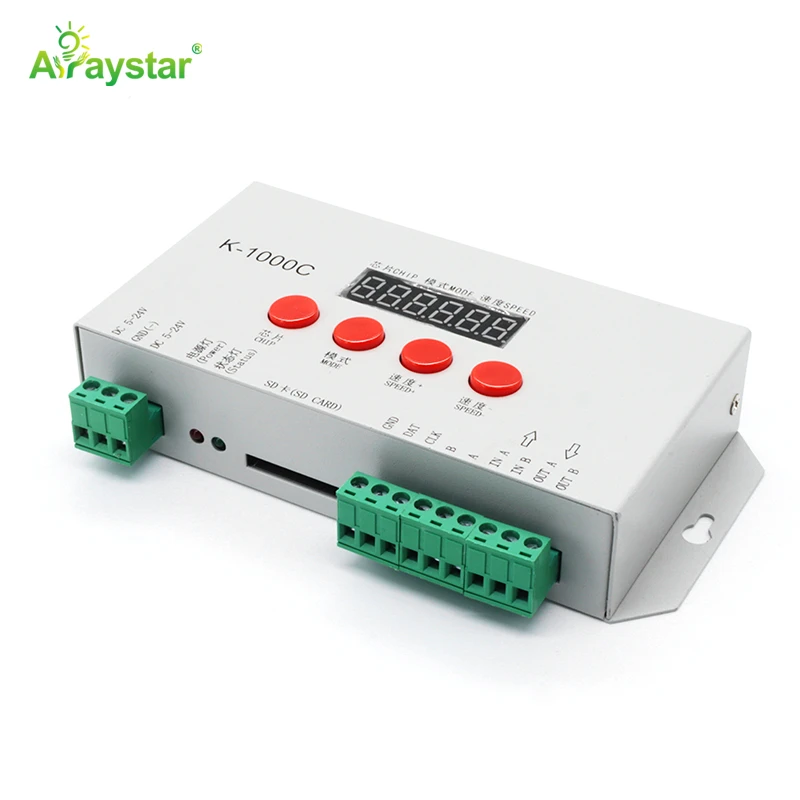
The K1000C is the offline pixel controller I turn to when a job mixes DMX512 fixtures and addressable strips and I don't want a PC running the show. It outputs TTL and RS485, drives up to 512/2048 pixels per port, works from 5–24V, and supports RGB/RGBW, DMX512, and single- or dual-wire ICs with up to 65536 gray levels.

K1000C DMX512 LED pixel controller with display and ports

What one controller replaces

On a typical install you'd otherwise juggle a DMX controller for the fixtures and a separate SPI controller for the pixel strips, with effects that don't line up. The K1000C speaks both: it stores effects on an SD card, runs standalone after power-up, and maps the same show across TTL pixel strips and RS485/DMX gear — useful in venues where a computer can't be left on the network.

Key features

  • TTL and RS485 outputs; DMX512 compatible
  • Up to 512/2048 pixels per port (per chip type)
  • RGB/RGBW and single/dual-wire IC support
  • 32–65536 gray scale, SD-card effect storage
  • 5–24V supply, runs standalone

Typical applications

  • Bars, clubs, and stages mixing DMX and pixels
  • Standalone signage and facade shows
  • Projects with no on-site control computer
  • RGBW pixel mapping alongside DMX fixtures

Specifications

ParameterValue
ModelART-K1000C
OutputsTTL & RS485
Pixels/portUp to 512 / 2048
Supported loadsRGB/RGBW, DMX512, single/dual-wire IC
Gray scale32–65536
StorageSD card
Voltage5–24V DC

Installation notes

  1. Set the chip type and pixel order in the configuration to match the strip.
  2. Use RS485 for long DMX lines and TTL close to the strips.
  3. Share a ground and power the controller from a clean DC feed.
  4. Load effects to the SD card and test before final mounting.

FAQ

Does it need a computer running?

No — effects run from the SD card standalone once powered.

Can it drive DMX and SPI at once?

Yes, it provides both TTL/SPI and RS485/DMX outputs for mixed installs.

How many pixels can it handle?

Up to 512 or 2048 per port depending on the IC; check the chip-specific limit.

Click To Action

Get a free consultation with us!