

What architectural linear lighting is
Architectural linear lighting uses continuous LED strips to define the lines of a building - coves, recessed slots, wall edges, facades and joinery. Unlike spotlights, the light source itself is hidden and the effect is a clean, uninterrupted line. This page covers the main applications, specification decisions and long-run power design.
Cove lighting
Hidden in a ceiling cove to bounce soft indirect light across the ceiling.
Recessed linear
Flush slots in walls or floors that show only a thin line of light.
Wall grazing
Narrow-angle light close to textured walls to reveal stone and brick.
Wall washing
Wide even beam that uniformly lights smooth walls and reduces contrast.
Spec decisions: CRI, color and dimming
Architectural projects are specified before the strips are ordered. The four values below determine the visible quality and how the lighting integrates with the building controls.
| Parameter | Standard | High-end |
|---|---|---|
| CRI | Ra 80 (corridors, back of house) | Ra 90-95, check R9 |
| Color temperature | 2700K / 3000K / 4000K fixed | Tunable white 2700-6500K |
| Dimming | Phase-cut / 0-10V | DALI / DMX512 / addressable |
| SDCM binning | ≤5 | ≤3 for color-critical spaces |
Powering long runs: 24V vs 48V and voltage drop
Voltage drop is the main technical risk on long architectural runs. The far end of the strip dims and shifts color as voltage falls. Two approaches solve it: 48V strips for long single feeds, or 24V with repeated injection.
24V with injection
Inject power every 5 meters. More drivers and junction boxes, but 24V strips and drivers are widely stocked and lower cost per meter.
48V single feed
Run 15-20 meters from one feed. Fewer drivers and cleaner ceiling voids, ideal for long coves and continuous corridors.
Recommended products for architectural projects
Specify COB for dot-free indoor lines, neon flex for visible and curved outlines, and wall washer strips for building exteriors.
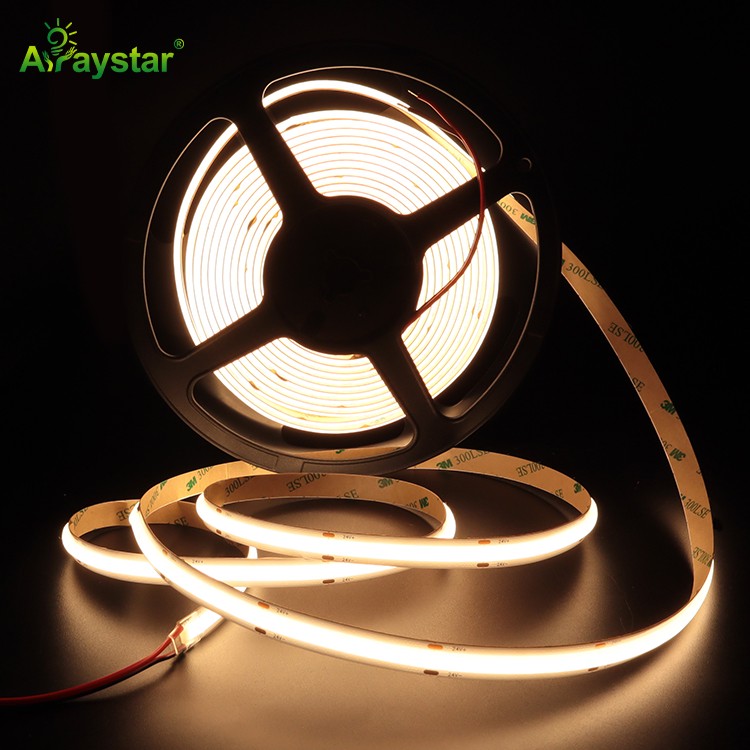
COB LED Strip
Dot-free continuous line for coves, recessed slots and joinery, CRI 90+ options.
View product
LED Neon Flex
Silicone extruded line for curved and visible outlines, IP67/IP68 exterior versions.
View product
Wall Washer Strip
Wide-angle linear flood for facade washing and grazing on commercial buildings.
View productFrequently asked questions
Specifying a linear lighting project?
Send us the floor plan, run lengths and control protocol. We will calculate load, injection points and recommend CRI and voltage for each line.
Get project support