

Neon flex for outdoor building facades
Outdoor facade neon flex outlines the edges, windows and contours of a building with a continuous, weather-resistant line of light. It replaces fragile glass neon with a flexible silicone jacket that cuts and mounts on site. This page covers weatherproof ratings, long-run power, exterior fixing and control.
Weatherproof
IP67/IP68 silicone extrusion with sealed end caps for rain and UV exposure.
Flexible outline
Bends around corners and curves to follow the building contour.
Long runs
48V and high-voltage options cover long facade sections with fewer feeds.
IP ratings and sealing the system
The strip rating is only part of the system. Every connector, end cap and feed point must be sealed to the same standard, or water enters through the joint.
| Rating | Protection | Facade use |
|---|---|---|
| IP65 | Silicone coated, splash resistant | Covered areas only, not open facade |
| IP67 | Fully encapsulated, temporary immersion | Minimum for permanent exterior |
| IP68 | Continuous immersion rated | Exposed pooling, harsh weather |
Long-run power: 48V vs high voltage
Facade outlines are long, so the voltage strategy is decided before ordering. Two practical options cover most buildings.
48V DC neon
Single feed 15-20m, low-voltage safety and simple dimming. Use multiple drivers around larger buildings.
High-voltage 110/220V
Very long runs from one feed with fewer drivers. Requires qualified installation and weatherproof AC connections.
Exterior mounting and control
Plan the route
Map edges, corners and feed points, and calculate total wattage per section.
Fix tracks
Screw aluminum tracks or stainless clips every 20-30cm; seal the holes.
Lay and seal
Press the neon into the track, glue end caps, seal feed points and leave expansion gaps.
Wire control
Connect drivers and DMX/addressable controllers, then test scenes and schedules.
Recommended neon flex for facades
Choose IP67/IP68 silicone neon for exterior outlines, 48V for long low-voltage runs, and pixel neon for color scenes.

IP68 Silicone Neon
Full silicone extrusion for permanent exterior outlines and harsh weather.
View product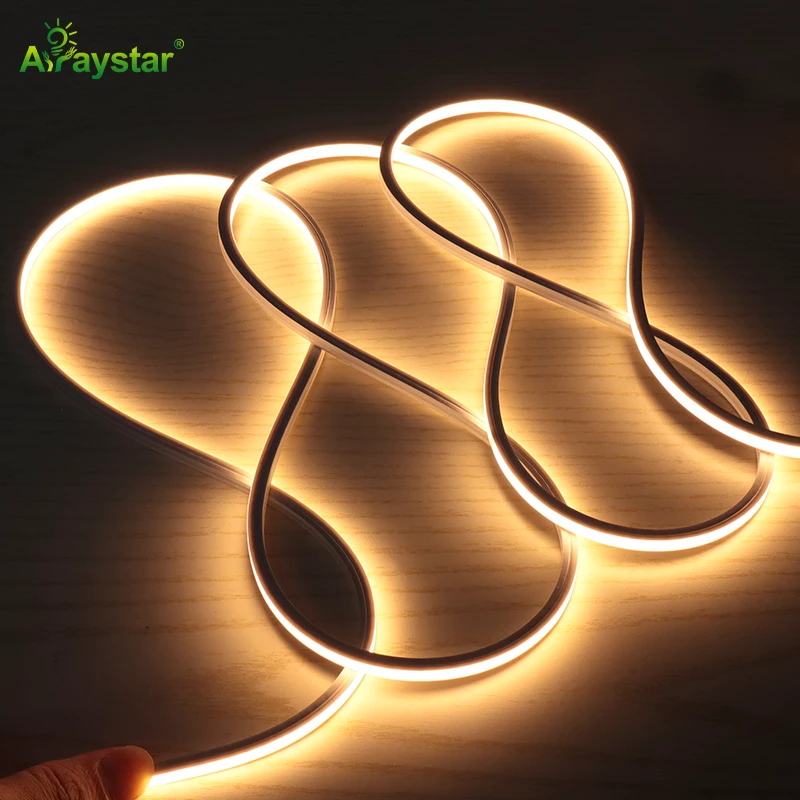

Pixel / Addressable Neon
DMX and addressable color scenes, schedules and building-wide effects.
View productFrequently asked questions
Specifying a facade outline?
Send us the building elevations, total outline length and control requirements. We will calculate runs, driver positions and recommend the IP rating and voltage.
Get project support