Anti-Glare Neon Where the Tube Faces the Bed at Night
- 2026-11-26 18:03
- /
- Alan
Where a neon tube faces the bed directly, glare and bare-emitter visibility decide whether the glow reads soft and restful or harsh and wakeful; diffuser texture and viewing angle matter as much as colour.
A bedroom feature outline mounted on the wall opposite or above the bed lands in the direct field of view when lying down. A standard neon flex can show a bright emitter face and glare from the side, which fights a sleep-friendly evening atmosphere.
Why a bed-facing tube glares
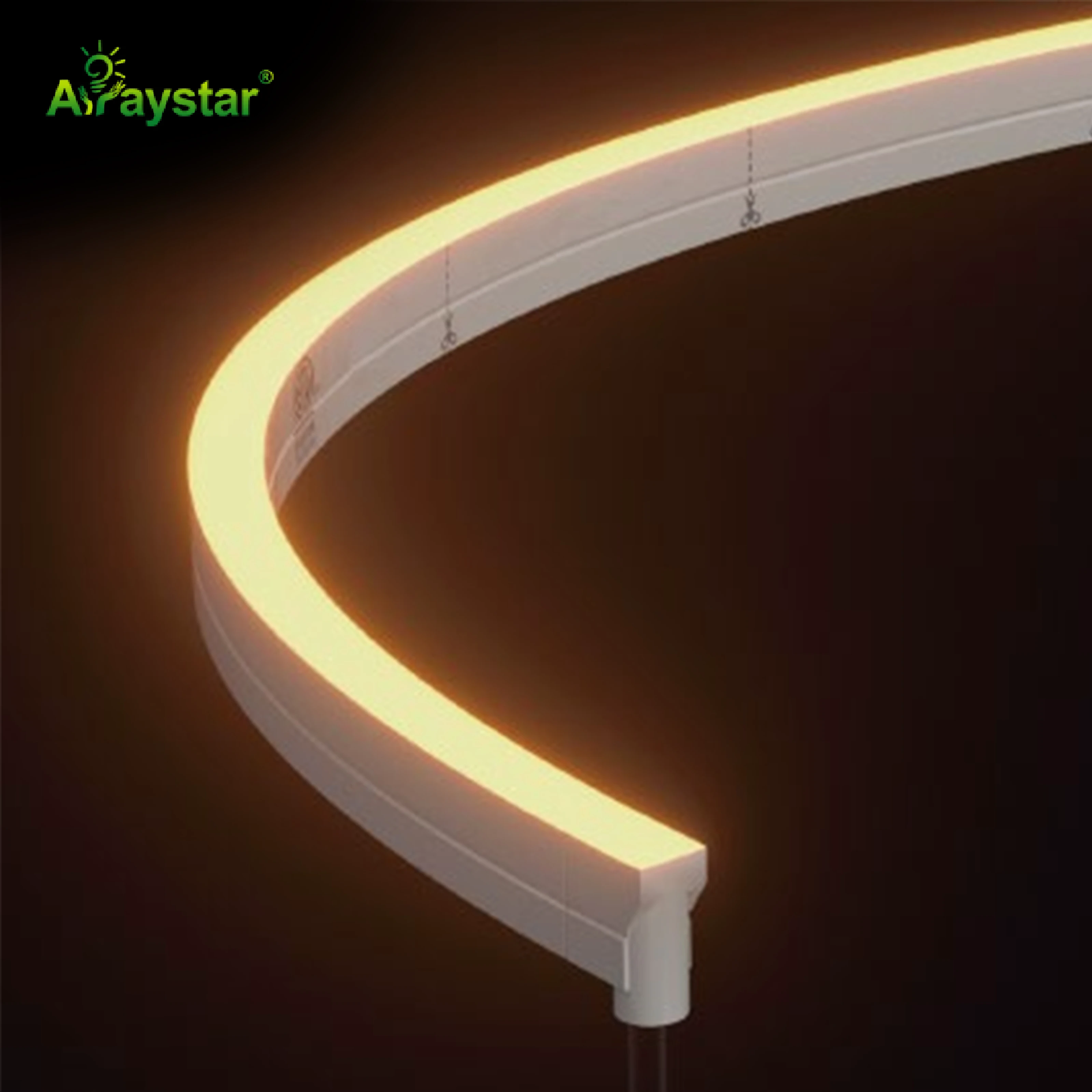
Flex neon diffuser brightness depends on how the emitter is mixed behind the silicone. A standard tube can show a hot central face and side spill that reads harsh from a lying-down viewpoint. An anti-glare diffuser spreads the output more evenly across the face so the outline glows rather than shows a bright line.
The angle of the tube relative to the bed also matters: a run seen end-on or from the side reveals more of the emitter than one viewed evenly across its face.
Colour and level for sleep
- Choose a warm, fixed colour for an evening bedroom rather than a vivid saturated scene.
- Keep the run at a low evening level so it reads as ambience, not task lighting.
- Avoid placing the tube directly in the overhead sightline from the pillow.
- Use a controller that dims smoothly rather than stepping between levels.
Diffuser size and mounting
Anti-glare flex comes in several cross-section sizes; a smaller profile reads lighter on the wall, while a larger one spreads the glow over a wider face. Match the profile to the outline scale, and mount the tube so its softened face points into the room rather than reflecting off a glossy wall.
Check the tube against a lit bed-position view: lie down where the sleeper will be and judge whether the emitter face is visible or the outline reads as an even glow.
Evening use commissioning
Set the scene the run will actually use at night, not the bright daytime demo level. Verify the glow does not wash onto the pillow or reflect off a nearby mirror or screen.
If a plain tube was already ordered and the glare is too strong from the bed, relocating the run slightly off the direct sightline often helps before changing the product.
Installation Checklist
- Confirm the strip voltage, per-metre load and total run length before sizing the supply or controller.
- Check the mounting position for moisture, heat, clearance and any obstruction before fixing the run.
- Test the sensor, receiver or controller in the finished position, with doors and panels closed.
- Keep drivers, joints and receivers reachable so the run can be serviced without reopening the finish.
Recommended Products
For this detail, the following Arraystarled products are listed in our current catalogue and can be matched to the run after the supply, enclosure and control requirements are confirmed:
- Anti-Glare 12x12mm Silicone LED Neon Flex White (24V DC Top Emitting) - ART-NS1212-120-X-24
- Anti-glare 16*16mm LED Neon Flex
- Anti-glare 10*10mm LED Neon Flex
Anti-glare neon flex sizes in the catalogue are built to soften the emitter face; for a bed-facing install, angle the run away from direct sightlines and set a warm, low-level evening scene.
Talk to our application team with your strip length, voltage and ambient condition; we will match the supply, controller or sensor to the actual run rather than a generic rule.