Rigid Bars vs Flexible Strip for a Flat Display Shelf That Needs Rigidity
- 2026-11-26 18:03
- /
- Alan
A flat display shelf that must stay dead level and rigid calls for fixed linear modules rather than a flexible strip; a flex reel sags between mounts, while rigid bars hold a straight, even line across the shelf.
Showcase and collectibles shelves hold small items where the light has to sit in a perfectly straight, parallel line under the shelf edge. A flexible strip can droop or bow between fixing points, whereas rigid LED modules and bars stay planar across the run.
When a flexible strip sags
Flexible strip follows its adhesive and clips, and between mounting points it can bow down, especially on a long shelf or a warm adhesive that softens. The resulting line is uneven and the light falls at different angles along the edge.
Rigid modules stay straight on their own housing, so a shelf that requires a clean, level linear edge is better served by fixed bars or modules than by a flex reel.
Planning the module layout
- Measure the shelf length and divide it into module lengths that fit without awkward offcuts.
- Plan module spacing so output overlaps evenly across the run.
- Align the bars to the shelf edge with the mounting holes fixed rather than adhesive only.
- Check how modules connect end to end for the required run.
Output and mounting
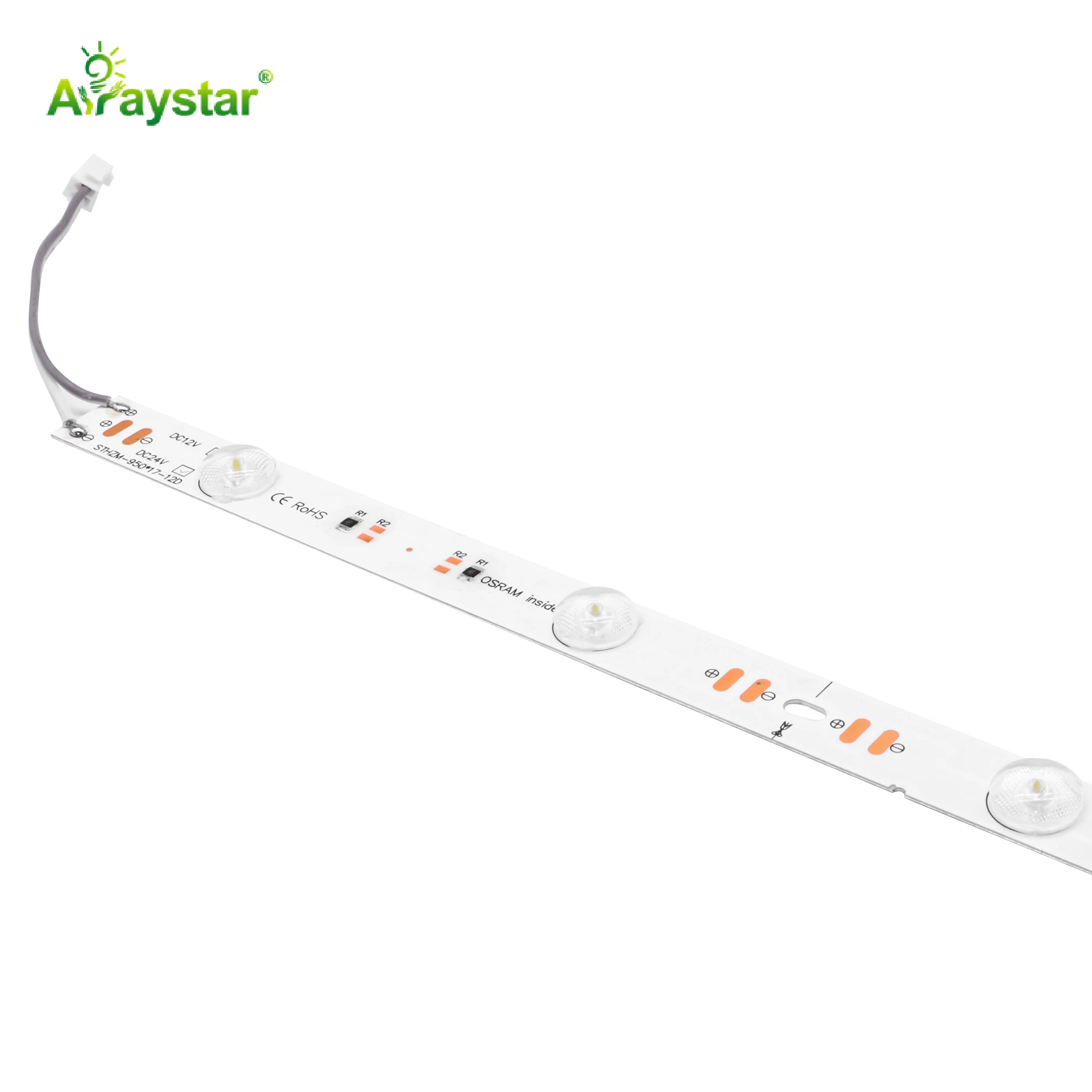
Rigid modules typically cluster LEDs in a fixed block; their beam covers a set area under the module, so spacing has to be set so adjacent modules' pools meet without a dark gap. Mount them level to the underside or front edge of the shelf, depending on whether the light should wash the items below or graze the shelf face.
For shelves that carry heavy displays, fix the modules to a solid part of the shelf rather than a thin panel that flexes under weight.
Matching the shelf use
A short feature shelf may still take a flex strip held closely at intervals, but a long showcase or repeated row of shelves where the straight line is visible benefits from rigid modules. Choose the format to the shelf's length and how exposed the edge is.
Keep spare modules from the same batch for later repairs; rigid module layouts are less forgiving of mismatched replacements than a continuous flex reel.
Installation Checklist
- Confirm the strip voltage, per-metre load and total run length before sizing the supply or controller.
- Check the mounting position for moisture, heat, clearance and any obstruction before fixing the run.
- Test the sensor, receiver or controller in the finished position, with doors and panels closed.
- Keep drivers, joints and receivers reachable so the run can be serviced without reopening the finish.
Recommended Products
For this detail, the following Arraystarled products are listed in our current catalogue and can be matched to the run after the supply, enclosure and control requirements are confirmed:
Rigid LED modules in the range suit fixed straight shelf edges; map the shelf length and spacing before choosing modules, and keep the runs aligned to the shelf edge.
Talk to our application team with your strip length, voltage and ambient condition; we will match the supply, controller or sensor to the actual run rather than a generic rule.