Sag Between Clips: Thermal Expansion on Long Linear Runs
- 2026-11-23 16:38
- /
- Alan
Aluminum expands by roughly 0.023 mm per metre per degree. On a 30 m run with a 20°C rise that is about 14 mm, which is enough to bow a profile that was fitted tight.
A concourse run sagged in the middle after the first summer. The profile was 30 m in one piece, clipped every 600 mm, and butted tight against both end stops. The sag was not a fixing failure; it was expansion with nowhere to go.
The numbers
For 6063 aluminum, the linear expansion coefficient is about 2.3 × 10⁻⁵ per °C. A 30 m length at +20°C grows 13.8 mm. At +40°C it grows 27.6 mm. That movement is real and must be accommodated.
The strip itself expands differently and is bonded to the profile. If the profile is restrained, the adhesive takes the shear, which is another reason strips release at the ends.
Clip spacing and fixing
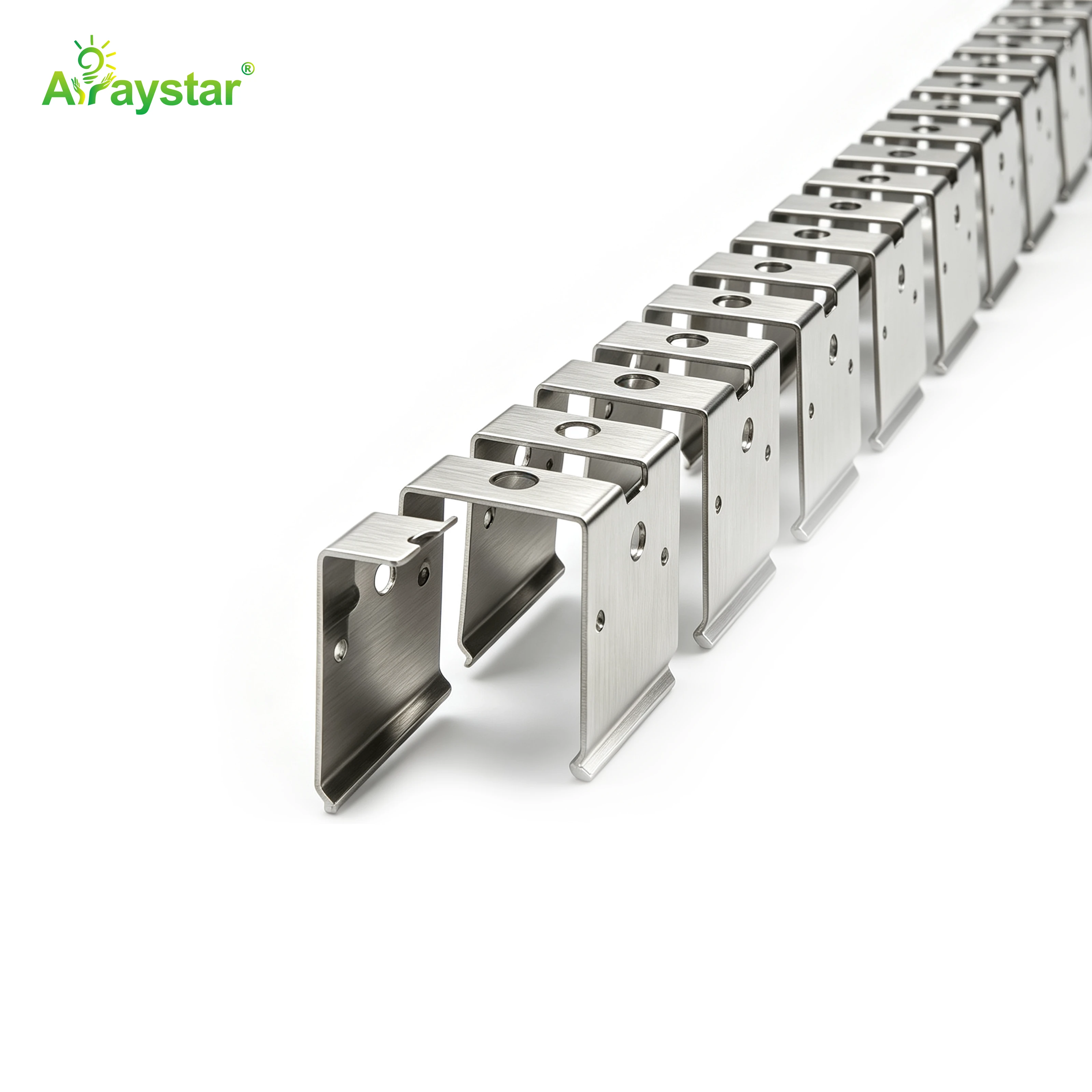
- Space clips at 400–600 mm for indoor runs; closer at 300 mm where the profile is thin or the span is exposed.
- Leave one end free to slide, or use slotted clips that allow movement.
- Do not butt both ends against fixed stops.
- For runs over 15 m, use expansion joints or split the run into sections with a small gap.
Sag is not always expansion
A run that sags immediately is a clip or fixing problem: too few clips, clips into drywall without anchors, or a profile too thin for the span. A run that sags after a season is expansion or creep. Check the timeline before choosing the fix.
On the concourse job we re-clipped at 400 mm, released one end by 15 mm, and added a mid-span support. The sag did not return the following summer.
The strip's own movement
A strip bonded to a profile that moves is under shear. If the profile is allowed to slide at one end, the strip moves with it and the adhesive sees less stress. If the profile is locked, the strip takes the strain at its weakest point, usually the end or a joint.
Expansion joints in the profile are the formal solution on runs over 15 m. A 5 mm gap at a joint, covered by a trim piece, gives the metal somewhere to go and keeps the line straight.
That is why end caps should not clamp the strip rigidly against a locked profile. A little clearance at the ends prevents the strip from being pulled off the channel.
Inspection
Look along the run at eye level against a straight edge. A sag of more than 5 mm over 3 m is visible and worth correcting. Check clip screws for pull-out and the profile ends for contact with stops.
For long facade and concourse runs, our aluminum profiles list wall thickness and recommended clip spacing, and the COB strip ranges give the load per metre that affects the thermal rise.