Wall-Washer Strip for a Short Feature Wall: Beam and Stand-Off
- 2026-11-26 18:03
- /
- Alan
Washing a short feature wall needs the right setback and beam spread; a strip mounted too close grazes the wall with hot spots, while the stand-off and strip type decide whether the wash is even along the full wall.
A short feature wall, fireplace surround or bedhead panel is lit from a run along the floor, ceiling or shelf edge. The goal is an even vertical wash up the surface, not a bright line with dark patches or a narrow grazing beam that shows every texture defect.
Washing versus grazing
A wall washer spreads light upward or outward in a broad beam to cover the panel evenly. A grazing strip sits close to the surface and rakes across it, emphasising texture and shadow. For a clean feature panel the washer approach suits most short walls; grazing is chosen only where texture is the effect wanted.
The strip's beam design is built for one or the other, so pick the wall-washer type rather than pointing an ordinary strip at the wall and expecting an even wash.
Setback and stand-off
How far the strip sits from the wall changes the wash: too close and the beam concentrates into a bright band with a dark upper area; too far and the light spreads thin before reaching the top. The correct stand-off balances coverage of the whole wall height.
For a short wall, confirm the beam reaches the top edge without pooling at the base. Adjust the stand-off or strip angle and watch the gradient along the panel.
Evenness along the run
- Check the wash is even across the wall length, with no dark gap between section feeds.
- Confirm the beam covers the full wall height from base to top edge.
- Avoid placing the strip where furniture or a fixed fitting blocks the beam.
- Match the strip spacing to the wall width for continuous coverage.
Test before final fix
Run a temporary section along the planned edge and stand back to judge the wash on the actual surface. Paint, brick and panel textures react differently to the same beam, so a test on the real wall beats judging from a sample.
If the wall shows hot spots or uneven patches, adjust the strip angle and stand-off before securing the mounting; wall-washer results are set largely at install rather than by the later dimmer.
Installation Checklist
- Confirm the strip voltage, per-metre load and total run length before sizing the supply or controller.
- Check the mounting position for moisture, heat, clearance and any obstruction before fixing the run.
- Test the sensor, receiver or controller in the finished position, with doors and panels closed.
- Keep drivers, joints and receivers reachable so the run can be serviced without reopening the finish.
Recommended Products
For this detail, the following Arraystarled products are listed in our current catalogue and can be matched to the run after the supply, enclosure and control requirements are confirmed:
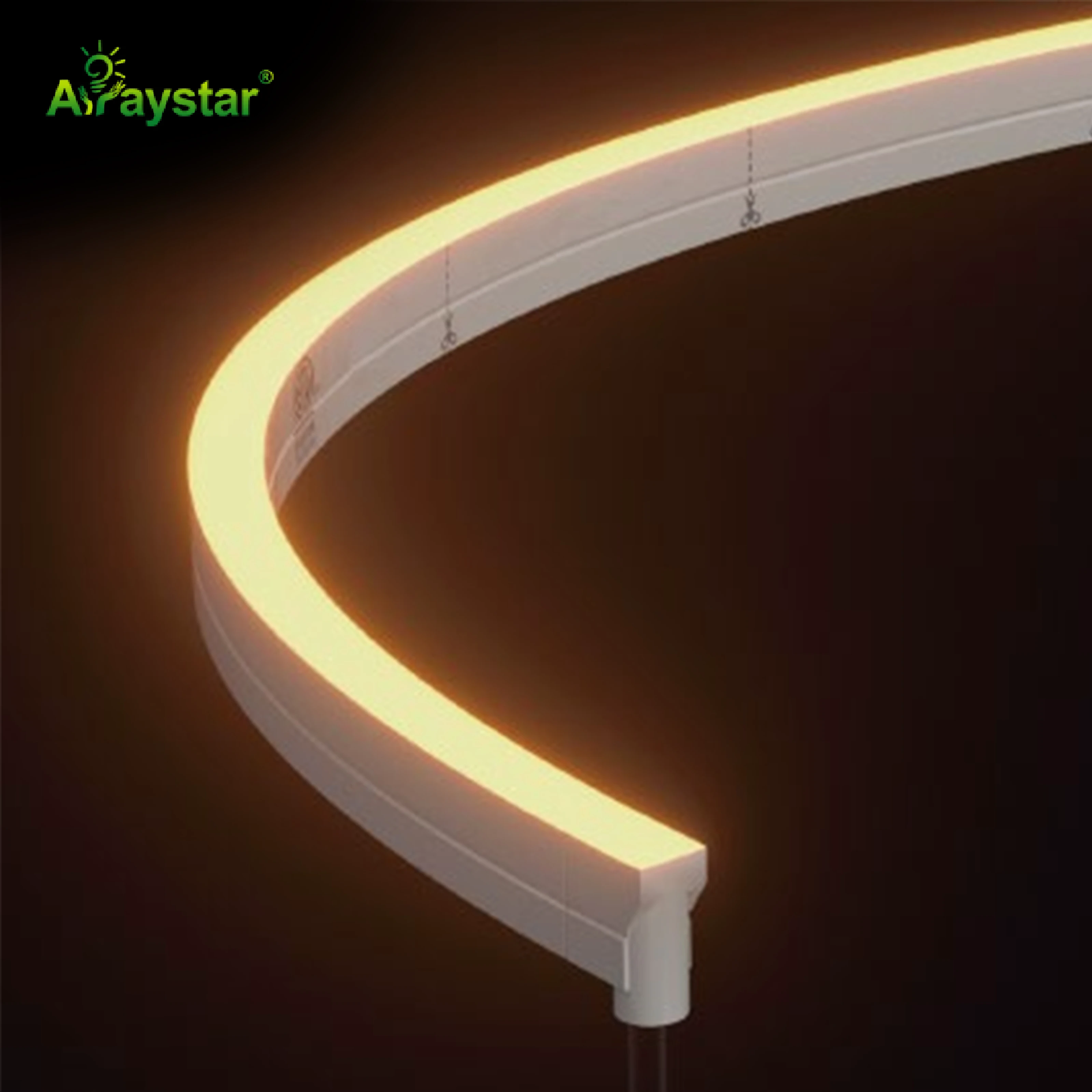
- 3D Free Bend Flex Wall Washer Strip ART-WL1616-X-24
- Top Bend Flex Wall Washer Light ART-WL2010-48
- 3D Flex Wall Washer Strip ART-WL2527-24-X-24
Flex wall-washer strips in the catalogue shape a vertical beam for feature walls; set the stand-off to the wall height and test the beam before fixing the final run.
Talk to our application team with your strip length, voltage and ambient condition; we will match the supply, controller or sensor to the actual run rather than a generic rule.