Library & Reading Room LED Strip: Glare-Free Study Lighting
- 2026-09-19 13:16
- /
- Arraystar
Library lighting is about sustained visual comfort: specify glare-controlled (low UGR), high-CRI (≥90), neutral-to-warm diffused linear light at appropriate task illuminance, uniform across reading surfaces, with daylight-linked dimming and separate low-impact stack and archive lighting. Bright bare strip or cool, flickering light causes eye strain and headaches during long study sessions and damages the calm atmosphere readers come for.
What a Library Needs From Light
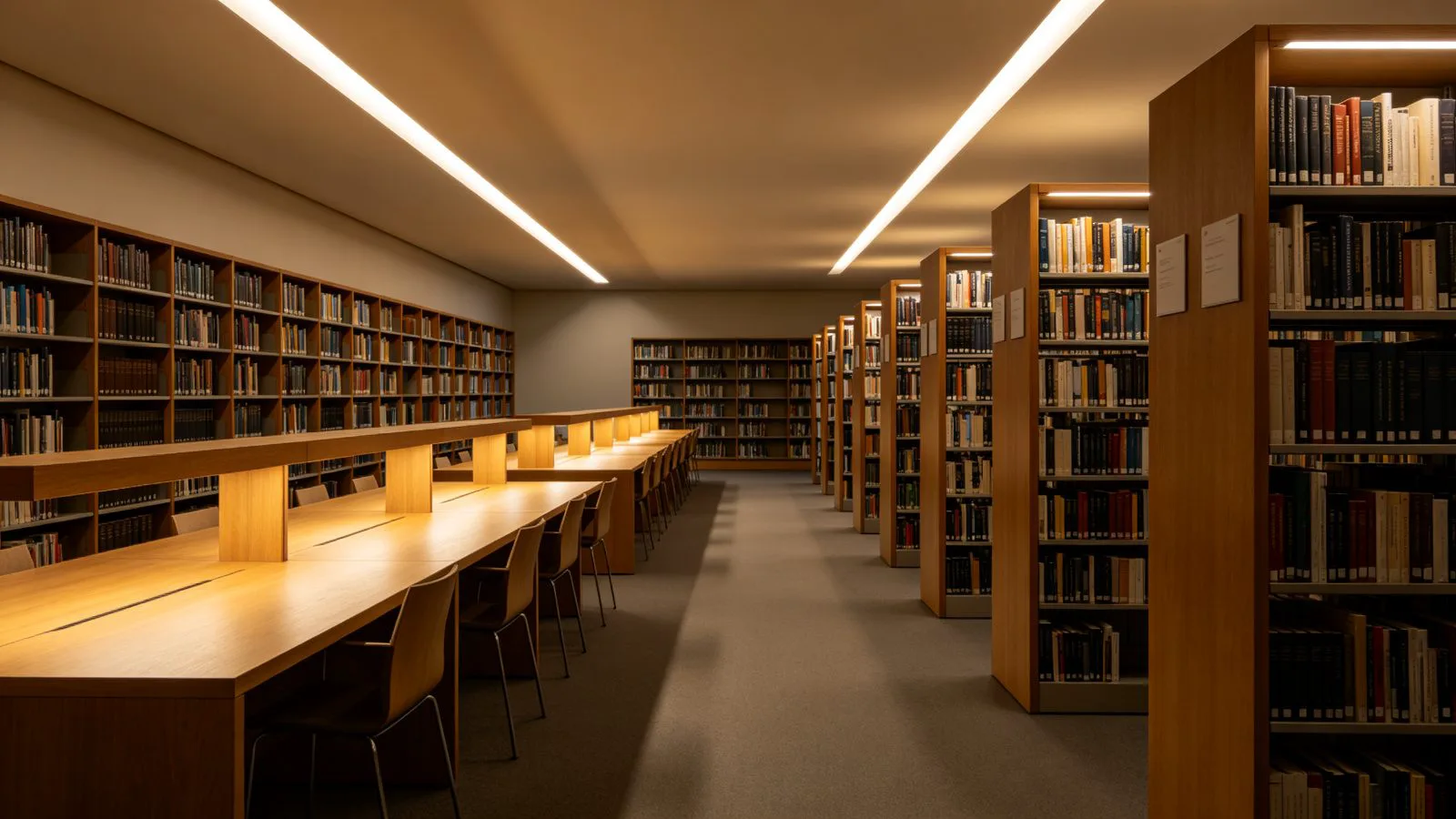
Readers, often students and researchers, stay for hours performing demanding near-vision tasks — books, screens, notes and now laptops. The lighting must support concentration without fatigue, remain comfortable from every seating position, and preserve a quiet, welcoming atmosphere. At the same time libraries contain stacks, archives and rare materials that need their own, sometimes conservation-grade, treatment and large daylit spaces where electric light must work with natural light rather than fight it.
- Glare control is paramount: readers look up between pages and screens; visible bright sources and reflections cause discomfort and veiling glare.
- Uniformity on the task plane prevents eyes constantly re-adapting between bright and dark spots.
- Colour quality and stability support legibility and concentration; flicker must be eliminated.
- Daylight integration in reading rooms saves energy and maintains comfort as conditions change.
- Conservation for special collections and archives (see our museum guide for lux limits).
Colour, Glare and Illuminance
Recommended lighting parameters by library zone
| Zone | CCT | CRI | Level / glare |
|---|---|---|---|
| Reading / study tables | 3500–4000 K | ≥90 | Task ~300–500 lx, low UGR |
| Computer / mixed-use | 3500–4000 K | ≥90 | Low glare, screen-friendly |
| Open shelves / stacks | 3500–4000 K | ≥80 | Vertical light on spines |
| Reading lounge / children's | 3000–3500 K warm | ≥90 | Comfortable, softer |
| Special collections / archive | Per conservator | ≥95 | Low lux, UV-free, controlled |
| Corridors / service | 4000 K | ≥80 | Wayfinding, dimmable |
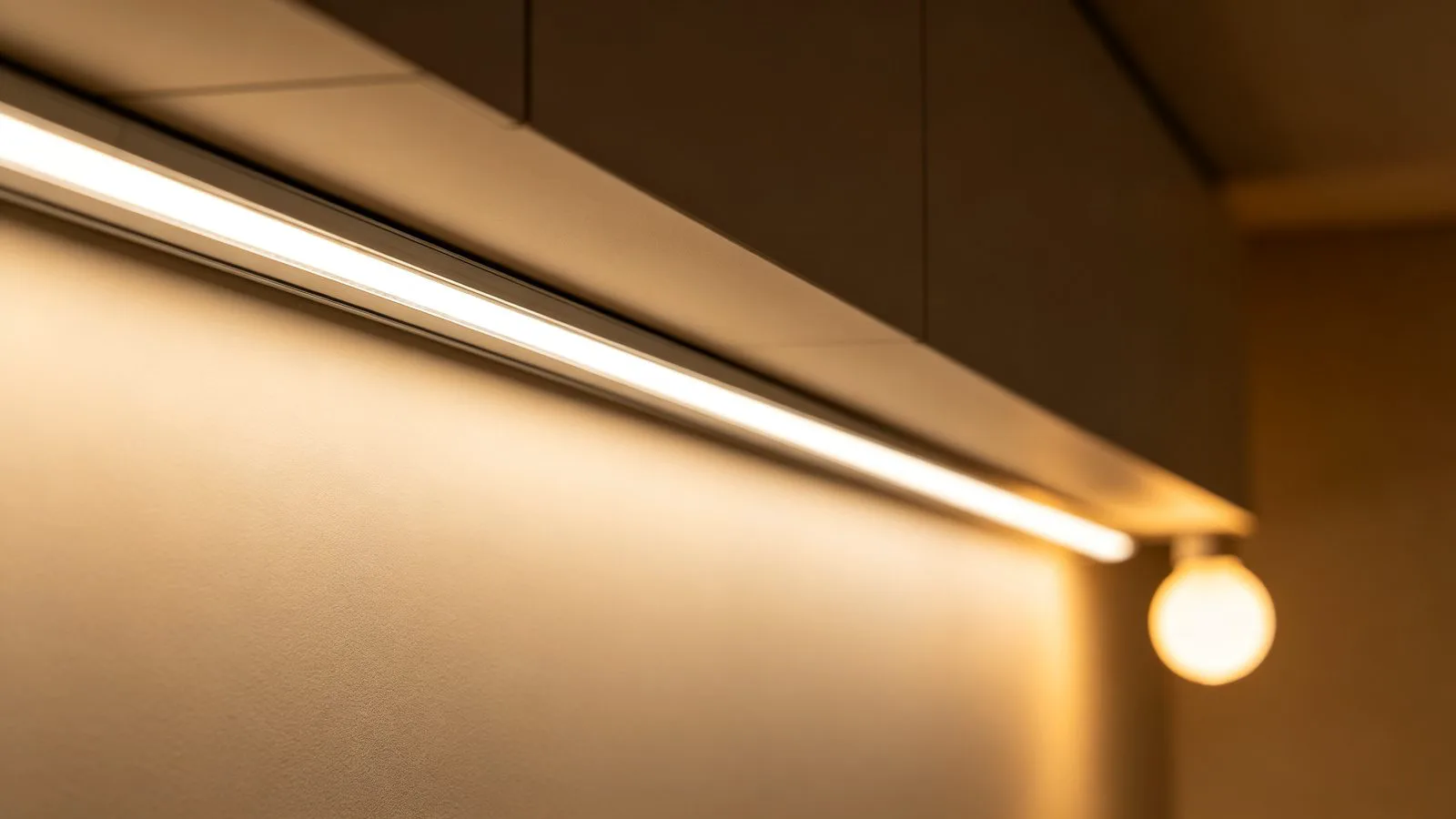
Glare is controlled through optics rather than wattage: use deep or shielded channels with opal diffusers, indirect cove light and low-brightness surfaces, aiming for a unified glare rating around UGR < 19 in study areas. Linear strip is excellent for this when hidden in coves and shelf baffles; bare strip under a shelf shining into a reader's eyes is a common, easily avoided mistake.
All dimming must be flicker-free (high-frequency or analogue, <1%), since students read and film for long periods and low-frequency PWM causes headaches and camera banding.
Linear Products and Glare-Free Layout
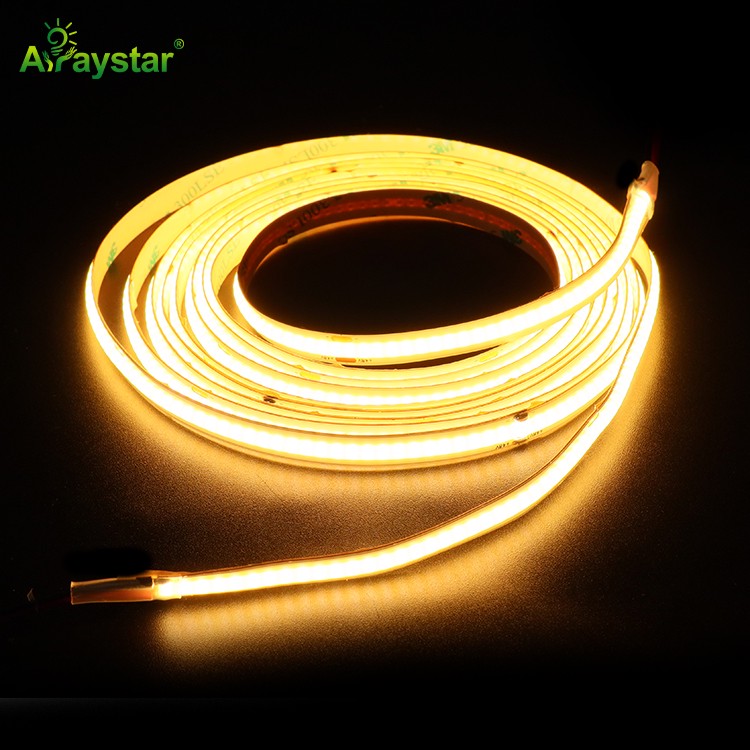
- Use diffused COB in deep aluminum channels for continuous, dot-free lines; COB's uniform emitting surface is inherently lower-glare than spaced SMD dots.
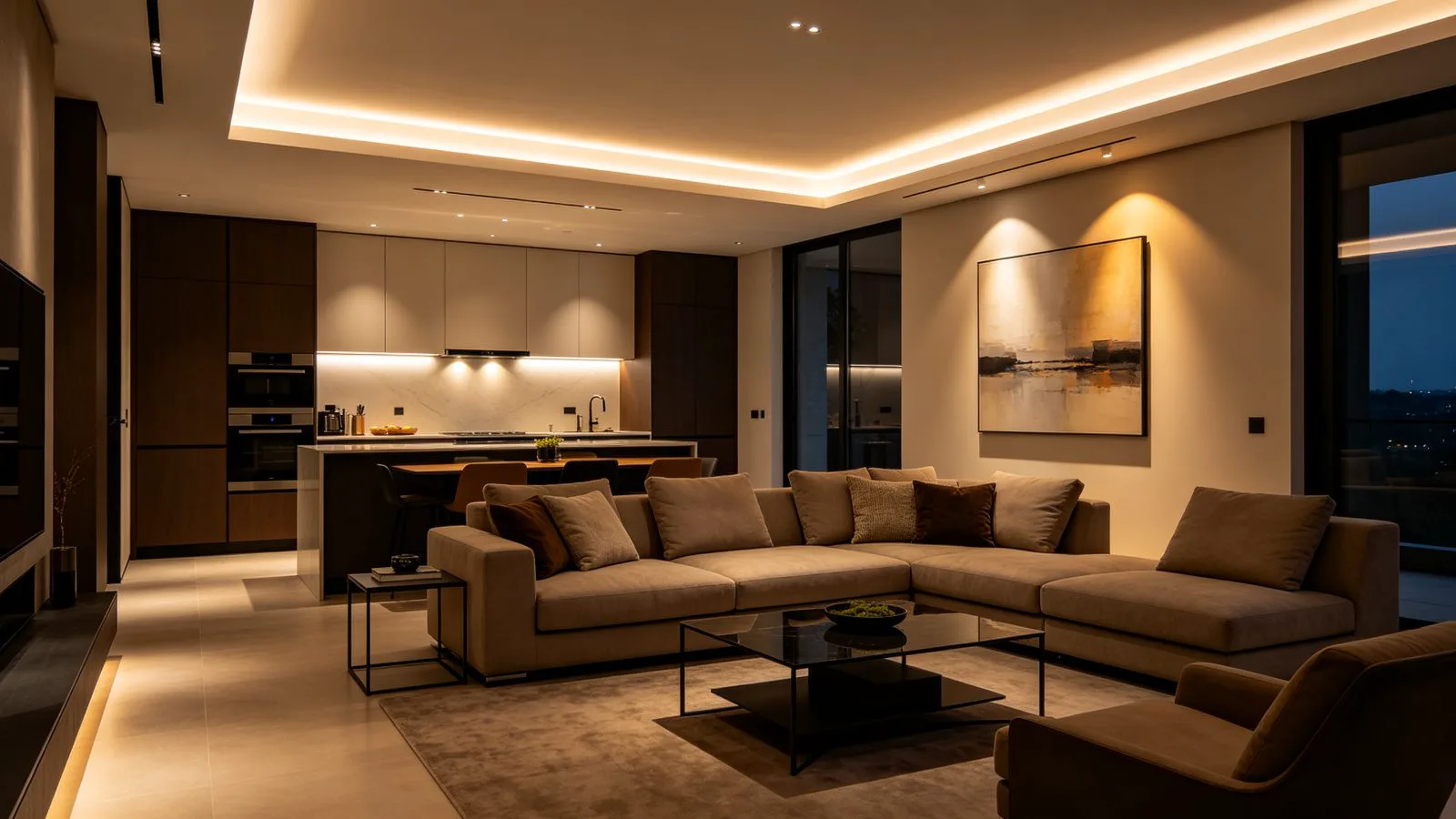
- Favour indirect cove and perimeter uplight in reading rooms to bounce soft light off ceilings, supplemented by modest task light at tables.
- At shelves, mount baffled linear light under each tier or at stack tops to illuminate spines vertically without shining into readers' eyes in the aisle.
- Specify neutral 3500–4000 K for study (alert but not harsh) and warmer light in lounges, children's areas and historic reading rooms.
- Use daylight-linked and occupancy sensors with DALI/0–10 V dimming to hold a steady task level as daylight changes and to dim empty stacks.
For laptop-based study, avoid bright point sources reflected in screens: indirect and cove lighting with matte surfaces keeps screen contrast readable, while a modest task layer prevents the desk being darker than the wall behind the screen, which causes adaptation fatigue.
Zones, Controls and Conservation
- Reading rooms: indirect cove base plus table/linear task light, daylight harvesting, scene presets for day, evening and events.
- Stacks: vertical shelf lighting with aisle occupancy sensors so lights dim when empty and brighten on approach.
- Special collections: very high-CRI, UV-free, low-lux, often vitrine-based lighting with timers and sensors (conservator-specified).
- Group and children's areas: warmer, softer, visually calm light with gentle accent colour avoided near readers.
- Maintenance: long-life bin-matched strip so replacements do not create colour patches across long coves; accessible drivers.
Library specification summary
| Aspect | Requirement |
|---|---|
| CRI | ≥90 study, ≥95 special collections |
| CCT | 3500–4000 K study, warmer in lounges |
| Glare | UGR <19, shielded/opal, indirect cove |
| Flicker | <1%, high-frequency/analogue dimming |
| Control | Daylight-linked + occupancy, DALI/0-10V |
| Conservation | Low-lux UV-free for archives/rare items |
We supply glare-controlled high-CRI COB in deep opal channels, indirect cove systems and shelf/baffle linear kits with flicker-free DALI/0–10 V dimming and daylight/occupancy control. Send us your reading-room and stack layouts for a low-UGR, study-comfort lighting scheme.
Recommended Products
Frequently Asked Questions
What colour temperature is best for a library reading room?
Use neutral 3500–4000 K for study and computer areas — alert but not harsh — with CRI 90+ and flicker-free dimming. Warmer 3000–3500 K suits lounges, children's areas and historic reading rooms. Avoid very cool light, which feels institutional over long sessions.
How do I prevent glare from LED strip in a library?
Hide the source: use COB in deep opal-diffused channels, indirect cove and perimeter uplight, and baffled shelf fixtures, targeting UGR below 19. Never mount bare strip where readers see it when looking up from books or screens, and avoid bright sources reflected in laptop screens.
What lux level do library reading areas need?
General study and reading tables commonly need around 300–500 lx on the task plane, evenly distributed, with lower ambient in lounges and conservator-defined low levels for special collections. Follow local educational/library standards and hold the level steady with daylight-linked dimming.
How should bookshelves and library stacks be lit?
Provide vertical light that reaches the spines, using baffled linear strips under shelf tiers or at stack tops rather than only ceiling downlights, which leave lower shelves dark. Add aisle occupancy sensors so stacks brighten on approach and dim when empty, saving energy without reducing safety.
Do LED lights damage old books and archives?
Quality LEDs emit essentially no UV and little heat, making them far safer than older sources, but visible light still fades sensitive paper, textiles and illustrations over time. For special collections use conservator-specified low-lux, UV-free lighting with timers or presence sensors to limit exposure, similar to museum practice.
Lighting a library, study hall or archive?
We supply low-UGR high-CRI COB in opal channels, indirect cove systems and shelf lighting with flicker-free daylight/occupancy dimming. Send your reading-room and stack layouts for a glare-free study-comfort scheme.
Email: info@arraystarled.com | Phone: +86-0755-2103-6746 | WhatsApp: 0086 1581 8514 077
Need to size your power supply? Use our LED Strip Power Calculator to find the right driver in seconds.