Stadium Concourse Runs: Long Distances, High Mounts and Safe Access
- 2026-11-23 16:44
- /
- Alan
In a stadium the electrical problem is solvable. The access problem shapes the design: if you cannot reach the middle, you cannot inject power there, and you cannot maintain it either.
A concourse retrofit had 80 m of continuous strip at 6 m height, above a route used by 40,000 people on match days. The original design was single-end fed from a plant room at one end. The far 20 m was visibly dim, and there was no safe way to reach it.
Distance and current
At 7 W/m, 80 m is 560 W and 23 A at 24V. Single-end feeding is not viable at that current; board and feeder losses would be enormous. Even at 48V, 11.7 A over 80 m is a serious feeder.
The practical answer is multiple zones of 15–20 m, each fed from a local driver in an accessible position. That converts one impossible run into four manageable ones.
Access strategy
- Locate drivers and joints at zone ends, near a maintenance door or a caged access point.
- Avoid mid-span joints unless there is a platform or a tested route for a mobile elevating work platform.
- Design for replacement, not just installation: a failed 15 m section should be swappable in one visit.
- Coordinate with match-day restrictions; work windows are short and usually overnight.
Safety and emergency provision
Concourse lighting is part of the means of escape. If the strip is decorative only, it still must not create a hazard when it fails or when maintenance opens the ceiling. Keep the emergency circuit separate and do not dim the emergency output.
Emergency luminaires along the route are usually independent fittings. Do not assume the cove strip can substitute for them unless the design has been calculated and accepted.
Choosing the mounting detail
At 6 m, the strip is seen at a glancing angle, which hides dotting but exaggerates any run that is not straight. A rigid profile with a diffuser reads better than a bare strip and is easier to clean.
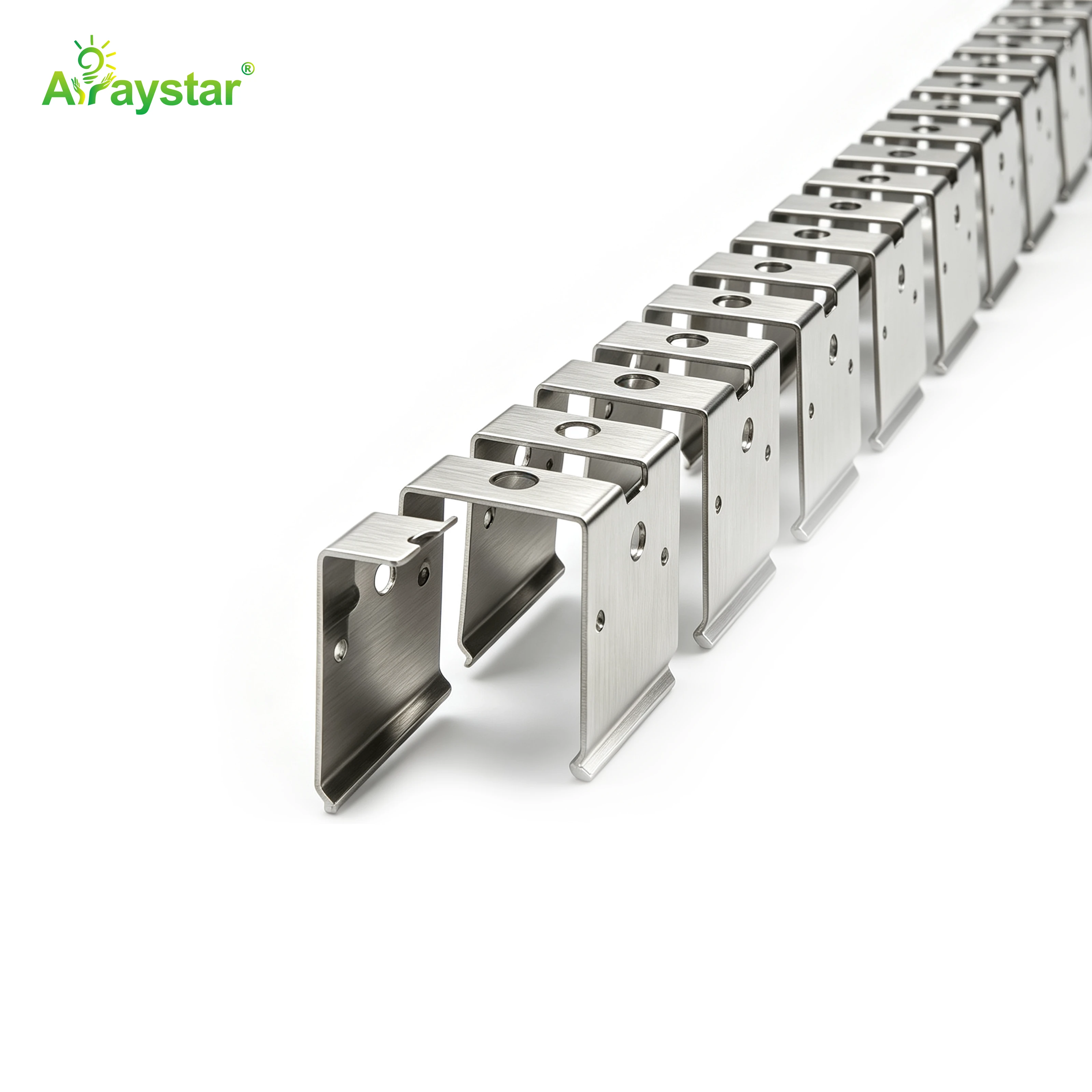
Mechanical fixing is mandatory at that height. Adhesive-only mounting is a maintenance liability when a section has to be reached with a platform.
Commissioning
Measure the end voltage of each zone, not the whole run. Record the readings per zone and photograph the line at each end. If one zone reads low, fix it before the stands open, when access is still cheap.
Hand over a zone map, a spare driver per type, and the measured voltages. On a venue of this size the next maintenance team will not have your installation notes, and a labelled plant room saves them a night shift of tracing. Keep the spare drivers in the plant room, not in a site container that moves between projects.
Our COB ranges give the W/m used to size each zone, and the profile range covers the longer spans at height.