48V Retrofit for a Dimming 24V Cove: What Else Has to Change
- 2026-11-23 16:32
- /
- Alan
At the same wattage, 48V draws half the current of 24V. Resistive loss falls with the square of current, so the drop becomes roughly a quarter. That is the whole argument — and the reason a retrofit touches more than the driver.
A retail group asked us to fix three 28–34 m perimeter runs that were dim at the tail. Instead of adding injection taps at six points per run, they asked whether changing to 48V would be cleaner. Electrically yes. Practically, it is a system change.
What improves
For 7 W/m strip, 24V draws 0.29 A/m; 48V draws 0.146 A/m. A 30 m run goes from 8.75 A to 4.4 A. The same board resistance produces one quarter of the voltage loss, and the feeder can be one or two gauges smaller for the same drop.
That often means fewer injection points, smaller cable, and less heat in the cove. On long facades and atriums it is the difference between a workable single-end feed and a wiring diagram full of taps.
What has to change with it
- Driver: 48V constant-voltage output, with the same dimming interface as the existing control. A 24V driver cannot be re-tapped to 48V.
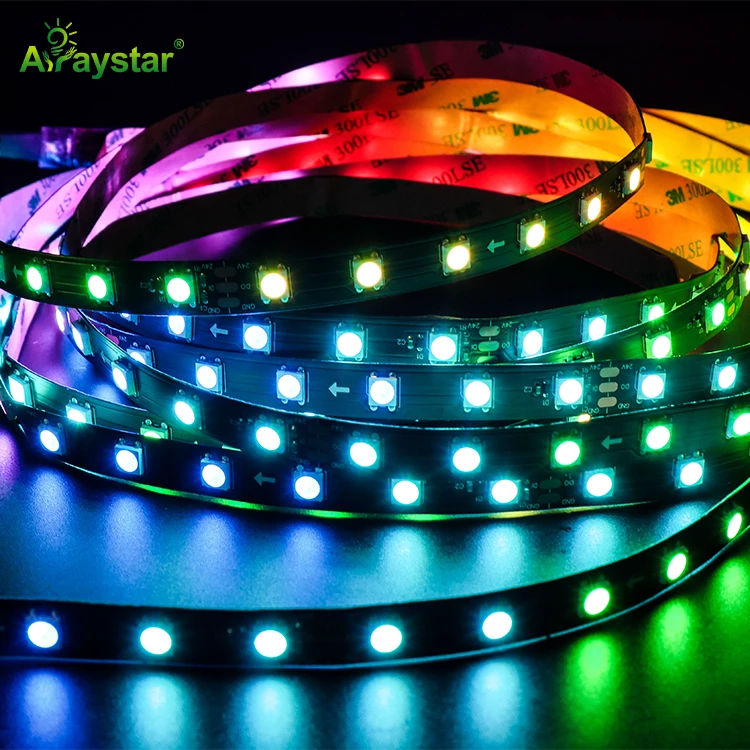
- Strip: the 48V version of the same family. Do not put 48V into 24V strip; the LEDs and series/parallel arrangement are different.
- Controllers and dimmers: check the output rating. A 24V DMX decoder or 0-10V dimmer may not accept 48V.
- Connectors: rated for 48V and for the strip width. The current is lower but the voltage class matters for creepage and insulation.
- Sensors and relays: confirm contact ratings and that the 48V DC side is switched, not the AC side only.
- Labelling and documentation: a mixed site with 24V and 48V circuits needs clear marking at every driver and joint.
What does not improve as much as people expect
Brightness uniformity still depends on board copper. A thin 48V board on a 40 m run can still show a gradient. The voltage drop is quartered, not eliminated.
Joint resistance matters just as much. At 4.4 A a 0.2 ohm joint costs 0.9V instead of 1.8V, which is better but still worth fixing.
Dimming behaviour at the bottom end can change. Some 48V drivers have a different minimum output and different PWM behaviour; test the 1% and 5% levels before handover, especially if the space is photographed or filmed.
Safety notes
48V DC is still within SELV limits for dry locations, but it is above the 30V threshold that many people associate with "safe extra-low voltage". Wet locations, outdoor facades and pools need the same IP and isolation discipline as before. Do not assume 48V is touch-safe in every environment.
A staged approach that works
Retrofit one zone first: one driver, one 48V strip run, the existing control interface. Measure the far end, the joint temperatures and the dimming curve. If the numbers hold, roll the remaining zones. Keep the 24V parts labelled and stored separately; mixed stock is how 48V ends up on a 24V reel.
The economics usually work when a 24V layout would need three or more injection points per run. Below that, dual-end feed or a single mid-run tap is cheaper than a full voltage change. Our 48V strip range and 48V drivers cover the parts side of the comparison.