Healthcare & Hospital LED Strip: Corridors, Nurse Stations & Wards
- 2026-09-19 12:28
- /
- Arraystar
Healthcare lighting must support 24-hour care, hygiene and patient wellbeing at once. Specify high-CRI (≥90), low-glare, flicker-free tunable-white strip on circadian schedules for wards and corridors, smooth dimming for night mode, sealed cleanable fittings for clinical areas, and integration with emergency lighting. The same cool, static light all day disrupts sleep and agitates patients — tunable, human-centric control is now the standard.
What Healthcare Lighting Has to Deliver
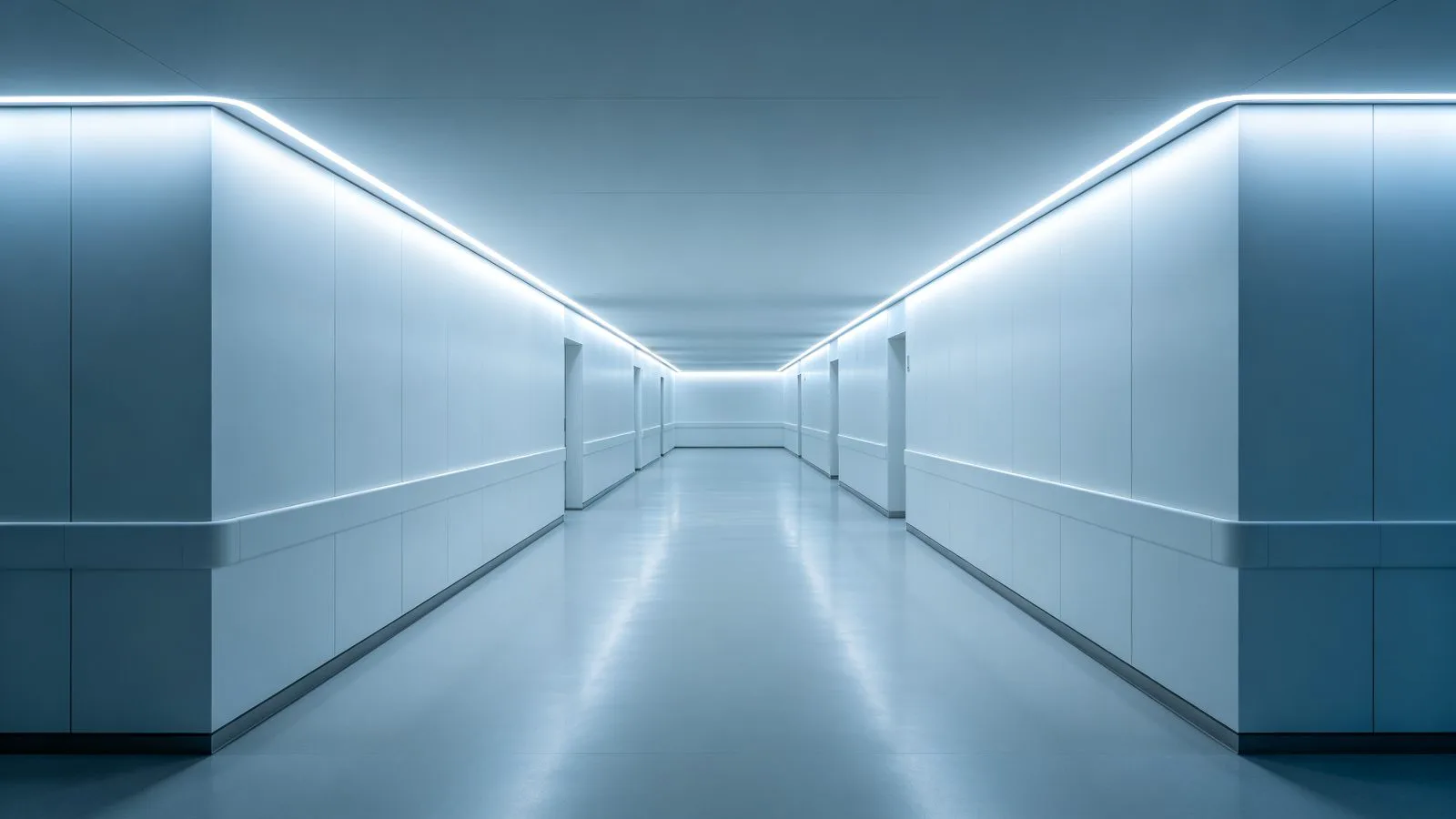
Hospitals and clinics operate around the clock and serve three very different users — patients (often anxious, sedated or asleep), clinical staff (reading skin tone, monitors and equipment) and cleaners/maintenance teams — in spaces that must be sterile, glare-free and safe to navigate at 3 am. Lighting that is merely bright enough fails on wellbeing; lighting that is merely atmospheric fails on clinical tasks and safety.
- Clinical accuracy: high CRI so skin tone, cyanosis, rashes and medication colours read correctly.
- Circadian support: cool, bright light during the day and warm, dim light at night protects patient sleep and reduces delirium and falls.
- Glare and flicker control: patients lie on their backs looking up; exposed diodes and flicker cause discomfort and headaches.
- Hygiene and cleanability: sealed, smooth, wipe-down fittings with no dust traps in clinical and food areas.
- Safety and compliance: corridor night lighting, stair visibility and integration with emergency/central battery systems.
Colour, Brightness and Circadian Tuning
Lighting parameters by healthcare space
| Space | CCT / tuning | CRI / level | Notes |
|---|---|---|---|
| Patient wards | Tunable 2700–5000 K | CRI ≥90 | Day bright/alert, night warm/dim |
| Corridors | Tunable or warm night mode | CRI ≥80 | Continuous low night level for safety |
| Nurses' station / exam | 4000–5000 K, bright | CRI ≥90 | Task clarity, accurate colour |
| Operating / procedure | Per medical standard | Very high CRI | Specialist fixtures, not strip |
| Waiting / reception | 3000–4000 K, calm | CRI ≥85 | Welcoming, reduced stress |
| Washrooms / clinical rooms | 3500–4000 K | IP-rated, sealed | Cleanable, shadow-free |
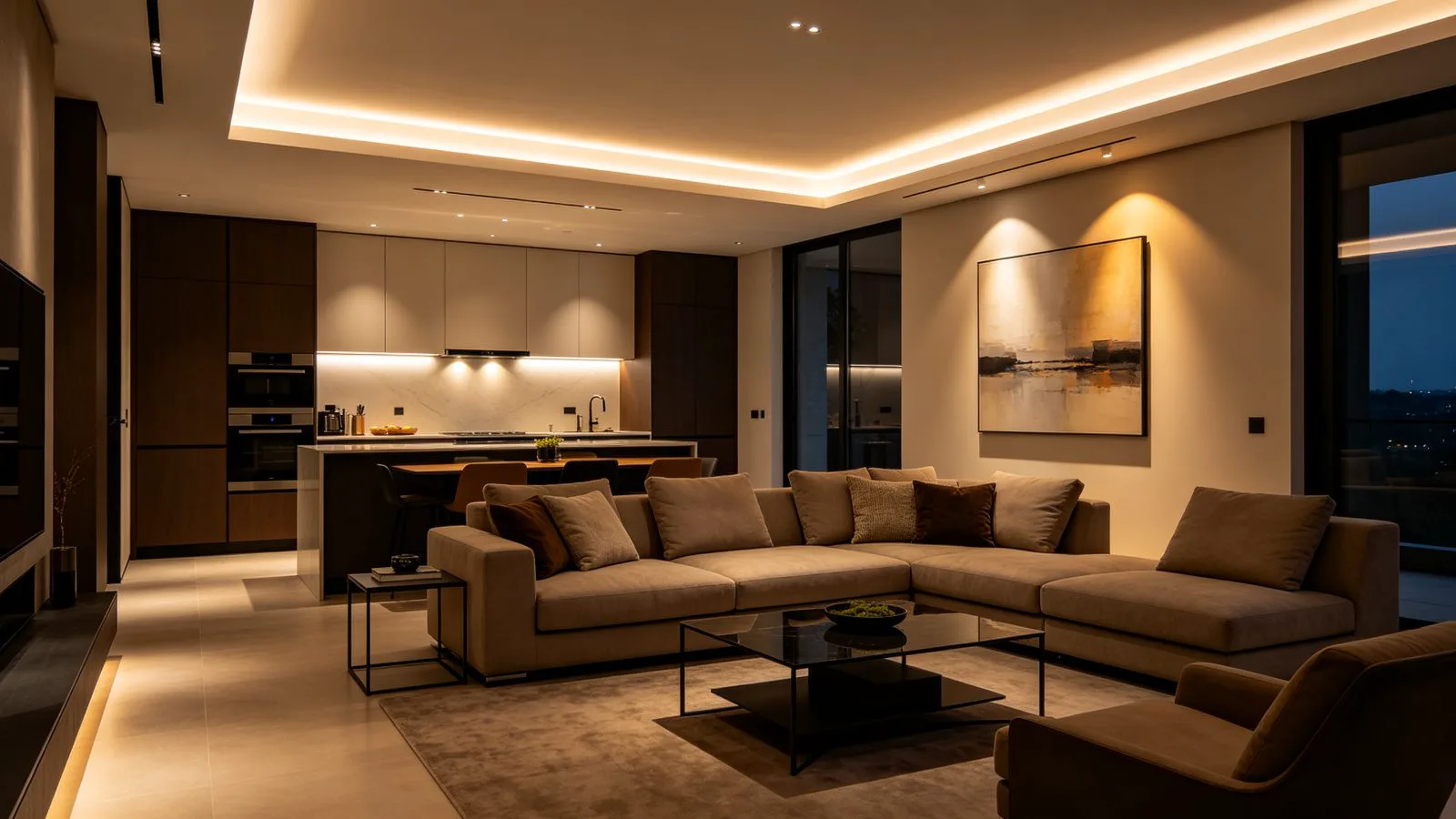
Tunable-white strip on a timed schedule is the practical tool for circadian lighting: cool 5000 K at high level during morning and afternoon to support alertness, transitioning through neutral to warm 2700 K at very low level overnight. Corridors in particular benefit from a continuous cove line that stays dimly warm through the night, guiding staff and reducing patient falls without the harsh on/off switch that jolts awake anyone nearby.
All dimming must be genuinely flicker-free (high-frequency or analogue, <1% flicker), because flicker is especially problematic for neurological and photosensitive patients and for the many cameras and monitors in modern facilities.
Hygiene, Materials and Emergency Integration
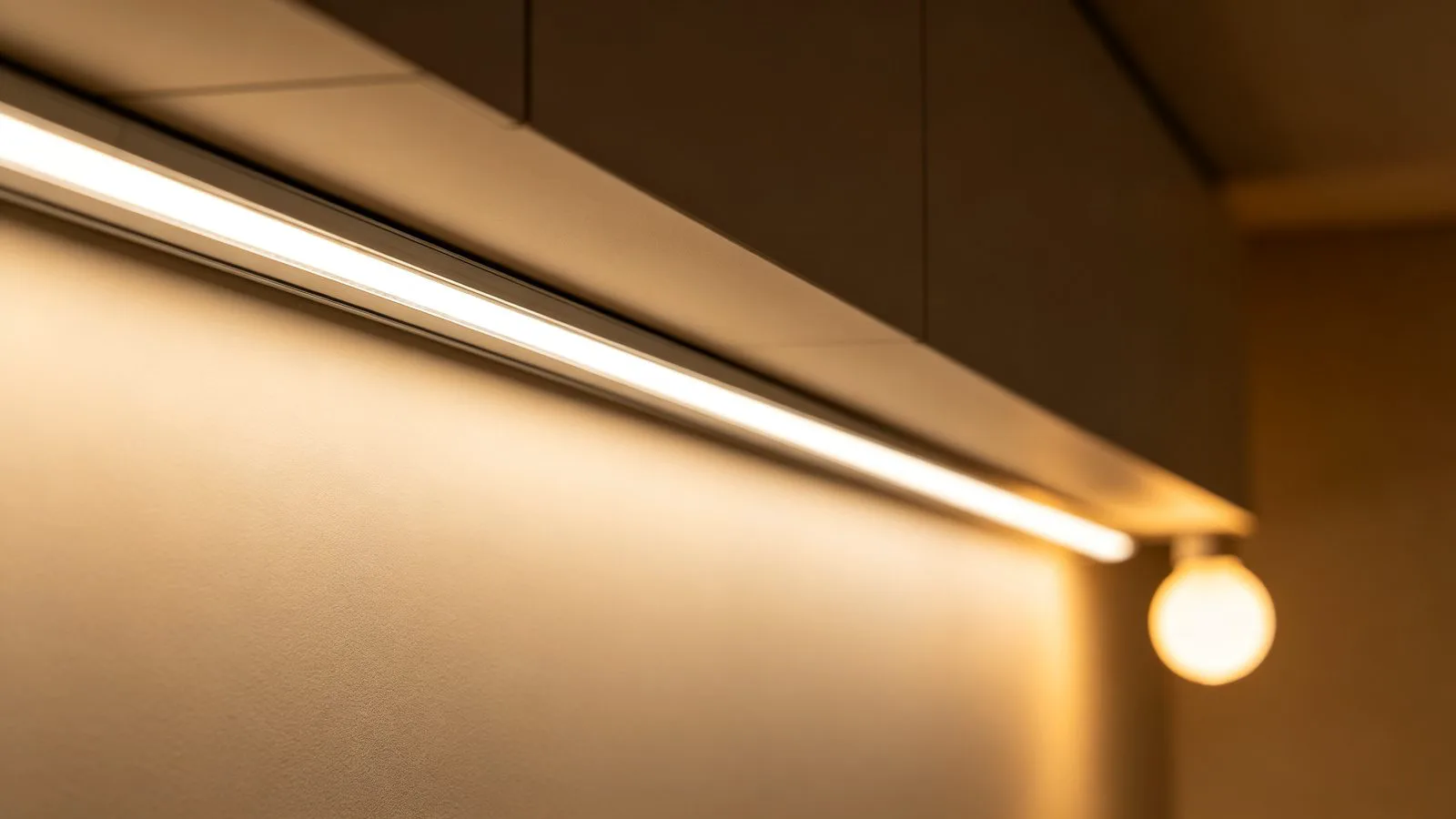
- Use strip sealed inside smooth, continuous aluminum channels with sealed diffusers — no open LED cavities, gaps or dust ledges that harbour contamination or complicate cleaning.
- Specify IP54+ (IP65 in washdown, bathroom and lab areas), wipe-down surfaces and non-porous diffusers; avoid fabric or exposed profiles in clinical zones.
- Choose low-heat, high-efficiency COB so enclosed ceiling coves do not add to cooling loads or create hot surfaces near patients and curtains.
- Coordinate with the emergency lighting design: normal cove lighting does not replace emergency luminaires, but corridors should maintain a minimum safe night level and emergency circuits must override scenes as required.
- Use DALI or addressable control for ward-level zoning, nurse-call-linked night modes and central monitoring; drivers should be accessible outside sterile ceilings where possible.
Acoustic and visual calm matters as much as specification: continuous indirect cove light with no visible source reduces the institutional feel of corridors and wards, and dimmable warm scenes in maternity, paediatric and palliative areas materially improve the patient environment.
Installation Zones and Control Scenes
- Corridor coves and bulkheads: continuous tunable linear light, bright/cool by day, dim/warm at night, always maintaining a safe minimum.
- Ward headwalls and bed surrounds: warm, individually dimmable reading and ambient lines that do not shine into supine patients' eyes.
- Nurses' stations and examination areas: brighter neutral/cool high-CRI light for clinical accuracy.
- Reception, waiting and family rooms: warmer, softer, more domestic scenes to reduce stress.
- Washrooms, sluice and lab-adjacent rooms: sealed IP-rated, shadow-free and cleanable.
Example 24-hour corridor/ward scenes
| Time | CCT / level | Purpose |
|---|---|---|
| 06:00–09:00 | Ramp to 5000 K, high | Wakefulness, morning care rounds |
| Daytime | 4000–5000 K, moderate-high | Alertness, clinical tasks |
| 16:00–20:00 | Warm toward 3000 K | Wind-down, evening visits |
| Night (22:00–06:00) | 2700 K, very dim | Safe navigation, minimal sleep disruption |
We supply high-CRI tunable-white COB in sealed cleanable channels with flicker-free DALI/0–10 V drivers suited to healthcare projects. Share your corridor and ward layouts and clinical zones and we will specify a circadian, low-glare, cleanable linear scheme that supports both care and compliance.
Recommended Products
Frequently Asked Questions
What colour temperature is best for hospital wards?
Use tunable white rather than a fixed CCT: cool 4000–5000 K during the day for alertness and clinical accuracy, transitioning to warm 2700–3000 K at very low level overnight to protect sleep and reduce falls and delirium. Hold CRI at 90+ throughout so clinical colour assessment stays accurate.
Do hospital LED strips need to be flicker-free?
Yes, absolutely. Specify high-frequency or analogue dimming with flicker below 1% (IEEE 1789). Flicker is distressing for neurological and photosensitive patients, causes headaches and interferes with cameras and monitors; it is often worst at low dim levels, which is exactly the night mode hospitals rely on.
What IP rating do clinical-area LED strips need?
General wards and corridors can use sealed channel-mounted fittings around IP54; washdown rooms, bathrooms, sluice and lab-adjacent areas need IP65 with smooth, non-porous, wipe-down diffusers and no open LED cavities or dust traps.
How does LED strip support circadian healthcare lighting?
Tunable-white strip on a DALI or timed schedule shifts intensity and CCT through the day — bright cool light in the morning and afternoon, warm and dim at night — which supports patients' day/night rhythm, improves sleep and reduces evening agitation and night-time falls, especially for elderly and long-stay patients.
Can LED cove lighting replace hospital emergency lights?
No. Normal decorative or ambient cove lighting is separate from code-required emergency and escape-route luminaires, which need their own battery/central supply and guaranteed minimum illuminance. Design the cove to maintain a safe dim night level, but coordinate emergency fixtures and override circuits with the electrical engineer.
Planning lighting for a hospital, clinic or care facility?
We provide high-CRI tunable-white COB in sealed cleanable channels with flicker-free DALI drivers and circadian scene support. Send your ward and corridor layouts for a clinical-grade linear scheme.
Email: info@arraystarled.com | Phone: +86-0755-2103-6746 | WhatsApp: 0086 1581 8514 077
Need to size your power supply? Use our LED Strip Power Calculator to find the right driver in seconds.