LED Strip IP Rating Explained: IP20 vs IP65 vs IP67 vs IP68
- 2026-09-16 16:54
- /
- Arraystar
Quick Answer
IP rating tells you how well an LED strip resists dust and water. The first digit (0-6) is solid-particle protection; the second (0-8) is water protection. For LED strips: IP20 = indoor only, no water protection; IP65 = dust-tight + water-jet resistant, good for bathrooms and covered outdoors; IP67 = dust-tight + immersible up to 1m for 30 min, best for outdoor and wet areas; IP68 = dust-tight + continuous immersion beyond 1m, for pools, fountains, and permanent underwater use. Choose IP20 for dry indoor rooms, IP65 for kitchens/bathrooms/covered patios, IP67 for general outdoor and sign lighting, and IP68 for underwater or fully exposed permanent installations. Higher IP ratings cost 20-60% more and may run hotter due to the silicone/epoxy coating.
📑 Table of Contents
What Does IP Rating Mean for LED Strips?
IP (Ingress Protection) rating is an international standard (IEC 60529) that defines how well an electrical enclosure resists intrusion by solids (dust, tools, fingers) and liquids (water splashes, rain, immersion). The rating always uses two digits: the first digit (0-6) rates protection against solid particles, and the second digit (0-8) rates protection against water. For LED strips, the most common ratings you will see are IP20, IP65, IP67, and IP68. An IP20 strip has a bare PCB with no coating—touch-safe but not water-resistant at all. An IP65 strip is dust-tight and can handle low-pressure water jets from any direction. An IP67 strip is dust-tight and can be immersed in up to 1 meter of water for 30 minutes. An IP68 strip is dust-tight and suitable for continuous immersion beyond 1 meter, under conditions specified by the manufacturer. Understanding these ratings is critical because choosing the wrong one leads to premature failure—an IP20 strip used outdoors will corrode and die within months, while an over-specified IP68 strip costs more and runs hotter than needed for a dry indoor installation.
IP20 vs IP65 vs IP67 vs IP68: Side-by-Side
| Feature | IP20 | IP65 | IP67 | IP68 |
|---|---|---|---|---|
| Dust Protection | Touch-safe only | Dust-tight | Dust-tight | Dust-tight |
| Water Protection | None | Water jets (12.5L/min) | Immersion 1m / 30min | Continuous immersion >1m |
| Coating Type | Bare PCB | Silicone coating / sleeve | Silicone tube / full extrusion | Full silicone extrusion / epoxy |
| Typical Use | Indoor, dry rooms | Kitchen, bath, covered patio | Outdoor, sign, facade | Pool, fountain, underwater |
| Heat Dissipation | Best (exposed) | Good | Moderate | Reduced (insulated) |
| Relative Cost | 1x (base) | 1.1-1.3x | 1.3-1.6x | 1.6-2.0x |
| Cut & Solder | Easy (bare pads) | Strip coating first | Need re-seal after cut | Hardest (full re-seal) |
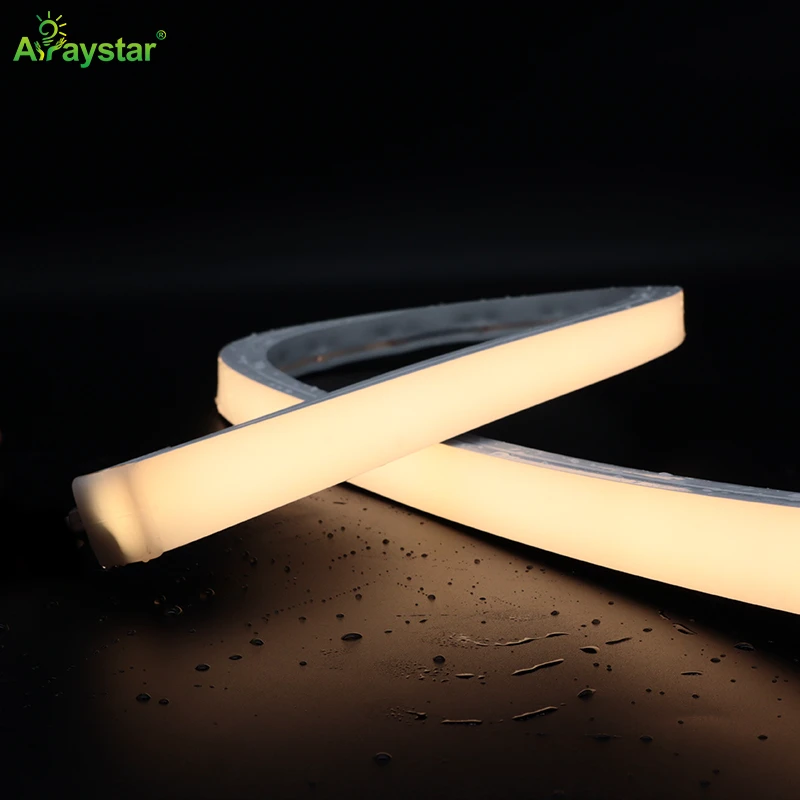
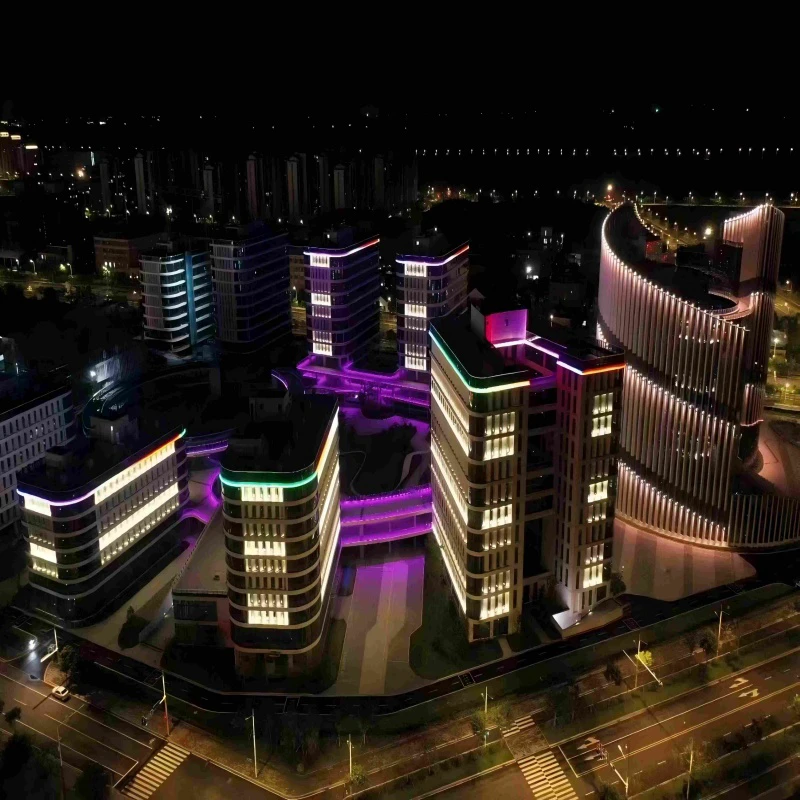
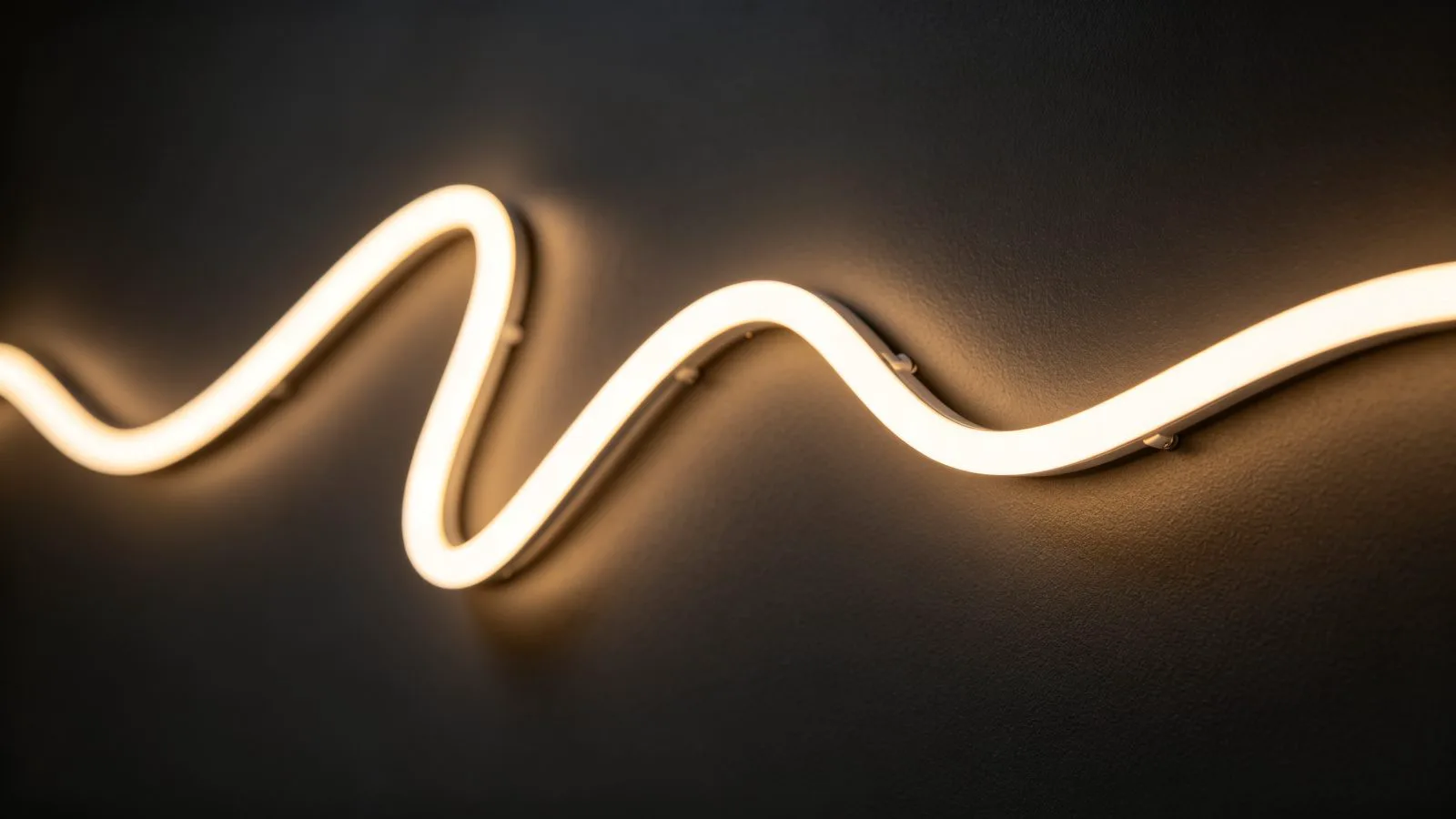
IP67 Waterproof LED Neon Strip for Outdoor Sign and Facade Lighting
How Each Rating Is Achieved (Coating Types)
The IP rating of an LED strip is determined by how the PCB and LEDs are protected from the environment. There are four common protection methods, each corresponding to a different IP level: Bare PCB (IP20): No coating at all. The LED chips and copper pads are fully exposed. This gives the best heat dissipation and easiest soldering, but zero water protection. Suitable only for dry, dust-controlled indoor environments. Silicone Coating (IP65): A thin layer of silicone resin (typically 0.3-0.5mm) is sprayed or dipped onto the PCB surface, covering the LEDs and components. The copper contact pads remain exposed for soldering, but you must scrape away the coating before connecting. IP65 coating resists water jets and rain but is not designed for immersion. Silicone Tube / Sleeve (IP67): The LED strip is inserted into a transparent silicone tube, and the ends are sealed with silicone end caps and adhesive. This creates a fully sealed barrier that can withstand temporary immersion. IP67 strips are the most popular choice for outdoor lighting, building facades, and signage because they offer excellent protection without excessive cost. Full Silicone Extrusion / Epoxy (IP68): The entire strip is co-extruded in solid silicone or encapsulated in epoxy resin, creating a monolithic waterproof body. IP68 strips can be permanently submerged underwater and are used for swimming pools, fountains, ponds, and marine applications. The tradeoff is reduced heat dissipation (the thick coating insulates the LEDs) and more difficult installation (cutting requires re-sealing with specialized kits). Key tip: The IP rating only applies to the strip body itself. The connection points (where you cut, solder, or use connectors) are the weak points. Always use waterproof connectors, heat-shrink tubing, or silicone sealant at every joint to maintain the IP rating in the field.
How to Choose the Right IP Rating for Your Project
Selecting the correct IP rating comes down to three questions: Where will it be installed? Will it get wet? How much maintenance access will you have? Dry indoor (living room, bedroom, office, retail ceiling): IP20 is sufficient and preferred. The bare PCB runs coolest, lasts longest, and costs less. There is no benefit to a waterproof coating in a dry environment—it only adds cost and reduces heat dissipation. Humid indoor (kitchen, bathroom, laundry, indoor pool room): IP65 is the sweet spot. It resists steam, splashes, and occasional cleaning with a damp cloth, while still allowing reasonable heat dissipation. For bathroom mirror lighting or kitchen under-cabinet lighting, IP65 is the standard choice. Covered outdoor (patio ceiling, porch, gazebo, under-eave): IP65 or IP65+ depending on exposure. If the strip is fully protected from direct rain but exposed to humidity and occasional spray, IP65 works. If there is any chance of direct rain hit or wind-driven rain, step up to IP67. Exposed outdoor (building facade, sign letters, garden path, fence, rooftop): IP67 is the minimum. The strip will be exposed to rain, snow, dust, and temperature extremes. IP67 silicone tube protection ensures the strip survives years of outdoor exposure. For sign lighting and architectural facade lighting, IP67 is the industry standard. Underwater or permanent wet (swimming pool, fountain, pond, boat, spa): IP68 is required. Only full silicone extrusion or epoxy encapsulation can withstand continuous immersion. Make sure the power supply and connectors are also rated for underwater use—an IP68 strip connected with an IP20 connector will fail at the joint. High-temperature environments (near ovens, grills, industrial heat sources): Consider that higher IP coatings trap heat. If the strip will be near a heat source, use a lower IP rating with an aluminum channel for heat sinking, or choose a high-temperature-rated silicone coating. When in doubt, go one level higher. The cost difference between IP65 and IP67 is usually 20-30%, but the cost of replacing a failed strip installed high on a building facade is far more.
Common Mistakes with Waterproof LED Strips
Mistake 1: Using IP20 strips outdoors. This is the #1 cause of premature LED strip failure. Bare PCB strips corrode quickly when exposed to humidity, even if they seem "protected" under a roof. Condensation alone will destroy an IP20 strip in 3-6 months outdoors. Always use IP65 minimum for any area with humidity, and IP67 for direct outdoor exposure. Mistake 2: Ignoring the connection points. An IP67 strip body is waterproof, but if you cut it and use a non-waterproof connector, the joint will leak and corrode. Every cut, splice, and connector must be re-sealed with silicone end caps, heat-shrink tubing with adhesive, or waterproof connector boxes. The weakest link determines the real IP rating of your installation. Mistake 3: Overpowering waterproof strips without heat sinking. IP67 and IP68 coatings insulate the LEDs, trapping heat. If you run a high-density IP67 strip (240+ LEDs/m or COB) at full brightness without an aluminum channel, the LEDs will overheat, causing accelerated lumen depreciation and color shift. Use aluminum profiles for any IP67+ strip running above 14.4W/m, and derate brightness by 10-20% for enclosed installations. Mistake 4: Assuming IP65 is submersible. IP65 resists water jets (like rain or a hose spray) but is NOT designed for immersion. Leaving an IP65 strip in standing water or puddles will cause water ingress through the coating edges. If the strip might sit in water, use IP67 or IP68. Mistake 5: Not testing before permanent installation. Always test the full strip (including all connections and joints) by powering it on and spraying it with water or submerging it briefly before you mount it permanently. It is much easier to fix a leaking connector before the strip is glued or screwed into place. Mistake 6: Using the wrong power supply rating. Outdoor installations require IP67-rated power supplies (not indoor IP20 supplies). The power supply is often the first component to fail outdoors. Use a waterproof LED driver with an IP67 rating, and mount it in a ventilated location away from direct sun and standing water.
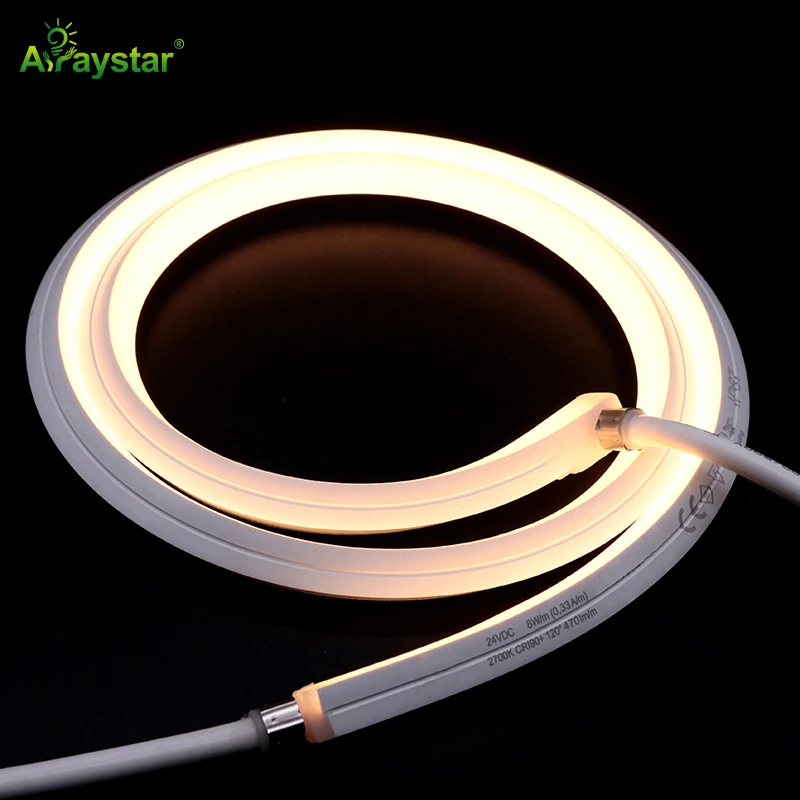
IP68 Full Silicone Extrusion LED Neon Strip for Pools, Fountains and Underwater Use
Product Recommendations
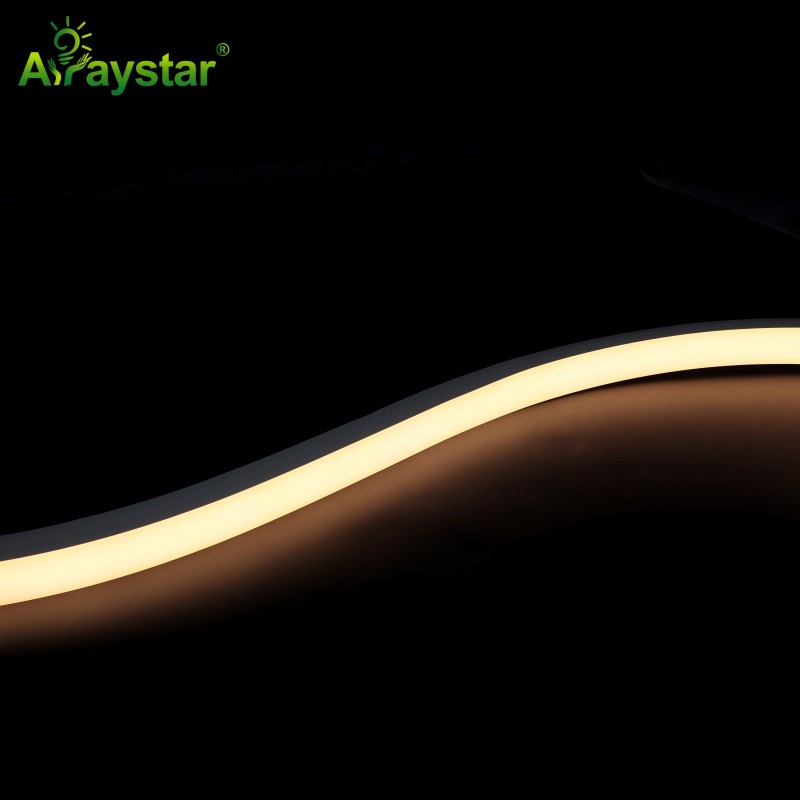
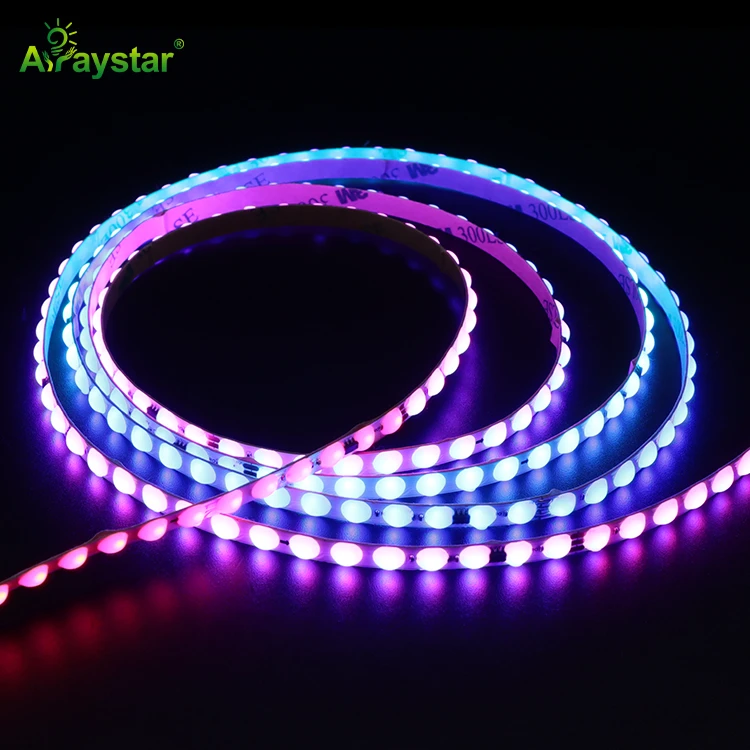
Explore our waterproof LED strip solutions for outdoor and wet-environment projects.
Frequently Asked Questions
Find answers to common questions about LED strip IP ratings.
❓ Can I use an IP65 LED strip in a bathroom shower area?
IP65 resists water jets and steam, making it suitable for bathroom mirror lighting and general bathroom use. However, for direct shower enclosure installation where the strip will be hit by direct water spray or potentially submerged, use IP67 or IP68. Always keep the power supply outside the wet zone.
❓ Will a higher IP rating make my LED strip last longer indoors?
Not necessarily. In dry indoor environments, IP20 strips actually last longer because the bare PCB dissipates heat better. Waterproof coatings (IP65+) trap heat, which can accelerate lumen depreciation if the strip is run at high brightness without heat sinking. Use the lowest IP rating that meets your environment's needs.
❓ How do I maintain the IP rating after cutting an IP67 strip?
After cutting an IP67 silicone tube strip, you must re-seal the cut end. Use a silicone end cap with adhesive, or apply a bead of neutral-cure silicone sealant around the cut end and let it cure for 24 hours before exposing to water. For solder joints, use heat-shrink tubing with adhesive inner lining or a waterproof connector box. Never leave a cut end exposed outdoors.
❓ What is the difference between IP67 and IP68 for outdoor use?
IP67 is rated for temporary immersion up to 1 meter for 30 minutes, which covers rain, snow, puddles, and accidental submersion—more than enough for most outdoor architectural and sign lighting. IP68 is rated for continuous immersion beyond 1 meter under manufacturer-specified conditions, and is needed for pools, fountains, ponds, and underwater installations. IP68 costs roughly 30-50% more than IP67.
❓ Can I install an IP67 strip inside an aluminum channel outdoors?
Yes, and it is recommended for high-density strips. The aluminum channel provides heat sinking (critical for IP67+ strips that trap heat) and additional mechanical protection. Ensure the channel has drainage holes at the bottom to prevent water pooling, and use a silicone or frosted diffuser cover. The strip's IP67 rating remains valid inside the channel as long as the strip body and connections are properly sealed.
Conclusion
IP rating is the single most important spec when choosing an LED strip for a specific environment. IP20 for dry indoor rooms, IP65 for humid kitchens and bathrooms, IP67 for general outdoor and sign lighting, and IP68 for underwater and permanent wet installations. The rating only applies to the strip body—connection points are the weak link and must be re-sealed after every cut. Higher IP ratings cost more and run hotter, so choose the lowest rating that meets your environment's needs. When in doubt, go one level higher: the cost of replacing a failed outdoor strip far exceeds the upfront savings of an under-rated strip.
Not Sure Which IP Rating You Need?
Contact Arraystar LED for free technical consultation and custom waterproof LED strip quotes.
Get a Free Quote →About the Manufacturer
ArrayStar LED is a professional LED strip manufacturer in Shenzhen, China since 2010, serving 80+ countries. We support custom OEM/ODM projects (custom CCT, CRI, PCB, logo, packaging) and wholesale supply for distributors and contractors worldwide. Our IP67 and IP68 waterproof strips are CE, RoHS, and ERP certified.