LED Strip Retrofit: Replacing T5/T8 Fluorescent in Display Cases & Signs
- 2026-09-19 13:17
- /
- Arraystar
Replacing T5/T8 fluorescent or old halogens in display cases, shelves and cabinets with LED strip improves colour, cuts heat and maintenance, and removes ballast hum — but it is a system change, not a lamp swap: remove or bypass the old ballast, fit constant-voltage drivers matched to total LED wattage, mount high-CRI strip in slim channels for even glare-free light, and re-use or upgrade wiring and diffusers. Match CCT/CRI to the merchandise and provide adequate (now much smaller) heat management.
Why Retrofit Fluorescent Cases to LED
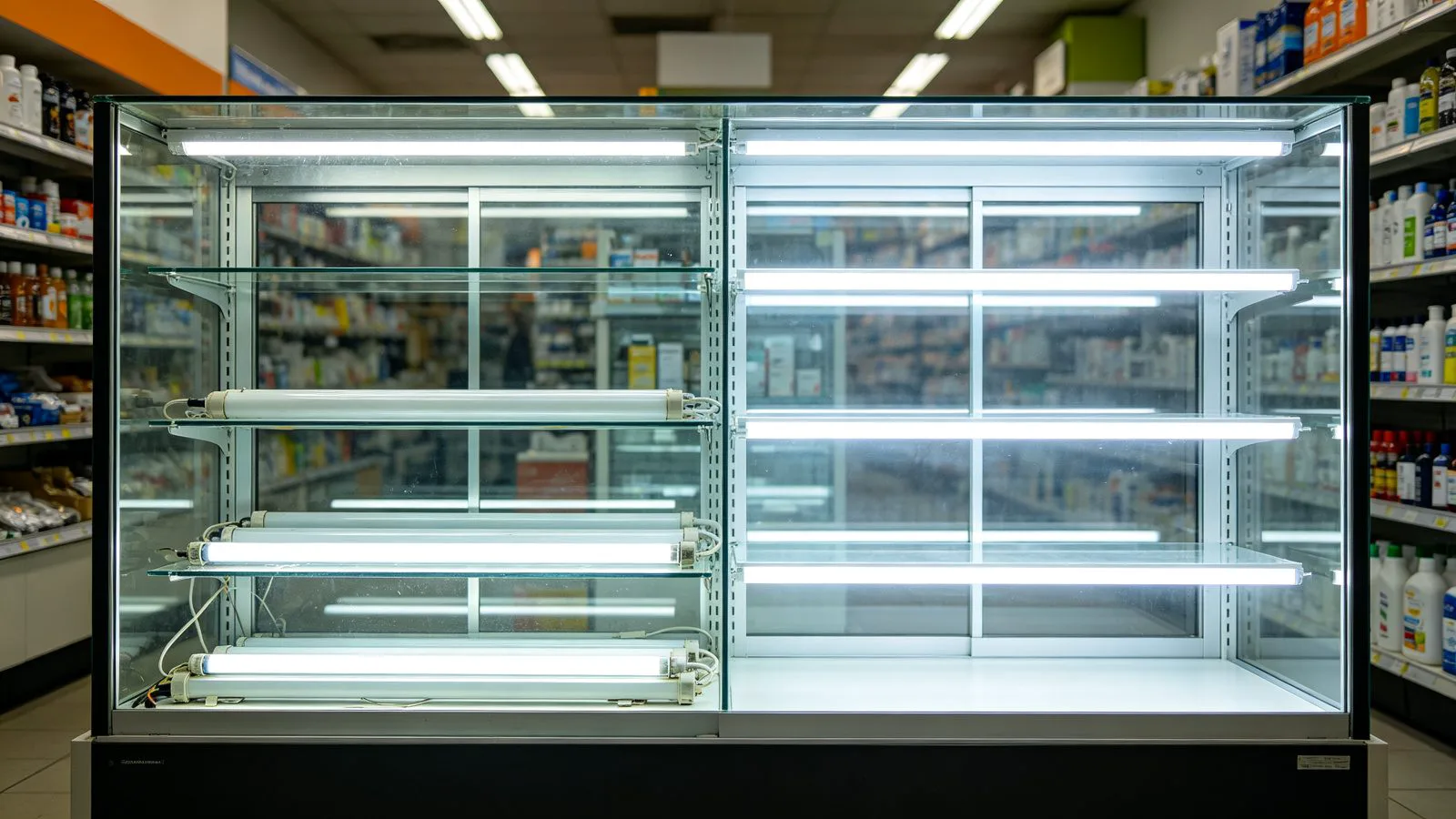
T5/T5HO and T8 fluorescent linear lamps have long lit retail display cases, under-shelf fixtures, sign cabinets and coves, but they have real drawbacks: ballast energy and failure, warm operation that heats merchandise and food, UV that fades sensitive goods, hum, flicker, dimming difficulty, shorter life and poorer colour control. LED strip in slim channels removes most of these, uses a fraction of the power, runs cool enough to sit close to products, offers high CRI and tunable colour, dims smoothly and lasts far longer with almost no maintenance inside sealed cases that are costly to open. The retrofit is usually straightforward because the geometry is already linear.
- Energy and heat: far lower watts and almost no heat on merchandise.
- No UV/fading: protects food, textiles, prints and sensitive goods.
- Better colour: CRI 90/95+ and tuned CCT by product type.
- No ballast hum/flicker, smooth dimming, instant start.
- Long life, low maintenance inside hard-to-open cases.
Electrical Retrofit: Drivers and Ballast
Fluorescent vs LED retrofit electrical layout
| Item | Fluorescent | LED strip retrofit |
|---|---|---|
| Source | T5/T8 lamp + socket | High-CRI strip in slim channel |
| Control gear | Ballast (magnetic/electronic) | Constant-voltage driver (12/24/48 V) |
| Wiring | High-voltage lamp circuit | SELV low-voltage from driver |
| Dimming | Limited/noisy | 0-10 V/DALI/triac smooth dimming |
| Failure part | Lamps + ballast | Long-life strip + accessible driver |
| Load | High wattage | Sum W/m × m + ~20% margin |
LED strip is low-voltage and must be powered by a constant-voltage driver, not the fluorescent ballast. In a hard-wired retrofit the old ballast is removed or bypassed (line voltage goes straight to the new LED driver); do not leave a magnetic ballast in circuit as a series component. Size the driver to the total strip wattage plus ~20% headroom, and locate drivers accessibly (outside sealed cases where possible) because they are the most serviceable component. For plug-in furniture, small desktop drivers replace the old fluorescent supply. A qualified electrician should make the mains-side changes.
Mechanical and Optical Conversion
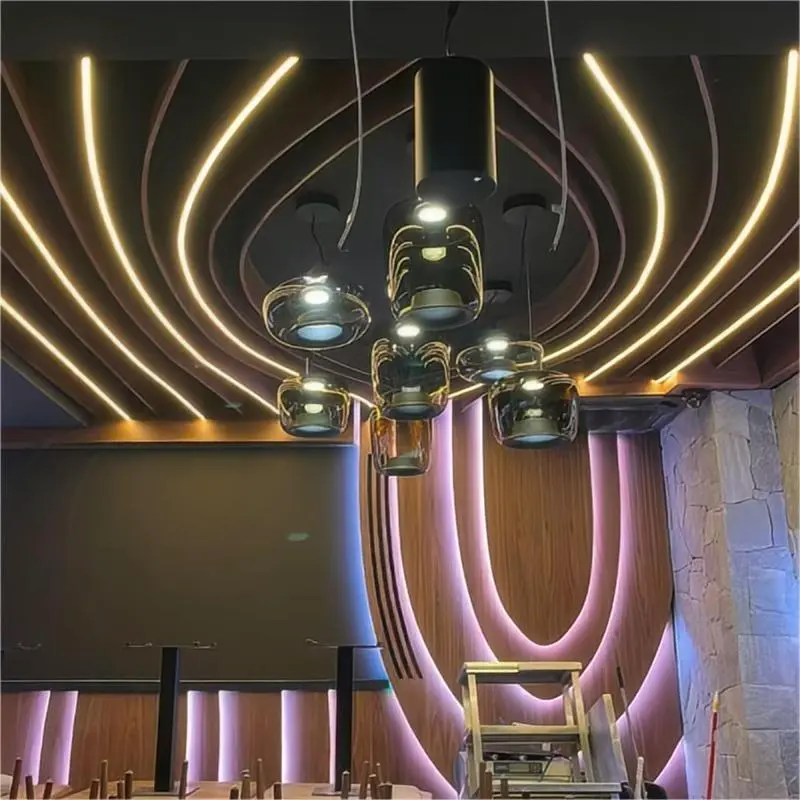
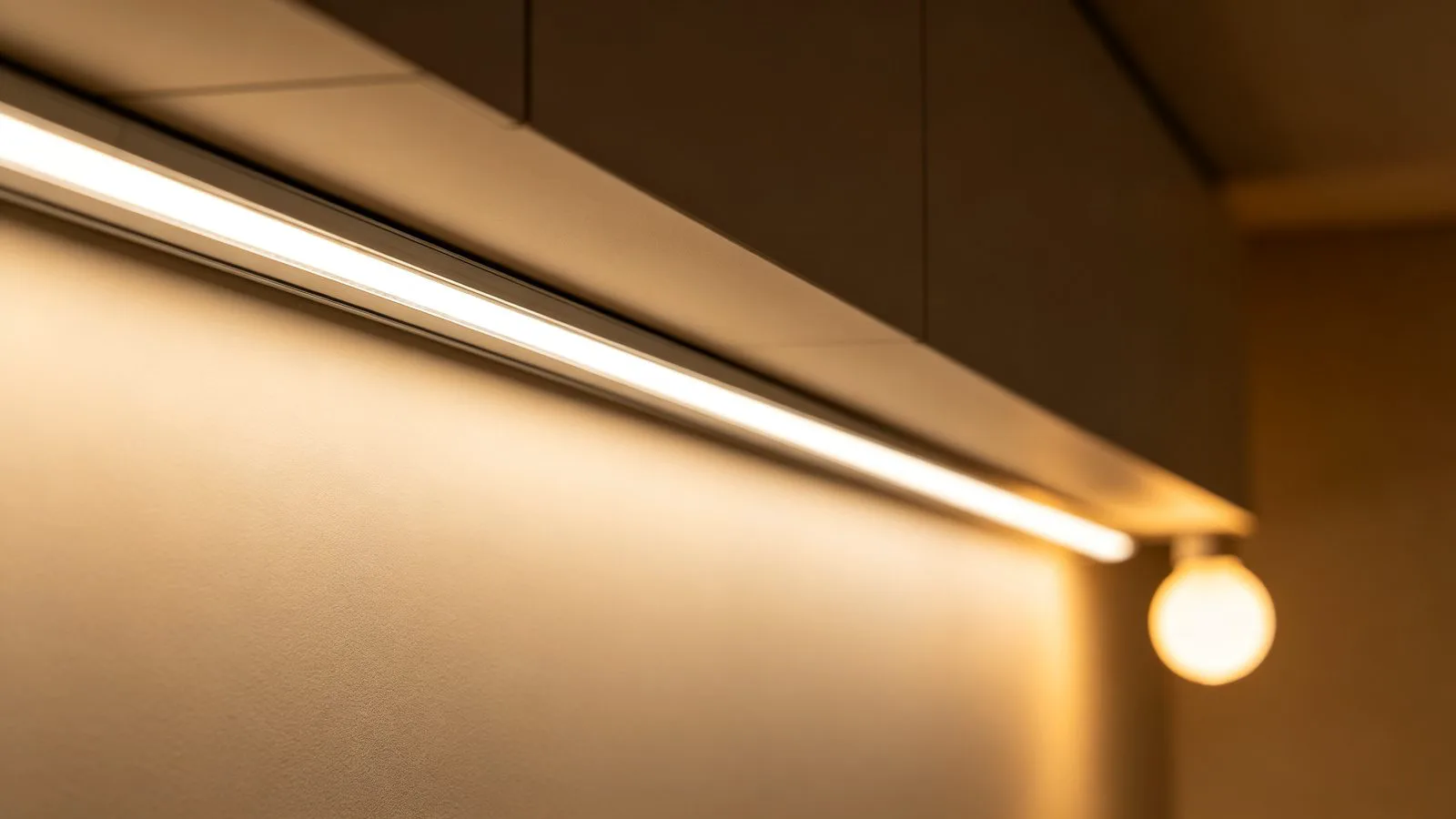
- Re-use the linear slot: fluorescent cases already have a mounting position; fit slim aluminum channels with opal diffusers in or near the old lamp position.
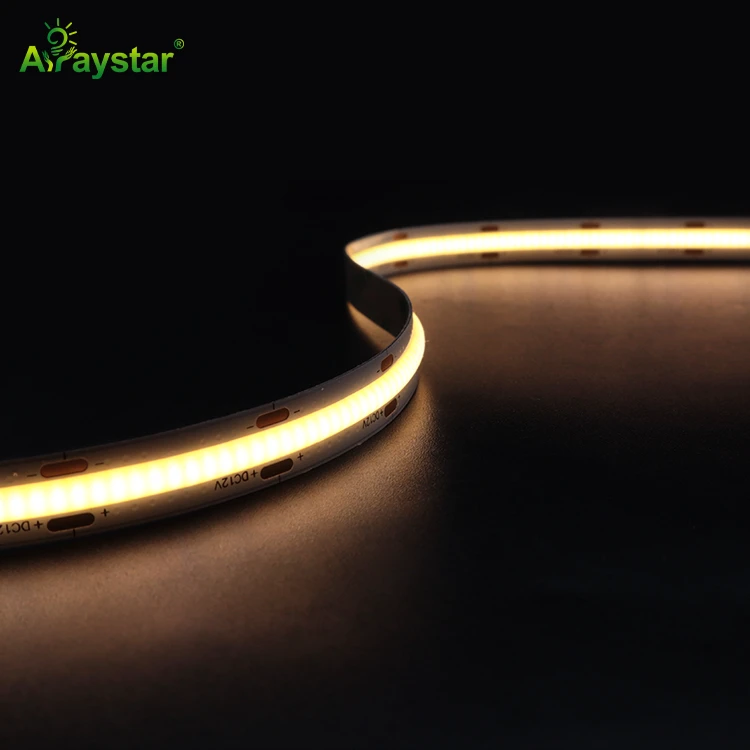
- Improve uniformity: continuous COB/dense strip removes the dark gaps and lamp-end shadows of discrete fluorescents; use shelf-front or top-rail channels to light goods vertically.
- Control glare on glass: hide the source and angle it at merchandise to avoid reflections (see our jewellery guide); opal diffusers in deep channels.
- Choose colour by product: high CRI (≥90, 95 for jewellery/food), CCT tuned to the goods (cool for diamonds/seafood, warm for gold/bakery).
- Re-use existing diffusers/lenses if compatible, or replace yellowed/cracked covers; ensure the LED channel fits the housing.
- Manage the small heat load: even low-wattage strip in a sealed case benefits of an aluminum channel; avoid dense high-power strip in tiny enclosures.
Retrofit planning checklist
| Area | Check |
|---|---|
| Driver | CV, total W + 20%, accessible, dimmable if needed |
| Ballast | Removed/bypassed by electrician |
| Wiring | SELV low-voltage, correct cable/feeds |
| Channel | Slim opal profile fits old slot, glare-controlled |
| Colour | CRI 90/95+, CCT matched to merchandise |
| Dimming | Compatible driver/control, flicker-free |
| Thermal | Aluminum channel, no over-dense sealed runs |
Project Steps and Verification
- Survey the cases: lamp type/wattage, ballast, wiring access, dimensions, merchandise and desired CCT/CRI/level.
- Calculate LED load and driver positions; plan feed points for long cases to avoid voltage drop.
- Prototype one case first: fit a sample channel, check uniformity, colour, glare through the glass and dimming before rolling out.
- Have an electrician remove/bypass ballasts and install drivers to local code and safety standards.
- Fit channels, strip and diffusers, wire low-voltage runs, label and secure cables.
- Power-test each case: brightness uniformity, colour consistency, smooth dimming, no flicker, driver temperature.
- Document and commission: driver models, spare parts, controls; consider controls/occupancy savings.
We supply high-CRI strip in slim opal channels ideal for replacing T5/T8 in cases and cabinets, plus matched constant-voltage dimmable drivers and connectors, and we can help calculate load and layout from your case dimensions. Send photos and dimensions of the existing fixtures and the merchandise type and we will specify a clean, cool, colour-accurate retrofit.
Recommended Products
Frequently Asked Questions
Do I remove the fluorescent ballast when converting to LED strip?
For a hard-wired conversion to constant-voltage LED strip, yes — the old ballast should be removed or bypassed so line voltage feeds the new LED driver directly; LED strip runs on low-voltage DC and cannot be driven through a fluorescent ballast. Have a qualified electrician perform the mains-side change and fit a correctly sized constant-voltage driver.
What wattage LED driver do I need for a display case?
Add the strip watts per metre times the total metres in the case, then size the driver at roughly 80% of its rated capacity (i.e. total LED watts plus about 20% headroom). Use a dimmable driver if the case will dim, locate it accessibly/outside the sealed case, and account for multiple cases on one driver with correct voltage drop.
Can LED strip replace T5 in refrigerated or food cases?
Yes, and it is an excellent upgrade because LED runs cool (reducing heat on food and refrigeration load), contains no UV and can use food-appropriate high CRI. Use sealed/IP-rated strip or vapor-tight channels suited to the moist, cool and washdown environment, with cold-rated drivers or drivers mounted outside the cold envelope (see our cold-storage guide).
What CRI and CCT should display-case LED use?
Use CRI 90+ generally and 95+ for jewellery, cosmetics and fresh food where colour drives sales. Pick CCT by merchandise: cool white for diamonds, silver and seafood; warm for gold, bakery and wood goods; neutral for general retail and mixed products. Tunable white lets one system cover changing displays.
Will LED strip fit where the fluorescent tube was?
Often yes, because both are linear: slim aluminum channels with opal diffusers fit into or over existing lamp slots and sign cabinets. Measure the old fixture's cavity and diffuser, choose a channel that fits, and prototype one case to confirm uniformity and glare through the glass before converting the whole estate.
Retrofitting display cases from fluorescent to LED?
We supply high-CRI slim-channel strip and matched dimmable constant-voltage drivers ideal for replacing T5/T8, with load and layout calculations. Send case dimensions, existing fixtures and merchandise type for a tailored retrofit spec.
Email: info@arraystarled.com | Phone: +86-0755-2103-6746 | WhatsApp: 0086 1581 8514 077
Need to size your power supply? Use our LED Strip Power Calculator to find the right driver in seconds.