
48V Neon Flex for Long Mall Atrium and Corridor Runs
- 2026-10-09 18:40
- /
- Arraystar LED
Long continuous neon in mall atriums and corridors is usually limited by voltage drop, not by the LEDs. Moving from 12/24V to 48V roughly doubles the usable single-feed length, which removes most of the visible power feeds and driver drops that break up a clean architectural line. It is the cleanest solution when the design demands uninterrupted runs and the install uses safety extra-low voltage.

Why Long Architectural Runs Keep Failing
Designers love a single unbroken line of light tracing a mall corridor or ringing an atrium void. Installers hate it, because every long low-voltage run eventually dims at the far end. You can add feed cables and inject power at intervals, but each feed is a visible junction, a cable to hide and another potential failure point in a finished ceiling.
The root cause is voltage drop: as current travels along the copper, resistance steals voltage, and the LEDs at the end of the run receive less than the LEDs at the start. Longer runs and higher currents make it worse.
How 48V Buys You More Length
Voltage drop is proportional to current, and power equals voltage times current. For the same wattage, doubling the voltage halves the current, which quarters the resistive loss in the cable for a given conductor. In practice that means a 48V system can drive a far longer continuous run from one feed than a 24V system before the far end becomes visibly dim.
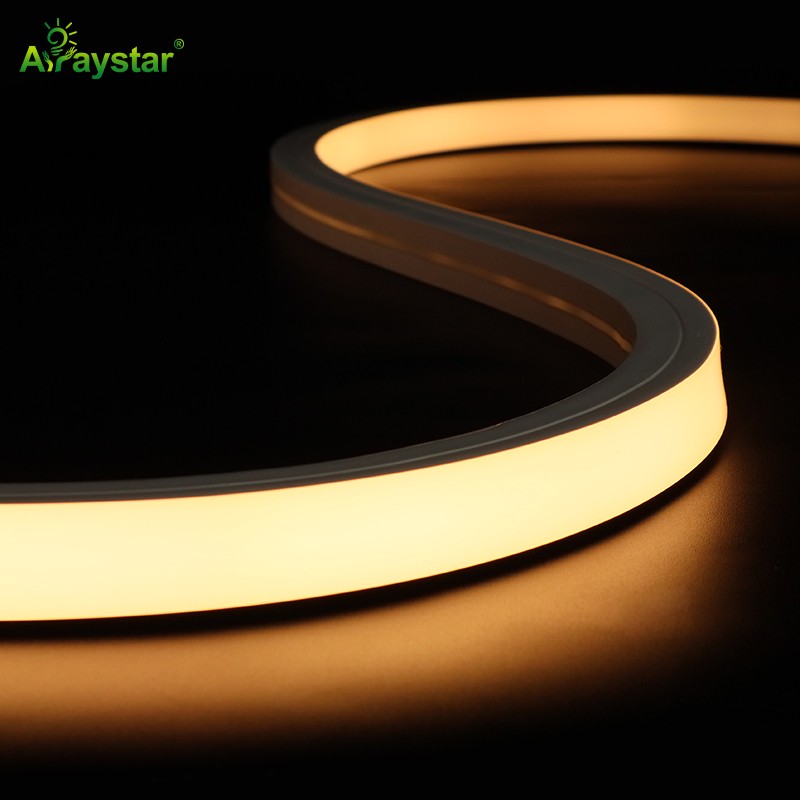
The ART-NS2020-48 is the 48V neon I specify for these long architectural runs. It keeps the safety extra-low-voltage benefits of low-voltage neon while extending the distance between power feeds, which is exactly what atrium and corridor work needs.
Where 48V Beats 24V (and Where It Doesn't)
48V is a distance tool, not a universal upgrade.
| Factor | 12/24V neon | 48V neon |
|---|---|---|
| Max single-feed length | Shorter; needs frequent feeds | Roughly far longer between feeds |
| Visible junctions per run | More | Fewer, cleaner lines |
| Safety voltage class | SELV | Still SELV (under the SELV ceiling in most regions) |
| Product / driver availability | Widest range | Smaller but growing range |
| Best fit | Short signs, letters | Long architectural and corridor runs |
I do not specify 48V for a small channel letter where a 12V run is a metre long; there is no benefit and the product range is narrower. 48V earns its place when the single-feed length of 24V would force feeds the design cannot hide.
Typical Mall and Atrium Applications
- Continuous corridor cove lines that run for tens of metres.
- Atrium void perimeter rings viewed from multiple floors.
- Long balustrade and handrail grazing lines.
- Feature ceiling contours that must not show power breaks.
- Large retail fascias with uninterrupted horizontal runs.
In these spaces the architecture is the product, and a visible driver or feed every five metres destroys the effect the designer specified. Reducing feed points is not just an electrical convenience; it is often the difference between the design being buildable as drawn and being value-engineered into a series of short segments.
Doing the Voltage-Drop Sums Properly
I never assume a product's claimed run length; I calculate from the actual wattage per metre, total length, conductor cross-section and acceptable end-of-run voltage. The goal is to keep the far end within the LED's tolerated voltage window so brightness is uniform. Even at 48V, an extremely long or high-wattage run can need a mid-feed, and symmetry (feeding from both ends) is often the neatest way to balance a long line.
- Use the real loaded wattage, not the LED's theoretical figure.
- Account for cable length from the driver as well as the strip itself.
- Feed long symmetrical runs from both ends or the centre to balance brightness.
- Confirm the 48V driver matches the product and dimming method.
Safety, Dimming and Compatibility
48V remains in the safety extra-low-voltage band in most regulations, which keeps installation simpler than mains voltage, but regional rules vary and I always confirm local requirements. Dimming must be matched to the 48V driver; I specify compatible dimmable drivers or control protocols up front rather than discovering on site that a favourite dimmer does not play with the longer-voltage system.
Planning the Driver Layout
Fewer feeds does not mean no planning. I locate 48V drivers in accessible ceiling risers or service cupboards, size them with headroom for the longer runs, and keep the mains-to-48V conversion out of sight but reachable. On multi-floor atriums I coordinate driver positions with the ceiling grid early, because moving a long neon run later is far harder than relocating a conventional downlight.
Specifying a Long-Run 48V Project
Provide the single longest uninterrupted length, the wattage per metre, the mounting route and where drivers can physically be located. From that I can confirm whether 48V clears the run with no visible feed or whether a small number of symmetric feeds are still needed. We supply the NS2020-48 and compatible drivers and can help with the voltage-drop layout so the atrium line stays uniform from the first metre to the last.
The Total Installed Cost, Not Just the Strip Price
48V neon and its drivers can carry a slightly higher unit price than commodity 24V strip, which is where some projects stall at the quotation stage. I always price the whole run instead of the metre rate, because that is where 48V recovers the difference and then some.
- Fewer drivers and power supplies to purchase and mount across a long corridor or atrium.
- Less power cable and fewer concealed drops routed through finished ceilings.
- Fewer junction boxes, connectors and penetrations that need fire and weather sealing.
- Lower labour from not chasing hidden feed routes across the architecture.
- Fewer future failure points, which reduces call-outs over the warranty period.
On one atrium perimeter the 24V design needed feeds roughly every five metres, each requiring a ceiling penetration, a local driver and a concealed cable; the 48V design collapsed that to a handful of driver locations in service risers. When the electrician priced the labour and the ceiling contractor priced the penetrations and patching, the 48V scheme was cheaper overall despite the higher strip cost, and it delivered the unbroken line the architect actually wanted. The comparison only works on genuinely long runs; on a short sign the driver savings never materialise and 24V remains the economical choice. I present both layouts with their feed counts so the decision is made on installed cost and visual cleanliness rather than the per-metre price in isolation.
Recommended Products
Frequently Asked Questions
How much longer can 48V neon run than 24V?
For the same wattage, 48V draws roughly half the current of 24V, which greatly reduces voltage drop and allows a much longer single-feed run. The exact length depends on wattage per metre and conductor size, so it must be calculated, but in practice 48V often removes most of the mid-run feeds on long architectural lines.
Is 48V neon still safe to install like low voltage?
48V generally sits within the safety extra-low-voltage band used in most regions, so installation remains simpler than mains-voltage work, but local regulations differ and should be confirmed. The main change is using matched 48V drivers and compatible dimming rather than 12/24V gear.
When is 48V neon worth specifying?
When the design calls for long uninterrupted runs, such as mall corridors, atrium perimeters, balustrades and long ceiling contours, where 24V would force visible mid-run feeds. For short signs and channel letters a standard 12/24V product is perfectly adequate and offers a wider range.
Can a 48V neon run still dim at the far end?
It can on an extremely long or high-wattage run if voltage drop is not calculated. Work from real loaded wattage and conductor size, keep the far end within the LED voltage tolerance, and feed very long or symmetrical runs from both ends or the centre to balance brightness.
Where should 48V drivers be placed in a mall?
Locate them in accessible ceiling risers or service cupboards, out of sight but reachable for maintenance, and size them with headroom for the longer runs. Coordinate driver positions with the ceiling grid early, because relocating a long neon run after installation is difficult.
Need help with your LED project?
Get factory-direct pricing, free samples and engineering support within 24 hours.
Email: info@arraystarled.com | Phone: +86-0755-2103-6746 | WhatsApp: 0086 1581 8514 077
Need to size your power supply? Use our LED Strip Power Calculator to find the right driver in seconds.







