Backlit Onyx & Marble: LED Strip Guide for Translucent Stone
- 2026-09-19 13:17
- /
- Arraystar
Backlit onyx, alabaster and translucent stone glow beautifully only when the light is even and the stone's translucency is respected: test a sample of the actual slab for light transmission, use a uniform grid of consistent high-CRI strip with tight spacing and adequate set-back behind the stone, control hot spots with a diffuser/opal layer and equal LED-to-stone distance, manage heat, and choose CCT to enhance (not wash out) the veining. Every slab varies, so mock-up the exact panel before fabricating.
What Makes Translucent Stone Glow
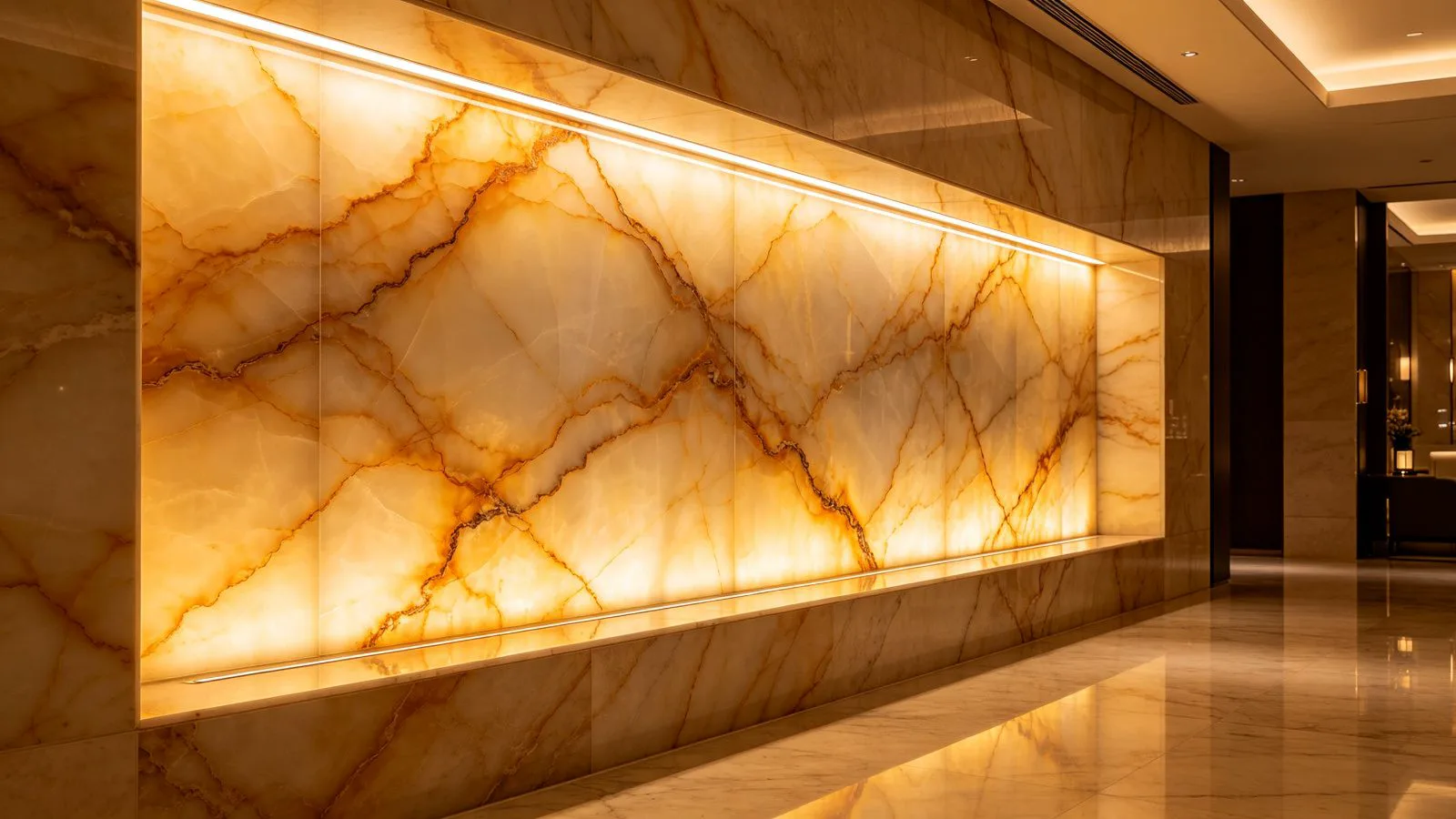
Onyx, alabaster, some marbles and engineered translucent stones transmit enough light to glow when backlit, revealing depth, veining and colour that disappear under front lighting. The effect depends on the stone's translucency and thickness — onyx and alabaster transmit well, most dense marble does not — and on the uniformity of the light field behind it. Because stone is a natural, variable material, two slabs of the same name differ in thickness, veining and light transmission; a lighting layout calculated without testing the actual panel risks hot spots (bright patches over the LEDs) or a flat, uneven glow. Backlighting is a close-collaboration between stone fabricator and lighting designer, and a physical mock-up is non-negotiable.
- Translucency varies by stone and slab: onyx/alabaster transmit; dense marble often will not.
- Thickness matters: thinner panels glow more but need structural support.
- Uniformity is everything: visible LED rows or hot spots ruin the effect.
- Colour temperature changes the stone: warm enhances honey onyx; cool can wash it out.
- Heat must be managed behind a sealed stone assembly.
Lighting Layout for Even Glow
Backlighting design parameters
| Parameter | Guidance |
|---|---|
| Stone test | Transmit light through the actual slab sample first |
| LED type | Dense COB or high-density strip, tight row spacing |
| LED-to-stone gap | Sufficient set-back/depth for light to blend |
| Row spacing | Matched to gap; tighter spacing = more even |
| Diffusion | Opal/white acrylic or diffuser film behind stone |
| Consistency | Same batch/bin, equal brightness across panel |
| CCT / CRI | Warm-to-neutral by stone; CRI 90+ (95 best) |
| Thermal | Aluminum backing, ventilation, efficient strip |
The physics is a spacing-to-distance problem similar to backlit signage: the LEDs must be close enough together and far enough from the stone (or behind a diffusing layer) that their individual cones of light overlap into a uniform field. As a rule, the distance from LED to the diffusing/stone surface and the spacing between LED rows are linked — shallow assemblies need very dense LED grids; deeper light boxes allow wider spacing. A white/opal acrylic or diffuser film between the LEDs and stone spreads light and hides the diode pattern, while the reflective white interior of the light box recycles light toward the panel.
Choosing Colour, Density and Product
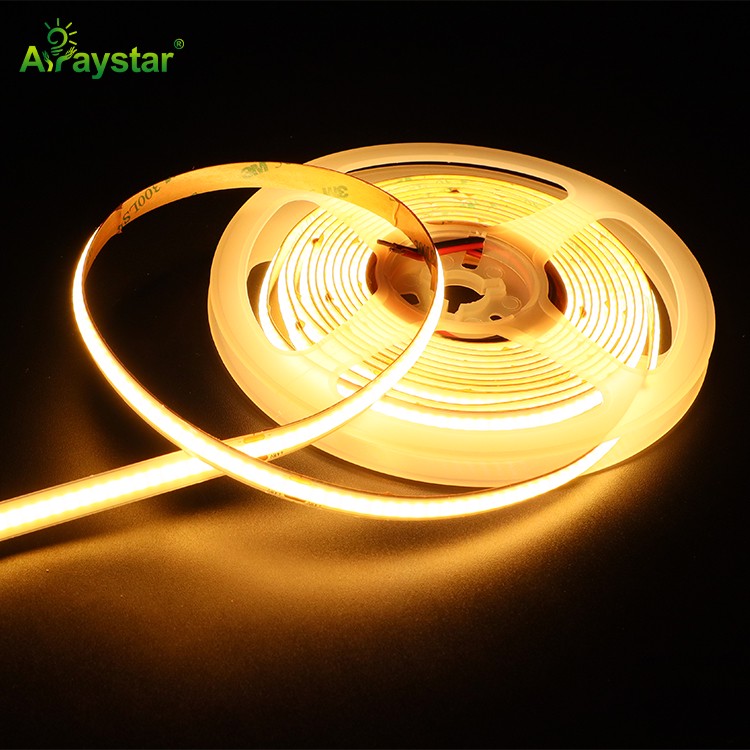
- Use dense COB or very high-density linear strip on a grid; COB's continuous emitting surface minimises hot spots in shallow panels.
- Specify high CRI (90+, ideally 95) and tight bin (SDCM) consistency across all reels so the panel has no colour patches.
- Choose CCT by stone colour: warm 2700–3000 K flatters honey/green onyx and alabaster; neutral 3500–4000 K suits whiter stones; mock up to decide and consider tunable white for flexibility.
- Dim the system with flicker-free drivers so the glow can be tuned from subtle backdrop to bright feature.
- Prefer efficient, low-wattage strip; backlit walls are large lit areas, and heat behind stone must be limited.
- Ensure all product is from one production run and laid out to balance brightness across the panel.
Stone types and backlighting tendency
| Stone | Backlight behaviour | Typical CCT |
|---|---|---|
| Honey/amber onyx | Excellent warm glow, strong veining | 2700–3000 K |
| Green/white onyx | Good translucency, colour-dependent | 3000–3500 K |
| Alabaster | Soft waxy diffusion | 2700–3000 K |
| Thin engineered translucent stone | Very even, predictable | Per finish |
| Dense granite/marble | Little/no transmission | Front-light instead |
Fabrication, Heat and Mock-Up
- Build a physical mock-up with the exact slab (and thickness), LED grid, set-back and diffuser before fabrication; approve uniformity and colour.
- Design a ventilated or thermally managed light box: mount strip on aluminum, keep drivers remote, and avoid trapping heat against the stone or adhesives.
- Provide maintenance access from the rear or via removable panels for drivers and any future service.
- Coordinate structural support for thin stone (honeycomb backing, glass laminates) without blocking light.
- Use a white reflective interior and opal diffuser; seal out dust while allowing required ventilation.
- Allow edge blending: borders and seams need closer LED runs or reflectors to avoid dark edges.
- Plan power feeds and voltage drop across the grid so centre and edges match in brightness.
We supply dense high-CRI COB and linear strip, bin-matched for large panels, plus efficient drivers and dimming suited to backlit stone light boxes. Because every slab differs, we strongly recommend a mock-up: send us the panel dimensions, stone type/thickness and available depth behind it, and ideally a sample, and we will design the LED grid, spacing and CCT for an even glow without hot spots.
Recommended Products
Frequently Asked Questions
Can all marble or onyx be backlit with LED strip?
No — only sufficiently translucent stones such as onyx, alabaster and some engineered/thin panels transmit light well; most dense marble and granite do not and should be front-lit. Translucency also varies between slabs and with thickness, so always test a sample of the actual slab by shining light through it before designing the backlighting.
How do you prevent LED hot spots behind backlit stone?
Use dense COB or high-density strip in a tight, evenly spaced grid, provide enough LED-to-stone set-back for light to blend (or a deeper light box), add an opal acrylic/diffuser film and a white reflective interior, keep all LEDs at equal distance and from the same bin, and approve the result on a physical mock-up of the exact slab.
What colour temperature is best for backlit onyx?
Warm white around 2700-3000 K typically flatters honey and amber onyx and alabaster by enhancing their warm tones and veining; neutral 3500-4000 K suits whiter or green stones. Because the stone filters and warms the light, always judge CCT on a mock-up through the actual slab; tunable white gives flexibility.
How thick should stone be for backlighting?
Thinner panels transmit more light and glow more evenly, but very thin natural stone needs structural support such as honeycomb backing or glass/stone laminates. The practical thickness depends on the stone type and panel size; your stone fabricator balances translucency against strength, and the LED density/set-back is then designed for the chosen thickness, validated on a sample.
How do you manage heat behind a backlit stone wall?
Use efficient low-wattage high-CRI strip mounted on aluminum in a light box with appropriate ventilation, keep drivers remote and accessible, and avoid sealing heat against the stone or its adhesives. Large backlit areas generate meaningful heat if over-specified, so right-sizing density and providing rear access protects both the stone and LED life.
Planning a backlit onyx or alabaster feature?
We supply dense bin-matched high-CRI COB, efficient drivers and dimming for stone light boxes, and design grid spacing/set-back around a mock-up of your slab. Send panel dimensions, stone type/thickness and available depth for an even-glow layout.
Email: info@arraystarled.com | Phone: +86-0755-2103-6746 | WhatsApp: 0086 1581 8514 077
Need to size your power supply? Use our LED Strip Power Calculator to find the right driver in seconds.