Stretch Ceiling & Backlit Fabric LED Strip Lighting Guide
- 2026-09-19 13:17
- /
- Arraystar
Backlit stretch (translucent fabric/PVC) ceilings deliver perfectly even, luminous surfaces when the LED grid behind them is designed for uniformity: space LED rows according to the gap between the membrane and the LED plane (closer spacing for shallow voids), use consistent high-CRI strip on a white reflective backing, dim with flicker-free drivers, keep the fabric clean and provide maintenance access. The ratio of row spacing to void depth is the critical number — get it wrong and the membrane shows stripes.
How Backlit Stretch Ceilings Work
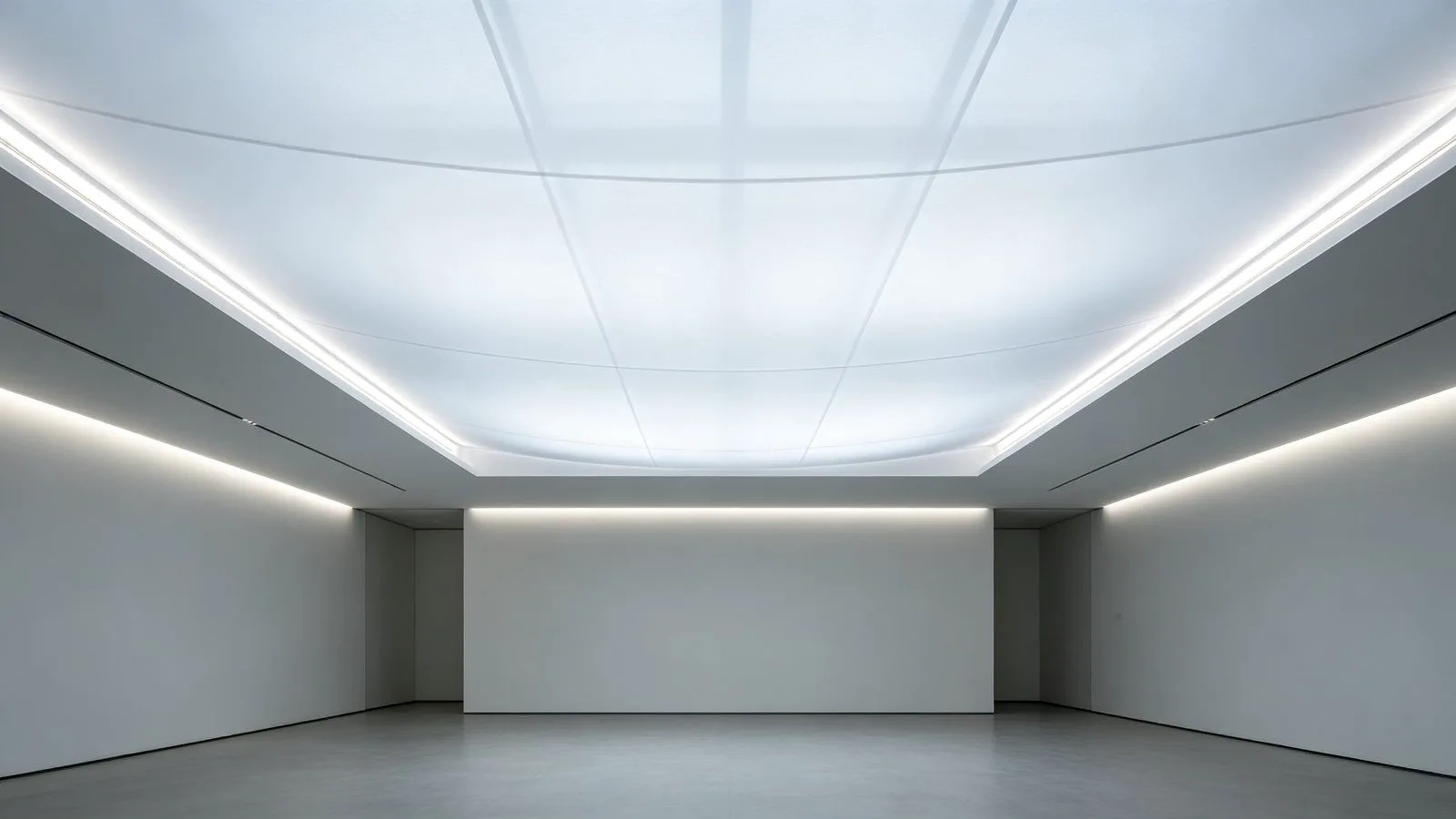
A stretch ceiling is a thin, tensioned membrane (translucent PVC or fabric) clipped into a perimeter profile; a translucent version becomes a luminous ceiling when a uniform field of light is installed in the void behind it. The membrane itself is a diffuser, so the design goal is to make the light reaching its back perfectly even — no visible rows, no brighter centre or dark edges. The governing relationship is between the spacing of the LED rows (or grid) and the depth of the void from the LEDs to the membrane: the deeper the void, the more light spreads and the wider the rows can be; shallow ceilings need a dense grid. Installers and membrane suppliers provide spacing/depth ratios for their systems, and these should drive the LED layout.
- The membrane is the diffuser; the LED field behind it must be uniform.
- Row spacing vs void depth is the critical ratio that prevents striping.
- Shallow voids need dense LEDs; deep voids allow wider spacing.
- White reflective backing recycles light and improves evenness.
- Access and thermal management are designed into the plenum.
Designing the LED Grid and Void
Uniformity design parameters
| Parameter | Guidance |
|---|---|
| Void depth (LED to membrane) | Set by ceiling build-up; defines spacing |
| Row/grid spacing | Per membrane supplier ratio for that depth |
| LED type | Dense COB or high-density linear strip |
| Backing | White/high-reflectance rear plane |
| Consistency | Same bin/batch, equal drive current |
| Brightness target | Tunable/dimmable; luminous ceilings are large |
| CCT / CRI | Per design; CRI 90+, tunable white common |
| Drivers | Flicker-free, remote, accessible, low heat |
As a conceptual guide (not a substitute for the membrane maker's ratio), uniform backlighting requires LED row spacing comparable to or less than the light-travel distance to the diffuser: in a very shallow void, rows may need to be quite close together or use dense COB/diffuser panels, while a plenum of 150–300 mm permits wider spacing. Edges, where the membrane meets the wall profile, need attention to avoid a dark border, and penetrations (sprinklers, vents, sensors) require local LED planning. Always confirm the ratio and light loss with the stretch-ceiling system and light a test bay before committing.
Product, Colour and Control Choices
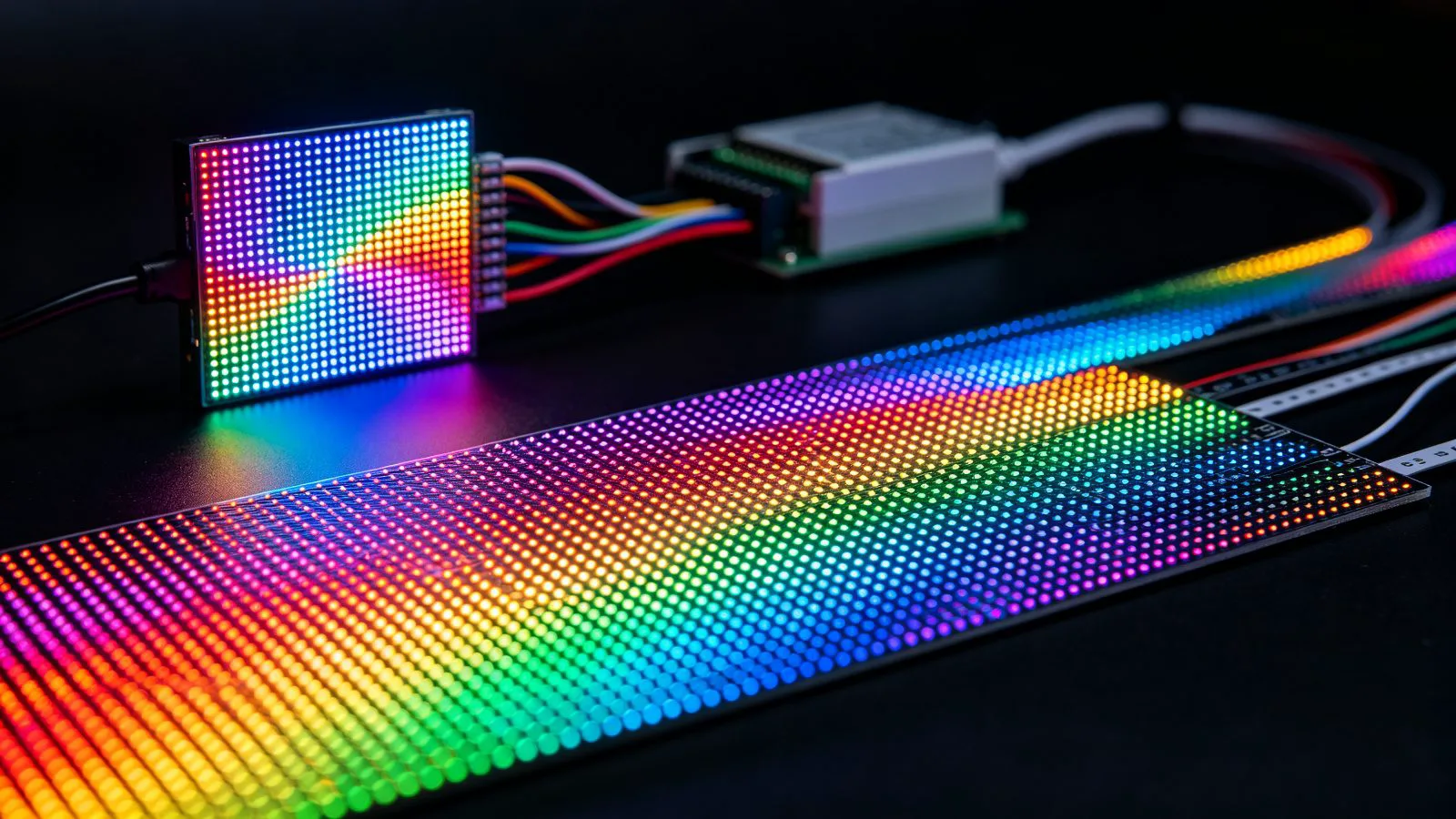
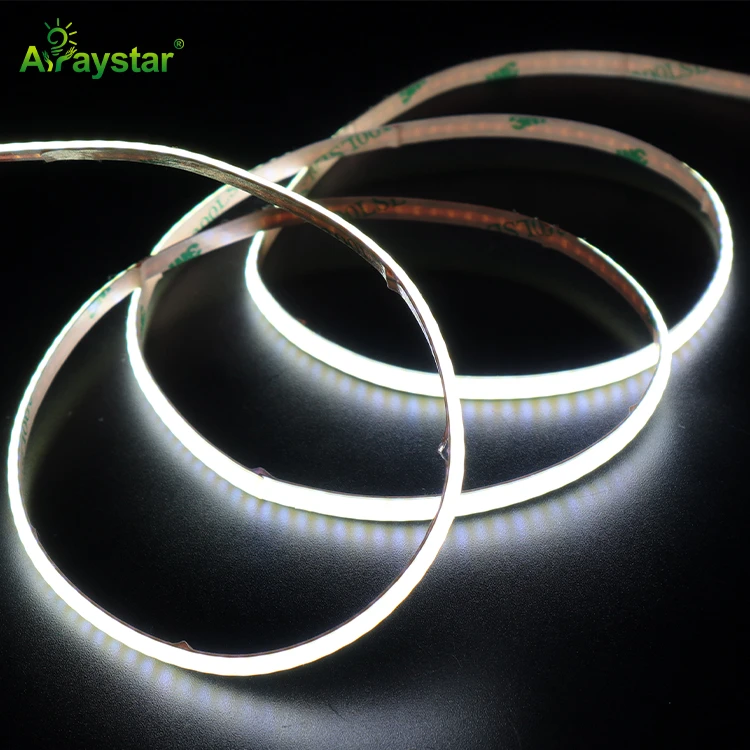
- Choose dense COB or high-density strip to minimise the appearance of individual emitters; COB is especially effective in shallow plenums.
- Specify bin-matched, high-CRI (90+) product from one production run so a large ceiling has no colour patches.
- Tunable-white systems are popular for luminous ceilings: cool bright for day, warm for evening, with circadian scheduling in wellness/office settings.
- Use flicker-free dimmable drivers; luminous ceilings are often dimmed rather than run at full output.
- Right-size brightness: a whole glowing ceiling is a large emitting area and rarely needs extreme lumens; evenness and comfort beat raw brightness.
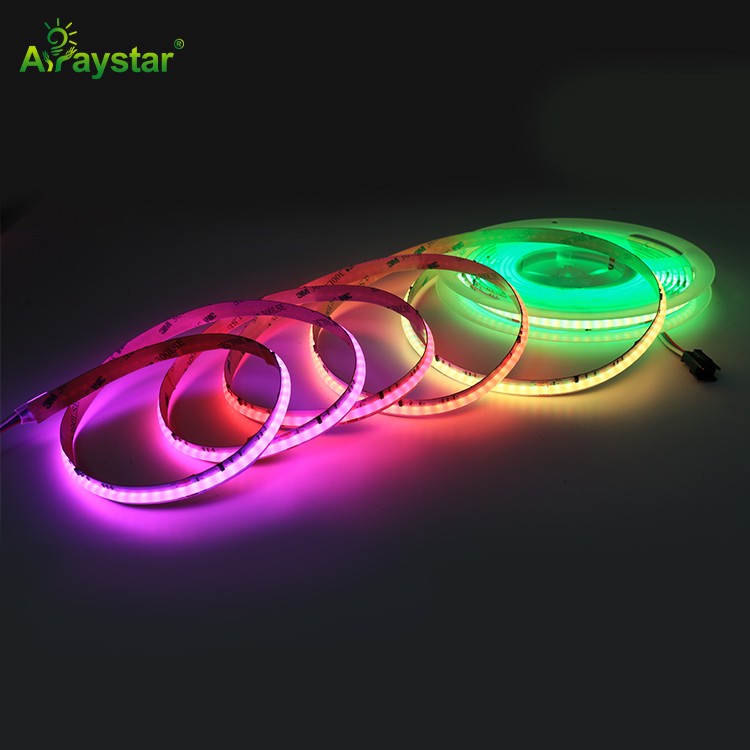
- Consider RGBW only where coloured scenes are genuinely needed; white quality should remain high for normal use.
Application colour guidance
| Space | Typical approach |
|---|---|
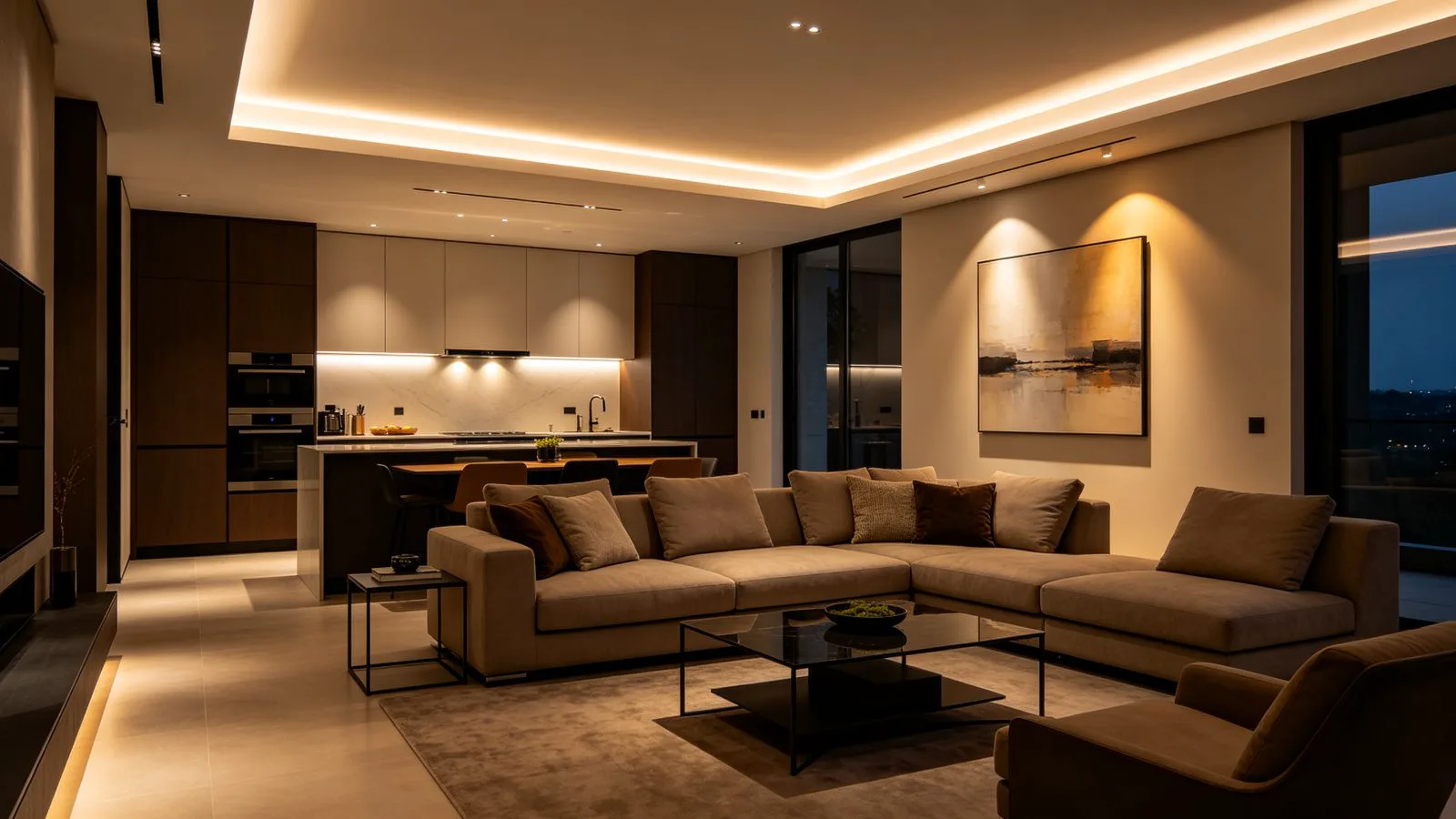
| Residential feature/cove | Warm/tunable, soft even glow |
| Office / wellness | Tunable white, circadian, CRI 90+ |
| Retail / hospitality | Brand-tuned, dimmable scenes |
| Spa / bedroom | Warm low brightness, gentle |
| Commercial lobby | High evenness, statement brightness |
Installation, Access and Common Faults
- Coordinate trades early: the ceiling profile, void depth, LED grid and penetrations are designed together.
- Mount strip on white aluminum rails or a reflective rear panel that also dissipates heat; keep the plenum ventilated.
- Locate drivers and junctions in serviceable zones (perimeter, bulkheads, access hatches) since the membrane covers the field.
- Power in zones to manage voltage drop and allow section control/redundancy.
- Keep the membrane and void clean and dust-free before closing; debris behind a translucent ceiling is visible.
- Light a test bay to confirm no striping at the chosen spacing/depth before full installation.
- Avoid overheating and over-tensioning; respect membrane temperature limits and LED thermal requirements.
We supply dense, bin-matched high-CRI COB and linear strip, flicker-free dimmable/tunable drivers and the layout support for backlit stretch ceilings, including grid spacing guidance for a given void depth. Send us the ceiling area, available plenum depth, membrane type and desired colour/control and we will design a stripe-free luminous ceiling with serviceable driver placement.
Recommended Products
Frequently Asked Questions
How far apart should LED strips be behind a stretch ceiling?
Spacing is set by the void depth between the LEDs and the translucent membrane using the membrane supplier's spacing-to-depth ratio: shallow voids need close rows or dense COB, while deeper plenums (often 150-300 mm) allow wider spacing. Conceptually, row spacing should be comparable to or less than the light-travel distance to the diffuser; always light a test bay to confirm no striping.
Which LED strip is best for a backlit fabric ceiling?
Dense COB or high-density linear strip from a single bin-matched, high-CRI (90+) production run, mounted on white aluminum/reflective backing for evenness, with flicker-free dimmable (and often tunable-white) drivers. COB is particularly good in shallow plenums because its continuous emitter hides individual dots.
Why can I see stripes or rows through my stretch ceiling?
Visible striping means the LED rows are too wide apart for the void depth (light has not blended before reaching the membrane), the LEDs are too close to the fabric, density is too low, or the backing is not reflective. Tighten row spacing, increase void depth, use denser COB or an additional diffuser and ensure a white reflective rear plane; confirm on a mock-up.
Can you repair LEDs behind a finished stretch ceiling?
Stretch membranes are removable/reinstallable by a trained installer using the harpoon/profile system, and drivers should be placed in accessible perimeter zones or hatches, but the LED field in the centre is harder to reach. Design with reliable long-life strip, zoned power, accessible drivers and good thermal management to minimise the need to open the ceiling.
What colour temperature suits a luminous stretch ceiling?
It depends on the space: warm 2700-3000 K for residential and spa calm, neutral/cool and tunable-white for offices and wellness (often circadian), brand-tuned for retail/hospitality. Large luminous ceilings are usually dimmed, and CRI 90+ keeps colour natural; tunable white is the most flexible choice for multi-use spaces.
Designing a backlit stretch ceiling?
We supply dense bin-matched high-CRI COB, flicker-free dimmable/tunable drivers and grid-spacing layout for a stripe-free luminous ceiling. Send ceiling area, plenum depth, membrane type and colour/control needs for a full design.
Email: info@arraystarled.com | Phone: +86-0755-2103-6746 | WhatsApp: 0086 1581 8514 077
Need to size your power supply? Use our LED Strip Power Calculator to find the right driver in seconds.