Carbon Payback: Energy Savings & ROI of Retrofitting LED Strip
- 2026-09-19 13:17
- /
- Arraystar
An LED-strip retrofit usually pays back fast because the savings are concrete: cut lighting energy by a large fraction, add controls savings, reduce maintenance and cooling load, then divide installed cost by annual savings for simple payback. Carbon payback (the time to repay embodied/manufacturing carbon through operational CO₂ saved) is typically far shorter than product life. Build the case on measured existing loads and real operating hours, not optimistic marketing figures.
Where the Savings Come From
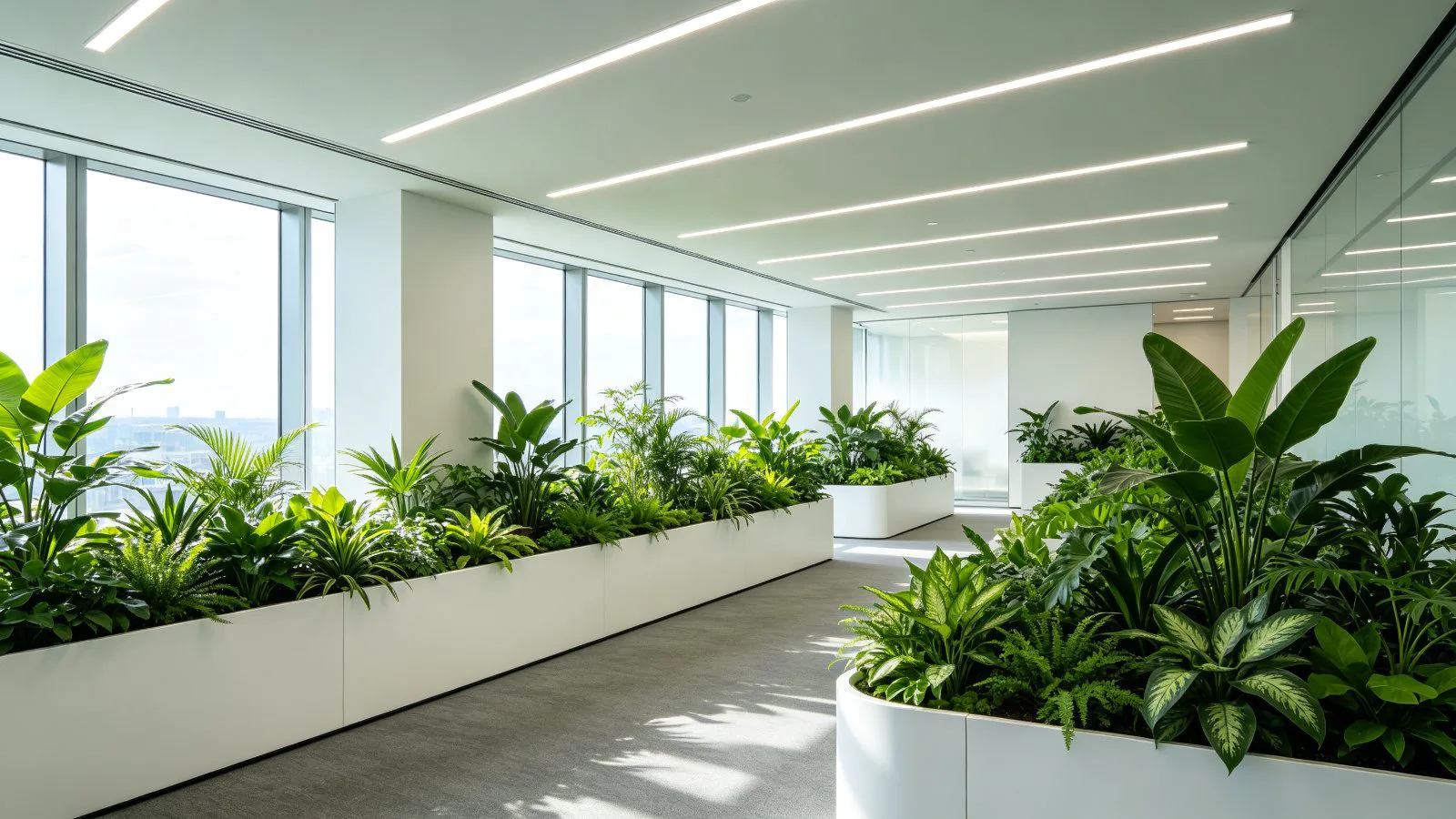
Replacing fluorescent, halogen or older LED linear lighting with modern high-efficacy strip in efficient channels saves energy through several stacked mechanisms. The new source produces more lumens per watt; well-designed linear optics deliver light where needed so fewer watts are wasted; and controls (occupancy, daylight, dimming) remove light when it is not needed. Because lighting also adds heat to air-conditioned spaces, lower wattage can reduce cooling energy in conditioned buildings. Finally, the long L80 life of quality strip cuts replacement labour and downtime — a major cost in commercial and industrial sites.
- Source efficacy: modern strip/drivers deliver far more light per watt than fluorescent/halogen.
- Optical efficiency: targeted linear light reduces wasted spill and over-lighting.
- Controls: occupancy and daylight harvesting add savings on top of the source upgrade.
- Cooling reduction: lower lighting heat trims air-conditioning load in cooled spaces.
- Maintenance: long L80 life means fewer replacements and less labour/downtime.
Calculating Energy, Payback and Carbon
Retrofit ROI calculation steps
| Step | Calculation |
|---|---|
| Existing load | Old W/fixture × fixtures × hours × days |
| New load | New W/m × metres × hours (with controls factor) |
| Energy saved | (Existing kWh − new kWh) per year |
| Money saved | kWh saved × energy tariff (+ maintenance) |
| Simple payback | Installed cost ÷ annual savings (years) |
| CO₂ saved | kWh saved × grid emission factor |
| Carbon payback | Embodied carbon ÷ annual operational CO₂ saved |
Use measured or nameplate existing loads and realistic operating hours, and include the controls/occupancy factor (lights are not always at full power). Apply the local grid emission factor (kg CO₂e per kWh) for carbon savings. Carbon payback also accounts for the embodied carbon of manufacturing the new product; because LEDs save many times their own energy over a long life, the operational carbon saved typically repays embodied carbon within a small fraction of the product's service life — often months to a couple of years, versus a decade-plus life.
Worked Example (Illustrative)
Consider a retail or office linear-lighting retrofit: an existing fluorescent-based installation drawing 1,200 W of lighting in a zone, replaced by high-efficacy strip and channels drawing 480 W, with occupancy/daylight controls reducing average output to 80% of schedule. Running 3,000 hours per year at an illustrative tariff and grid factor:
Illustrative figures (replace with project data)
| Parameter | Value |
|---|---|
| Old consumption | 1.2 kW × 3000 h = 3,600 kWh/yr |
| New consumption | 0.48 kW × 3000 h × 0.80 = 1,152 kWh/yr |
| Energy saved | ~2,448 kWh/yr (~68%) |
| Money saved | 2,448 kWh × tariff, plus maintenance |
| CO₂ saved | 2,448 kWh × local grid factor |
| Payback | Installed cost ÷ annual cash saving |
The percentage and payback vary with tariff, hours and controls, which is precisely why the business case should use this site's numbers. Long-hour spaces (retail, hospitality, warehouses, car parks) show the fastest payback; occasionally used storage areas show slower cash payback but still good carbon logic when controls are added.
Maximising and Proving the Return
- Choose high-efficacy strip and drivers (high lm/W); a few extra lm/W compounds over long runs.
- Always include occupancy and daylight controls — often the highest-return part of the project.
- Right-size light levels to current standards; many old systems are over-lit, adding waste.
- Capture cooling-load savings in air-conditioned spaces and maintenance savings in hard-to-reach runs.
- Where available, add utility rebates/incentives (see our DLC guide) to shorten payback.
- Meter or sub-meter before/after to verify savings and support ESG/carbon reporting.
Data to collect for a credible business case
| Data | Source |
|---|---|
| Existing fixture W & quantity | Nameplate / audit |
| Operating hours / controls profile | BMS, logs, observation |
| New W/metre, metres, efficacy | Datasheet / layout |
| Energy tariff | Utility bill |
| Grid CO₂ factor | Official local factor |
| Maintenance cost & frequency | Facility records |
We provide high-efficacy strip and drivers with accurate photometric and wattage data, long L80 ratings and controls options, and can help size layouts and supply the figures your ROI and carbon model needs. Share the existing installation, hours and tariff and we will help build a defensible payback calculation rather than a marketing estimate.
Recommended Products
Frequently Asked Questions
How do I calculate payback for an LED strip retrofit?
Calculate annual kWh for the existing lighting (watts × quantity × hours) and for the new lighting including a controls/occupancy factor, subtract to find kWh saved, multiply by your energy tariff and add maintenance savings, then divide installed cost by total annual savings to get simple payback in years. Use measured loads and real hours.
How much energy does replacing fluorescent with LED strip save?
High-efficacy LED linear lighting with controls commonly cuts lighting energy by roughly half to two-thirds or more versus older fluorescent systems, depending on the baseline, optics and controls. The exact figure must be calculated from the existing wattage, new efficacy and operating schedule; controls often add substantial savings on top of the source upgrade.
What is carbon payback for LED lighting?
Carbon payback is the time for the operational CO₂ saved (annual kWh saved × the grid emission factor) to offset the embodied carbon of manufacturing the new product. Because efficient LEDs save many times their energy over a long life, carbon payback is typically months to a few years — far shorter than the fixture's service life.
Do controls or better light sources save more?
The source upgrade delivers the base efficacy gain, but controls (occupancy sensors, daylight harvesting, dimming) often deliver the highest marginal return in intermittently occupied or daylit spaces by switching off unnecessary light. The strongest projects combine both, plus right-sizing over-lit old systems.
How can I prove the savings after retrofit?
Sub-meter or use circuit metering before and after, log operating hours and control behaviour, and compare measured kWh against the model; record maintenance events and, in cooled spaces, estimate cooling savings. Metered verification also supports utility rebate claims and ESG/carbon reporting.
Building the business case for a strip retrofit?
We supply high-efficacy strip and drivers with accurate wattage/photometric data, long L80 ratings and controls, and can provide the figures for your ROI and carbon model. Share the baseline, hours and tariff for a defensible payback calculation.
Email: info@arraystarled.com | Phone: +86-0755-2103-6746 | WhatsApp: 0086 1581 8514 077
Need to size your power supply? Use our LED Strip Power Calculator to find the right driver in seconds.