Human-Centric Lighting in Offices: Tunable White Scheduling Guide
- 2026-09-19 13:17
- /
- Arraystar
Human-centric lighting (HCL) uses tunable-white luminaires on a circadian schedule — cool and bright in the morning to support alertness, warmer and dimmer through the afternoon and evening — with adequate vertical illuminance at the eye, high quality and personal/zone control. Success depends less on the strip than on correct CCT range, dimming quality, realistic schedules and integration with daylight and occupant preference.
What Human-Centric Lighting Does
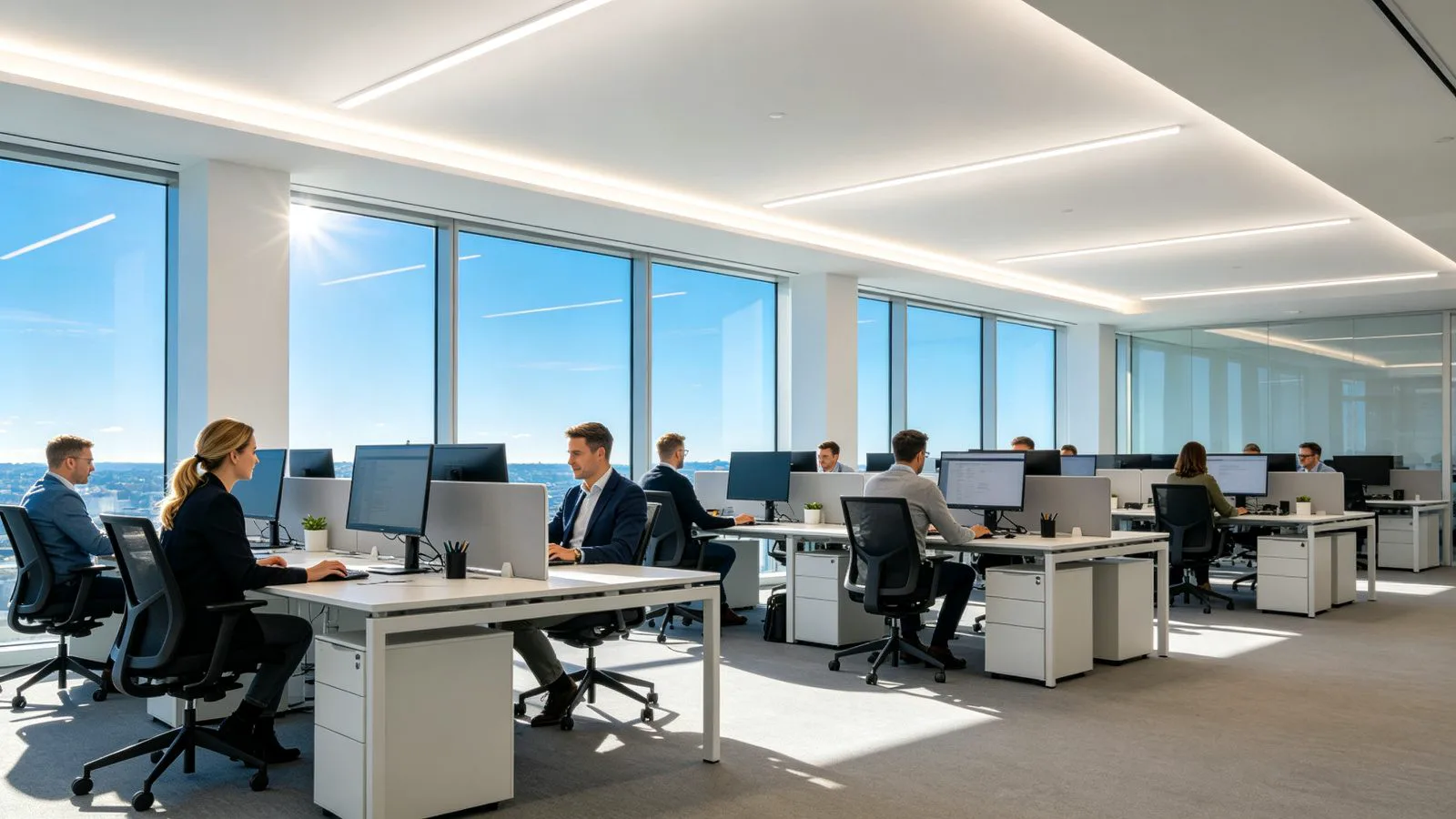
Human-centric lighting aligns electric light with the human circadian system. Light — especially cool, short-wavelength light received at the eye — sets the body clock, suppresses melatonin during the day and supports alertness; warm, dim light in the evening allows relaxation. In offices, HCL typically uses tunable-white luminaires that automatically shift correlated colour temperature (CCT) and intensity across the day: cool and brighter in the morning and after lunch when alertness dips, neutral midday, and warmer and lower toward the end of the day. The goal is improved comfort, alertness and sleep quality for occupants, alongside energy efficiency.
- Morning: cool (e.g. 5000–6500 K), higher intensity to promote alertness and synchronise the clock.
- Midday: neutral bright light supporting focus and visual performance.
- Afternoon/evening: warmer (e.g. 2700–3500 K), lower intensity to wind down.
- Eye-level light matters: circadian effects depend on light reaching the eye, including vertical surfaces.
- Personal control and daylight strongly influence acceptance and effectiveness.
Hardware and Control Specification
HCL system components
| Component | Requirement |
|---|---|
| Luminaire | Tunable-white (warm–cool) high-CRI linear LED |
| CCT range | Typically ~2700 K to 5000/6500 K |
| CRI | ≥90 for office comfort and colour tasks |
| Dimming | Flicker-free, smooth to low levels |
| Control | DALI/DALI-2 (DT8 tunable), 0-10 V x2, or smart |
| Sensors | Daylight + occupancy to adapt and save |
| Interface | Zone/personal overrides + central schedule |
- Use true tunable-white fixtures (warm and cool LED channels mixed) rather than fixed-CCT, with consistent colour across the dimming range.
- Specify DALI-2 DT8 (single-addressable tunable white) or dual-channel control for smooth coordinated CCT/level changes.
- Require flicker-free drivers and high CRI (≥90); HCL fails if the light itself is uncomfortable or renders poorly.
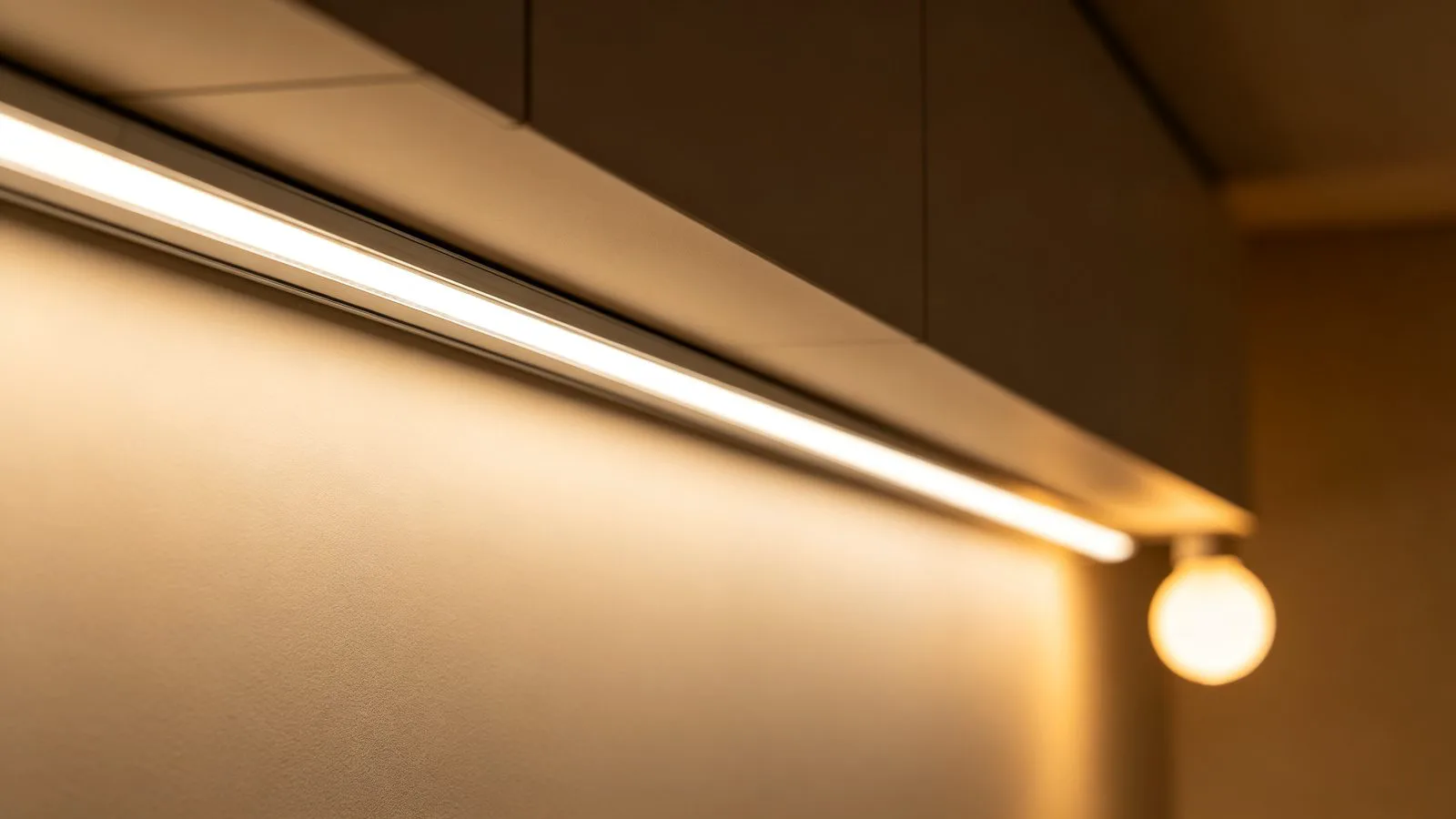
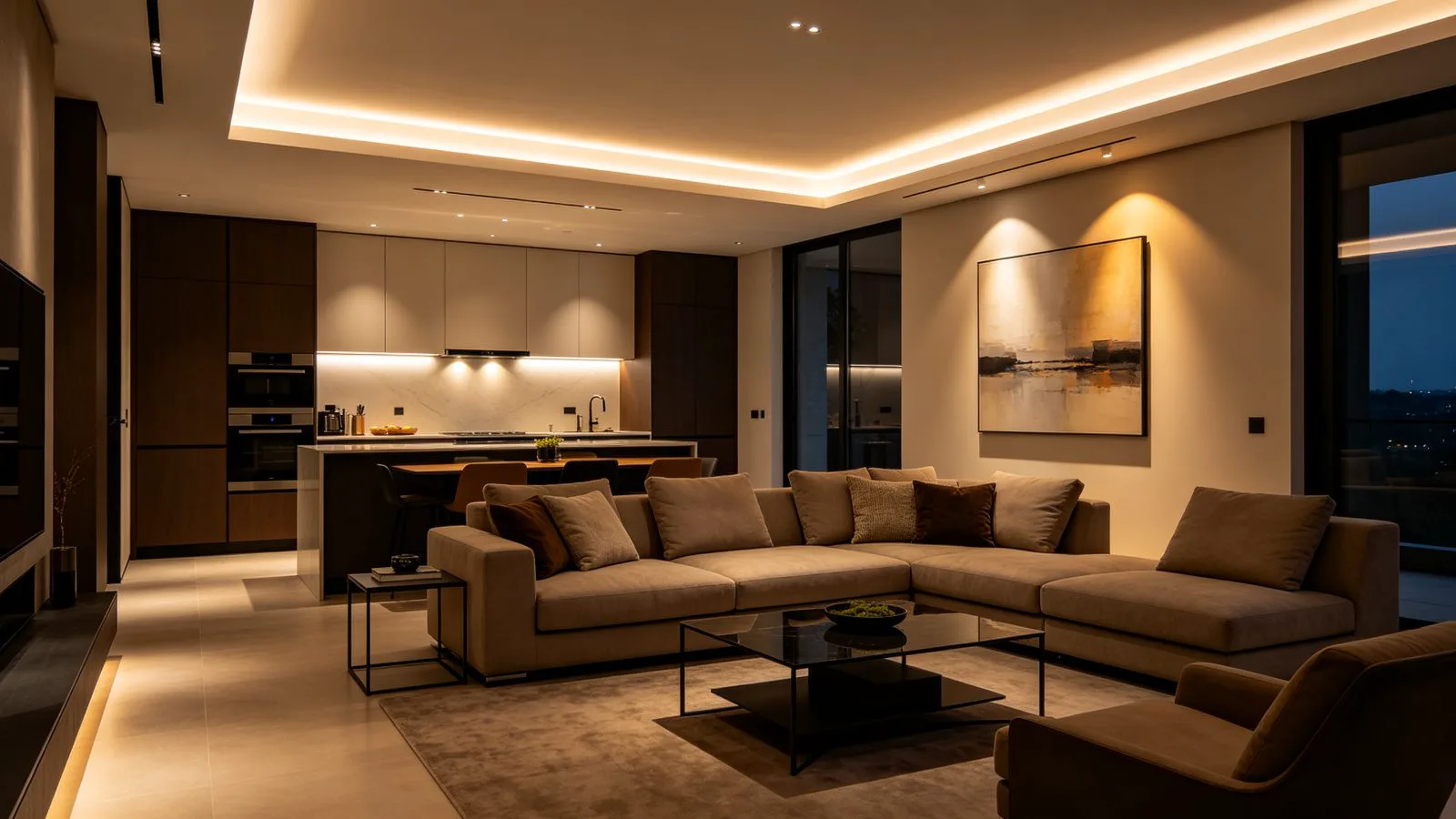
- Design for vertical/eye-level illuminance using indirect and cove linear light, not just desk-plane lux.
- Integrate daylight harvesting so electric light supplements natural circadian daylight rather than fighting it.
Designing a Realistic Daily Schedule
A common failure is an aggressive schedule that occupants immediately override. Effective HCL uses gentle, often imperceptible transitions and respects task needs and preference. A typical office profile provides a cool, bright start to replicate morning light, holds neutral-bright through core hours, and warms and dims in the last working hours; shift and night-worker schedules need different treatment to avoid incorrectly stimulating night staff before sleep.
- Start with occupant work hours and geography (sunrise/sunset), not a generic curve.
- Use slow transitions (minutes, not instant jumps) so changes are imperceptible.
- Provide zone and personal overrides; overridden fixtures should return to schedule sensibly.
- Treat meeting rooms and focus booths separately (scene-based) from open-plan circadian zones.
- For night shifts, design deliberately with occupational-health guidance rather than applying the day curve.
Example office day profile (illustrative, tune to occupants)
| Time | CCT | Level / feel |
|---|---|---|
| 07:00–10:00 | 5000–6000 K | Bright, energising |
| 10:00–14:00 | 4000–5000 K | Neutral, focused |
| 14:00–16:30 | 4000 K | Stable, comfortable |
| 16:30–end | 3000–3500 K | Warm, winding down |
| After hours | Warm/low or off | Security/cleaning scenes |
Commissioning, Verification and Pitfalls
- Commission the schedule with occupants and adjust after a trial period; HCL is not set-and-forget.
- Verify actual CCT and dim levels at fixtures across the curve and consistency between luminaires.
- Ensure controls compatibility end to end (DT8 drivers, controllers, BMS/room controllers).
- Avoid over-selling medical claims; frame HCL as comfort/alertness support, not treatment.
- Balance energy goals: daylight harvesting and occupancy still apply; tunable systems should not run at full output unnecessarily.
- Document overrides and maintenance so facility teams can manage scenes after handover.
We supply high-CRI tunable-white COB and linear channels, flicker-free DALI-2 DT8/dual-channel drivers and controllers with daylight/occupancy inputs, suitable for office HCL. Send us floor plans, work hours and control platform and we will design zoned tunable systems with a practical, occupant-friendly day schedule.
Recommended Products
Frequently Asked Questions
What is the best CCT schedule for human-centric office lighting?
A typical profile uses cool bright light (about 5000–6500 K) in the morning for alertness, neutral 4000–5000 K through core hours, and warm 3000–3500 K dimmed toward the end of the day, with slow imperceptible transitions tuned to actual work hours and local daylight. Night shifts need a deliberately different, guidance-based schedule.
What equipment is needed for tunable-white HCL?
Tunable-white high-CRI (90+) linear fixtures with warm and cool channels, flicker-free drivers, and control that coordinates CCT and level — commonly DALI-2 DT8 or dual-channel 0–10 V/smart controllers — plus daylight/occupancy sensors and a scheduler with zone overrides. The control layer is as important as the fixtures.
Does human-centric lighting actually improve productivity?
Well-designed HCL can support alertness, visual comfort, mood and sleep timing, with benefits most evident in window-poor spaces and shift work, but outcomes vary and it should be specified as comfort and well-being support rather than a guaranteed productivity treatment. Personal control, daylight and good baseline quality are essential for acceptance.
What is DALI DT8 tunable white?
DALI-2 device type 8 (DT8) controls colour temperature and brightness of a tunable-white fixture from a single DALI address, simplifying wiring and commissioning compared with separate addresses for warm and cool channels. It is a common professional choice for coordinated HCL dimming and CCT changes.
How do I stop occupants overriding the HCL schedule?
Design gentle, imperceptible transitions, keep light levels comfortable for tasks, provide easy zone and personal overrides that gracefully return to schedule, and involve staff in a trial-and-tune period. Forcing an aggressive curve guarantees overrides and complaints; acceptance matters more than theoretical circadian strength.
Planning circadian tunable-white office lighting?
We supply high-CRI tunable-white COB and channels with flicker-free DALI-2 DT8/dual-channel drivers, daylight/occupancy control and practical day schedules. Send floor plans and work hours for a zoned HCL design.
Email: info@arraystarled.com | Phone: +86-0755-2103-6746 | WhatsApp: 0086 1581 8514 077
Need to size your power supply? Use our LED Strip Power Calculator to find the right driver in seconds.