COB vs SMD LED Strip: 7 Differences That Matter (2026)
- 2026-09-07 16:03
- /
- Arraystar
Quick Answer: COB vs SMD LED Strip — Which One Should You Choose?
COB (Chip-on-Board) LED strips mount hundreds of tiny chips per meter to produce a continuous, dot-free line of light — the choice for under-cabinet, cove, architectural and neon-look installations where uniformity matters. SMD (Surface-Mounted Device) strips (2835, 2216, 5050) use discrete chips and win on color options (RGB, addressable SPI), lower cost and easier repair. In 2026 the rule is simple: choose COB for seamless light quality, choose SMD for effects, color or budget. This guide walks through the 7 differences that actually affect your project, with real specs from a Shenzhen factory that ships both.
Why This Comparison Matters in 2026
Buyers often send us the same question: "Should I buy COB or SMD LED strip?" The answer changes the price per meter, the power supply you need, the look on the wall — and whether the client calls back for a second order. As linear lighting moves from accent decoration to primary architectural lighting, COB has gone from a niche product to roughly a third of strip-light exports from Shenzhen. But SMD is far from dead: addressable and RGB effects still only exist on SMD, and for sheer value-per-meter nothing beats a 2835 reel.
Below are the 7 differences that matter, based on the specifications we actually manufacture at our 5,000㎡ factory (est. 2010, exported to 80+ countries).
1. Light Uniformity — the Deciding Factor for Most Buyers
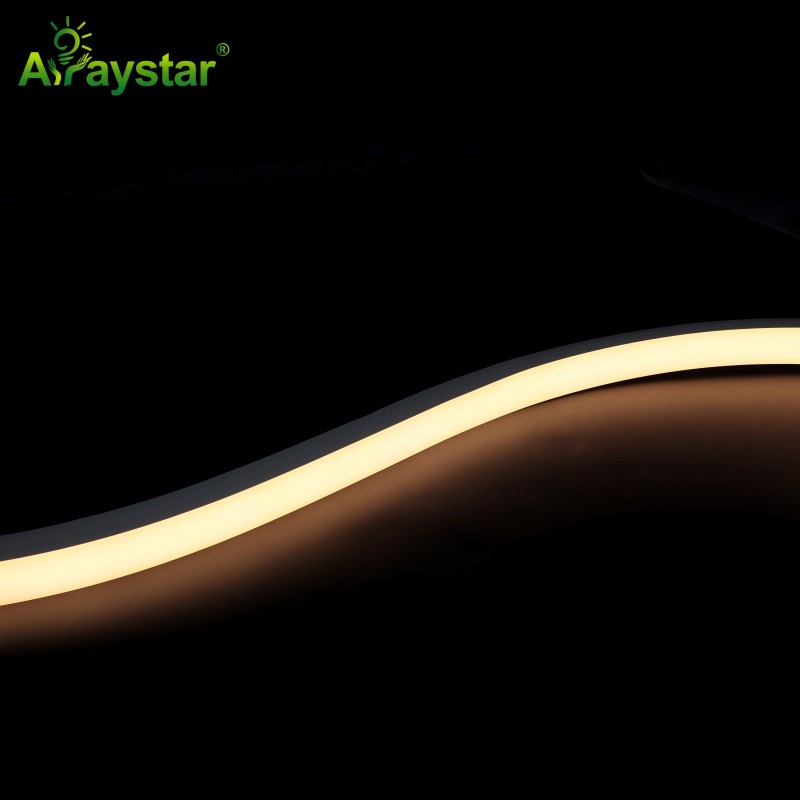
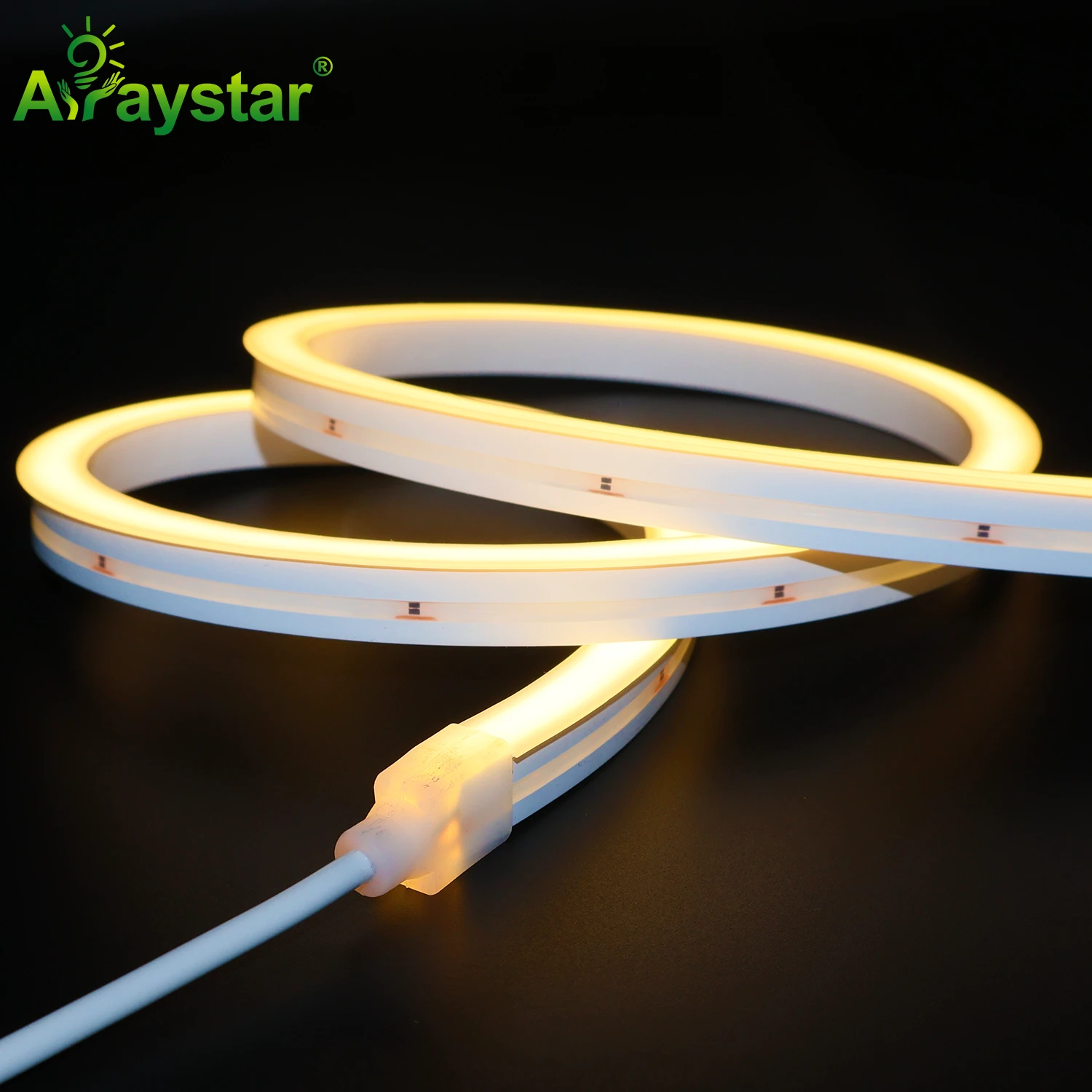
COB produces a seamless light line; SMD shows individual dots. A COB strip packs 480 (up to 840) chips per meter under a continuous phosphor coating, so light appears as one unbroken line. An SMD strip lights discrete points — at 60 LEDs/m the dots are clearly visible on a wall or ceiling, and even at 120 LEDs/m you can still see hot spots in a cove.
Choose COB if the strip will be seen directly (under cabinets, in channels, on walls, as neon-look lettering).
Choose SMD if the strip sits inside a diffused channel or behind a baffle where dots are hidden anyway.
2. Power and Brightness per Meter
Brightness per meter depends on chip density and voltage, not on "COB vs SMD" itself. Typical production figures:
Type | Density | Typical Power | Typical Lumens |
|---|---|---|---|
COB 480 chips/m | 480 chips | 12–15 W/m | ≈ 800–1,200 lm/m |
SMD 2835 60 LEDs/m | 60 LEDs | 4.8–9.6 W/m | ≈ 450–900 lm/m |
SMD 2835 120 LEDs/m | 120 LEDs | 9.6–19.2 W/m | ≈ 900–1,800 lm/m |
SMD 5050 RGB 30 LEDs/m | 30 LEDs | 7.2–14.4 W/m | ≈ 300–600 lm/m (white) |
If your project needs a bright but hidden strip, a high-density SMD 2835 gives the most lumens per dollar. If it needs a clean visible line, COB is the only option — SMD at high density only makes the dots smaller, never invisible. For power supply sizing, always budget 1.2–1.3× the total strip wattage.
3. Color Rendering (CRI)
CRI measures how true colors look under the light. COB strips are routinely offered at CRI 90+, 95+ and 98 because they are specified for retail, hospitality and residential spaces where fabric, food and skin tones must look natural. SMD 2835 is commonly CRI 80–90, with CRI 95 available on request. For showrooms, photo studios and hotels, CRI 90+ is effectively the entry requirement in 2026 — if your spec sheet says CRI 80, expect the buyer to ask why.
4. Color Options and Effects
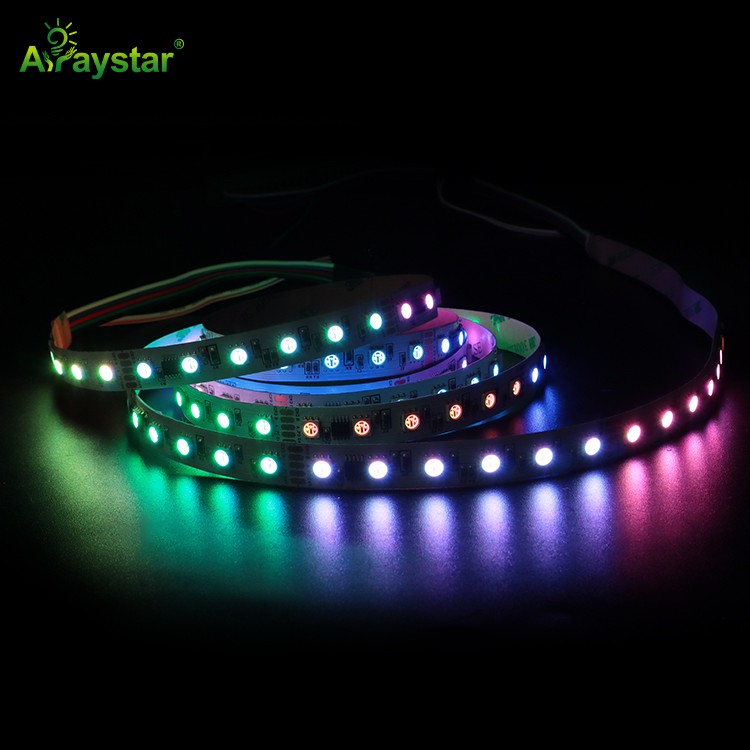
This is where SMD still leads. RGB, RGBW, tunable white and addressable (SPI / pixel) effects exist on SMD strips — that is how you get chasing effects, music sync and pixel art. COB is primarily single-color or tunable white (CCT 1800K–6500K, including amber 1800K), with RGB COB emerging but at higher cost and lower pixel resolution. If the brief says "animated effects," you need SMD addressable (SPI) or DMX512; if it says "beautiful warm line of light," COB tunable white is the better tool.
5. Bending and Installation Flexibility
SMD strips bend more freely and can be shaped for corners and pixel installations; 5050 RGB strips are the default for sign letters and effects. COB strips are designed for straight linear runs (or gentle curves in channels) and are the standard inside aluminum profiles. For neon-look signs, a COB strip inside a diffuser or an LED neon flex product gives the continuous glow, while SMD pixel strips create the "digital sign" look.
6. Repairability and Cutting
An SMD strip can be cut at every 3–6 LEDs and a failed chip can often be reworked with a soldering iron. COB chips are under a continuous phosphor layer — cutting is possible at marked lines every few centimeters, but a damaged section must be replaced rather than repaired chip by chip. Plan spare cut-offs for both types; order 5–10% extra length on long runs.
7. Cost and Minimum Order
Per meter, SMD 2835 is the cheapest option and COB sits in the middle-to-premium band. Our factory MOQ reflects this: standard products start from one reel or 50 m, samples are always available first (3–7 days), and mass production runs 10–25 days depending on quantity and customization. Payment is typically T/T with a 30% deposit, FOB Shenzhen / EXW / CIF all available.
Full Spec Comparison Table
Parameter | COB LED Strip | SMD LED Strip (2835/5050) |
|---|---|---|
Light output | Seamless, dot-free line | Visible dots (density-dependent) |
Typical power | 12–15 W/m (480 chips/m) | 4.8–14.4 W/m (30–120 LEDs/m) |
CRI | 90+ / 95+ / 98 optional | 80+ / 90+ optional |
Color options | Single color / tunable white | Single / RGB / RGBW / addressable SPI |
Voltage | 12V / 24V / 48V | 12V / 24V |
Waterproof rating | IP20 / IP65 / IP67 | IP20 / IP65 / IP67 |
CCT range | 1800K–6500K custom | 2700K–6500K |
Repair | Replace section | Single chip replaceable |
Best for | Cabinets, coves, neon-look, wall washing | Ambience, sign letters, pixel effects, budget |
Which One Should You Choose? A Scene-Based Guide
Kitchen under-cabinet and shelving: COB (CRI 90+, 4000K or 3000K) — see our COB LED strip series.
Cove, stair and architectural lines: COB 24V for runs up to ~10 m without visible voltage drop; inject power every 5–10 m on longer runs.
Neon-look signs and letters: COB in a diffuser, or dedicated LED neon flex for bendable outlines.
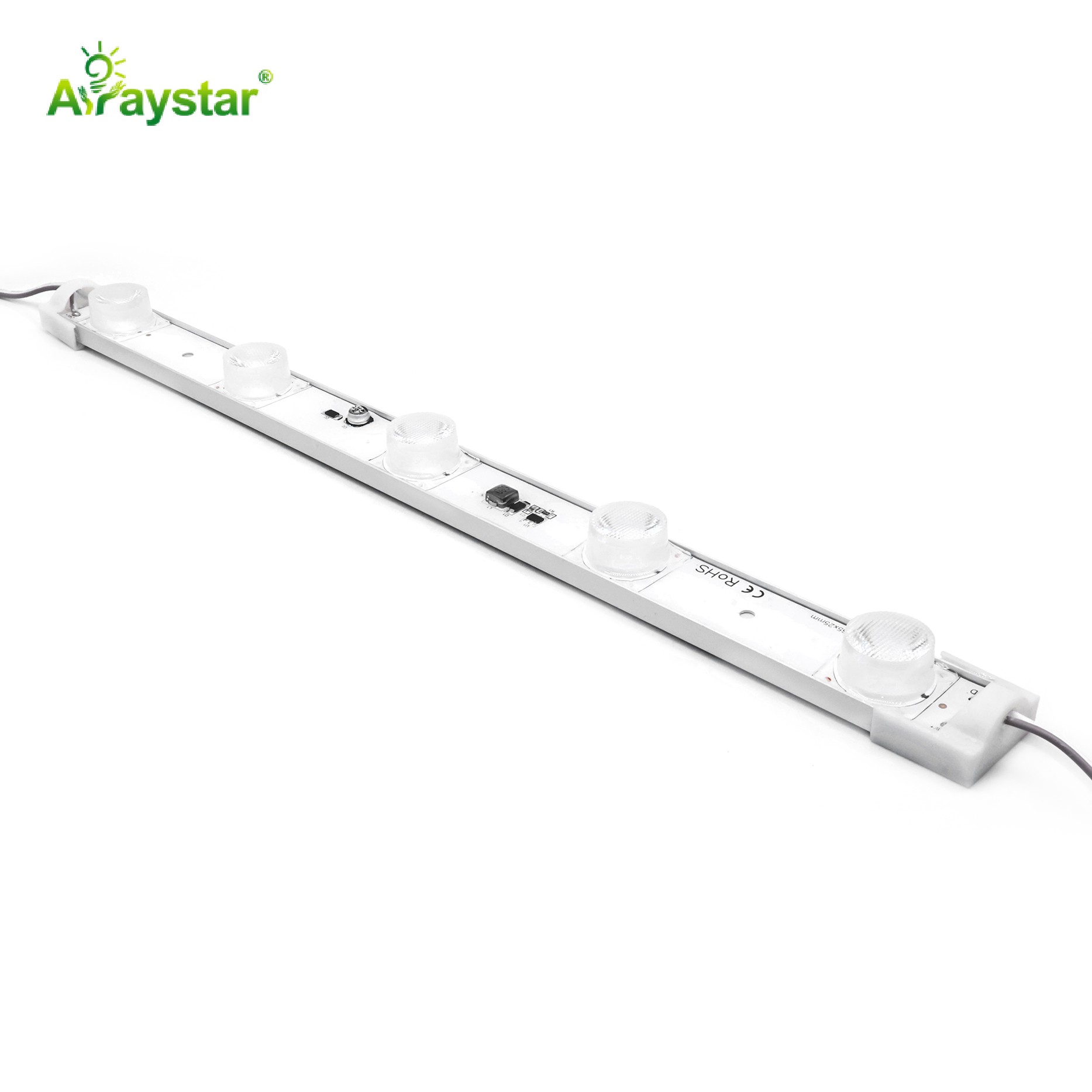
RGB ambience and TV backlight: SMD RGB or RGBW — the SMD LED strip series.
Addressable / pixel effects (chasing, music sync): SMD 5050 addressable SPI or DMX512.
Budget projects where the strip is hidden: SMD 2835 at 60 or 120 LEDs/m — highest lumens per dollar.
What Real Buyers Asked Us (Case Notes)
Over the past quarter these are the patterns we saw from actual inquiries:
A Spanish kitchen renovation company ordered 16 m of COB strip for continuous under-cabinet light lines in a villa project — the brief was "no dots, no shadows," which ruled out SMD entirely. They now buy COB in 5 m reels with 24V drivers.
A German architectural studio specified COB for building facade cove lighting at CRI 95+ and 3000K, with IP65 silicone coating for the outdoor sections — a mix that SMD could not deliver at the same uniformity.
A US event production company purchased 600+ feet of addressable RGB SMD strip for stage backdrops and aisle lighting — pixel effects only exist on SMD, so for them COB was never in the running.
An Indian distributor reordered 20,000 m of SMD 2835 in bulk for general lighting resale — the buying decision was purely price-per-meter plus consistent binning across reels.
The pattern: projects that light a surface choose COB; projects that create an effect choose SMD. If you are still unsure, request samples of both — a side-by-side test on your own wall settles it faster than any spec sheet. Our engineers are happy to advise on voltage, density and driver sizing for your specific run length.
FAQ
What is the difference between COB and SMD LED strips?
COB (Chip-on-Board) strips mount hundreds of tiny chips densely to create a continuous, dot-free light line with high uniformity — ideal for linear lighting and neon-look effects. SMD strips use discrete chips (2835, 2216, 5050) and offer more color options (RGB, addressable), lower cost, and easier repair. Choose COB for seamless light, SMD for effects or budget projects.
How many watts per meter does an LED strip use?
It depends on chip size, density and voltage. Common figures: SMD 2835 at 60 LEDs/m draws about 4.8–9.6 W/m; COB at 480 chips/m draws about 12–15 W/m; high-density strips can reach 20 W+/m. Rule of thumb: check the spec sheet, then size your power supply at 1.2–1.3× the total wattage.
Is COB LED strip brighter than SMD?
Not automatically — brightness depends on chip density and drive current. A COB 480 strip (12–15 W/m) is comparable to a high-density SMD 2835 (120 LEDs/m). COB's advantage is uniformity, not raw lumens. If you need maximum brightness per dollar with the strip hidden, SMD 2835 is usually the better value.
Can COB LED strips do RGB or color effects?
Mostly no. COB is primarily single-color or tunable white (1800K–6500K). RGB COB exists but is more expensive and offers coarser effects. For RGB, RGBW or addressable pixel effects, choose SMD 5050 or addressable SPI strips.
What is the maximum length of a 24V COB LED strip run?
As a rule of thumb, a 24V strip can run about 10 m before visible voltage drop; 12V drops noticeably after ~5 m. For longer runs, use 48V strips, inject power every 5–10 m, or run parallel connections from the power supply. If you are planning a run over 10 m, tell our engineers the length and wattage — we will spec the wiring and power injection points for you.
What is the warranty on your COB and SMD strips?
Standard warranty is 2–3 years depending on product line; selected COB series offer a 5-year warranty. Warranty covers manufacturing defects with replacement parts or new reels. All strips are CE, RoHS and REACH compliant; UL/cUL, ETL, TUV and FCC are available on request.
Need Help Choosing? Talk to Our Engineers
We manufacture both COB and SMD strips in-house, so you get an unbiased answer — not a sales push toward one technology. Send us your project details (run length, voltage, mounting surface, whether the strip will be visible, and effect requirements) and we will recommend the right product, density and driver within 24 hours.
Request a quote or samples → | OEM/ODM customization → | Meet the factory →