PIR Light Switches Itself on at Night Without Anyone Passing
- 2026-11-02 15:55
- /
- Arraystar LED
A PIR that switches itself on at 3 am in an empty room is almost always fooled by heat, not by a ghost. A cold wall, a heater vent or a radiator cycling is moving the same way a warm body does, and the lens cannot tell the difference.
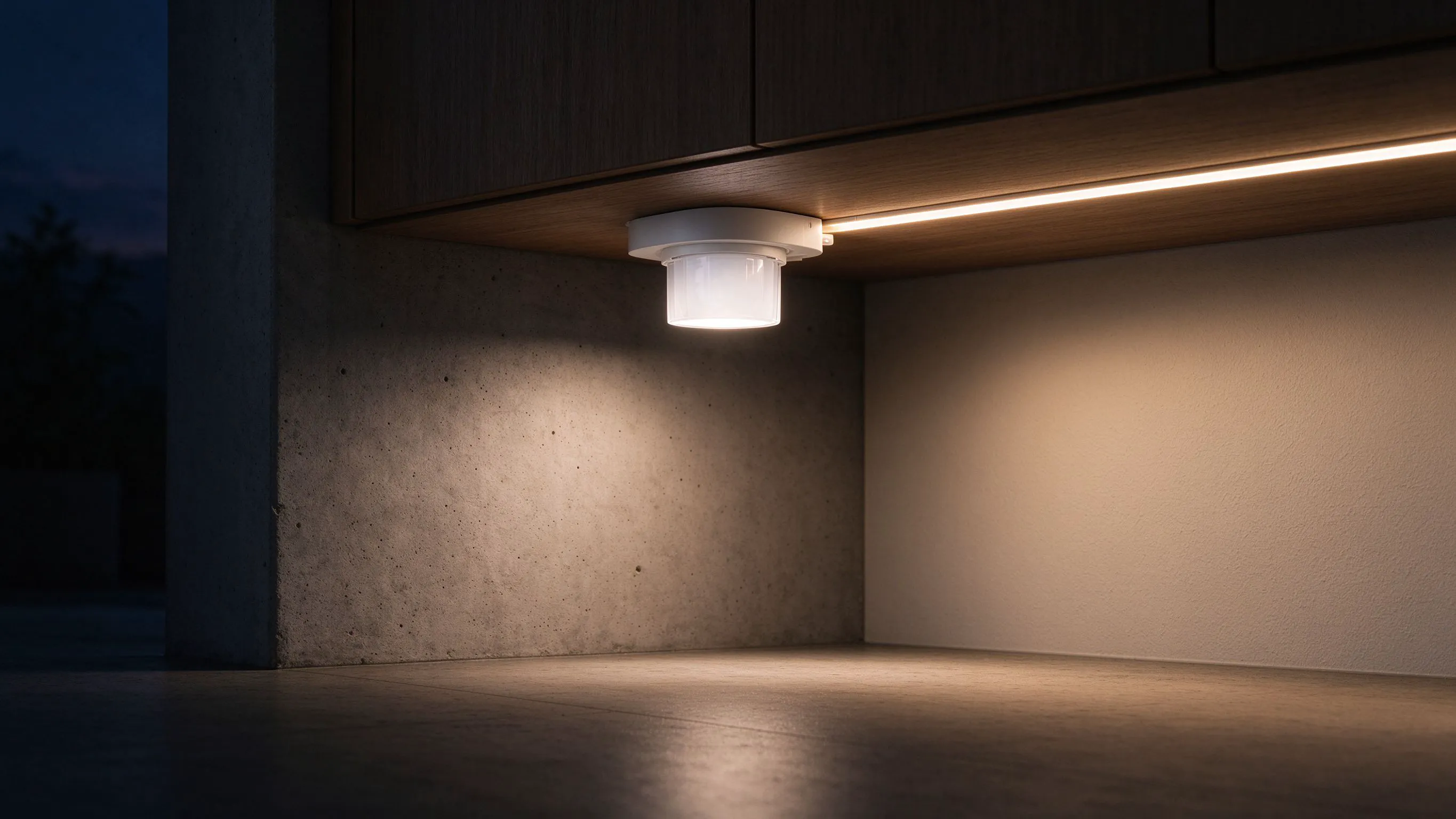
The light that turns itself on in the empty house
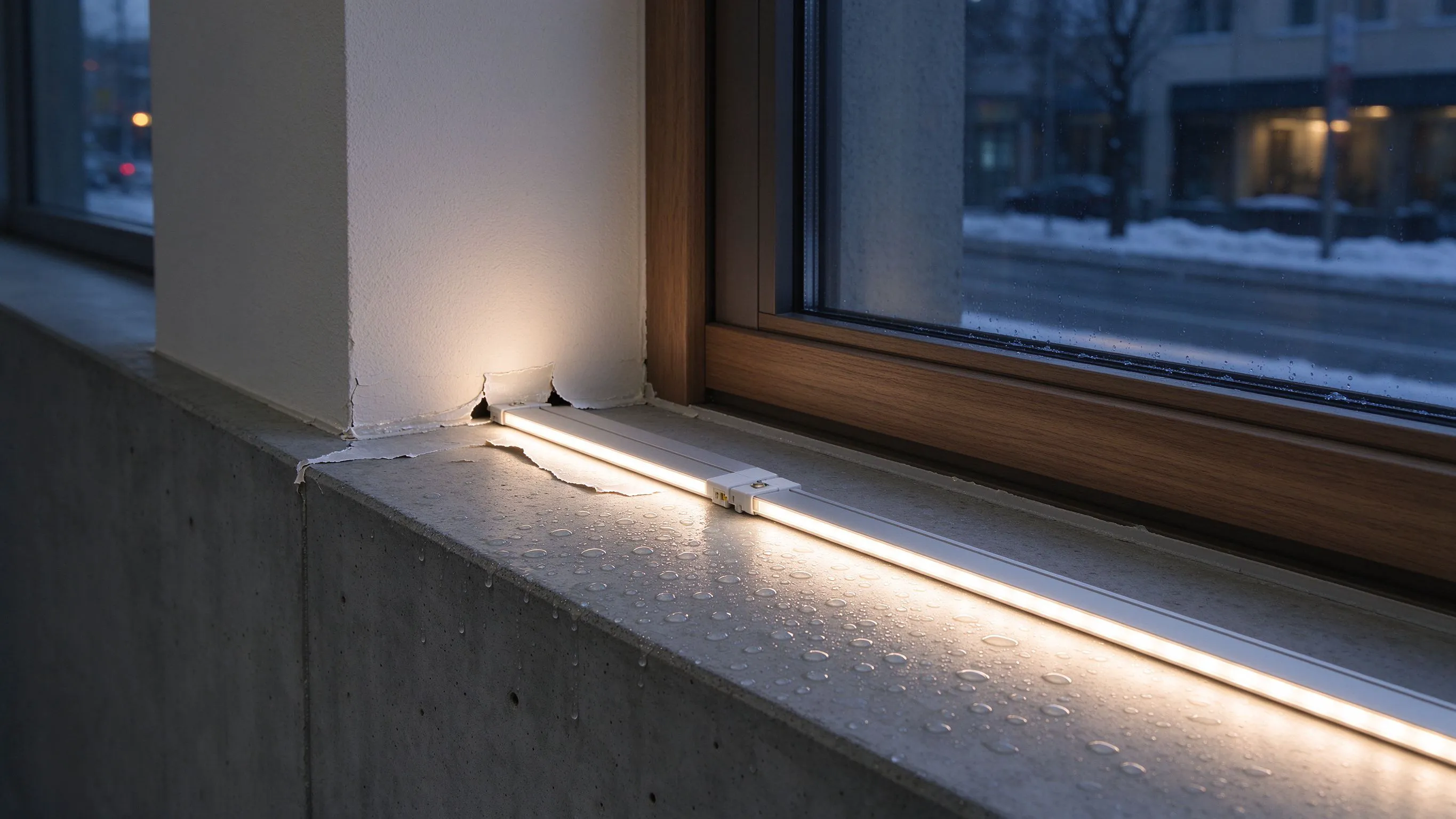
A client sends me a log: the under-cabinet strip flickers on at 2:14 am, again at 3:40, again at 5:05. Nobody got up. The PIR has decided there is motion in front of the sink. The most common cause is a thermal source cycling nearby. A fridge compressor kicks on, a radiator vents, a warm pipe behind the cupboard heats the cold wall, and the PIR sees a moving heat edge exactly like a human walking past.
A PIR lens is split into zones. Each zone compares the incoming infrared against the previous frame. When a warm object crosses a zone boundary, the sensor fires. A wall that warms up by one or two degrees behind a cupboard creates a heat edge that drifts across the zones over several minutes, and the sensor reads it as slow motion.
- The false trigger happens on a timer that matches an appliance cycle.
- It is worse on cold nights when the wall is the coldest.
- It stops if you tape a piece of foam over the lens for a night test.
Heat sources that look like people to a PIR

Fridge compressors, freezer fans, towel rail thermostats, downlights that have been on all evening and cool down, and even a laptop charger brick behind the plinth. All of them raise the temperature of a small surface by a few degrees, and that surface drifts across the PIR zones. The sensor is not broken; it is doing exactly what it was told to do, which is detect changes in infrared.
I walk the cabinet with a thermal camera or a cheap IR thermometer. The surface that is warming up while the room stays cold is the culprit. In about 70 percent of the jobs I see, the offending heat source is within 300 mm of the sensor lens.
Common mounting faults that amplify thermal drift
Move the lens, do not just lower sensitivity.
| Fault | Why it fools the PIR | Fix |
|---|---|---|
| Sensor above a warm pipe | Pipe heats the ceiling slowly | Move sensor 500 mm away |
| Lens facing a window | Sunlight warms the wall at dawn | Rotate lens 90 degrees |
| Sensor too high on cabinet | Cone covers the floor vent | Lower the sensor face |
| High sensitivity set | Small thermal shifts trigger | Turn down to 50 percent |
Re-tuning the PIR on site

I start with the sensitivity at 50 percent and the hold time at 10 seconds. Then I watch it through one night. If it still false-triggers, I rotate the sensor body so the lens faces into the cabinet rather than out at the wall, and I cover the side of the lens that points toward the heat source with a small paper mask.
I also add a cool-down test: I cover the lens with my hand for 60 seconds, then remove it. If the sensor fires instantly on my hand, it is working correctly, which means the false trigger is environmental, not a faulty unit. That test separates a bad sensor from a bad mounting in two minutes.
When a PIR is the wrong sensor for the job

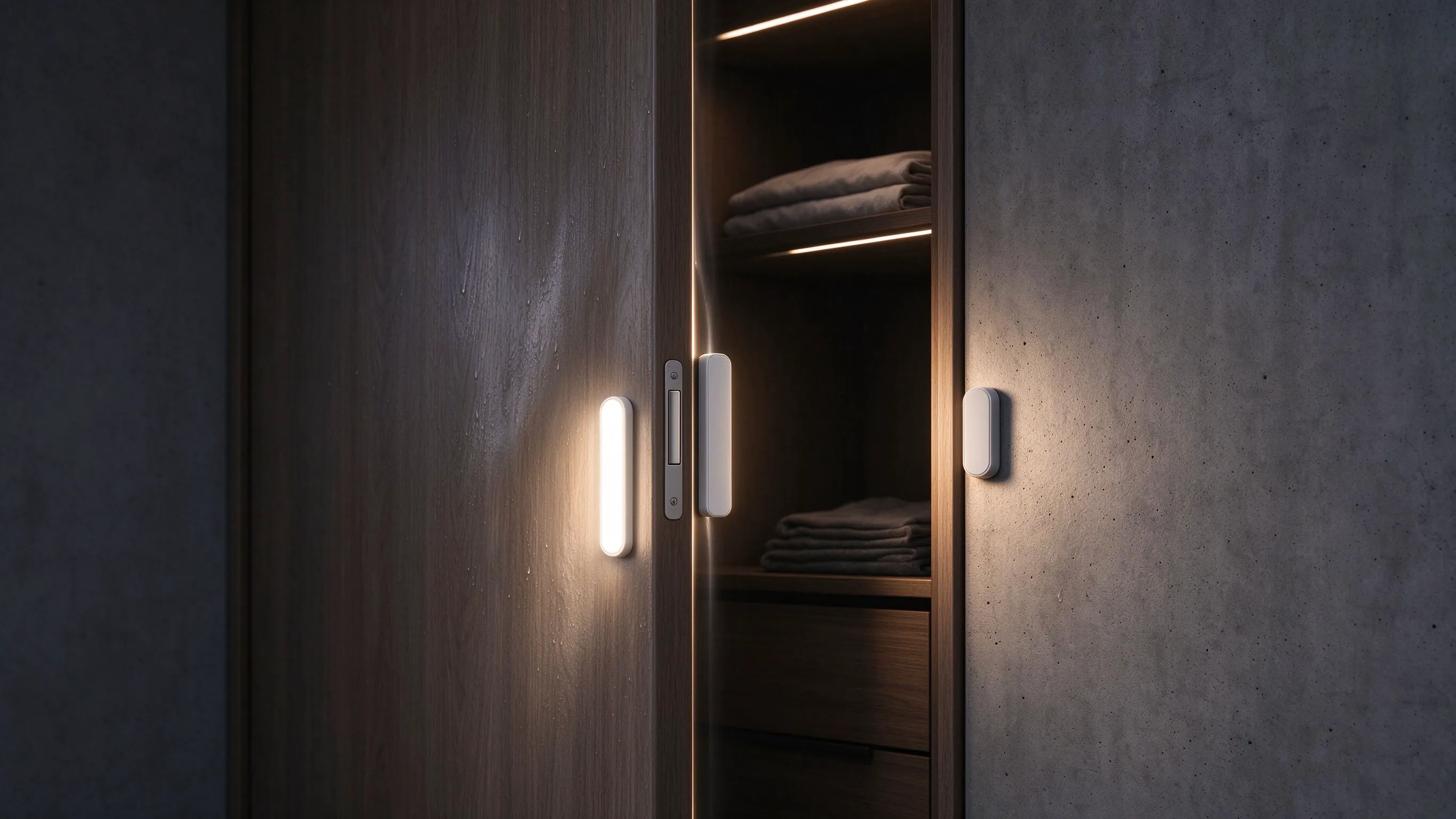
If the cabinet is next to a boiler, a fridge or a hot-water cylinder, a PIR will never behave. I swap it for a hand-wave sensor, a door sensor or a touch sensor, none of which respond to heat. On a drinks cabinet next to a wine fridge, for example, a PIR false triggers every time the compressor kicks in; a hand-wave sensor does not care.
I make that call on site, not on the bench. A PIR tested in a warm office works perfectly; installed against a cold wall with a cycling appliance behind it, it is the wrong tool. Choose the sensor by the environment, and the 3 am triggers stop. I keep a hand-wave sensor in the van for exactly this swap, so the client is not waiting a week for a parts order.
Recommended Products
Frequently Asked Questions
Why does my PIR light turn on by itself at night?
A heat source cycling near the sensor is moving a warm edge across the lens zones. A fridge compressor, radiator, downlight or warm pipe behind the cabinet warms a surface by a degree or two, and the PIR reads that slow drift as motion.
Does a cold wall actually cause PIR false triggers?
Yes. A cold wall that warms by even one or two degrees behind the cupboard creates a heat edge that drifts across the lens zones overnight. The sensor compares one frame to the next; a slow warming wall looks like slow motion.
How do I test whether the PIR itself is faulty?
Cover the lens with your hand for 60 seconds, then remove it. If the sensor fires instantly on your hand, the unit is working correctly. If it does not, the sensor is faulty. The false trigger is environmental, not the unit.
Should I just turn the PIR sensitivity all the way down?
Turn it down to 50 percent as a starting point, but do not leave it there alone. A lower sensitivity reduces the false trigger but also stops the sensor detecting a real person. Rotate the lens away from the heat source and mask the leaking quadrant.
What sensor should I use instead of a PIR near a fridge or boiler?
A hand-wave sensor, a door sensor or a touch sensor. None of them respond to heat, so a cycling appliance does not trigger them. On a cabinet next to a wine fridge or boiler, a PIR will never behave reliably.
Need help with your LED project?
Get factory-direct pricing, free samples and engineering support within 24 hours.
Email: info@arraystarled.com | Phone: +86-0755-2103-6746 | WhatsApp: 0086 1581 8514 077
Need to size your power supply? Use our LED Strip Power Calculator to find the right driver in seconds.