CSP Tunable-White COB for Circadian Office Lighting
- 2026-10-09 18:40
- /
- Arraystar LED
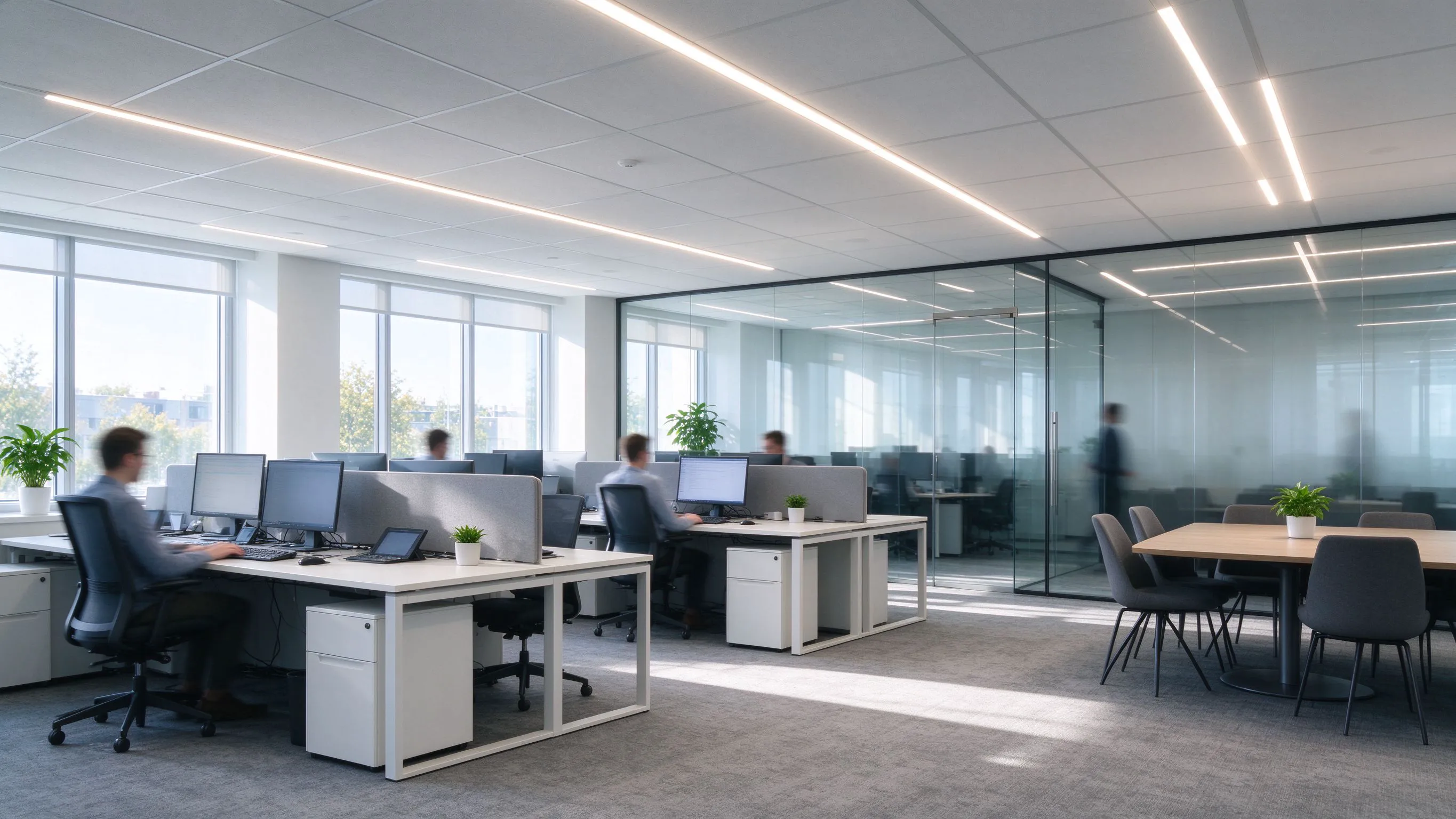
Circadian and human-centric lighting schedules a space to shift colour temperature and intensity through the day, which only looks right if the white transitions are perfectly smooth and free of colour breaks. A CSP (chip-scale package) tunable-white COB blends warm and cool channels into a continuous dot-free line that sweeps CCT cleanly, making it suited to offices and wellness spaces where tunable white is a working tool rather than a novelty.
What Circadian Lighting Is Trying to Do
Human-centric or circadian lighting mirrors the natural day: cooler, brighter, alerting light in the morning and around focus periods, shifting to warmer, dimmer, relaxing light towards the evening. In offices it is used to support concentration and comfort; in wellness, education and healthcare settings the schedule can be tuned to the occupants' routine. The benefit depends on the change feeling natural rather than obvious.
If the white shifts in visible steps, drifts off-axis to green or pink, or shows dots and bands, occupants notice the lighting instead of benefiting from it, and the whole concept is undermined.
Why Tunable White Is Harder Than It Looks
- Warm and cool channels must blend into a single accurate white at every CCT.
- Transitions need to be continuous, with no stepping or sudden hue shifts.
- Off-axis viewing must stay on the black-body curve, not tint green or magenta.
- Dense, even emission prevents bands where the two white populations meet.
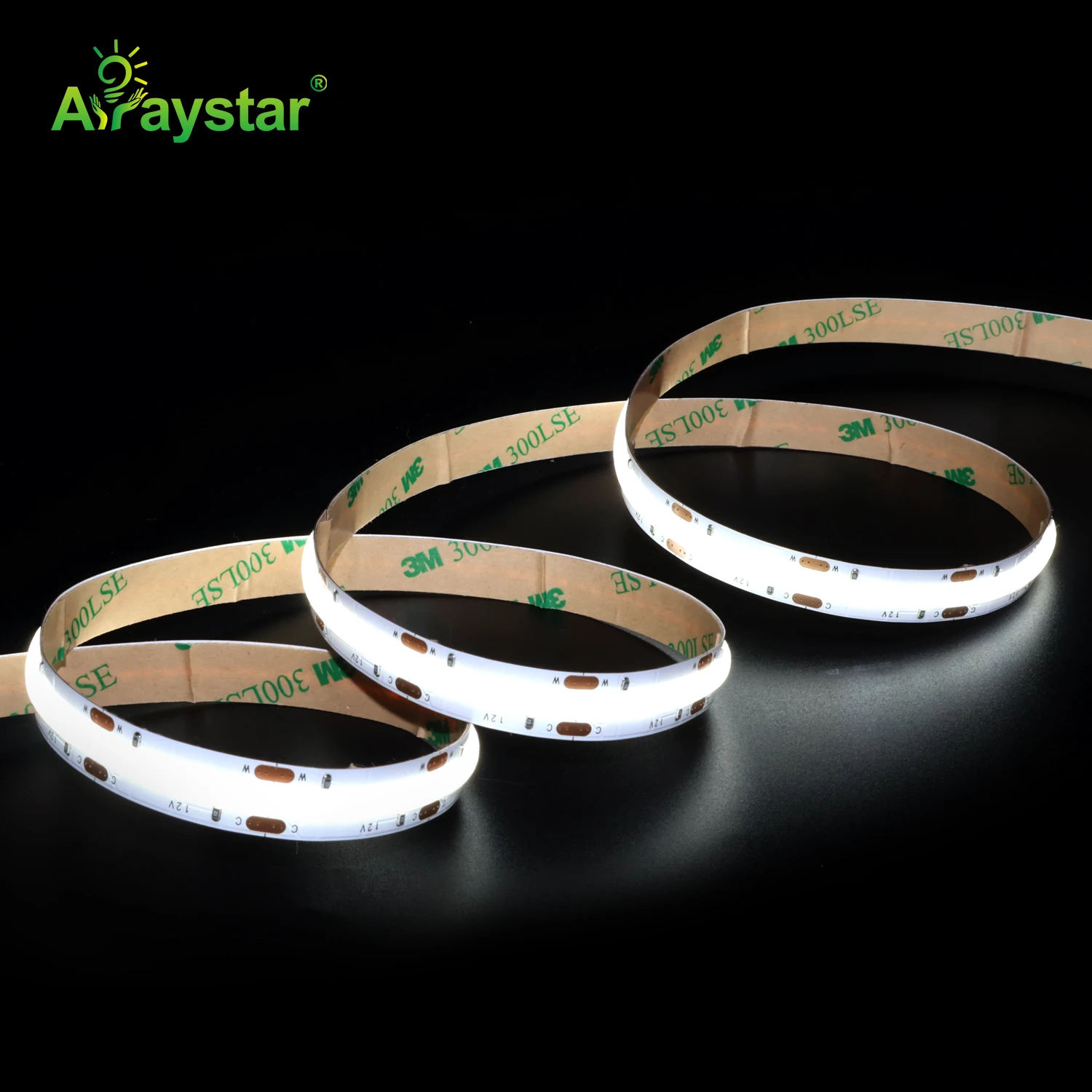
For circadian coves and linear office systems I use the CCT-adjustable CSP COB. Chip-scale packaging and dense blending give the smooth white sweep that tunable schedules demand.
What CSP Brings to Tunable White
CSP density is what makes the white transition invisible.
| Attribute | Conventional SMD tunable | CSP tunable COB |
|---|---|---|
| Emission | Discrete packages | Near-continuous dense line |
| Blending of warm/cool | Needs distance/diffuser | Blends very tightly |
| Off-axis tint risk | More visible | Reduced by density |
| Dot-free appearance | No | Yes |
| Smooth CCT sweep | Good with care | Very smooth |
Chip-scale packages are very small and can be placed densely, so the warm and cool emitters interleave tightly. When the controller cross-fades between them, the eye sees one white source changing temperature rather than two populations fighting.
Where Smooth Tunable White Is Specified
- Open-plan offices with day-long circadian scenes.
- Meeting and focus rooms that shift between alert and relaxed modes.
- Healthcare and aged-care environments where calm, natural light matters.
- Schools and care settings following occupancy routines.
- High-end residential and wellness spaces with automated white scenes.
The Control Layer: DALI, DMX and Smart Drivers
The strip is only half the system; tunable white needs a control layer that can fade two channels in opposite directions smoothly. In commercial offices I commonly see DALI-2 with DT8 tunable-white drivers, which carry CCT and level on one control relationship and integrate with building systems; DMX works for dynamic installations; simpler smart drivers suit smaller spaces. Whichever the protocol, the key requirements are smooth low-end dimming, no flicker and repeatable CCT points.
- Choose a control protocol that matches the building management system.
- Use drivers rated for smooth two-channel cross-fade and flicker-free dimming.
- Programme realistic scenes: not everyone wants an aggressive cool morning.
- Allow manual override so occupants are not trapped by a rigid schedule.
Maintaining Colour Accuracy Along Runs
Long office coves expose any inconsistency between batches or along a run, especially at intermediate CCT where warm and cool mix. I use strip from a single batch, inject power at intervals to keep both channels even, and commission intermediate white points rather than only checking warm and cool extremes. A run that looks perfect at both ends can tint in the middle if the channel balance or voltage is uneven, which is exactly the colour break circadian designs cannot tolerate.
Designing a Realistic Daily Schedule
- Morning: gradually raise level and move cooler to support wake and focus.
- Midday: hold a neutral, bright, comfortable white for sustained work.
- Afternoon: ease CCT warmer and slightly lower level to avoid a harsh finish.
- Evening: warm, dim scenes for wind-down in occupied spaces.
- Keep transitions slow (minutes, not seconds) so the change is subliminal.
I advise against programming the full advertised CCT range into aggressive swings; most comfortable office schedules use a sensible middle band and gentle timing. The goal is a space that feels naturally right through the day, not a demonstration of how far the white can swing.
Specifying a Circadian Linear System
Send the space type and occupancy hours, desired CCT range, control protocol (DALI/DMX/smart), run lengths and diffuser details. I will confirm the CSP tunable-white COB, compatible two-channel drivers, feed spacing and a realistic scene schedule. We supply the CCT-adjustable CSP strip and recommend demonstrating a full slow warm-to-cool transition on a mocked cove before committing, because smoothness through the middle of the range is the part that separates a genuine circadian system from a gimmick.
Commissioning and Verifying the Schedule
- Set and measure the anchor white points first: the coolest morning state and the warmest evening state.
- Step through every intermediate CCT slowly and watch for green or magenta drift in the middle of the range.
- View from the worst angle in the room, often from the side or near a wall, where off-axis tint shows first.
- Run a full timed schedule once in accelerated form, then again at real speed over a day if possible.
- Check flicker and dimming smoothness at low levels, where inferior drivers become obvious.
- Confirm the manual override works and that staff can return the space to a known neutral state.
The intermediate white points are where I spend the most commissioning time, because they are where warm and cool channels mix and where under-performing systems reveal themselves. On one office pilot the endpoints were flawless but the early-afternoon state, a mid-CCT white, sat faintly green from the main workstations although it looked acceptable straight on. It traced to uneven channel balance along a long run combined with a diffuser that emphasised the tint at viewing angle; re-feeding the run and re-trimming the channel curve at that CCT removed it. We also learned to verify the schedule against how the room was actually used rather than the theoretical day: staff arrived earlier than the programmed cool ramp, so we shifted the morning scene forward. I hand over a commissioning sheet recording the CCT and level of each saved scene, the controller settings and the batch reference of the strip, so any extension or replacement can be matched. A circadian system that is commissioned only at its two endpoints and left to run untuned through the middle is the one most likely to be switched off by occupants within a month, which wastes the entire investment.
Recommended Products
Frequently Asked Questions
What is CSP tunable-white COB used for?
It is used for circadian and human-centric linear lighting that shifts colour temperature and brightness through the day, such as offices, meeting rooms, healthcare and education spaces. Dense chip-scale warm and cool emitters blend into a continuous dot-free line so the white sweeps smoothly without visible steps, bands or tint.
Why does tunable white sometimes look green or pink?
When warm and cool channels do not blend accurately, especially off-axis or at intermediate colour temperatures, the mixed white drifts off the black-body curve toward green or magenta. Dense CSP packaging interleaves the channels tightly to reduce this, but single-batch strip, even power and proper commissioning of mid-range white points are also needed.
What control system do I need for circadian tunable white?
You need a control layer that smoothly cross-fades warm and cool channels, such as DALI-2 with DT8 tunable-white drivers in commercial offices, DMX for dynamic installs, or smart two-channel drivers for smaller spaces. Prioritise flicker-free dimming, smooth low-end control, repeatable CCT points and a manual override for occupants.
Should a circadian schedule use the full advertised CCT range?
Usually not at full swing. Most comfortable office schedules use a sensible middle band with slow transitions over minutes, moving cooler and brighter for morning focus then warmer and dimmer toward evening. Aggressive fast swings draw attention to the lighting and defeat the natural, subliminal effect.
How do I keep white consistent on long tunable-white runs?
Use strip from a single manufacturing batch, inject power at intervals so both warm and cool channels stay even, and commission the intermediate CCT points, not just the warm and cool extremes, because tint and colour breaks most often appear in the middle of the range where the two channels mix.
Need help with your LED project?
Get factory-direct pricing, free samples and engineering support within 24 hours.
Email: info@arraystarled.com | Phone: +86-0755-2103-6746 | WhatsApp: 0086 1581 8514 077
Need to size your power supply? Use our LED Strip Power Calculator to find the right driver in seconds.