L70, B50 & TM-21: Reading LED Strip Lifetime Ratings Correctly
- 2026-09-19 12:27
- /
- Arraystar
A “50,000-hour” label means nothing on its own. Require the L70/B50 lifetime at a stated case temperature (Tc), backed by an LM-80 report and a TM-21 projection (“6x” rule). In practice, strip lifetime is decided by temperature: every 10 °C reduction at the LED junction roughly doubles real-world life, so the profile and driver matter more than the printed hour count.
What L70, B50 and Lx/Bx Actually Mean
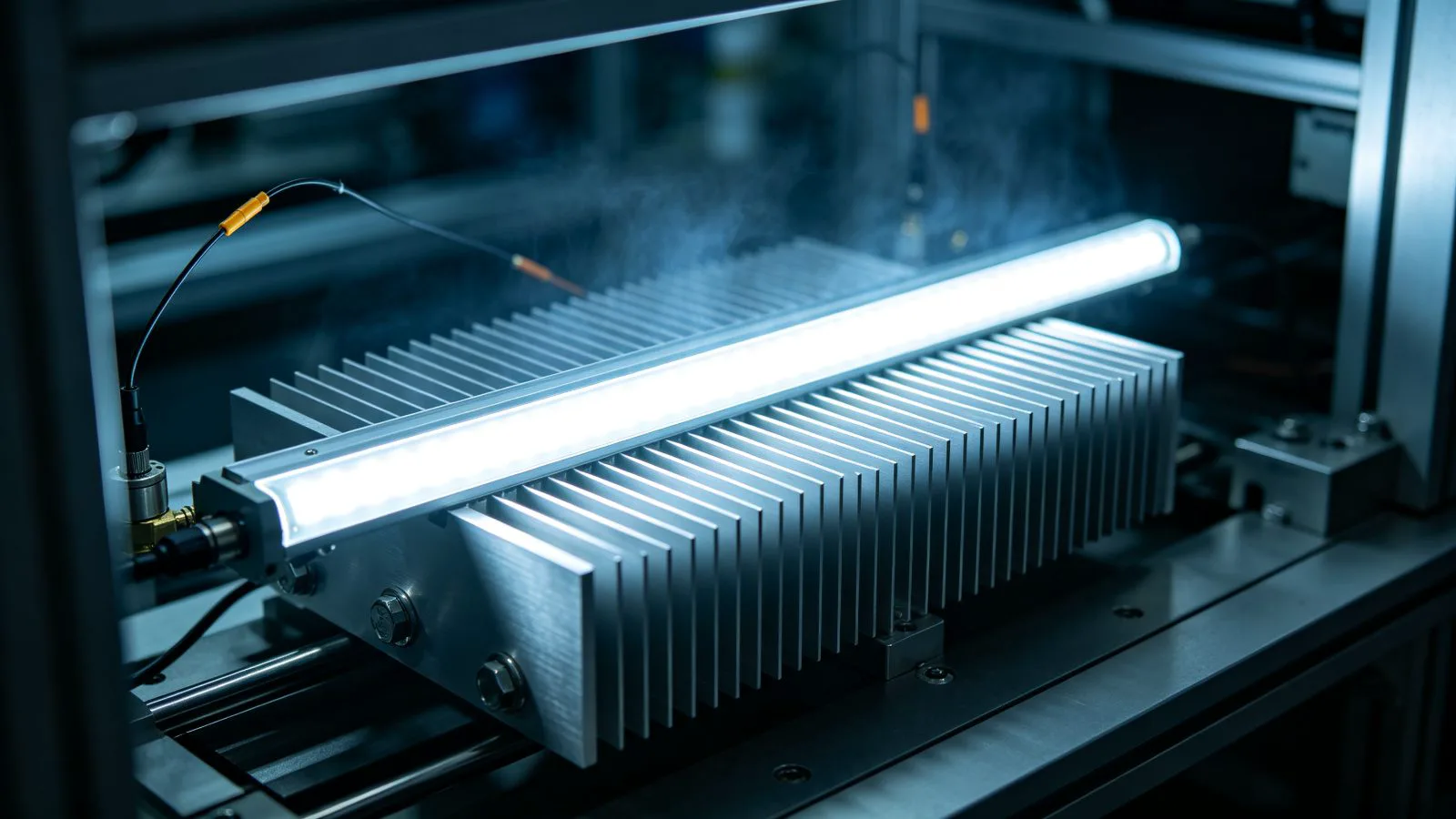
LEDs rarely burn out like incandescent bulbs; they fade. The industry therefore rates lifetime by lumen maintenance — how much light remains after a given number of hours. L70 means the point at which light output has fallen to 70% of initial, i.e. 30% depreciation, which is roughly the threshold at which occupants notice the dimming.
The B number describes the population. B50 means 50% of modules are allowed to have fallen below L70 at the rated time — a median. B10 is far stricter: only 10% may be below the threshold. Two products can both say “L70 50,000 h” while one means the median and the other means the worst-case tenth percentile — they are not comparable.
Common lumen-maintenance ratings decoded
| Rating | Meaning | Typical use |
|---|---|---|
| L70 / B50 | 50% of modules still ≥70% lumens | General commercial, most datasheets |
| L80 / B50 | 50% still ≥80% lumens | Higher-quality maintained output |
| L70 / B10 | Only 10% below 70% | Conservative engineering, maintenance-light |
| L90 / B10 | 90% of modules ≥90% lumens | Museum, gallery, colour-critical |
For maintenance contracts and spaces where relamping is expensive, specify an L80 or B10 figure rather than the default L70/B50 — it forces the supplier to design with more thermal headroom.
LM-80, TM-21 and the Honesty of the Hour Number
Manufacturers do not run LEDs for 50,000 hours (5.7 years) before selling them. LM-80 (IES LM-80) is the standardised test that measures lumen depreciation of the LED package over at least 6,000–10,000 hours at several controlled temperatures. TM-21 (IES TM-21) is the mathematical method that extrapolates those measurements out to a long-term lifetime.
- TM-21 projections are capped at 6× the test duration — the so-called 6x rule. A 10,000-hour LM-80 dataset can legitimately support a 60,000-hour claim; a 6,000-hour dataset only 36,000 hours.
- Claims beyond the 6x cap, or with no LM-80 data at all, are extrapolation beyond the rules and should be treated as marketing.
- The projection is only valid at the tested current and temperature. Running strip hotter or harder than the tested condition invalidates the number.
Ask for the LM-80 report for the exact LED package used and the TM-21 calculation sheet. A supplier selling strip with a 50,000-hour sticker but no LM-80 for the actual chip is asking you to trust a number with no test behind it.
Heat Is the Real Lifetime Lever
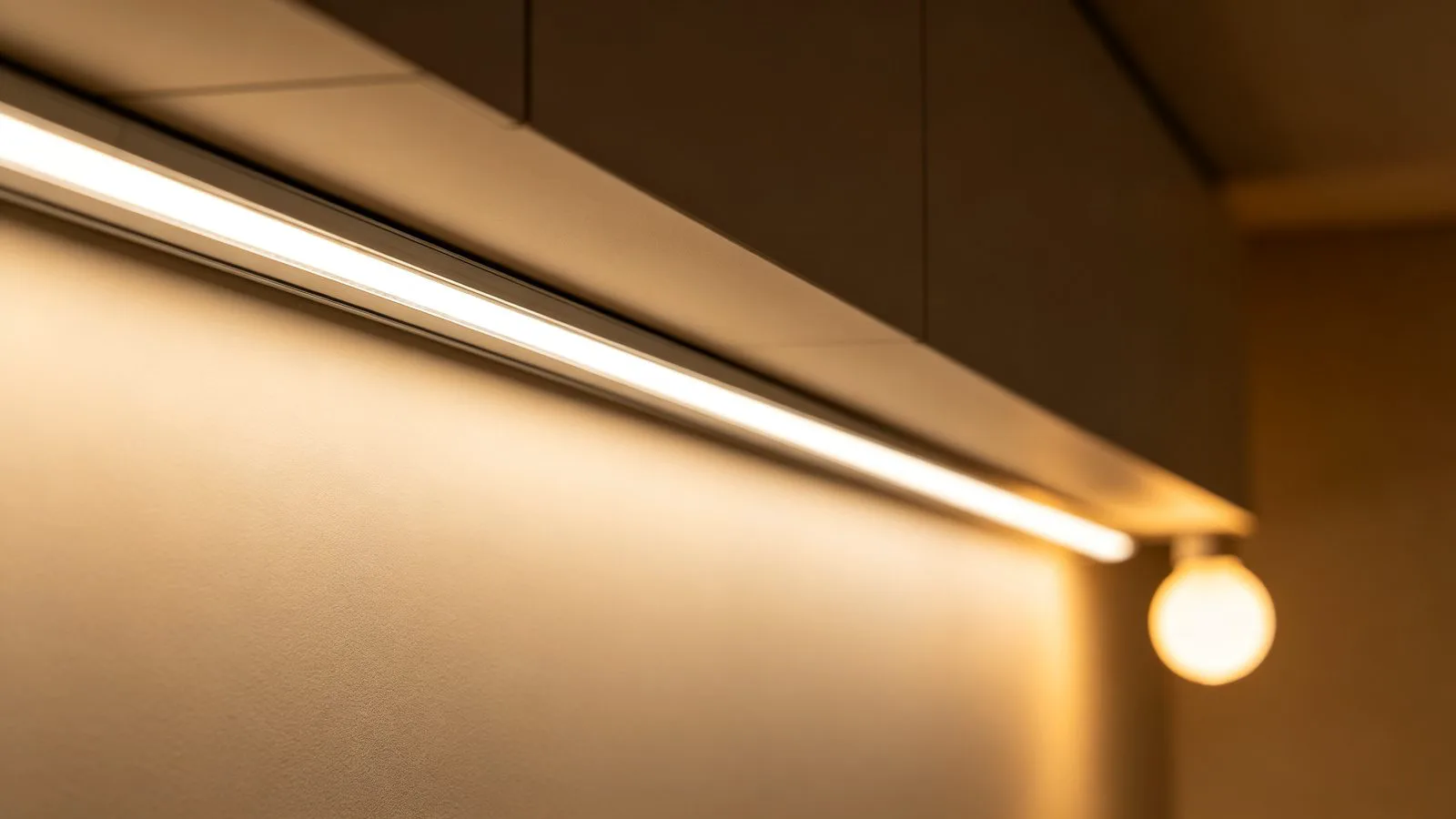
The rated hours assume a specific LED case temperature (Tc), commonly 55°C or 65°C in the test. Installed in a sealed plastic channel under a kitchen cabinet with no airflow, the same strip can run at 85°C+ — and lifetime collapses. The Arrhenius relationship behind LED degradation means roughly that every 10 °C rise at the junction halves useful life.
How installation temperature changes real lifetime (illustrative, L70)
| LED case temp Tc | Approx. L70 life | Typical installation |
|---|---|---|
| 55 °C | ~50,000 h+ | Wide aluminum profile, ventilated, correct current |
| 65 °C | ~35,000–40,000 h | Standard aluminum channel, moderate density |
| 75 °C | ~20,000–25,000 h | Small channel or high-density strip |
| 85°C+ | <15,000 h | Sealed plastic channel, no heatsinking, overdriven |
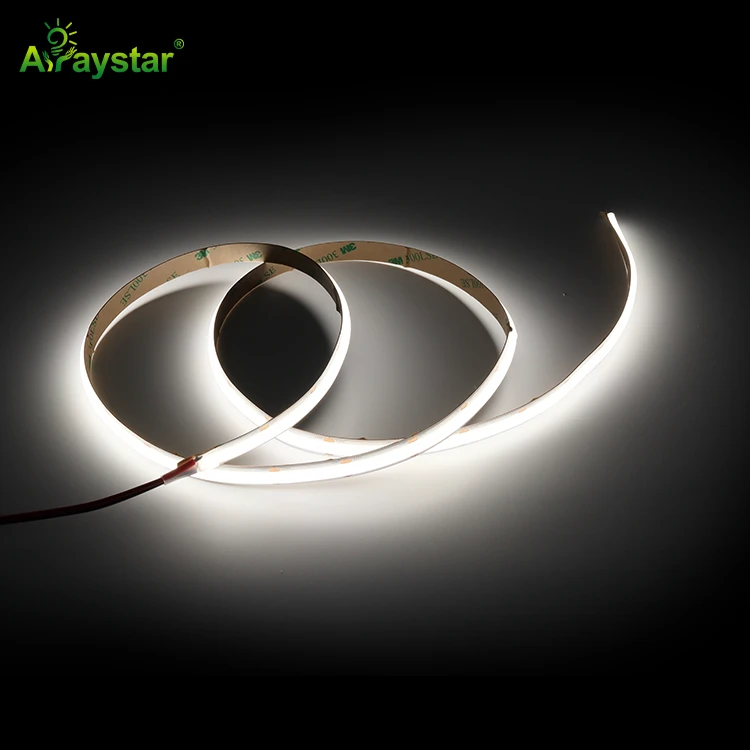
- Mount strip in aluminum, not plastic: the profile is the heatsink; wider and deeper is cooler.
- Match LED density and current to the profile — ultra-high-density strip needs proportionally more metal.
- For enclosed or high-ambient locations (saunas, under-cabinet with covers, retail window sun) derate or choose a lower-current, higher-efficiency strip.
- Constant-current or high-voltage long-run strip often runs cooler per metre than many parallel constant-voltage reels.
How to Compare Lifetime Claims Honestly
When evaluating two quotes, line up the assumptions rather than the headline hours. A credible specification reads: “L80/B10 >54,000 hours at Tc 65 °C, per LM-80 10,000 h and TM-21 6x projection.” A weak one reads simply: “50,000-hour lifespan.”
- Request the LM-80 report and TM-21 sheet for the exact LED package, not a generic brand brochure.
- State the Lx/Bx point and Tc in your tender, and require thermal guidance for the profile you intend to use.
- Where maintenance access is costly, buy headroom: specify L80/B10 and an oversized profile rather than chasing the cheapest reel.
- Keep driver life in view — electrolytic capacitors in the driver often fail before the LEDs, so premium drivers are part of the system lifetime.
We supply LM-80/TM-21 documentation and thermal recommendations with every commercial order, and we deliberately recommend a lower-current, wider-profile solution where a high-density strip would cook in the customer's chosen channel. The cheapest way to a 50,000-hour installation is to keep the LEDs cool.
Recommended Products
Frequently Asked Questions
What is the difference between L70 and B50?
They describe different things. L70 is the lumen-maintenance threshold (light falls to 70% of initial); B50 is the population statistic (50% of modules may be below that point). A full rating such as L70/B50 means half the modules are still above 70% output at the stated hour.
Is a 50,000-hour LED strip claim reliable?
Only if backed by LM-80 test data and a TM-21 projection within the 6x limit, and valid at the temperature you will actually run. A bare “50,000-hour” sticker with no documentation, or strip installed hotter than the tested Tc, can deliver a fraction of that in reality.
How much does heat shorten LED strip life?
As a rule of thumb every 10 °C increase at the LED junction roughly halves useful life. Strip in a wide ventilated aluminum profile at 55–65 °C can reach 40,000–50,000+ hours; the same strip sealed in plastic at 85 °C may fall below L70 in under 15,000 hours.
Should I specify L80 instead of L70?
For maintenance-light or premium spaces, yes. Requiring L80 (only 20% depreciation) and/or B10 (only 10% of modules below threshold) forces the supplier to design with thermal headroom and keeps the space looking consistently bright for longer.
Do the LEDs or the driver fail first?
Often the driver. Quality LEDs in good thermal design can last 50,000+ hours, while the driver's electrolytic capacitors are heat-sensitive and may fail sooner. Specifying a premium driver with its own temperature rating and accessible mounting location protects the overall system life.
Need documented lifetime for a maintenance-light project?
We provide LM-80/TM-21 reports, L80/B10 options and matched aluminum profiles sized to keep Tc in spec. Share your profile and ambient conditions for a thermal-reviewed bill of materials.
Email: info@arraystarled.com | Phone: +86-0755-2103-6746 | WhatsApp: 0086 1581 8514 077
Need to size your power supply? Use our LED Strip Power Calculator to find the right driver in seconds.