PCB Copper Thickness 2oz vs 3oz: Heat & Voltage Drop Impact
- 2026-09-19 12:27
- /
- Arraystar
Voltage drop — not LED count — is what causes the dim, colour-shifted tail on a long strip run. Specify 2-oz (70 µm) or thicker copper PCB for runs over about 5 m, prefer 24 V (or 48 V for 10 m+), and either feed both ends or use constant-current/long-run strip. A 1-oz board on a 10-metre 12 V run can lose 15%+ of its brightness end to end.
Why the PCB Copper Layer Does the Work
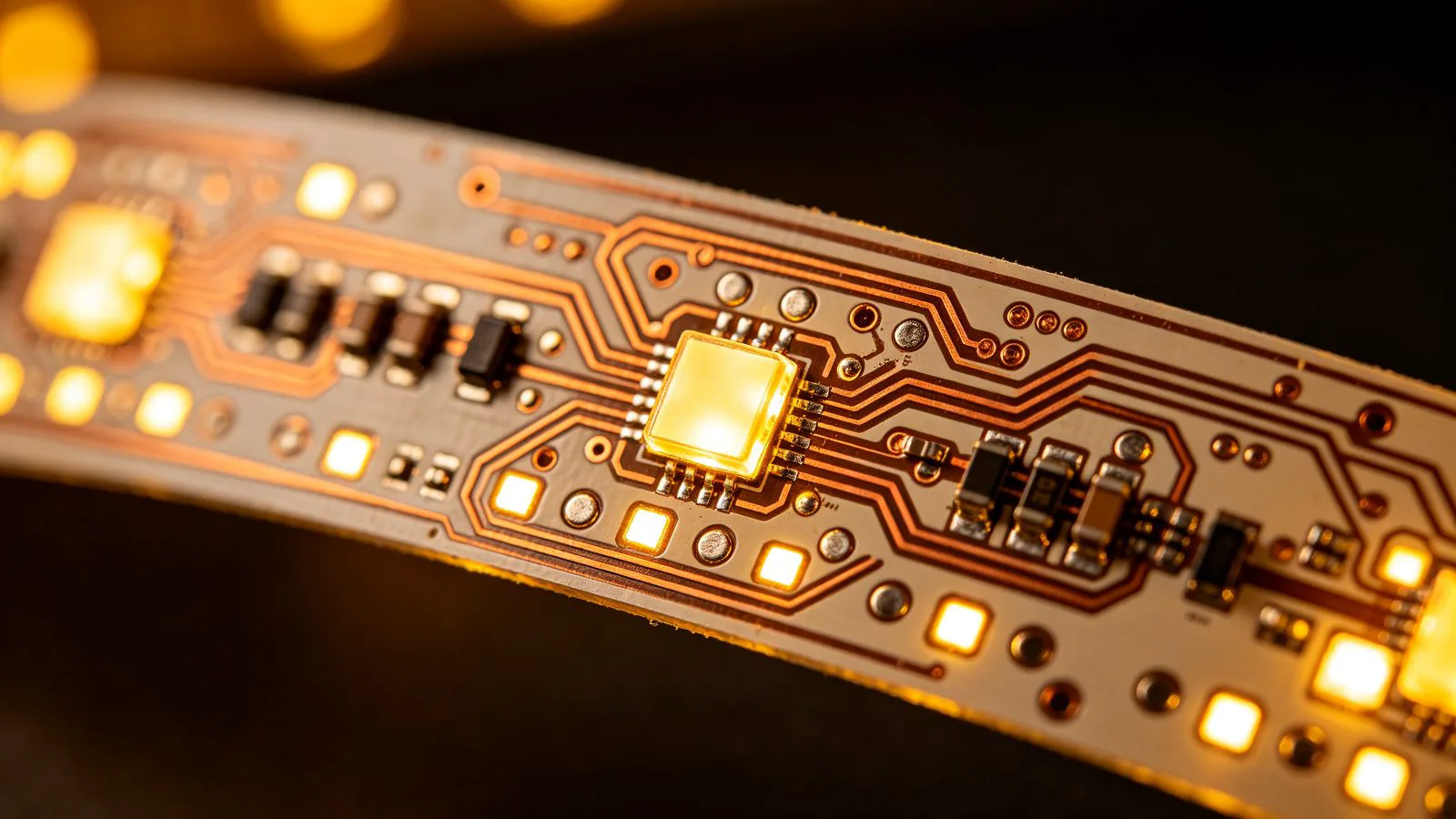
Flexible LED strip is built on a laminated board: a thin layer of copper bonded to a polyimide or FR-4 substrate, etched into the traces that carry current to every LED. That copper layer is the power cable of the strip, and its cross-sectional area — set by trace width and copper thickness — determines how much voltage is lost along the run.
Copper thickness is quoted in ounces per square foot (oz) or micrometres (µm). One-ounce copper is ~35 µm thick; the common upgrade is 2-oz (~70 µm), which doubles the cross-section and roughly halves trace resistance. Budget strip frequently uses 0.5-oz or narrow traces to save metal, which is invisible on the reel but obvious at the end of a long run.
The visible symptom: dimming and colour shift
Constant-voltage LEDs dim as supply voltage falls. On white strip the tail looks dimmer; on RGB or RGBW the three channels dim unequally, so the tail also shifts colour — a cove that starts 3000 K warm white and ends slightly pink or blue. This is voltage drop, and no controller setting can correct it.
The Voltage-Drop Math, Simply
Voltage drop follows Vdrop = I × R, where R is the trace resistance over the run. Higher current (low voltage, high wattage) and thinner, longer copper both increase it. The tolerance is tight: a 12 V strip fed only 10.5 V at the tail is already 12.5% under-voltage and visibly dim; the rule of thumb is to keep drop under roughly 3% (about 0.4 V on 12 V, 0.7 V on 24 V).
Indicative single-end run limits before visible drop (constant-voltage white strip)
| Voltage / copper | 1 oz (35 µm) | 2 oz (70 µm) | 3–4 oz |
|---|---|---|---|
| 12 V | ~4–5 m | ~7–8 m | ~10 m |
| 24 V | ~8–10 m | ~12–15 m | ~18–20 m |
| 48 V / long-run | 15 m+ | 20 m+ | 25–30 m |
These are indicative — actual limits depend on watts-per-metre and trace width, which is why a high-density 24 W/m strip needs shorter runs or thicker copper than a 10 W/m strip. Always design from the supplier's voltage-drop table for the specific product.
Choosing Voltage, Copper and Feed Strategy
- 12 V suits short runs and tight cuts (more cut points); it is the worst choice for long coves because current — and therefore drop — is highest.
- 24 V halves the current for the same wattage and is the default for general architectural runs over about 5 m.
- 48 V and constant-current / long-run strip are purpose-built for 15–30 m uninterrupted lines such as coves, corridors and facade outlines.
- Double-end feed (power from both ends) effectively halves the worst-case run length and rescues borderline installations.
- Ample copper (2 oz+) costs a few percent more per metre and is the cheapest insurance against a visibly uneven line.
Other places voltage is lost
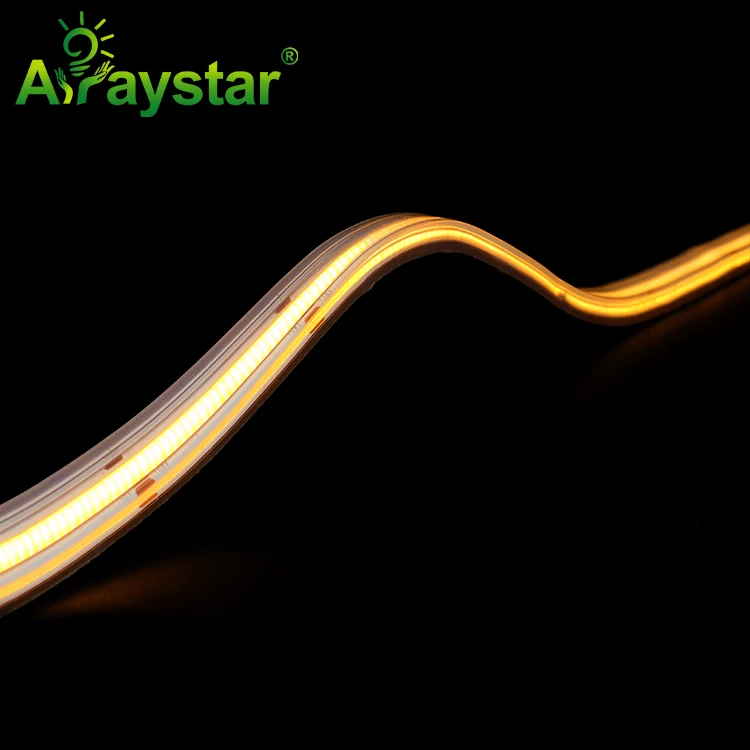
The PCB is only one link. Undersized connecting wire, daisy-chained connectors, long DC cables from a remote driver and overloaded parallel runs all add drop before the strip even starts. Use appropriately gauged feed cable, keep drivers close to the load, and treat each connector as a small resistance in series.
How to Specify for an Even Line, Every Time
The professional sequence is: choose watts-per-metre and CCT first; pick the voltage from the run length; then lock the copper thickness and feed method from the voltage-drop table; finally size the driver at no more than 80% load.
Specification decision by run length (single-colour architectural strip)
| Run length | Voltage | Copper | Feed / product |
|---|---|---|---|
| Up to 5 m | 12/24 V | 1–2 oz | Single feed |
| 5–10 m | 24 V | 2 oz | Single or double feed |
| 10–15 m | 24 V high-eff. or 48 V | 2–3 oz | Double feed / long-run |
| 15 m+ continuous | 48 V / constant-current | Long-run PCB | Dedicated long-run strip |
Request a sample or a voltage-drop calculation for the exact reel length and loading you plan. We specify copper thickness on every product datasheet, stock 2-oz and 3-oz boards for long-run work, and offer constant-current strip that holds near-constant brightness across 20–30 metres without re-feeding — the cleanest answer for long architectural lines.
Recommended Products
Frequently Asked Questions
What copper thickness should LED strip use?
For runs under about 5 metres, standard 1-oz (35 µm) copper is usually fine. For longer or higher-wattage runs specify 2-oz (70 µm) or thicker, and use 3–4-oz boards for the longest constant-voltage lines. The extra copper cost is small compared with replacing an uneven installation.
Is 24V LED strip better than 12V for long runs?
Yes. For the same wattage 24 V draws half the current of 12 V, so voltage drop is roughly halved and acceptable runs are about twice as long. Reserve 12 V for short runs and applications needing frequent cut points; use 24 V (or 48 V) for coves and long architectural lines.
Why is one end of my LED strip a different colour?
That is voltage drop: the tail of a long or thin-copper run receives lower voltage, and the R/G/B or phosphor channels respond unequally, causing dimming and colour shift. Fix it with thicker-copper or higher-voltage strip, double-end power feed, or constant-current long-run product.
Does feeding from both ends really help?
Yes. Powering a run from both ends halves the effective one-way length and roughly quarters the worst-case voltage drop for the same copper, often rescuing a borderline cove without changing product. Ensure both feeds come from the same driver and observe polarity.
How do I avoid voltage drop on runs over 15 metres?
Use 48 V or constant-current long-run strip designed for 20–30 metre uninterrupted lines, thick copper, appropriately gauged feed cable and drivers sized under 80% load. For very long facade or corridor runs, long-run product is more reliable than re-feeding many 24 V reels.
Planning a long cove or facade run?
We stock 2-oz/3-oz copper boards, 24 V and 48 V strip and constant-current long-run product holding even brightness to 30 m. Send your run lengths and watts/metre for a voltage-drop-checked layout.
Email: info@arraystarled.com | Phone: +86-0755-2103-6746 | WhatsApp: 0086 1581 8514 077
Need to size your power supply? Use our LED Strip Power Calculator to find the right driver in seconds.