TLCI vs CRI: Choosing LED Strips for Film, TV & Broadcast Studios
- 2026-09-19 12:27
- /
- Arraystar
For any camera-critical space — studios, virtual-production sets, broadcast corners or film locations — specify TLCI ≥ 95 (and SSI/TM-30 where possible), CRI Ra ≥ 95 with R9 > 90, plus flicker-free dimming (<1% flicker, >3000 Hz). High CRI alone does not guarantee good skin tones on camera, and an otherwise perfect set is ruined by strip that band or flicker on sensor.
Why CRI Is Not Enough for Camera
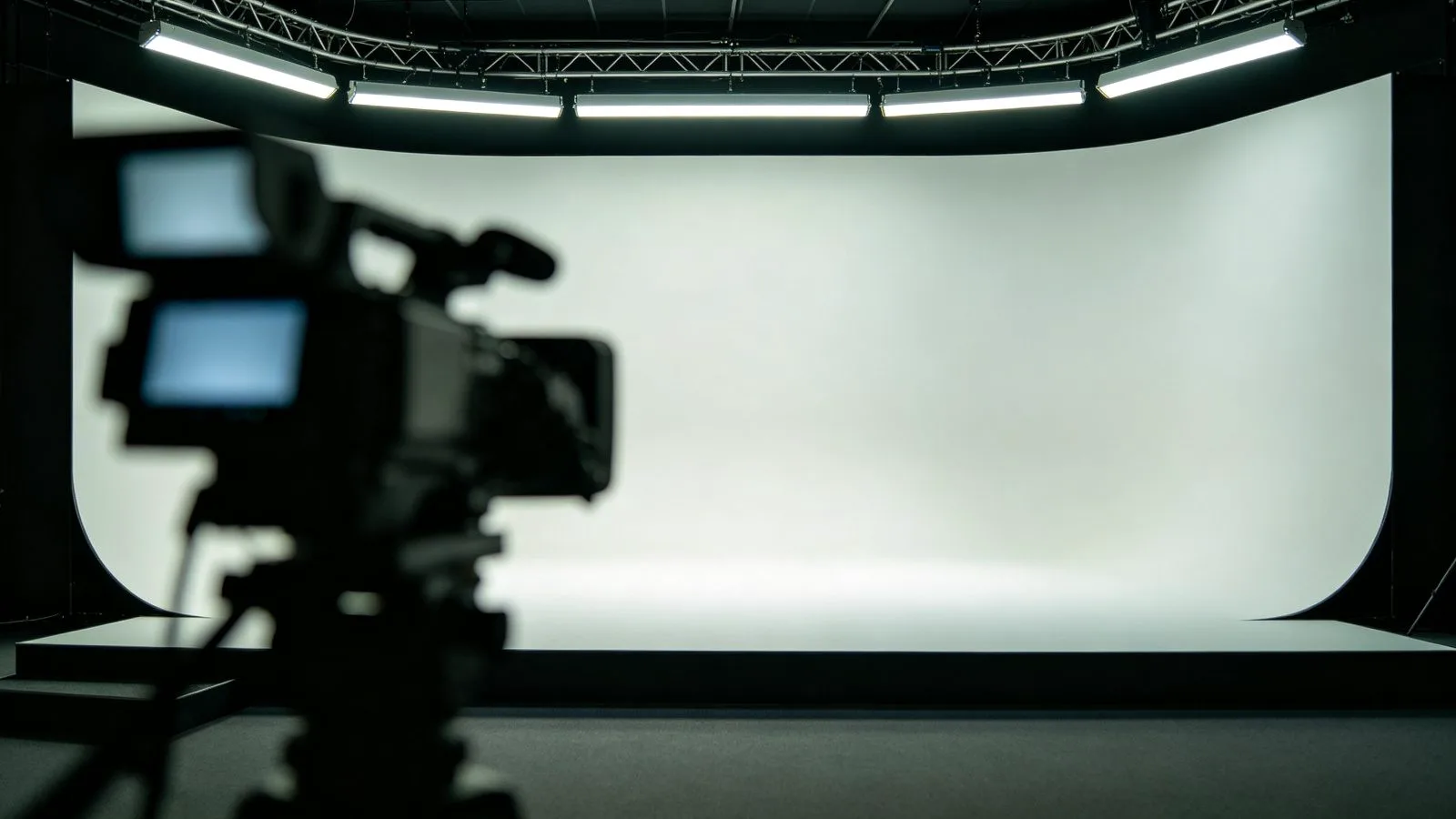
CRI (Colour Rendering Index) was developed in the 1960s to judge how a light source renders a small set of pastel colour samples compared to daylight — using the human eye as the reference. Television and cinema cameras are not human eyes: their red, green and blue sensors have narrow, specific sensitivities, and a source can score CRI 95 while rendering skin tones poorly on a CMOS sensor.
The most common failure is red. CRI's headline Ra value averages eight samples (R1–R8) and excludes the saturated-red sample R9. A strip can post Ra 95 with a weak red spike, leaving faces looking washed-out or greenish and set fabrics appearing muddy on camera — even though it looks fine to the crew standing on set.
The metrics that actually predict on-camera results
- TLCI (Television Lighting Consistency Index, IEC standard): analyses the spectrum against a standard TV camera and reports how little colour correction is needed in post; 0–100, higher is better.
- TM-30 (IES TM-30-15/20): modern framework using 99 colour samples, reporting fidelity Rf, gamut Rg and detailed hue/skin charts.
- SSI (Spectral Similarity Index): compares spectrum shape directly to a reference, increasingly used on virtual-production sets.
- CRI R9 and R13: saturated red and skin-tone samples that reveal the weaknesses Ra hides.
Reading the Numbers: TLCI, TM-30 and CRI Together
What the scores mean for broadcast and film
| Metric | Acceptable | Good | Studio-grade |
|---|---|---|---|
| CRI Ra | ≥90 | ≥95 | ≥97 |
| CRI R9 (saturated red) | >50 | >80 | >90 |
| TLCI-2012 | ≥85 | ≥90 | ≥95 |
| TM-30 Rf | ≥85 | ≥90 | ≥95 |
| TM-30 Rg | 95–105 | 97–103 | 98–102 |
Treat the numbers as a screen, not a final verdict: two strips with identical TLCI can behave differently on a specific camera. For high-value shoots, request a 1–2 m sample and film it under the actual camera, shutter angle and ISO before ordering the full run — a step that costs almost nothing and prevents a reshoot.
Colour temperature consistency matters as much as rendering. On a set mixing soft panels, hard light and strip accents, all sources should sit within roughly ±100 K and a tight SDCM bin (see our colour-binning guide), or the grade cannot match them in post.
Flicker, Dimming and the Rolling Shutter
Spectrum is only half the problem. Most consumer and many commercial drivers dim by pulse-width modulation (PWM) — switching the LEDs on and off rapidly. The eye smooths this out; a camera with a rolling shutter does not, capturing it as banding, strobing or a dark band that rolls across the frame. Slow-motion and high-frame-rate shoots make it worse.
- Specify flicker-free drivers with high-frequency PWM (>3000 Hz, ideally >10 kHz) or true analogue/CCR dimming, and a documented flicker percentage below 1% (IEEE 1789 recommends no observable effect).
- Verify at low dim levels — many drivers are clean at 100% but start pulsing below 20%, exactly when moody set lighting operates.
- Match dimming protocol to the rig: 0–10 V or DALI for studio grids, DMX for dynamic and colour-changing sets; avoid mixing consumer TRIAC dimmers with professional cameras.
- Keep drivers and camera power clean — a poor driver can introduce both flicker and electromagnetic noise.
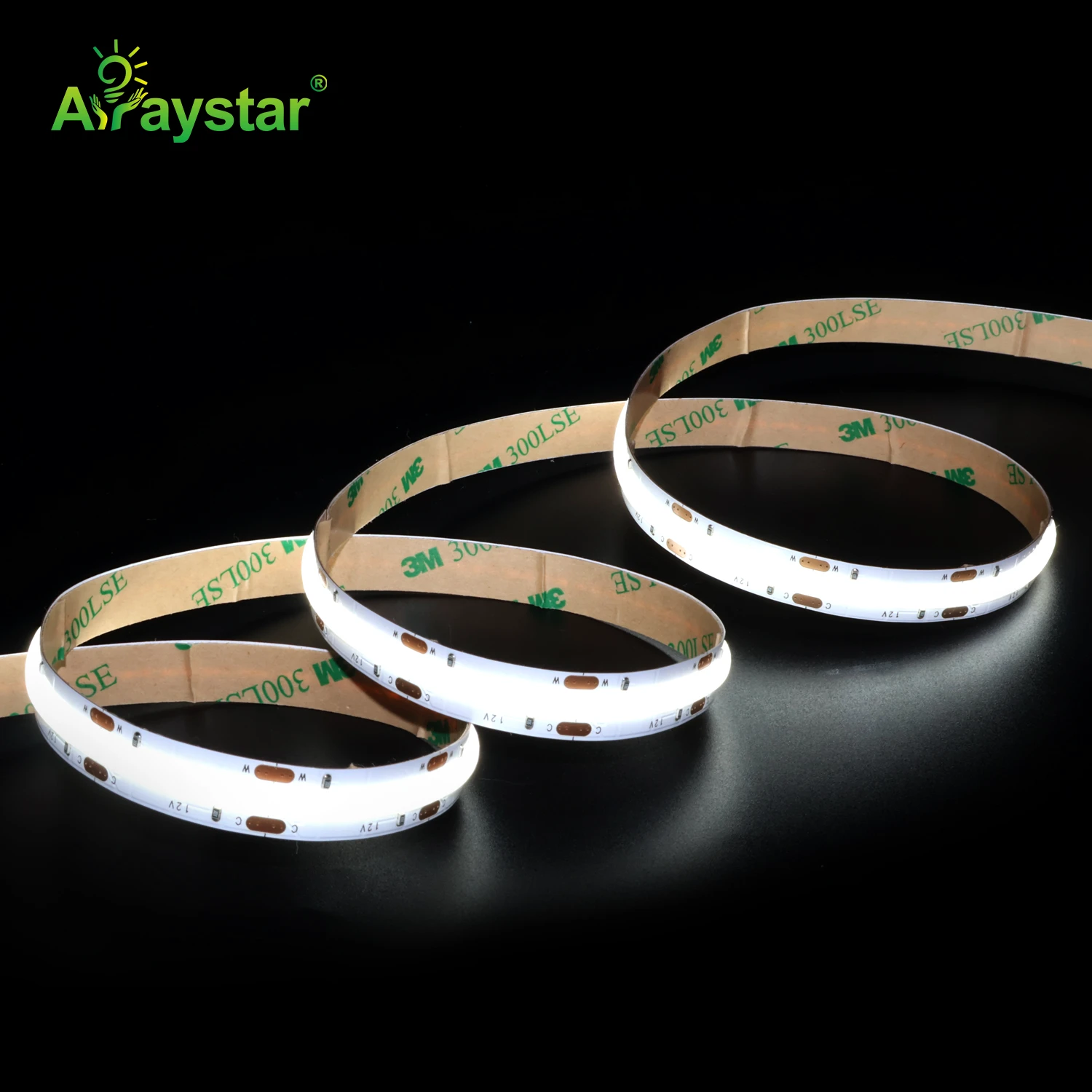
Tunable-white strip is especially valuable on set because it lets the gaffer match practicals — the on-camera lamps and coves — to the key light's colour temperature in seconds, rather than gelling or swapping fixtures between takes.
Specifying Studio and Virtual-Production Strip
LED volumes and green-screen sets add another requirement: spill. Strip lighting talent near an LED wall throws coloured reflections onto faces and costumes, and any flicker in practicals can beat against the wall's refresh rate. Use high-CRI/TLCI tunable strip with flicker-free drivers, keep practicals colour-stable, and coordinate refresh rates between the wall processor and camera.
Specification checklist by camera-critical space
| Space | TLCI / CRI | Dimming | Notes |
|---|---|---|---|
| Talking-head / podcast corner | TLCI ≥90, Ra ≥95 | >3 kHz PWM | Tight CCT match to key light |
| Broadcast studio | TLCI ≥95, R9 >90 | Flicker-free <1% | Sample test on the camera |
| Film / drama location | TLCI ≥95, Rf ≥95 | Analogue or >10 kHz | Full-range smooth dimming |
| Virtual production / LED volume | TLCI ≥95, SSI matched | Genlock-aware, <1% | Control spill and refresh |
As a manufacturer we provide spectral test reports (CRI all 15 samples, TLCI, TM-30), bin consistency and flicker measurements for studio orders, and we recommend a camera test sample up front so the choice is made on the sensor that will actually shoot the project.
Recommended Products
Frequently Asked Questions
Is CRI 95 good enough for video?
CRI 95 is a reasonable starting point but not a guarantee. Check the saturated-red R9 value (aim >90) and a TLCI of at least 90–95, because Ra averages away the red and skin-tone weaknesses that cameras pick up. Always film a sample on the actual camera for high-value work.
What TLCI should studio LED strip have?
Professional broadcast and film work should specify TLCI ≥ 95, with CRI Ra ≥ 95 and R9 > 90. Talking-head and lighter content can use TLCI 90+, but the higher tier removes most colour-correction work in post.
Why does my LED strip flicker only on camera, not to my eye?
The eye smooths out PWM pulsing, but a camera's rolling shutter captures the on/off cycles as banding. It usually appears or worsens at low dim levels and high frame rates. The fix is high-frequency (>3 kHz, ideally flicker-free <1%) dimming verified at the lowest level you use.
Do I need tunable white strip on a film set?
It is strongly useful. Tunable-white practicals and cove strip can be adjusted to match the key light's colour temperature between setups without gels or fixture swaps, and high-CRI tunable COB keeps skin tones accurate across the warm-to-cool range.
How do I avoid LED wall colour spill in a virtual-production set?
Use colour-stable, high-TLCI tunable strip for talent lighting, keep practicals from throwing uncontrolled colour onto faces and costumes, and coordinate the LED wall's refresh rate with the camera (genlock where available). Test the complete chain — wall, strip, driver and camera — before the shoot.
Lighting a studio, set or LED volume?
We supply high-CRI/TLCI 95+ tunable-white COB with flicker-free (<1%) dimmable drivers, full spectral reports and camera-test samples. Tell us your camera, frame rate and CCT for a matched studio package.
Email: info@arraystarled.com | Phone: +86-0755-2103-6746 | WhatsApp: 0086 1581 8514 077
Need to size your power supply? Use our LED Strip Power Calculator to find the right driver in seconds.