LED Strip Applications: Commercial, Retail, Restaurant & Hotel Lighting
- 2026-09-08 17:02
- /
- Arraystar LED
Why LED Strips Dominate Modern Commercial Lighting
Few lighting products are as adaptable as the LED strip. A single flexible circuit board populated with surface-mount diodes can be bent, cut to length, hidden into millimetre-wide gaps and tuned to almost any colour temperature or beam effect. That flexibility is why architects, interior designers and facility managers now specify LED strip lighting across retail floors, dining rooms, hotel lobbies and exterior facades. Compared with halogen, fluorescent and even conventional downlights, high-quality strips cut energy use by 60–80%, last 50,000 hours or more and produce far less radiant heat — an important factor in climate-controlled retail and hospitality spaces.
This guide walks through the highest-return commercial applications, the technical specifications that matter in each, and the installation details that separate a professional result from a disappointing one.
Retail Lighting: Guide Attention and Lift Sales
Retail is where lighting most directly affects revenue. The Lighting Research Center and numerous merchandising studies have found that well-designed accent lighting increases dwell time and can lift conversion by double-digit percentages. LED strips excel at three retail jobs:
- Shelf and under-cabinet lighting: low-profile strips mounted beneath shelving eliminate shadows on products and make labels legible. Use 3000K with CRI 90+ for general merchandise and 2700K for premium displays.
- Backlit feature walls and logo panels: strips installed behind translucent acrylic or stretch fabric create even, glare-free brand backdrops that draw the eye toward promotional zones.
- Window displays: IP65-rated strips and tunable or RGBW accents let merchandisers refresh window scenes seasonally without rewiring.
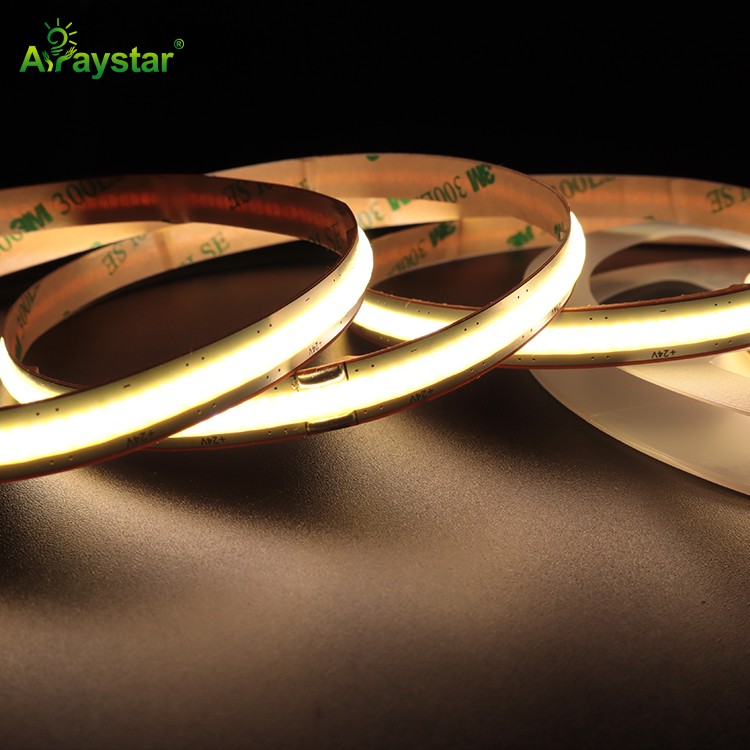
For apparel and cosmetics, specify CRI 95+ with strong R9 (red rendering, ideally above 80) so fabrics and makeup read accurately. You can browse our COB LED strip range for dot-free shelf and cove lighting.
Restaurant and Café Lighting: Set the Mood, Control the Bill
Diners stay longer and spend more in warm, layered environments. Restaurants use LED strips to build three distinct layers: bright, cool task light in the kitchen and pass; warm ambient cove light over the dining floor; and accent light on bars, bottle displays and artwork. A typical scheme combines 2700K strips in ceiling coves for warmth with dimmable 3000K strips under the bar front. Because strips dim smoothly to 1% with the right driver, a single system can shift from a bright lunch setting to an intimate evening scene.
Key specifications for hospitality include flicker-free dimming (look for drivers with low ripple and PWM frequencies above 1,000 Hz), high CRI to make food look appetising, and IP44 or better protection near serving and wash areas. Our LED neon flex is a popular choice for bar outlines and signage because it delivers continuous, shadow-free lines.
Hotel and Hospitality Lighting: Comfort That Earns Reviews
Hotels use strips everywhere guests form an impression — lobby coves, reception desks, corridor kickboards, headboard accent lines and bathroom mirrors. Warm 2700K–3000K light with CRI 90+ flatters skin tones and photographs well, which encourages the social-media sharing modern hotels rely on. Tunable-white strips add a circadian dimension: cooler 4000K light in bathrooms and gyms during the morning, warmer 2700K in guest rooms during the evening.
Reliability is critical because maintenance access in finished guest rooms is expensive. Specify strips with LM-80-tested chips, 3-step MacAdam binning for colour consistency, and constant-voltage drivers with 20% headroom. We cover the full specification in our SMD LED strip catalogue.
Offices, Workspaces and Public Buildings
In offices, strips are integrated into linear pendants, recessed coves and under-shelf task lighting. Tunable-white systems that follow daylight cycles support concentration and regulate circadian rhythm; neutral 3500K–4000K light at 300–500 lux at the desk is the common target. For corridors, stairways and public buildings, strips provide low-energy wayfinding and architectural definition while meeting emergency-lighting and efficiency codes.
Exterior, Facade and Landscape Lighting
Outdoor strips transform building outlines, bridges, pergolas and decking. Here ingress protection is non-negotiable: IP65 for sheltered eaves, IP67 for exposed but non-immersed locations and IP68 solid-silicone-extrusion or resin-filled strips where water contact is sustained. Use UV-stable jackets in strong sunlight and marine-grade 316 fasteners near salt air. DMX512-addressable strips allow dynamic facade shows that can be re-themed for events or holidays.
Installation Notes That Protect Your Investment
- Always use an aluminium profile. It acts as a heat sink, hides the dots and protects the strip; running high-wattage strips without a profile dramatically shortens life.
- Size the power supply correctly. Add the total wattage and multiply by 1.25 for headroom; observe 5-metre run limits on 12V and 10-metre limits on 24V to avoid voltage-drop dimming, or inject power at both ends.
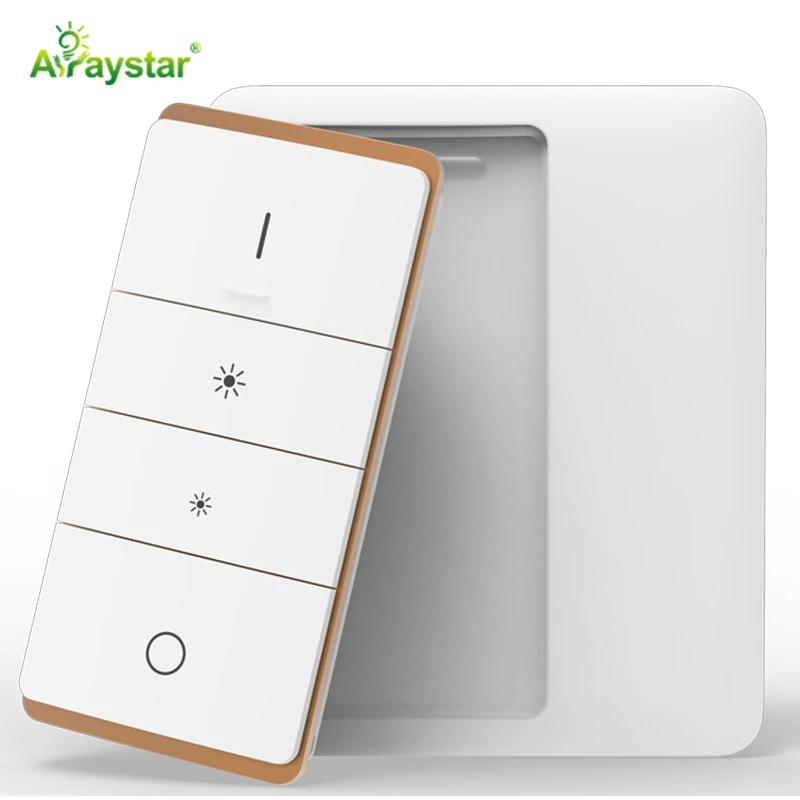
- Match dimmers and drivers. Confirm TRIAC, 0–10V, DALI or DMX compatibility across the whole chain before installation.
- Manage heat in enclosed coves. Leave ventilation and derate strips in sealed profiles.
Recommended Products by Application

Frequently Asked Questions
What is the most common commercial use for LED strips?
Cove and accent lighting lead the market, followed by shelf, under-cabinet and signage applications. Strips are valued for fitting into spaces conventional fixtures cannot reach.
How much energy do commercial LED strips save?
Against halogen and fluorescent sources, high-quality strips typically reduce lighting energy by 60–80%, with most projects reaching payback within two years.
Which colour temperature is best for hospitality?
Restaurants and hotel guest rooms generally use 2700K–3000K at CRI 90 or above; offices and bathrooms lean toward 3500K–4000K.
Can LED strips be used outdoors?
Yes, provided you select the correct IP rating — IP65 minimum, IP67 or IP68 for exposed or wet locations — with UV-stable jacketing and proper drainage.
Get a Free Lighting Consultation
Specifying LED strips for a commercial project involves colour, control, thermal and power decisions that are easier to get right with expert input. Our engineering team provides free layout reviews, product specifications, wattage calculations and sample support for contractors, designers and importers worldwide.
Email: info@arraystarled.com
Phone: +86-0755-2103-6746
WhatsApp: 0086 1581 8514 077