LED Strip Luminous Efficacy: Lumens per Watt Explained
- 2026-09-18 19:05
- /
- Arraystar
Quick Answer
Luminous efficacy = lumens of light output ÷ watts of electricity (lm/W). It tells you how hard a strip works for its power. Modern LED strips range from about 80 lm/W on budget SMD to 130–160 lm/W on high-efficiency COB/SMD. Higher lm/W means more light per metre, smaller drivers and lower running cost — but always compare output on the same test basis, not a single marketing number.
📑 Table of Contents
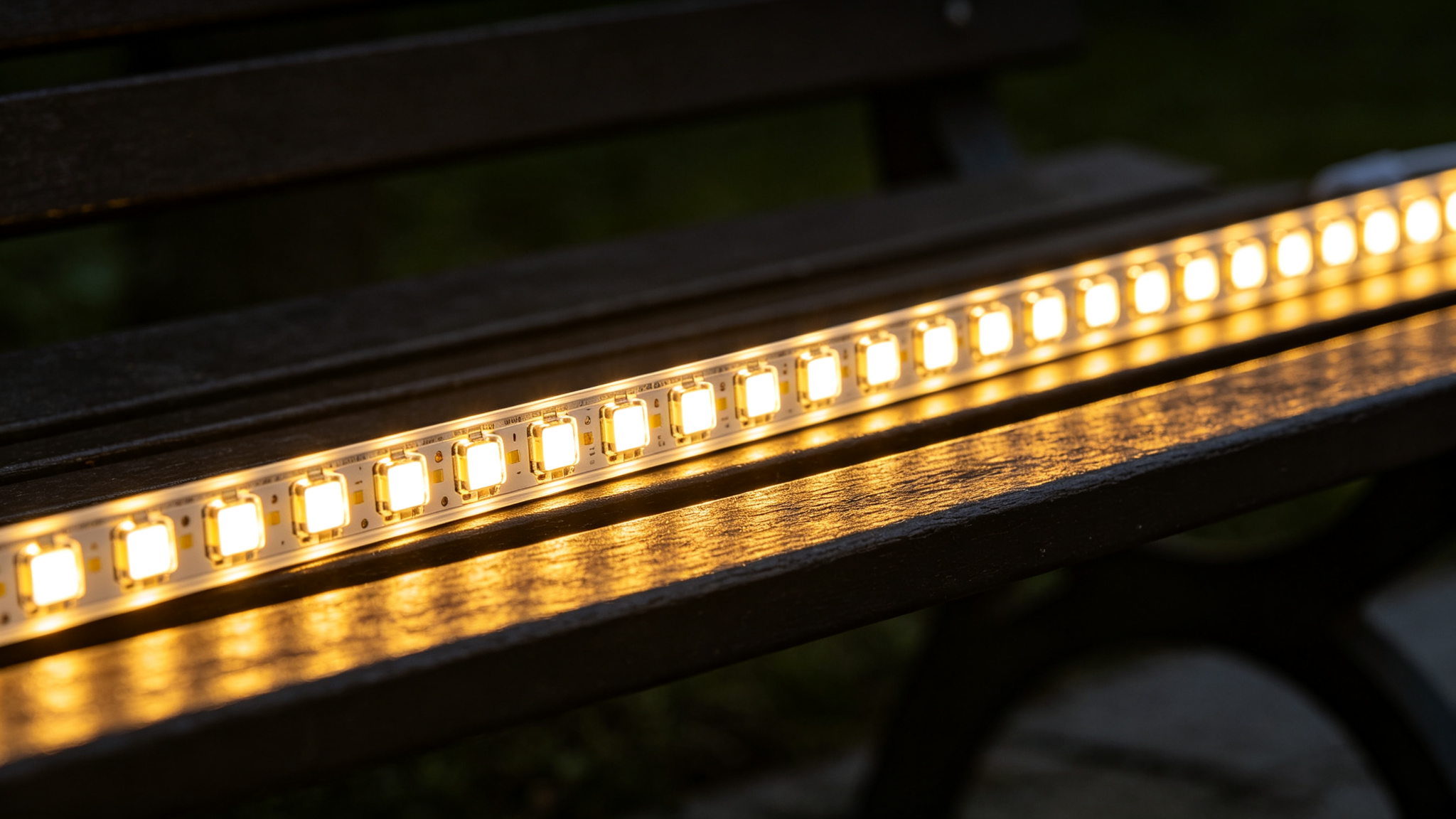
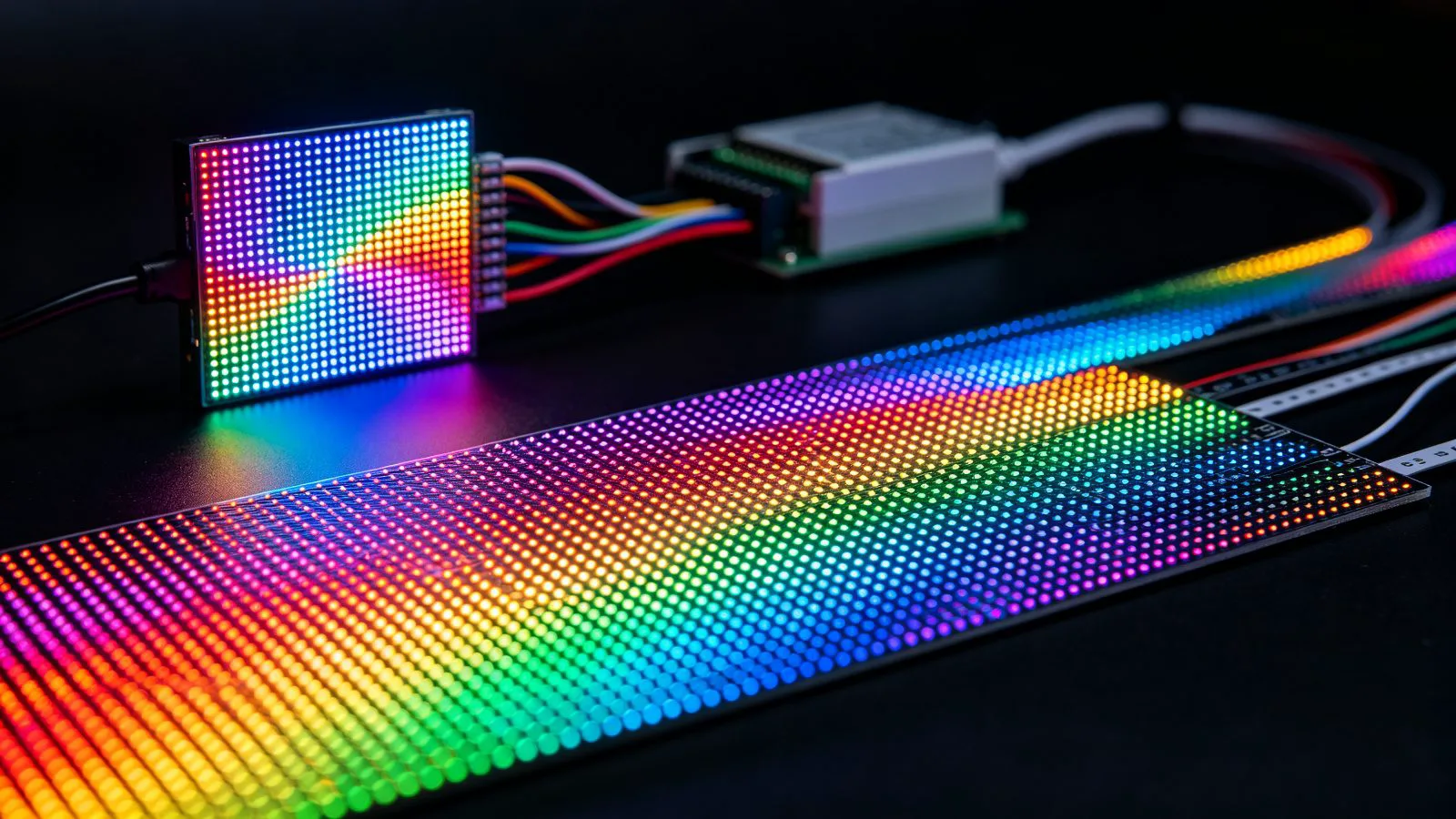
High efficacy means bright, even light from modest power — smaller drivers, lower bills.
What Lumens per Watt Actually Means
A watt is electricity; a lumen is visible light. Luminous efficacy (lm/W) divides one by the other. A strip that makes 1,200 lm from 10 W is 120 lm/W; one that makes the same 1,200 lm from 15 W is only 80 lm/W. The higher number produces the same brightness for less current — which matters on long runs, on heat, and on the electricity bill.
It is not the same as raw brightness: a high-power strip can be bright yet inefficient. Efficacy rewards engineering — better chips, optics and PCB layout — and it is the number behind EU ERP and energy-labelling requirements. Pair it with correct driver sizing from our LED strip wattage guide.
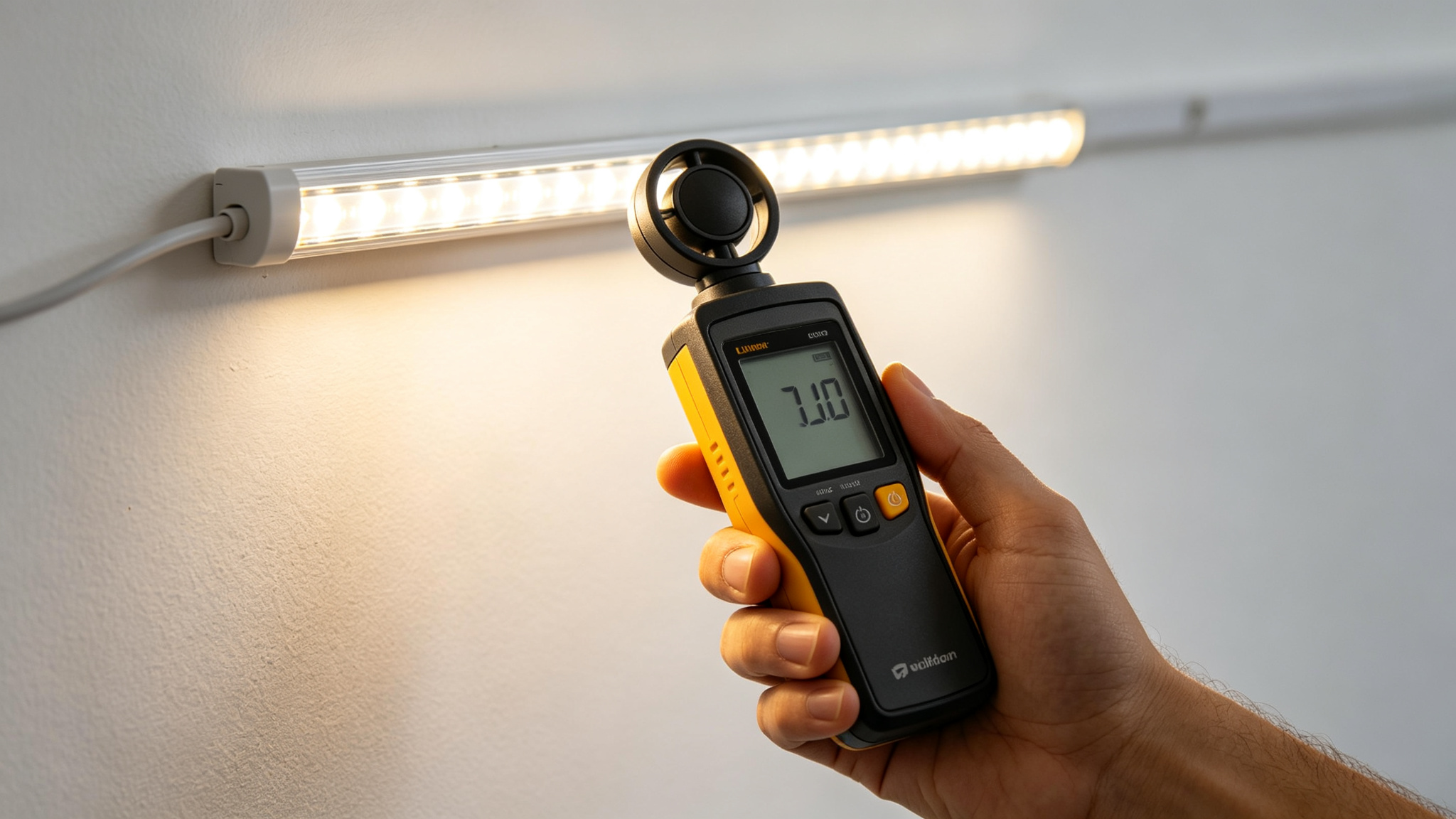
Measure real lux at the mounting distance — efficacy numbers only tell part of the installed story.
How COB, SMD and Density Affect Efficacy
- Chip generation: newer high-efficiency 2835 and COB chips convert more electricity to light; older or cheap chips waste more as heat.
- Density: more LEDs per metre spread the load, often improving efficacy per chip — but only if the PCB and driver match.
- Phosphor / CRI: high-CRI and red-enhanced blends are slightly less efficient; there is a small trade-off between lm/W and colour quality (see our CRI guide).
- Thermals: a strip run hot or unheated loses efficacy and lifespan; aluminium channels help.
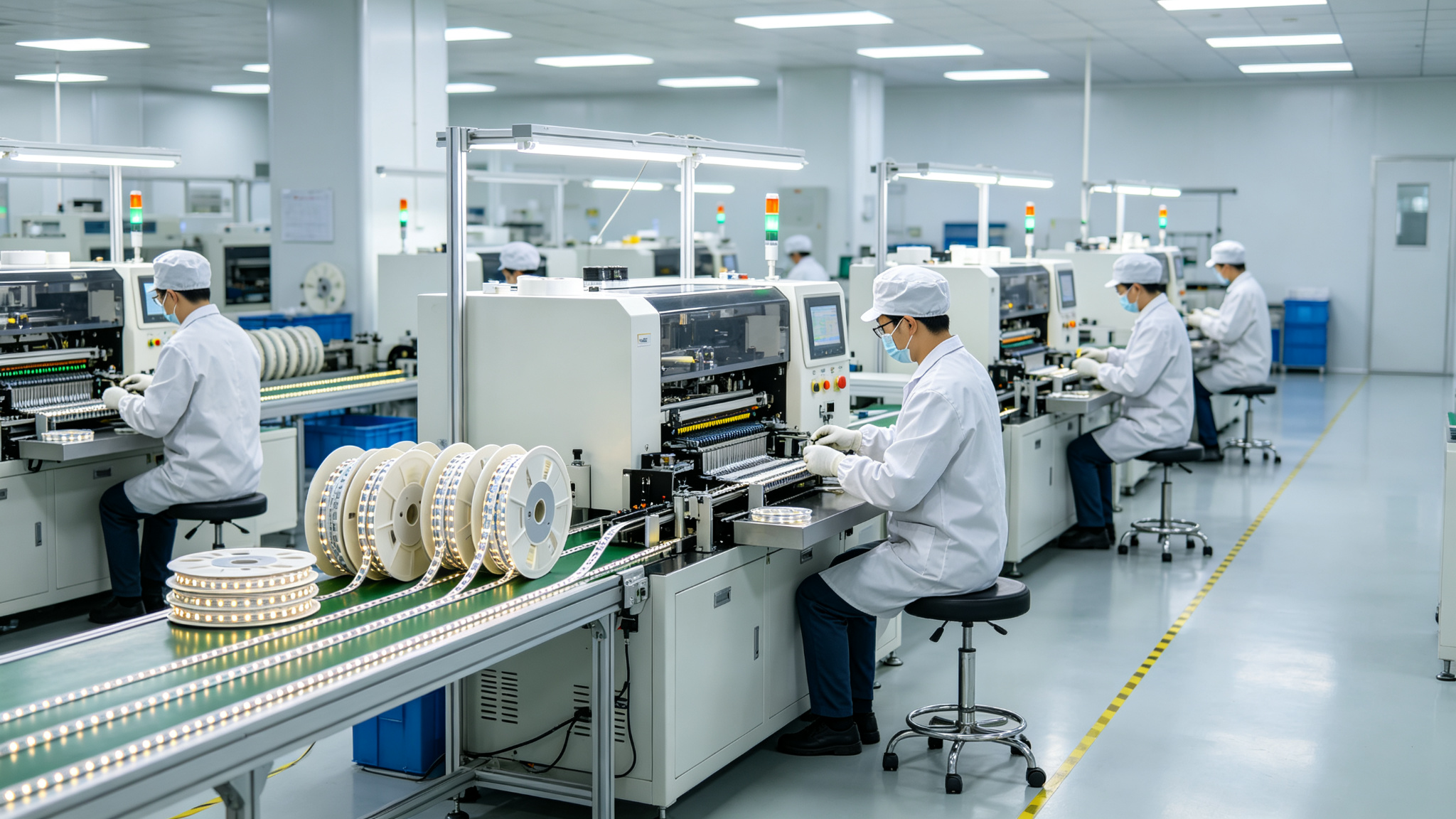
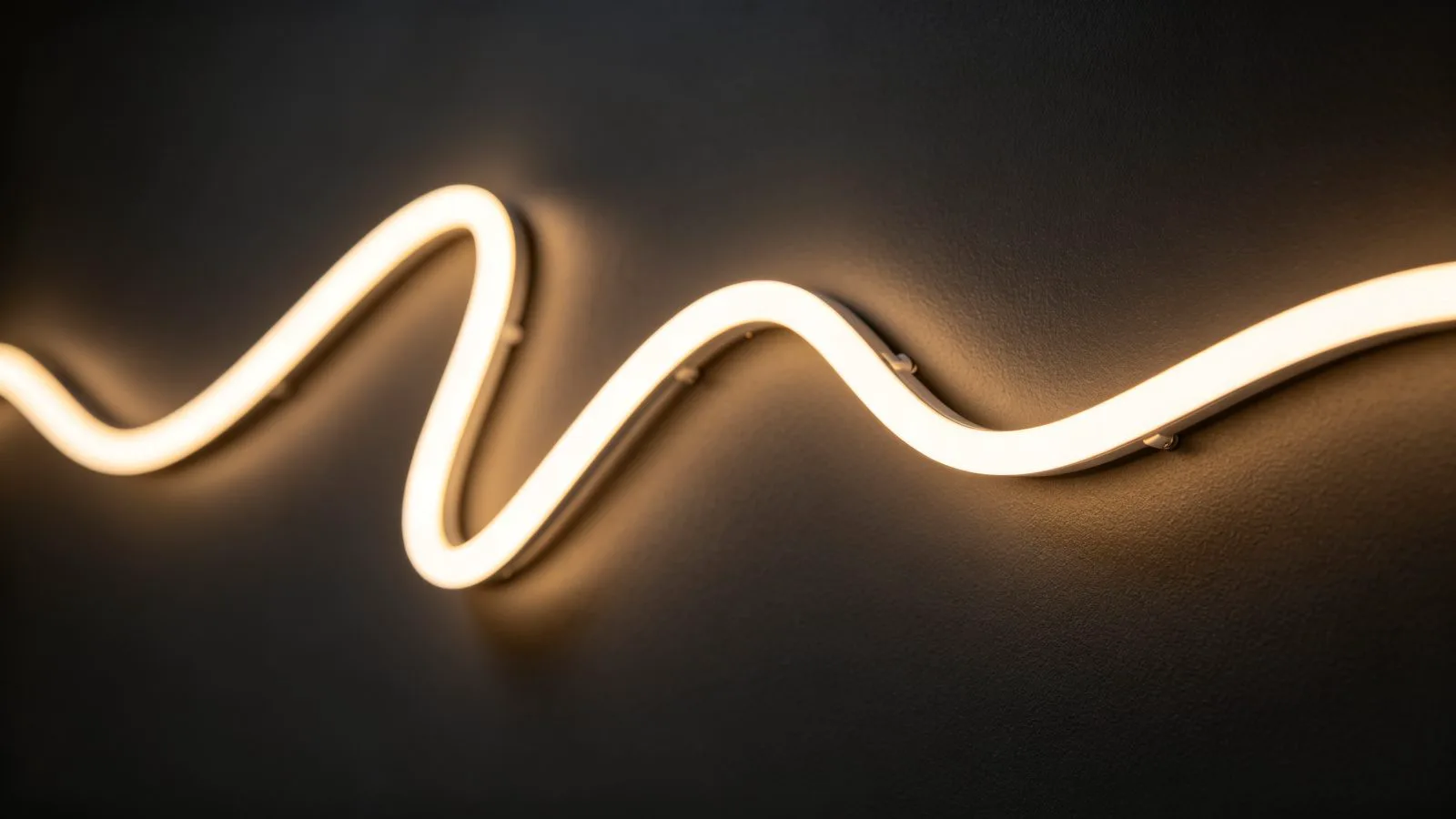
Efficient chips are selected, sorted and binned on the production line to hit published lm/W.
Efficacy Comparison Table
| Strip Type | Typical Efficacy (lm/W) | Notes |
|---|---|---|
| Budget SMD 2835 / 5050 | 80–100 | Cheap chips, often lower CRI |
| High-efficiency SMD | 110–135 | Best balance of cost and output |
| High-efficiency COB / SOB | 120–150 | Smooth face, strong lm/W |
| High-CRI premium COB | 100–130 | Colour quality trumps peak efficacy |
| Very high-density free-cut COB | 110–140 | More chips, needs good heat sinking |

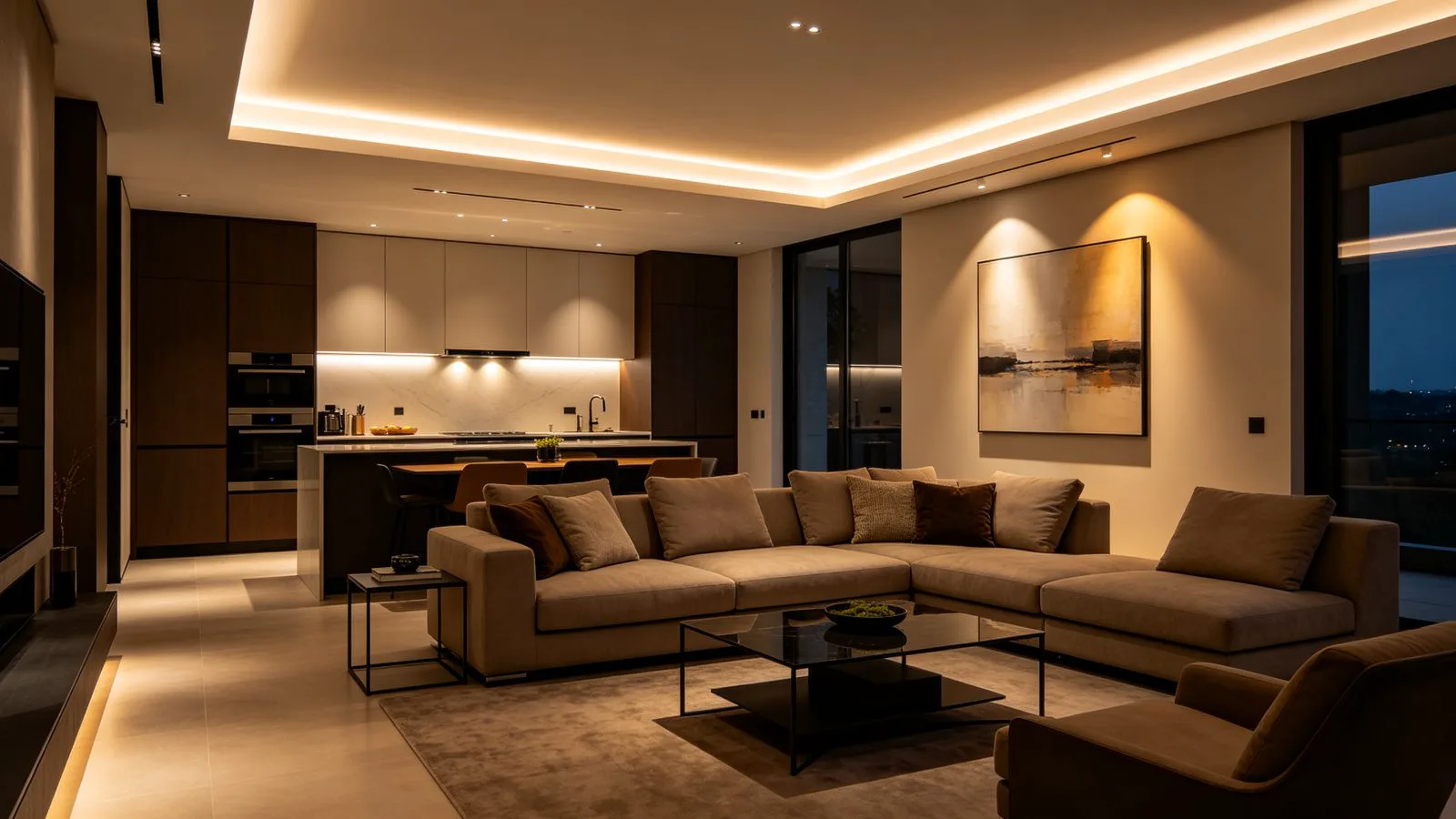
Efficiency keeps retail shelves bright all day without overloading circuits or overheating.
What Changes Efficacy on the Bench
Efficacy is measured at a specific drive current and temperature. Driving a strip harder (more mA per chip) increases output but reduces lm/W and raises heat — the extra watts mostly become warmth. Running at the rated current in an aluminium profile yields the best real-world efficacy and lifespan. Overheating also accelerates lumen depreciation, so the “high efficacy” number only lasts if the strip is cooled properly.
Rule of thumb: compare lm/W at the same CCT and CRI, and ask whether the figure is measured on a free-running strip or in an aluminium profile. “Up to 160 lm/W” measured on a test jig in a lab is not the same as installed efficacy on a hot PCB.
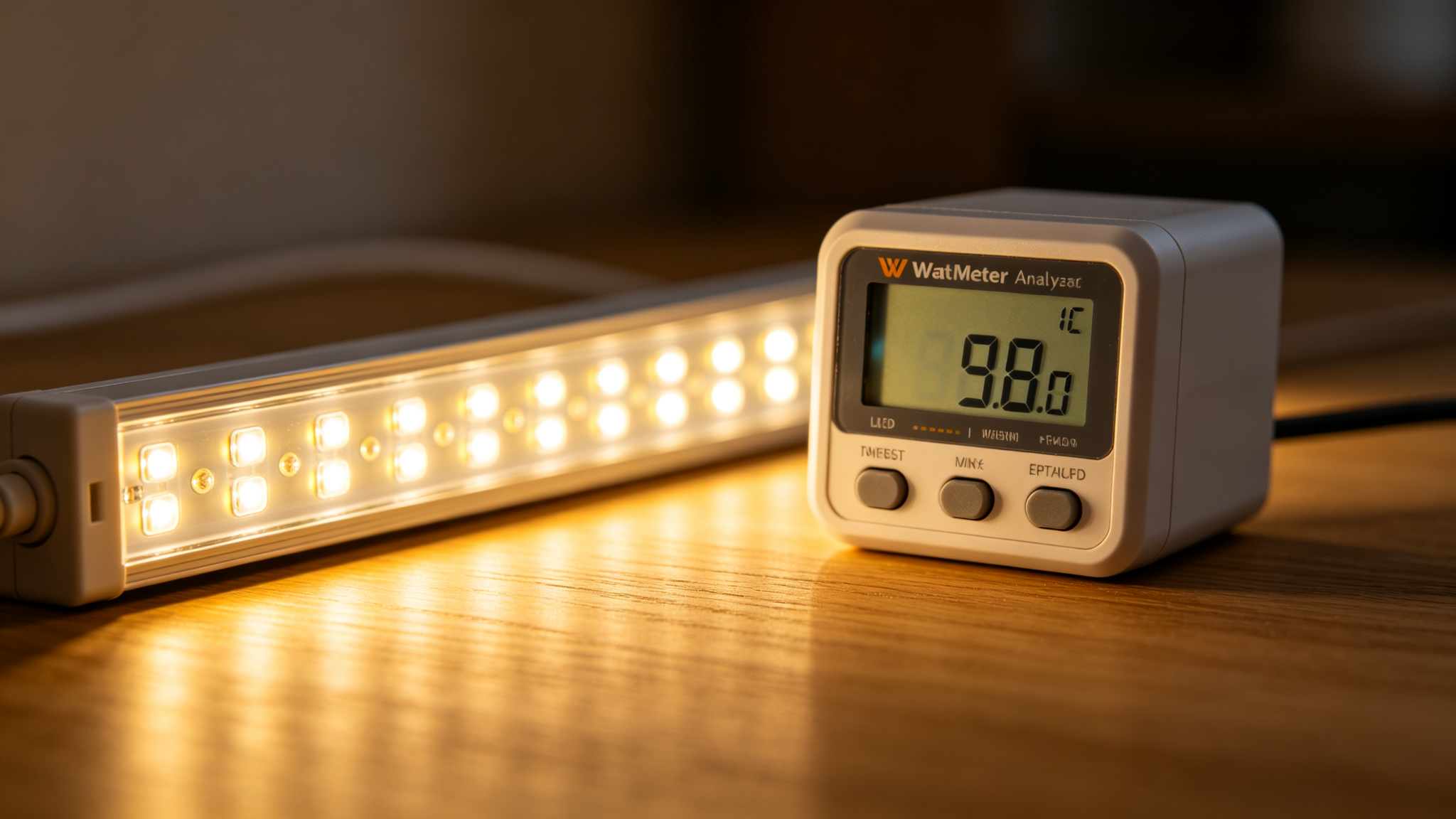
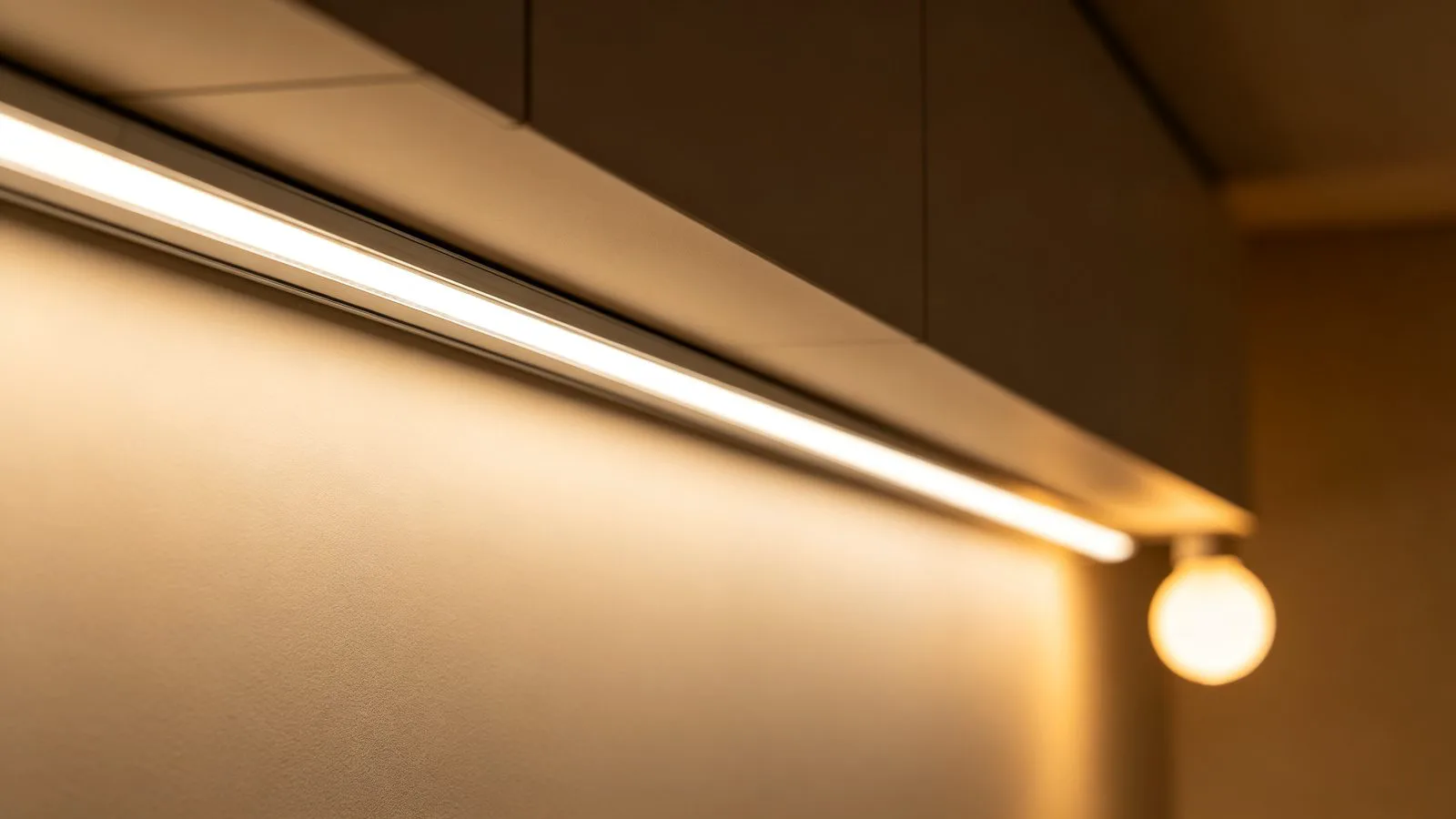
A lower wattmeter reading for the same visible brightness is the practical payoff of high efficacy.
How to Compare Numbers Without Being Misled
- Ask for lumens per metre AND watts per metre, not just lm/W — divide to verify.
- Require the figure at your actual CCT and CRI (high-CRI is a little less efficient).
- Prefer ERP-compliant product lists for commercial and EU projects.
- Calculate total wattage and driver size using the power supply sizing guide; high efficacy means you may downsize the driver.
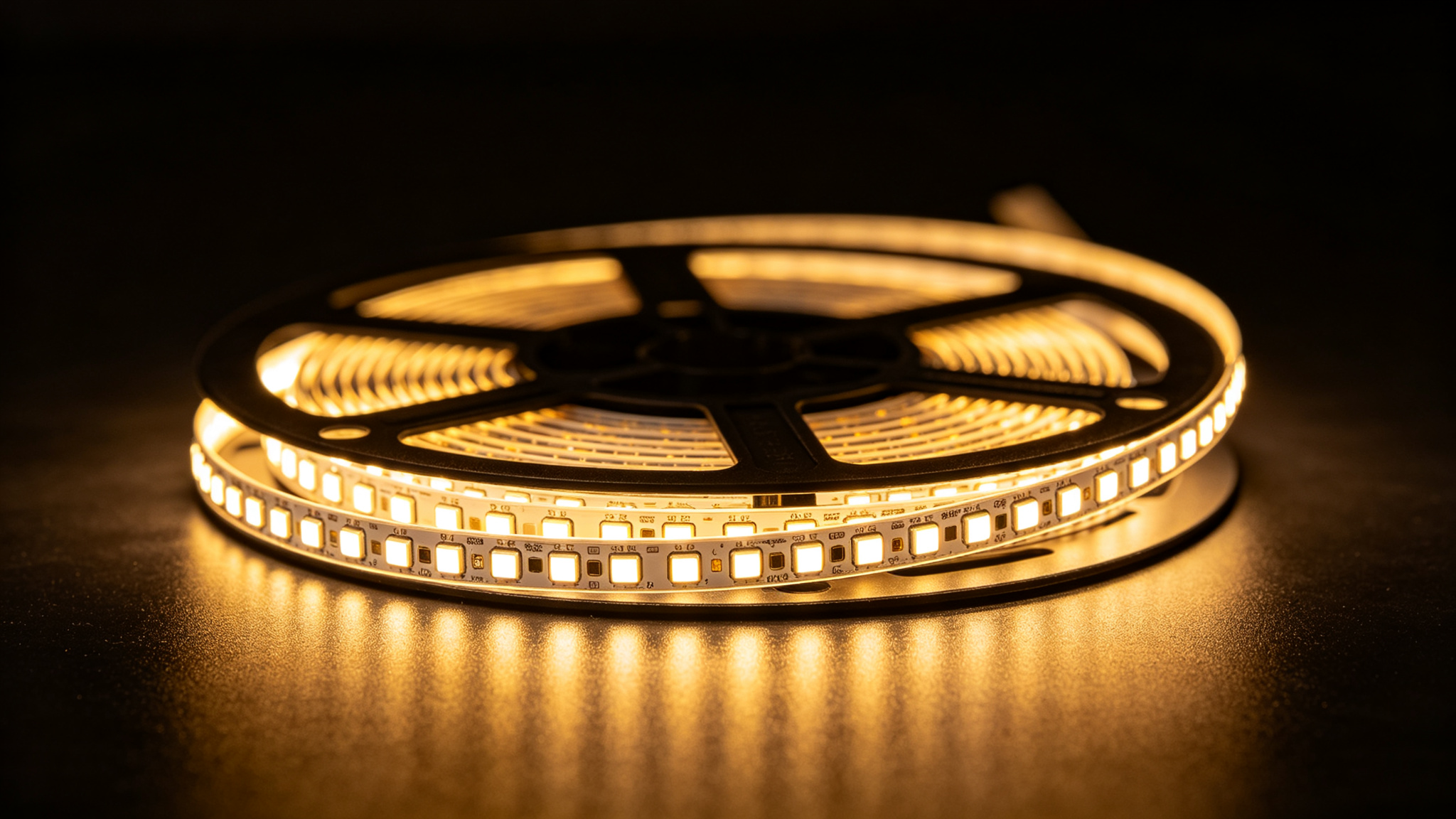
Slim, dense, efficient reels deliver bright smooth lines while drawing modest current.
The 30-second decision
Need the most light per watt and smallest driver → high-efficiency SMD/COB at 120+ lm/W. Need premium colour → accept 100-130 lm/W with CRI 90+. Always compare lm/W at the same CCT and CRI.
Recommended Products
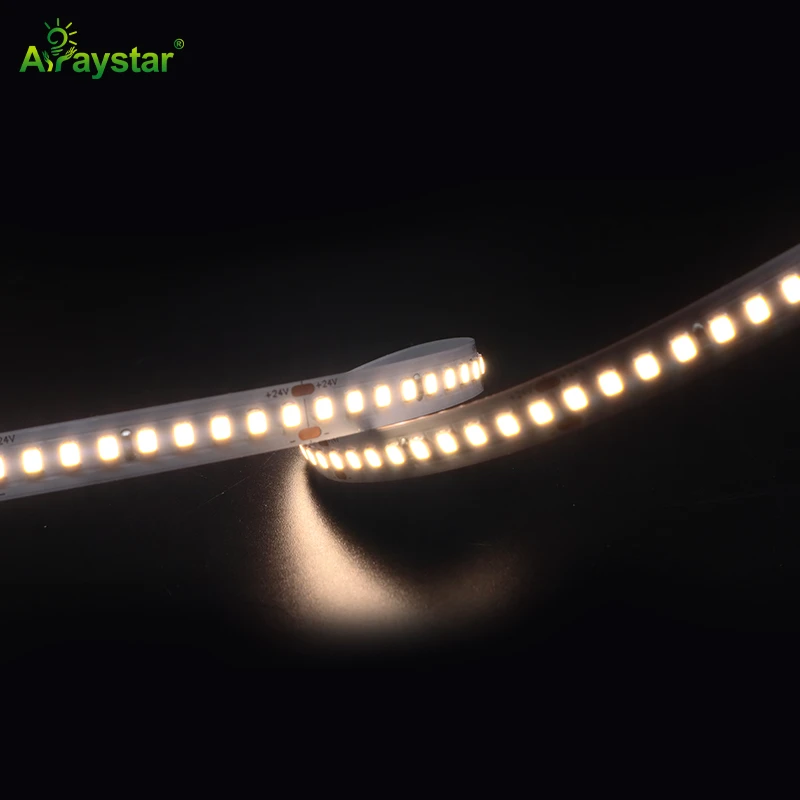
ERP Listed 2835 LED Strip, 180 LEDs/m
High-efficiency ERP-compliant SMD strip with strong lm/W for commercial and EU energy-saving projects.
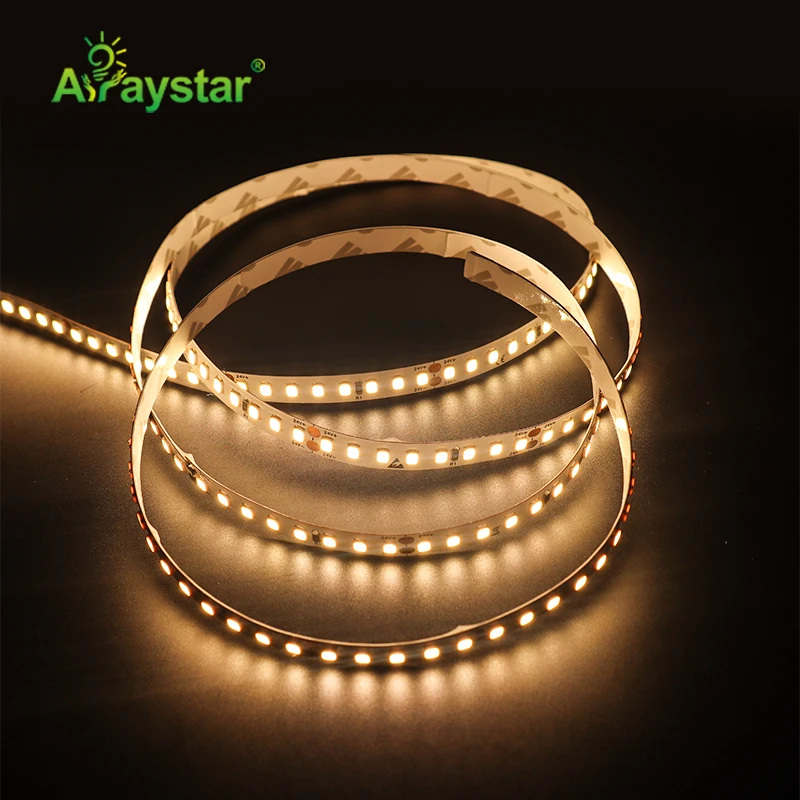
High Efficiency 2835 LED Strip, 168 LEDs/m
Efficient general-purpose strip balancing output, colour and cost for coves and retail.
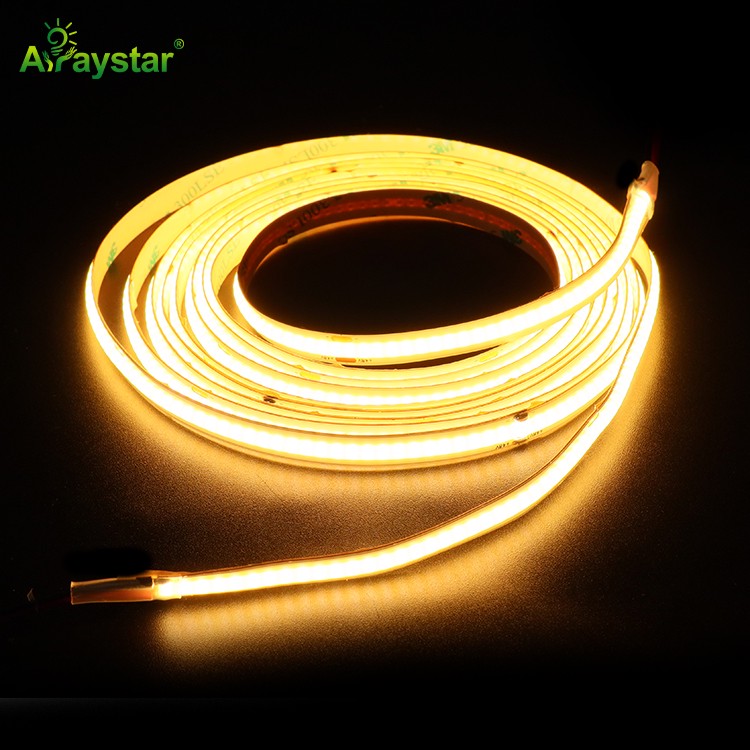
High Efficiency & Brightness COB LED Strip, 480 LEDs/m
Bright, smooth COB with strong efficacy — dot-free and efficient for close-view lighting.
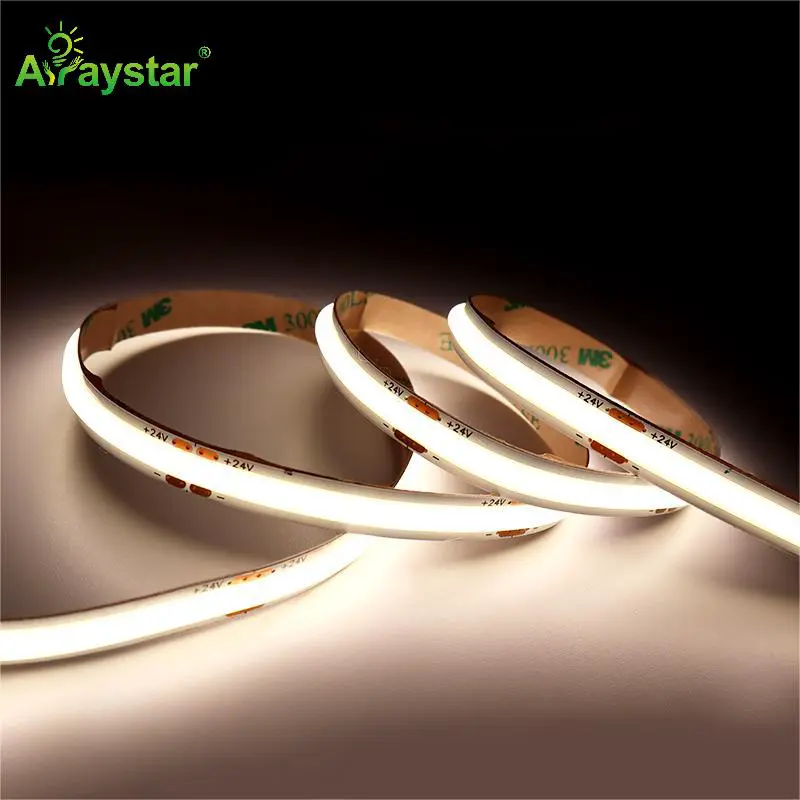
Reel-to-Reel COB LED Strip, 320 LEDs/m
Uniform reel-to-reel COB with good luminous efficiency for long runs where driver size matters.
Frequently Asked Questions
What is a good lumens per watt for LED strips?
Budget SMD strips manage roughly 80-100 lm/W; high-efficiency SMD and COB/SOB strips reach 120-150 lm/W. High-CRI premium versions sit around 100-130 lm/W because richer colour phosphor costs a little efficiency. For most projects, 120 lm/W or higher is a strong target.
Does higher efficacy mean brighter light?
Not by itself. Efficacy is lumens per watt; brightness is total lumens. A strip can be very efficient but low-powered, or bright but inefficient. Ask for both lumens per metre and watts per metre so you can verify the lm/W yourself.
Why is high-CRI LED strip less efficient?
Richer red rendering needs extra red phosphors, which convert a little more electricity into heat rather than visible light. The efficiency penalty is typically modest and worthwhile in hospitality, retail and vanity where colour matters more than peak lm/W.
How does efficacy affect the power supply I need?
Higher-efficacy strips deliver the same lumens for fewer watts, so you can choose a smaller, cheaper driver and run cooler cables. Always size the driver to total watts per metre times length, plus a 20% margin, using a power supply calculator.
Need high-CRI, color-consistent LED strips for your project?
Get factory-direct pricing, free samples and a tailored quote within 24 hours.
Get a Quote