
MacAdam Ellipse & SDCM: LED Colour Consistency Explained
- 2026-09-18 19:06
- /
- Arraystar
Quick Answer
SDCM (measured in “steps”) and the MacAdam ellipse describe how far an LED’s white point sits from its target colour. The smaller the number, the tighter the colour match: 3-step SDCM (≤3 SDCM) is near invisible to the eye, 5-step is acceptable for most interiors, and beyond 7-step the mismatch between reels becomes obvious. For professional strip lighting, specify ≤3 SDCM same-bin reels from the same batch.
📑 Table of Contents

A tight SDCM bin is what makes a long cove look like one continuous, even light.
What SDCM and the MacAdam Ellipse Mean
On a colour diagram (the CIE 1931 chromaticity chart), every white light has a “white point”. A MacAdam ellipse is the region around that point where a standard observer cannot tell the colour difference — one ellipse = one “step” of just-noticeable difference. SDCM (Standard Deviation of Colour Matching, in “steps”) measures how many of these ellipses the LED sits from the target point.
- ≤ 3 SDCM — differences are essentially invisible, even side by side.
- ≤ 5 SDCM — acceptable; most people only notice it in a direct side-by-side.
- > 7 SDCM — a visible warm/cool mismatch between strips or reels.
This is why two strips both labelled “4000K” can still look different: they may come from different colour bins. The CCT number alone does not guarantee a match. Read more in our Kelvin colour temperature guide.

Same labelled CCT, same bin — the reels match edge to edge with no visible seam.
Why Colour Consistency Matters on a Real Job
On a cove, wall-wash or ceiling line, the eye is extremely good at spotting a warm-cool boundary. If reel two runs 5-step cooler than reel one, you see a visible “join” even though both read “3000K” on the spec sheet. The problem shows up most on long continuous runs, adjacent walls and multi-room projects — exactly the high-value installations where a mismatch is unacceptable.

Seamless uniformity across metres of cove is the visual payoff of tight-bin, same-batch reels.
3-Step vs 5-Step vs 7-Step: Comparison Table
| Bin Grade | SDCM | Visible Mismatch? | Best Use |
|---|---|---|---|
| Premium | ≤ 3 step | Almost invisible | Hotels, galleries, premium coves |
| Standard | ≤ 5 step | Only side-by-side | Most commercial interiors |
| Economy | 5–7 step | Noticeable on long runs | Accent, backs of shelves |
| Off-spec | > 7 step | Clearly warm vs cool | Avoid for visible lighting |

Flat walls are the toughest test: even a 5-step shift shows as a tone difference.
How LED Binning Actually Works
Factories sort LEDs into bins by colour, brightness and forward voltage after testing. A reel labelled “4000K, ≤3 SDCM” has been screened so every chip falls within a small ellipse around 4000K. The catch: different production batches use slightly different phosphor lots, so even ≤3 SDCM reels from batch A and batch B can differ. The professional answer is to buy one batch for the whole job.
Rule of thumb: specify “one CCT, ≤3 SDCM, same colour bin, same production batch for the entire project.” Order the whole reel quantity at once and ask the factory to confirm the bin/batch code.

A calibrated light booth lets the factory bin chips to a tight SDCM before they leave.
How to Order Colour-Matched Reels
- Tell the supplier your total metreage up front, including 5–10% spare, so the whole order can come from one batch.
- Ask for the bin code and SDCM grade in writing (e.g. “3000K, 3-step, batch xxx”).
- Request a small sample length from each planned batch and lay them side by side before reel production.
- Store spares in their sealed bags; phosphor can shift if exposed to heat/UV over time.
- For extra-long runs, also plan electrical injection to avoid brightness falloff — see the voltage drop guide.

Buying the whole job from one pallet and one batch is the simplest way to guarantee a colour match.
The 30-second decision
Visible, close-view or multi-room project → ≤3 SDCM, one batch, sample first. Utility or hidden accent → ≤5 SDCM is fine. Never mix batches on the same continuous line.
Recommended Products
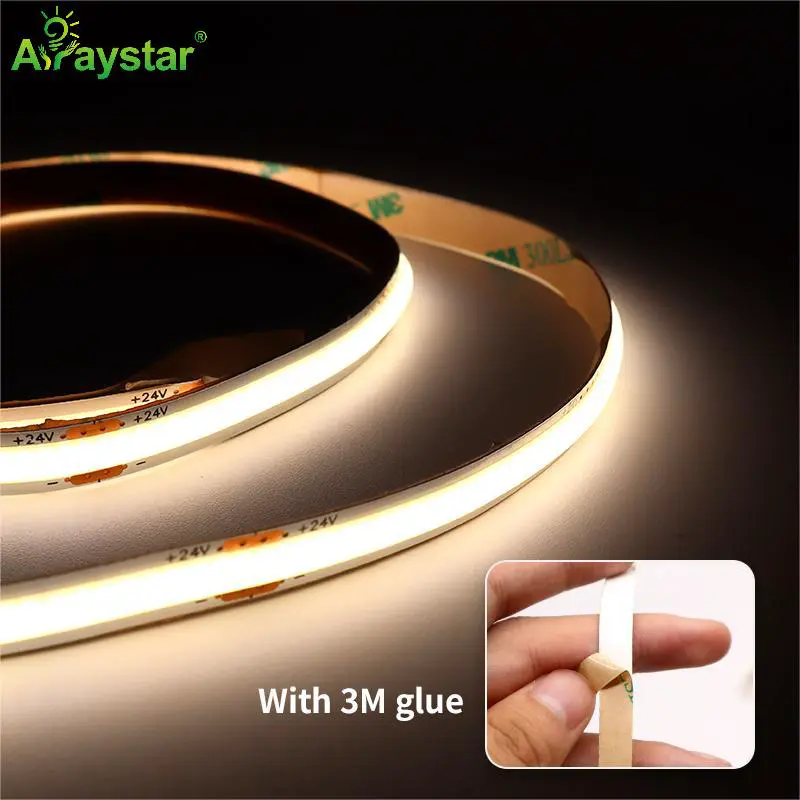
Reel-to-Reel COB LED Strip, 480 LEDs/m
Tight-bin reel-to-reel COB with controlled SDCM, ideal for long coves where visible colour shifts are unacceptable.

COB LED Strip Light 480 LEDs/m, 8 mm
High-density COB sorted to consistent colour bins for premium hospitality and close-view installations.
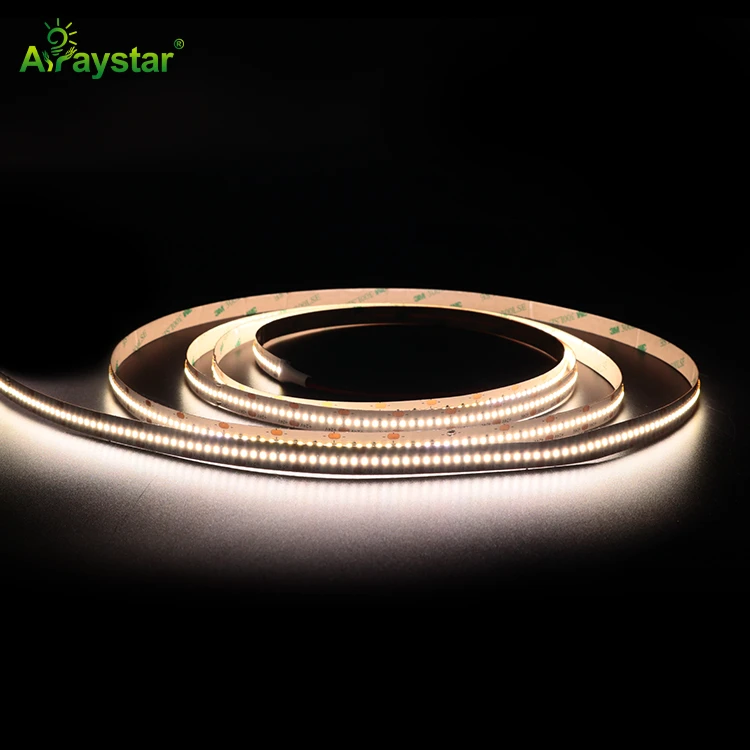
High Density 2216 LED Strip, 300 LEDs/m
Dense 2216 strip with tight colour-binning options for smooth, evenly matched runs.

The versatile cost-effective strip, supplied in consistent bins for general interior lighting.
Frequently Asked Questions
What does SDCM mean for LED strips?
SDCM (Standard Deviation of Colour Matching), measured in MacAdam steps, says how far an LED’s white point sits from its target colour. ≤3 SDCM is nearly invisible; ≤5 is acceptable; above 7 steps the warm-cool mismatch becomes obvious. Specify the SDCM grade, not just the Kelvin number.
What is a good SDCM rating to specify?
For visible, close-view or multi-room lighting, specify 3-step (≤3 SDCM). For general commercial interiors, 5-step is acceptable. Avoid 7-step or unspecified bins on any continuous run where two reels meet.
Why do two strips both labelled 4000K look different?
They can come from different colour bins or different phosphor batches. Even within the same labelled CCT, chips vary slightly in their exact white point. Matching colour bins and ordering from one production batch prevents this.
How do I guarantee matched colour across many reels?
Order the full metreage (plus 5-10% spare) at once, ask for a single colour bin and production batch in writing, request sample lengths to compare side by side, and keep spares sealed. This is standard practice for hotels and retail chains.
Need high-CRI, color-consistent LED strips for your project?
Get factory-direct pricing, free samples and a tailored quote within 24 hours.
Get a Quote