LED Strip UV Degradation: Sunlight Aging of Silicone, PCB & Adhesive
- 2026-09-19 12:28
- /
- Arraystar
Sunlight ages strip from the outside in: it yellows and cracks cheap encapsulation and destroys the adhesive backing long before the LEDs fade. For any permanently sun-exposed or high-UV location, specify UV-resistant silicone or PU encapsulation (not PVC or bare epoxy), VHB-grade or clip-secured mounting, and an aluminum profile — then treat the supplier's outdoor lifetime claim as valid only with UV test evidence.
How Sunlight Attacks an LED Strip
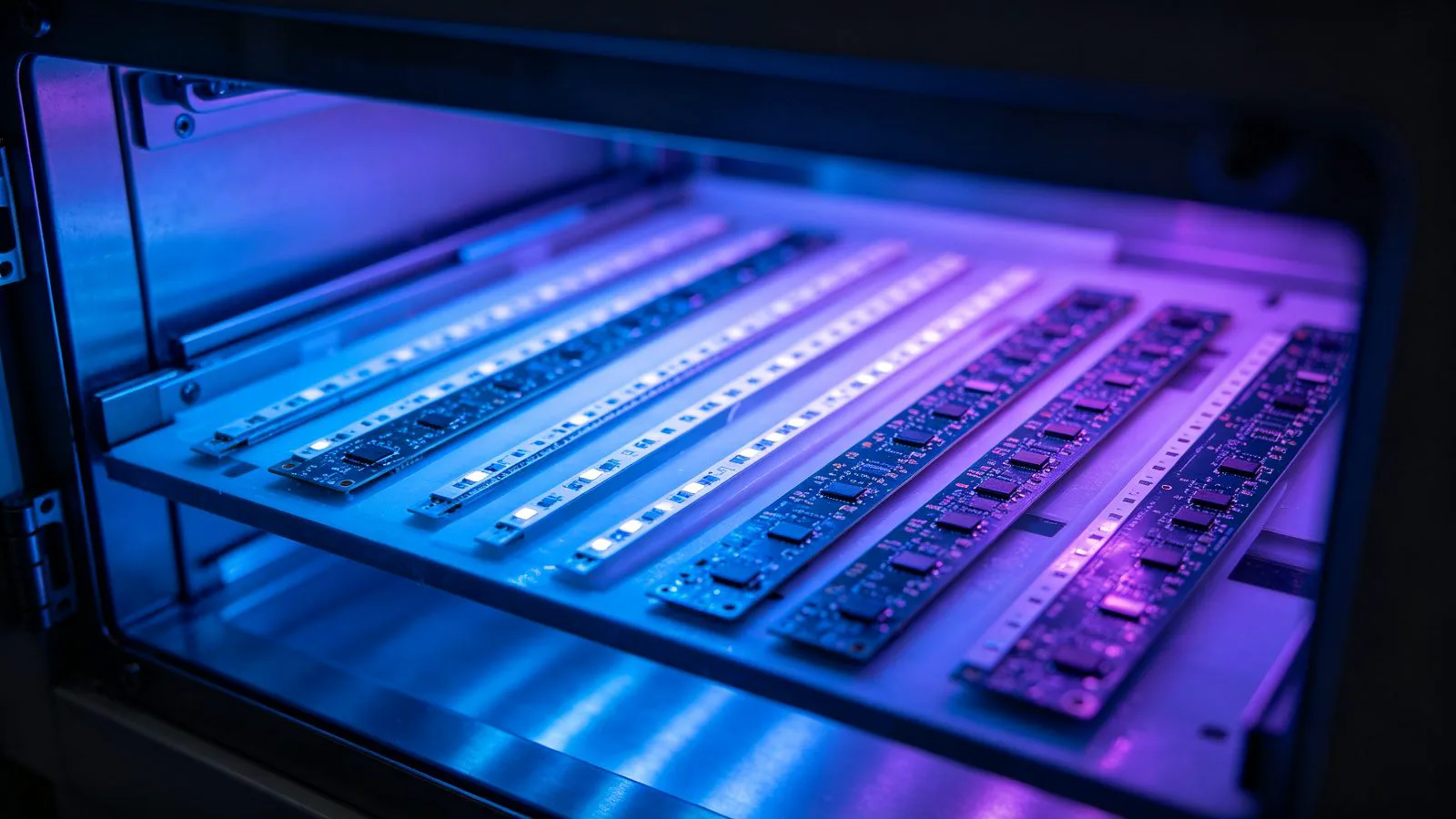
Ultraviolet radiation in sunlight is high-energy light that breaks chemical bonds over time — the same process that fades outdoor furniture and makes plastic brittle. An LED strip exposed to direct sun is attacked on three fronts simultaneously: the optical encapsulation, the adhesive backing, and the outer jacket and PCB materials.
- Encapsulation yellows and cracks: cheap epoxy and low-grade PVC yellow under UV, shifting the colour temperature and reducing output; eventually the jacket hardens, cracks and lets moisture in.
- Adhesive fails: standard pressure-sensitive foam or rubber adhesives lose tack and turn chalky under UV and heat cycling, so the strip peels or sags — often within a year outdoors.
- Corrosion follows: once the jacket or bond is breached, rain and humidity reach the copper and joints.
The LEDs themselves are usually the last thing to fail. A strip that “died” outdoors after 18 months has typically lost its adhesion and sealed-in protection, not its emitters.
Materials Compared: Silicone, PU, PVC and the Adhesive
Encapsulation and adhesive performance in UV / outdoor exposure
| Material | UV resistance | Flexibility / temp | Typical outcome outdoors |
|---|---|---|---|
| Epoxy resin (IP20/65) | Poor | Yellows, cracks | Indoor only; yellows in sun |
| PVC jacket | Low–moderate | Stiffens with age | Budget outdoor, short life |
| PU (polyurethane) | Good | Flexible, wide temp | Good mid-range outdoor |
| Silicone (UV-grade) | Very good | Stays flexible, wide temp range | Best for sun / extreme climate |
| Standard foam adhesive | Poor | Fails under UV/heat | Indoor or profile-mounted |
| 3M VHB / clips + screws | Very good | Mechanical security | Required for permanent outdoor |
Note that “silicone” alone is not a guarantee — formulations vary and only UV-stabilised, outdoor-rated silicone carries meaningful weathering resistance. The safest outdoor designs do not rely on adhesive at all: the strip sits in an aluminum channel retained by clips, end caps and mounting brackets, so even if the backing tape weakens the strip cannot fall.
Climate, Temperature and Realistic Lifetime
UV intensity varies dramatically by latitude, altitude and orientation. A vertical facade facing the equator, a rooftop sign at altitude, or a coastal installation under strong reflected light receives far more UV than a shaded northern soffit. Combine UV with high temperature and salt air and the aging accelerates further.
- Hot, high-UV climates (desert, tropical, high altitude): demand UV-grade silicone/PU, VHB or mechanical mounting, and derate for heat.
- Coastal / marine adds salt corrosion — pair UV resistance with IP67/IP68 and corrosion-resistant hardware (see our salt-spray guide).
- Temperate shaded exterior (soffits, under-eave): PU or UV silicone with profile mounting gives multi-year service.
- Indoor but sunlit (skylight coves, south-facing windows): UV still reaches the strip through glass; avoid epoxy there too.
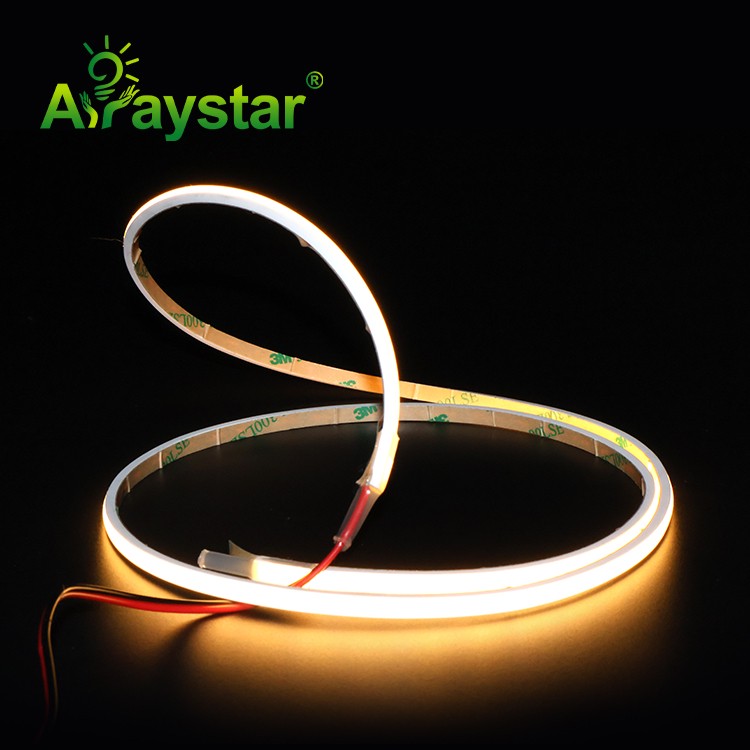
Ask for accelerated weathering evidence — UV/weathering chamber testing (such as QUVA/UVB exposure) and salt-spray hours — rather than a generic “outdoor” label. Reputable outdoor-rated lines are qualified with hundreds or thousands of chamber hours.
Specifying Strip That Survives the Sun
A defensible outdoor specification addresses the whole assembly, not just an IP number, because IP rating says nothing about UV:
- Encapsulation: UV-stabilised silicone or PU, IP67 minimum (IP68 for immersion/heavy exposure); avoid epoxy and budget PVC.
- Mounting: aluminum channel with clips/end caps; VHB-grade tape only as a supplement, never the sole support in permanent sun.
- Hardware: stainless-steel or coated clips and brackets, especially within a few kilometres of salt water.
- Thermal: a metal profile keeps the strip cool, which itself slows both LED depreciation and adhesive breakdown.
- Documentation: request UV weathering and salt-spray test hours and a warranty that explicitly covers outdoor use.
We qualify our outdoor silicone and IP68 ranges with UV and salt-spray testing and ship them with matched aluminum profiles, sealed connectors and stainless fixings. The few-percent premium for genuine UV-grade material and mechanical mounting is the difference between a facade that looks new after five years and one that is peeling after one summer.
Recommended Products
Frequently Asked Questions
Does IP67 mean LED strip is UV resistant?
No. IP67 rates ingress against dust and temporary water immersion; it says nothing about ultraviolet resistance. A strip can be IP67 yet use PVC or adhesive that degrades quickly in direct sun. For permanent outdoor exposure require both an IP rating and explicitly UV-stabilised silicone or PU with weathering test evidence.
Why does outdoor LED strip peel off after a year?
Standard pressure-sensitive backing tape loses tack and turns chalky under UV radiation and heat cycling, especially on metal or sealed surfaces. The fix is mechanical: mount in an aluminum channel with clips and end caps, using VHB-grade tape only as a supplement.
Which LED strip coating is best for direct sunlight?
UV-stabilised silicone offers the best combination of UV resistance, wide-temperature flexibility and durability; polyurethane (PU) is a strong mid-range option. Avoid epoxy (yellows and cracks) and budget PVC (stiffens and fails) for any sun-exposed or skylight-lit location.
Will LED strip behind glass still get UV damage?
Yes, reduced but not eliminated. Ordinary glass blocks some UVB but transmits much UVA, so strip in skylight coves or behind south-facing windows can still yellow and lose adhesion over years. Use silicone/PU rather than epoxy even for indoor sunlit positions.
How do I verify a supplier's outdoor lifetime claim?
Ask for accelerated weathering evidence — QUVA/UVB chamber hours, salt-spray test hours and the specific encapsulation and adhesive specifications — plus a warranty that explicitly covers outdoor installation. A bare ‘waterproof’ or ‘outdoor’ label without test data is not reliable.
Specifying strip for a sunny or coastal facade?
Our UV-stabilised silicone and IP68 ranges come with weathering and salt-spray test data, matched aluminum profiles, sealed connectors and stainless fixings. Send your location, orientation and exposure for an outdoor-rated layout.
Email: info@arraystarled.com | Phone: +86-0755-2103-6746 | WhatsApp: 0086 1581 8514 077
Need to size your power supply? Use our LED Strip Power Calculator to find the right driver in seconds.