Salt Spray & Corrosion Resistance for Coastal & Marine LED Strip
- 2026-09-19 12:28
- /
- Arraystar
IP67 keeps water out but does not stop salt. Within roughly 10 km of the coast — and anywhere on a vessel, dock or waterfront facade — specify strip and hardware that have passed salt-spray (neutral salt fog) testing, use corrosion-resistant metals (316 stainless fixings, tinned/protected copper), and are fully encapsulated in silicone with sealed IP67/IP68 connectors. The mounting hardware usually corrodes before the strip itself.
How Salt Air Destroys LED Strip

Coastal air carries fine salt particles and chloride ions that settle on every surface and dissolve into a conductive, corrosive film whenever humidity rises or dew forms. This electrolyte attacks exposed metals electrochemically: copper traces tarnish and grow resistive, steel screws and brackets rust and expand, and contacts at connectors and solder joints oxidise — causing intermittent faults, dead segments and eventually total failure.
The crucial point for specifiers is that ingress protection and corrosion resistance are different properties. An IP67 rating means the strip resists water and dust ingress for a defined test; it says nothing about how the jacket, PCB copper, connectors or mounting clips survive months of salt fog. A fully waterproof product can still corrode itself to death at the metalwork.
- Mounting hardware fails first: standard steel clips, screws and aluminum profiles pit and seize, often within 1–2 years.
- Connectors and cable tails are the weak point where moisture and chloride reach copper.
- Galvanic corrosion occurs where dissimilar metals (steel screw into aluminum) meet in salt moisture.
- Heat and UV accelerate it, so tropical coastlines and engine rooms are the harshest cases.
Salt-Spray Testing and What to Require
The standard accelerated test is neutral salt spray (NSS), commonly run to ISO 9227 or ASTM B117, expressed in test hours (24h, 48h, 96h, 500h…). It is an accelerated comparison rather than a direct calendar prediction, but products that emerge from 500–1000 hours of salt fog without rust on metal parts or electrical failure are demonstrably in a different class from untreated hardware.
Corrosion provisioning by distance from the coast
| Environment | Typical provision | Hardware | Strip / connections |
|---|---|---|---|
| Inland / dry | Standard | Steel / standard aluminum | IP20–IP65 as needed |
| 10–50 km from coast | Moderate | Coated aluminum, stainless screws | IP65–IP67, sealed joints |
| Within ~10 km / waterfront | High | 316 stainless, anodized aluminum | IP67 silicone, salt-spray tested |
| On vessel / dock / pier | Marine | 316 SS throughout, isolated metals | IP68, 500h+ salt fog, sealed harness |
Request the salt-spray test certificate for the actual product and its fixings, not just a generic ‘waterproof’ claim. A supplier that has genuinely qualified marine product will have chamber reports and can tell you the test duration and standard.
Materials That Survive the Coast
- Fixings: 316 (marine-grade) stainless steel for screws, clips, brackets and cable glands; 304 stainless rusts in time near salt water.
- Profiles: anodized or powder-coated aluminum; avoid raw steel and dissimilar-metal contact, or isolate with non-conductive washers.
- Strip: full silicone-filled or solid-silicone extrusion (IP67/IP68) rather than hollow-sleeved product that can wick water at cut ends.
- PCB: tinned or corrosion-protected copper; sealed cut ends and solder joints with heat-shrink or glue-filled end caps.
- Connectors: IP67/IP68 screw-lock or moulded marine connectors; avoid bare clip-on connectors outdoors.
- Drivers: IP67/IP68 drivers mounted above potential water line with drip loops.
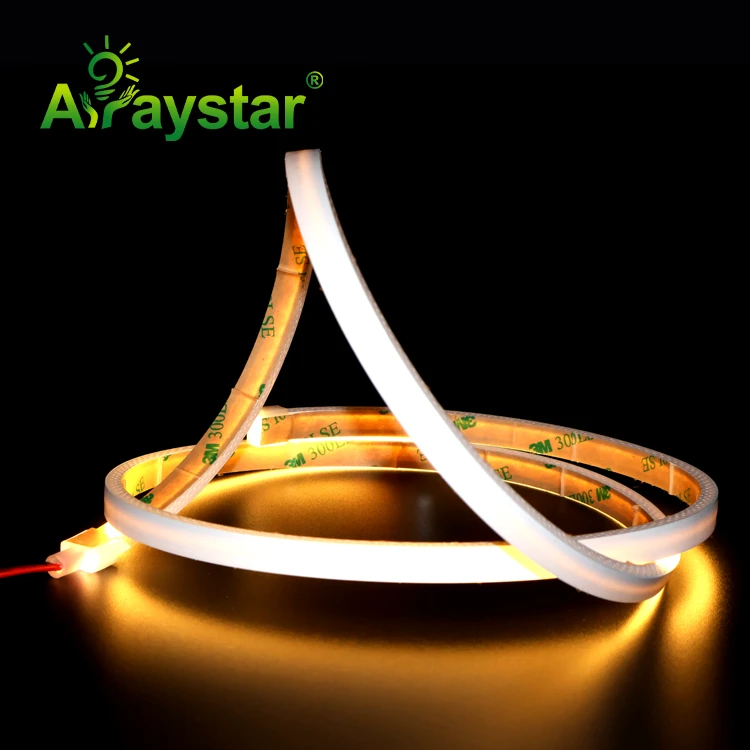
Installation detail matters as much as the bill of materials: route cables so water runs away from (not into) enclosures, use drip loops, avoid trapping salt water inside channels, and make every field connection in a sealed junction box rather than relying on inline connectors alone.
Specifying and Maintaining Marine-Grade Strip
For a marina, yacht, pool deck, waterfront restaurant or coastal facade, write the corrosion requirement explicitly so it cannot be substituted with indoor ‘waterproof’ stock:
- Strip: solid-silicone IP68, salt-spray tested to ISO 9227/ASTM B117 (state required hours).
- All metalwork: 316 stainless and anodized aluminum; dissimilar metals isolated.
- Connections: moulded IP68 harness or sealed junction boxes; heat-shrunk, glued cut ends.
- Drivers and control gear: IP67+ in ventilated, accessible locations with drip loops.
- Maintenance: periodic fresh-water rinse and inspection of clips and connectors in the harshest zones.
Our marine and IP68 ranges are supplied with 316 stainless fixings, sealed connectors and salt-spray qualification on request. Specifying the metalwork as carefully as the strip is what separates a coastal installation that lasts one season from one that lasts a decade.
Recommended Products
Frequently Asked Questions
Is IP67 LED strip suitable for coastal and marine use?
IP67 handles water immersion but does not by itself prove salt corrosion resistance. For coastal or vessel use, require salt-spray (ISO 9227/ASTM B117) tested product with solid-silicone IP67/IP68 encapsulation, sealed connectors and 316 stainless hardware. The IP rating and the corrosion qualification are separate requirements.
What stainless steel grade is needed near salt water?
Use 316 (marine-grade) stainless steel for screws, clips, brackets and glands within roughly 10 km of the coast or on any vessel or dock. The more common 304 stainless will eventually show rust in salt-laden air. Pair it with anodized aluminum and isolate dissimilar metals.
Which part of an outdoor LED strip fails first by the sea?
Usually the mounting hardware and connectors, not the LEDs. Steel clips and screws rust, dissimilar metals corrode where they meet, and salt moisture enters at connectors and cut ends. Specifying 316 fixings, sealed IP68 connections and proper drip loops protects these weak points.
How many hours of salt-spray testing should I require?
There is no direct hour-to-year conversion, but as a practical benchmark general outdoor product should survive several hundred hours of neutral salt spray without rust or failure, while genuine marine-grade strip and hardware are commonly qualified to 500–1000+ hours per ISO 9227 or ASTM B117. Ask for the certificate.
Does silicone encapsulation prevent corrosion?
Solid-silicone IP68 encapsulation protects the strip's own PCB and LEDs, but corrosion also attacks external metalwork, connectors, cut ends and drivers. Treat silicone as one layer and combine it with 316 hardware, sealed joints, tinned/protected copper and correct cable routing for a genuinely marine-rated assembly.
Specifying lighting for a coastal or marine project?
We supply salt-spray-tested IP68 solid-silicone strip with 316 stainless fixings, sealed marine connectors and IP67 drivers. Send us your location and exposure for a corrosion-resistant bill of materials.
Email: info@arraystarled.com | Phone: +86-0755-2103-6746 | WhatsApp: 0086 1581 8514 077
Need to size your power supply? Use our LED Strip Power Calculator to find the right driver in seconds.