Surge Protection (SPD) for Outdoor LED Strip Installations
- 2026-09-19 12:27
- /
- Arraystar
LED strips fail in storms because a single surge device on the mains board rarely protects long, exposed cable runs. Specify coordinated surge protection — a Type 2 SPD at the distribution board plus a local SPD at each outdoor or long-run driver — rated for at least 10 kV/5 kA, and use IP67-rated strip and drivers on the exposed side.
How a Surge Kills an LED Strip
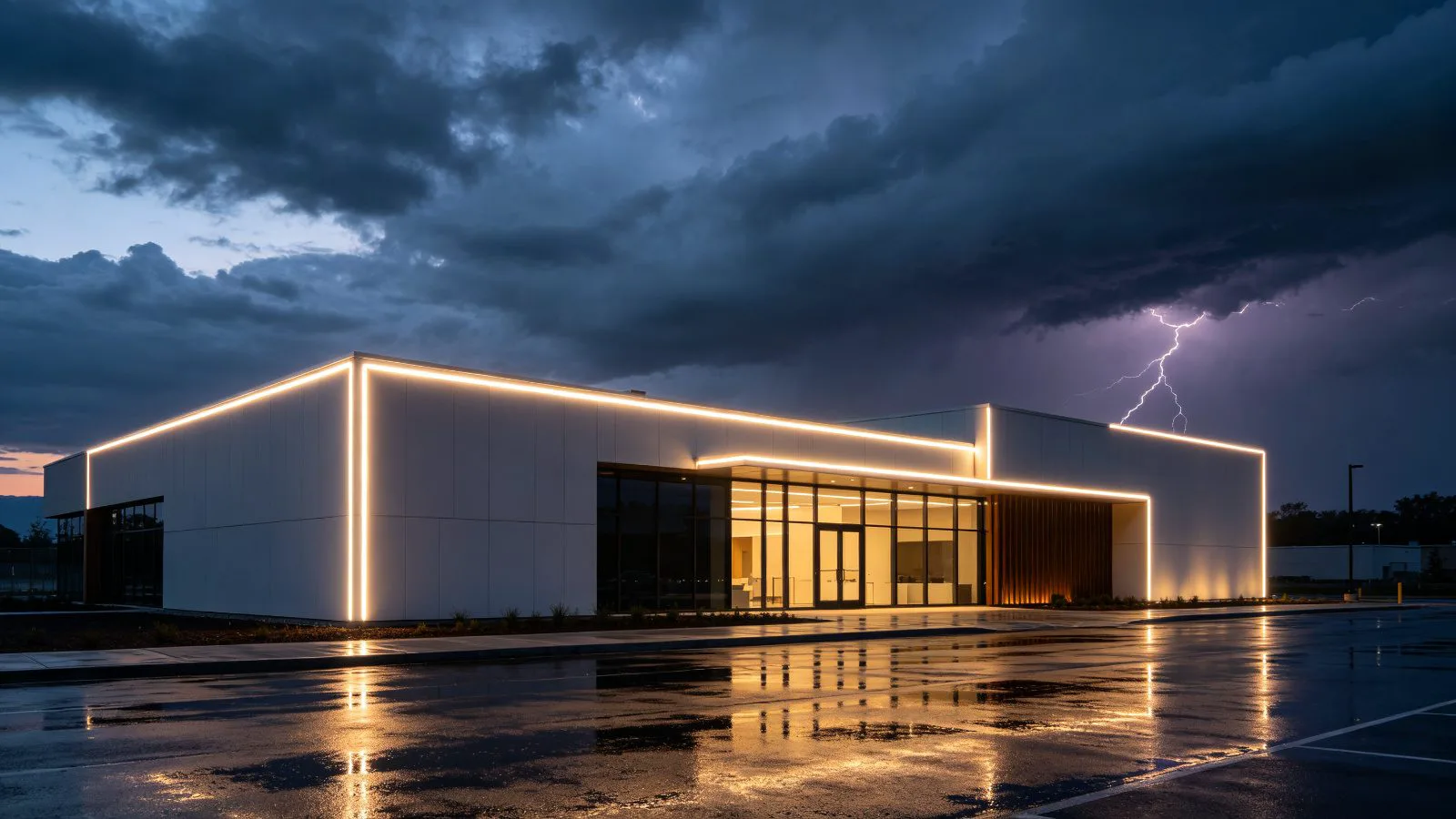
A voltage surge is a brief spike — microseconds to milliseconds — that can reach several thousand volts. LEDs and their driver semiconductors are designed for 12/24/48 V on the secondary side, so even a fraction of that spike arriving through the wiring punctures the LED junction or destroys the driver's switching components instantly.
Outdoor architectural strip is unusually exposed: it runs in long metal profiles across facades, rooflines and signage, acting like an antenna. A nearby lightning strike need not hit the building directly — electromagnetic induction can couple a surge into tens of metres of cable, and grid switching or large motors starting nearby produce the same effect on a smaller scale.
Two coupling paths planners miss
- Differential mode: surge between line and neutral, handled by line-to-neutral SPD components.
- Common mode: surge between live conductors and earth/ground — the dominant path from induced lightning, which requires line-to-earth protection and a sound earth bond.
A cheap two-wire SPD with no proper earth path addresses differential surges only and leaves the more common lightning-induced common-mode spike untouched.
Where Surges Actually Come From
Lightning is the dramatic source but statistically the majority of surges at commercial sites are man-made: capacitor-bank switching by the utility, air-conditioner and lift motors cutting in and out, and load switching inside the building. These smaller, repeated events degrade drivers cumulatively — the strip does not die in one storm, it fails after months of small hits.
Surge sources and typical exposure
| Source | Relative magnitude | How often | Primary risk |
|---|---|---|---|
| Direct lightning strike | Extreme (very high kA) | Rare | Catastrophic, often total |
| Nearby strike / induction | High (several kV) | Occasional in storms | Driver + first segment of strip |
| Utility capacitor switching | Moderate | Several times/year | Cumulative driver damage |
| On-site motors / load switching | Low–moderate | Daily | Gradual component wear |
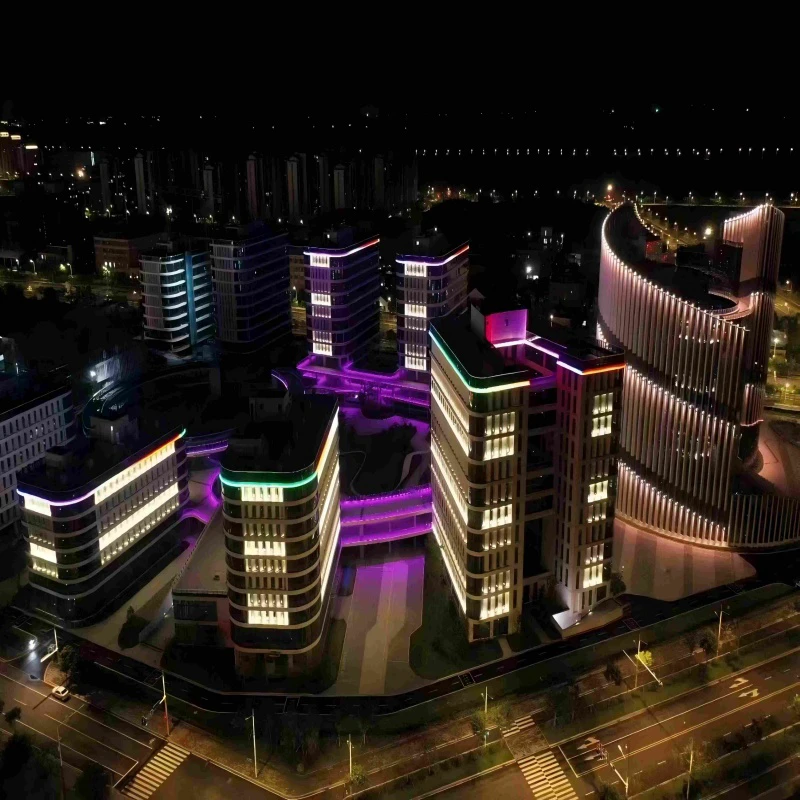
Coastal and exposed sites — marina signage, rooftop bars, tall facade outlines — sit in the highest-risk category and justify the most conservative protection.
SPD Ratings and Coordinated Protection
Surge protective devices (SPDs) are classed by type and rated by discharge current. A single device cannot both intercept a near-direct strike and protect sensitive electronics, so standards such as IEC 61643 use coordinated cascades:
Surge protection device types for an LED installation
| SPD type | Location | Nominal discharge (In) | Role |
|---|---|---|---|
| Type 1 / Class I | Main incoming board | 10–25 kA (10/350 µs) | Divert direct-strike energy |
| Type 2 / Class II | Distribution board / driver | 5–20 kA (8/20 µs) | Main protection for the lighting circuit |
| Type 3 / Class III | Close to the load | Lower, fine protection | Final clamp for sensitive drivers |
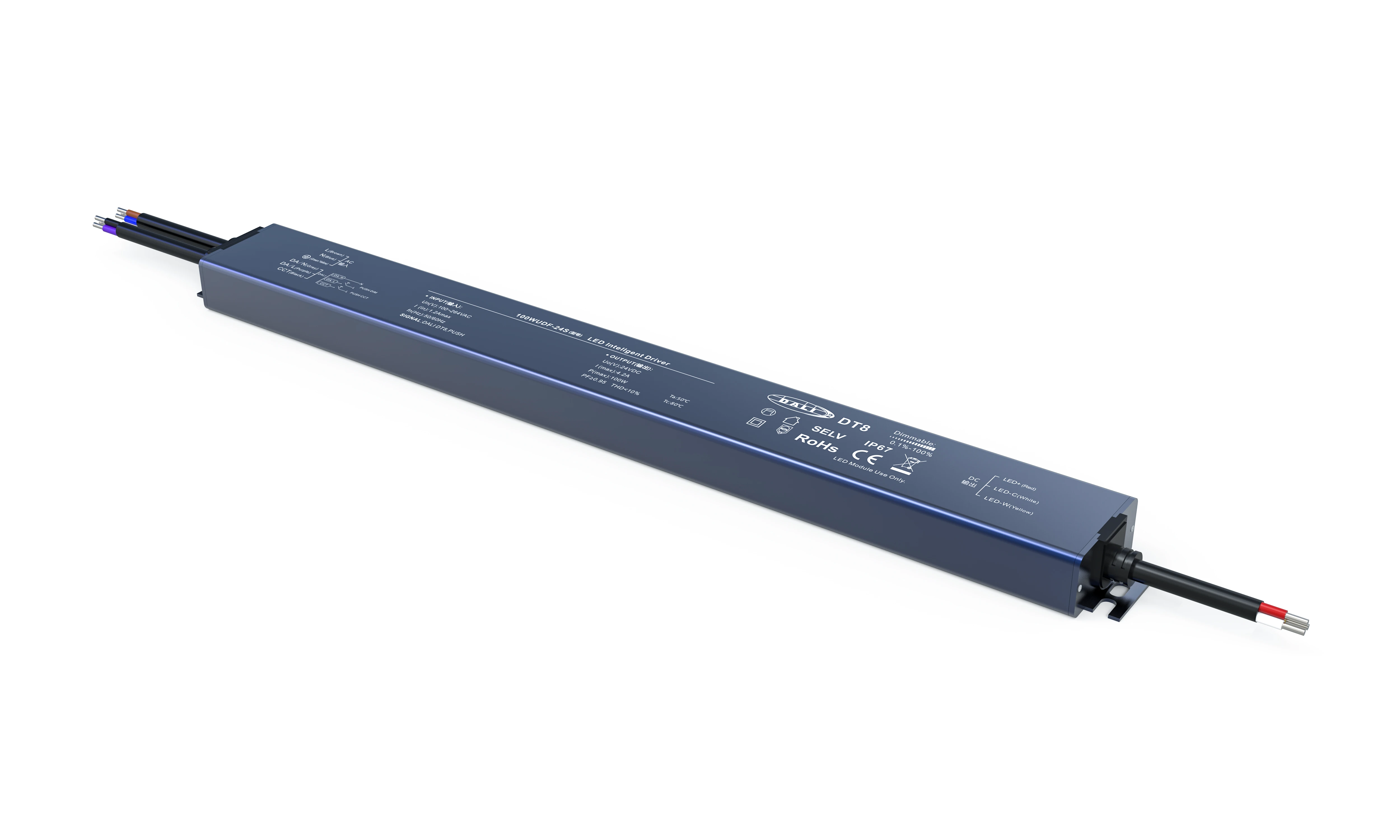
- Specify outdoor and long-run drivers with a built-in or adjacent Type 2 SPD rated at minimum 10 kV / 5 kA; many premium drivers advertise 6 kV/3 kA, which is adequate indoors but marginal on an exposed facade.
- Protect both AC input and, on very long runs, the DC side; long secondary cables can induce surges after the AC SPD.
- Ensure a low-resistance earth bond — an SPD without a proper ground cannot divert common-mode energy.
- SPDs degrade: use pluggable modules with a status indicator so a spent device is visible during maintenance.
Protection by Environment — and the Physical Side
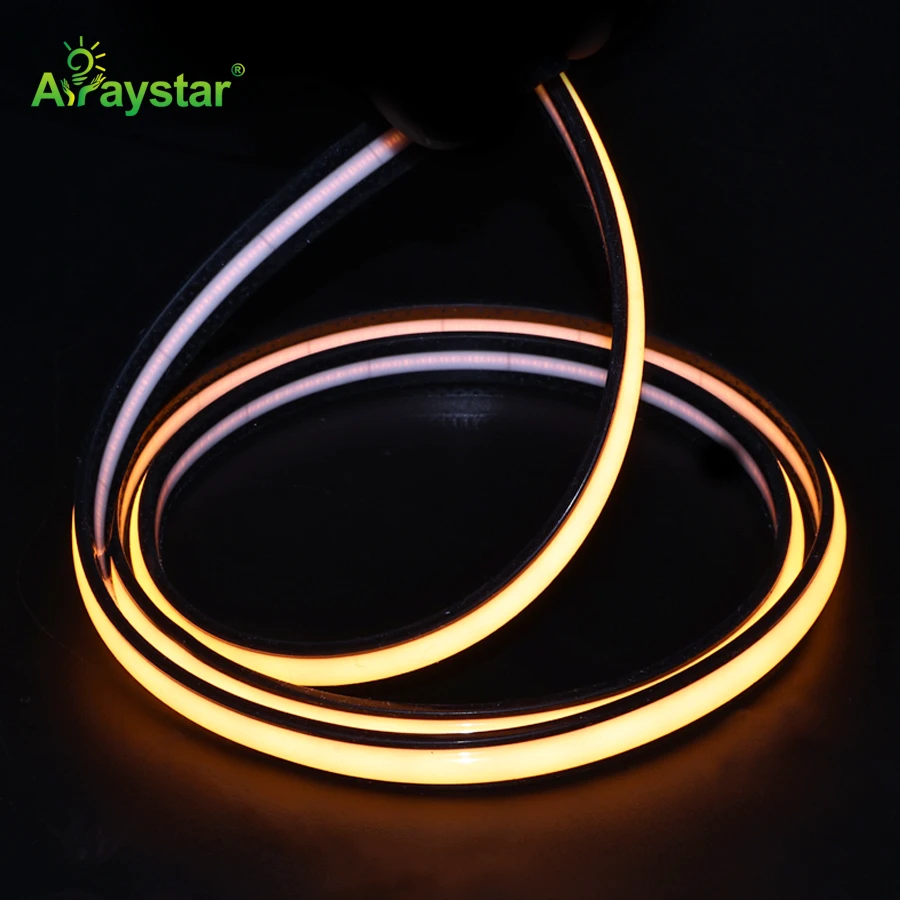
Electrical protection works together with physical ingress protection. Water in a connector is itself a surge and corrosion risk, and a breached IP rating is the most common root cause when outdoor strip fails after rain rather than after a visible storm.
- Indoor coves and offices: standard IP20 strip, good-quality driver; board-level SPD usually sufficient.
- Sheltered exterior / soffits: IP65–IP67 strip, sealed connectors, Type 2 SPD at the driver.
- Fully exposed facade / signage / marina: IP67 or IP68 strip and driver, IP67 connectors, 10 kV/5 kA SPD, drip loops so water cannot track along cable into enclosures.
- Long cable runs (>15–20 m from driver): consider 48 V strip to reduce current and voltage drop, and add DC-side protection.
Installation discipline closes the gap: route signal and low-voltage cables away from high-current mains, use shielded or earthed metal profiles, and never leave spare conductor length coiled near the driver where it forms an induction loop. Specified together, these measures turn a facade that fails every storm season into one that survives for years.
Recommended Products
Frequently Asked Questions
Will a surge protector at the mains board protect my outdoor LED strip?
It helps with large surges entering the building, but long outdoor cable runs induce additional surges after the board, and the board device may be several protection zones away. Outdoor and long-run strip needs a coordinated design: a Type 2 device at the board plus a local 10 kV/5 kA SPD at each exposed driver.
What SPD rating do outdoor LED strips need?
As a minimum specify 10 kV/5 kA (some premium drivers offer 15–20 kV) with both differential and common-mode protection, backed by a Type 1 device at the main intake for lightning-prone regions. Basic 4 kV/2 kA drivers are intended for indoor use.
Does IP67 strip still need surge protection?
Yes. IP rating guards against water and dust ingress; surge protection guards against voltage spikes. They solve different problems and exposed outdoor strip needs both — IP67/IP68 strip and connectors plus a properly earthed SPD.
Why did my strip fail months after the storm season with no direct hit?
Nearby strikes, utility switching and motors produce smaller surges that cumulatively degrade driver semiconductors. Repeated minor hits cause delayed failure even without a direct strike, which is why coordinated SPDs and maintenance-visible status indicators matter.
Is 48V strip safer from surges than 12V or 24V?
48 V reduces current and voltage drop over long runs, which indirectly improves reliability, but the low-voltage side is still vulnerable to induced spikes. The decisive protection is the SPD at the driver and a sound earth bond, rather than the strip voltage alone.
Specifying outdoor or facade strip?
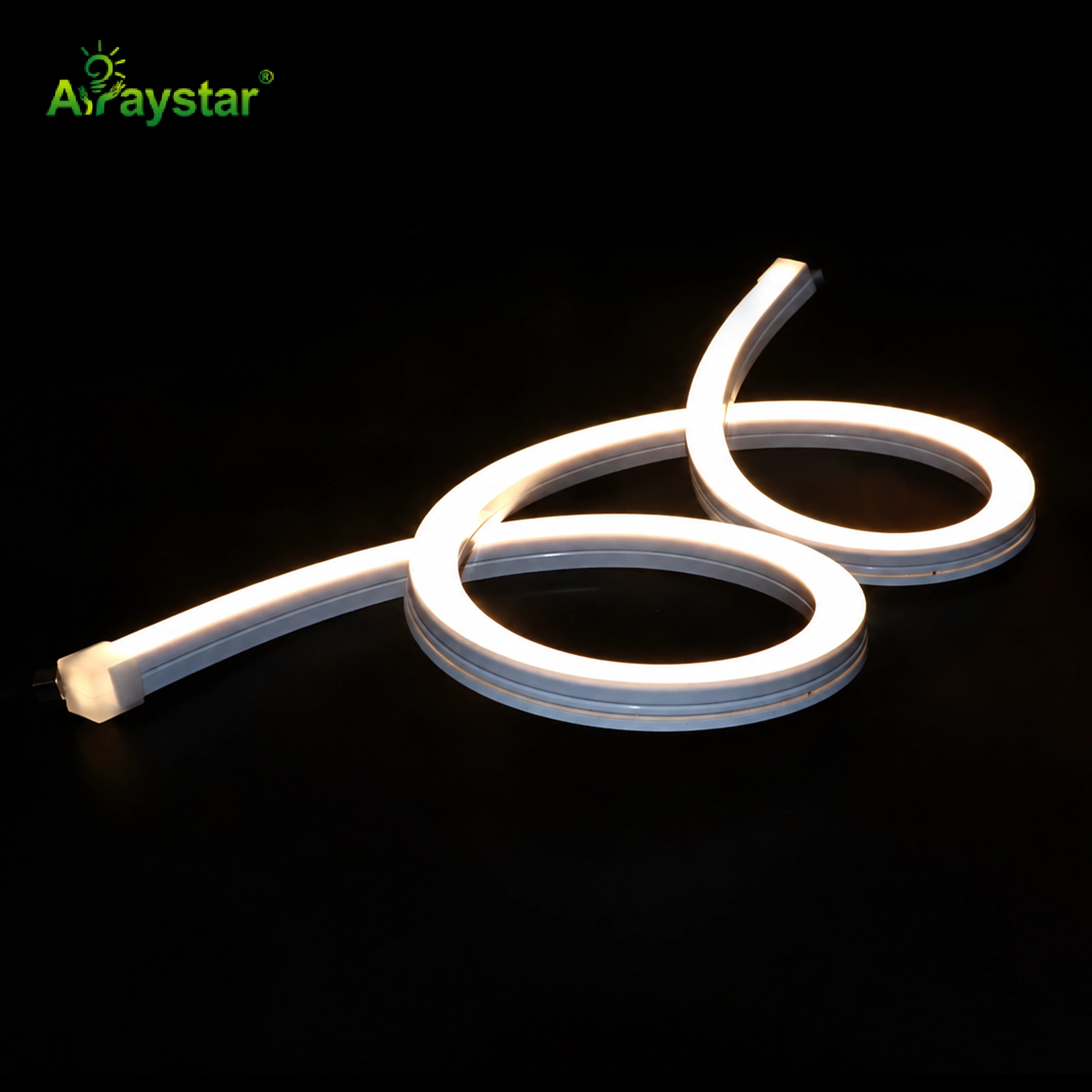
We supply IP67/IP68 COB and neon strip with 10 kV/5 kA surge-rated drivers, sealed connectors and coordinated protection drawings. Send us your facade length and exposure for a protected bill of materials.
Email: info@arraystarled.com | Phone: +86-0755-2103-6746 | WhatsApp: 0086 1581 8514 077
Need to size your power supply? Use our LED Strip Power Calculator to find the right driver in seconds.