
360-Degree Neon Rope: Round Hanging and Suspended Installations
- 2026-10-09 18:40
- /
- Arraystar LED
A round 360-degree neon rope emits in every direction, which makes it ideal for hanging pendants, overhead outlines and suspended shapes seen from below, but it changes the whole installation: the rope must be tensioned, supported at the right spacing and powered for a round conductor. Treat it as a suspended light fixture, not a flat strip glued to a surface.
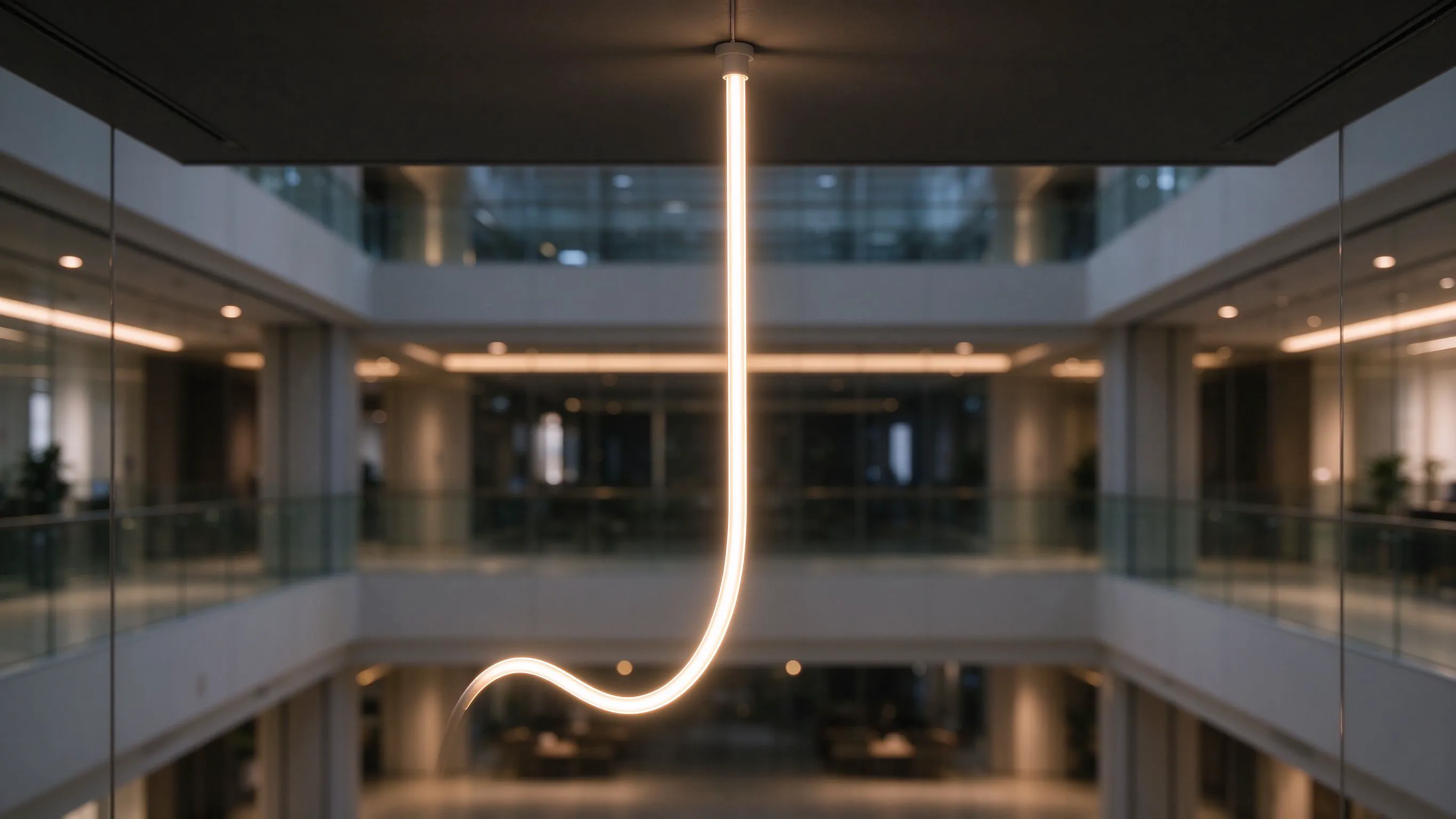
What 360-Degree Rope Does That Flat Neon Cannot
Flat neon is built to shine from one face, which is perfect against a wall but wrong for anything hanging in space. A pendant, a ceiling-drawn shape or a rope outline over a bar is viewed from below and from the sides, so a single-face product shows a bright line from one angle and a dark cable from another.
A 360-degree neon rope is a round, fully diffusing body that glows on all sides, so it reads as a glowing cord from every viewpoint. That all-round emission is the entire reason to choose it.
Where Round Rope Works Best
- Hanging pendants and cluster lights over bars, counters and tables.
- Overhead geometric shapes (circles, waves, grids) suspended from ceilings.
- Trade-show and window displays where the fixture is seen in the round.
- Outline of suspended objects and signage viewed from multiple angles.
- Ambient room dividers and light curtains in hospitality and retail.
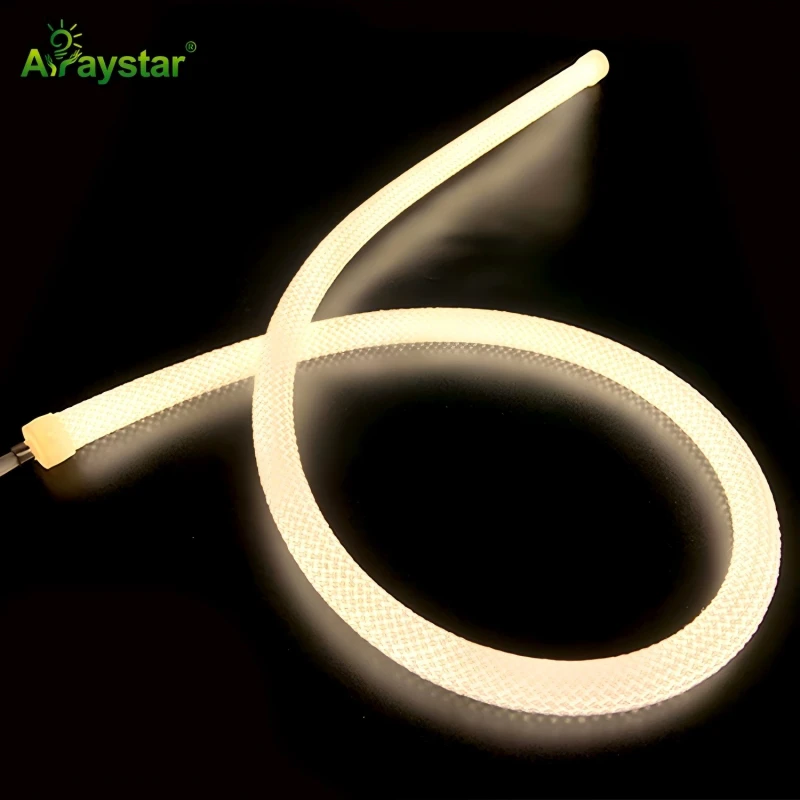
For pendants and overhead outlines I use the ART-NSD22-Rope, a 22 mm round 360-degree neon. The 22 mm body has enough diameter to read as a substantial glowing cord from below while remaining light enough to suspend across reasonable spans.
Support Spacing and Tension
A hanging rope is a mechanical installation as well as an electrical one. Unsupported, it sags, and sagging rope looks untidy and can stress conductors at the suspension points. I support the rope at intervals that keep it straight or deliberately form it into a shape with a designed curve rather than an accidental droop.
Plan the mechanical support before the electrical layout.
| Installation style | Support approach |
|---|---|
| Straight horizontal runs | Evenly spaced suspension points to limit sag |
| Shapes and logos in the air | A rigid or tensioned wire frame the rope follows |
| Vertical drops / pendants | Top anchor with strain relief; optional bottom weight |
| Free-form curves | More support points to hold the intended curve |
Always use strain relief at anchor points so the rope's own weight is not carried by the electrical wires. For vertical pendants a small discreet weight at the bottom can keep a long drop straight and twist-free.
Powering a Round Conductor Evenly
Because a rope is often used in long overhead runs, voltage drop needs the same attention as any long linear product. I plan feed points so the far end of a suspended shape matches the near end, and I favour the voltage option that suits the run length rather than defaulting to the lowest voltage. On big overhead shapes I bring feeds in symmetrically from multiple points so the glow is uniform around the whole outline.
- Calculate total wattage across the full rope length and size drivers with headroom.
- Feed long or symmetrical shapes from multiple points to avoid a dim far side.
- Keep drivers accessible above the ceiling rather than buried inside a sealed pendant.
Mounting Hardware and the 'Invisible' Look
Clients usually want to see the glowing rope, not the hardware holding it up. I use thin steel suspension wires or clear/transparent hangers matched to the rope colour, and I route power leads along the suspension cables rather than letting them drape across the glow. For shapes in the air, a thin wire template carries both the mechanical form and, where possible, the wiring, which keeps the installation clean from below.
Safety and Compliance Overhead
- Use fixings rated for the rope's weight over the span, with safety factors appropriate to overhead fixtures.
- Ensure any suspension over occupied seating uses secure, redundant anchoring.
- Specify the correct fire and material ratings for ceiling-suspended products in public spaces.
- Keep connectors and joins above the glowing line or inside discreet junction hardware.
- Allow for thermal movement; a long rope warms and cools and should not be fixed rigidly at both ends.
From Concept to Hanging Shape
I start every rope project with the geometry: the exact shape, span, drop height and viewing angles. That determines rope diameter, support spacing, driver count and mounting method. We supply the NSD22-Rope and related 360-degree products, and for large overhead shapes we can advise on the voltage and feed layout. Send a sketch with dimensions and the suspension height and we will help size the rope and plan the feeds so the finished piece glows evenly and hangs straight rather than sagging into a tangle.
Shaping Rope Into Letters and Logos Overhead
Straight runs are straightforward; the interesting work is forming round rope into letters, logos and abstract shapes in the air. Because the rope glows in every direction, even a simple overhead circle reads as a clean neon ring from anywhere in the room, which is why these shapes are so popular in bars and retail windows. The challenge is holding the form without visible scaffolding.
- Build the shape on a thin wire or acrylic template first, then clip the rope to it, rather than trying to freehand the curve in the air.
- Support tighter curves more frequently; a circle or letterform needs points at every change of direction.
- Bring power feeds in at natural low points or frame junctions so leads do not cross the glowing shape.
- For repeated motifs (rows of pendants or grids), make one jig and replicate it for identical spacing.
On a recent bar install the client wanted three overlapping glowing waves above the counter. We made a single wire template, bent the rope to it on the bench, and then lifted the finished assemblies onto pre-marked ceiling anchors with feeds hidden along the suspension wires. Trying to bend those waves directly overhead would have produced uneven curves and visible joins. For lettering I keep the strokes generous, because a round rope viewed from below loses definition on thin characters; bold, simple forms work far better than intricate scripts, which are better left to flat neon mounted on a backing. The payoff for getting the template and feeds right is a shape that appears to float and glow with no visible means of support.
Recommended Products
Frequently Asked Questions
What is a 360-degree neon rope used for?
It emits light in all directions, so it is used for hanging pendants, overhead shapes and suspended outlines that are viewed from below and the sides, where a flat single-face neon would show a dark cable from some angles.
How do I stop a hanging neon rope from sagging?
Support it at evenly spaced suspension points or run it along a tensioned wire frame that holds the intended shape. Always use strain relief at the anchors so the wires do not carry the rope's weight, and add a small bottom weight on vertical pendants to keep long drops straight.
How do you power a long overhead neon rope evenly?
Size the driver for the full wattage with headroom and feed long or symmetrical shapes from multiple points so the far end is not dimmer than the feed end. Keep drivers accessible above the ceiling and favour the voltage option suited to the run length.
What hardware hides the suspension on a glowing rope?
Use thin steel suspension wires or clear hangers matched to the rope colour, route power leads along the suspension cables rather than across the glow, and build large shapes on a thin wire template that carries the form and wiring so the fixture looks clean from below.
Are there safety considerations for neon rope over seating?
Yes. Use fixings rated for the rope weight across the span with appropriate safety factors and secure, where possible redundant, anchoring over occupied areas, specify the required fire and material ratings for public spaces, and allow some freedom for thermal movement instead of fixing a long run rigidly at both ends.
Need help with your LED project?
Get factory-direct pricing, free samples and engineering support within 24 hours.
Email: info@arraystarled.com | Phone: +86-0755-2103-6746 | WhatsApp: 0086 1581 8514 077
Need to size your power supply? Use our LED Strip Power Calculator to find the right driver in seconds.







