
Black PCB & Black-Housing LED Strips: Invisible Hardware by Day, Glow by Night
- 2026-09-30 17:38
- /
- Arraystar LED
The trick behind 'invisible' accent lighting is contrast: a white PCB or neon body shows up as a pale line against dark surfaces even when off, spoiling the very effect you're after. Black PCB strip, black neon and black anti-glare profiles disappear against dark cabinetry, black walls and tinted glass in daylight, then reveal clean lines of light when switched on. It's the go-to for dark interiors, home theaters, bars and premium display work - but you have to match the whole assembly (PCB, body and profile) to black, not just the tape.
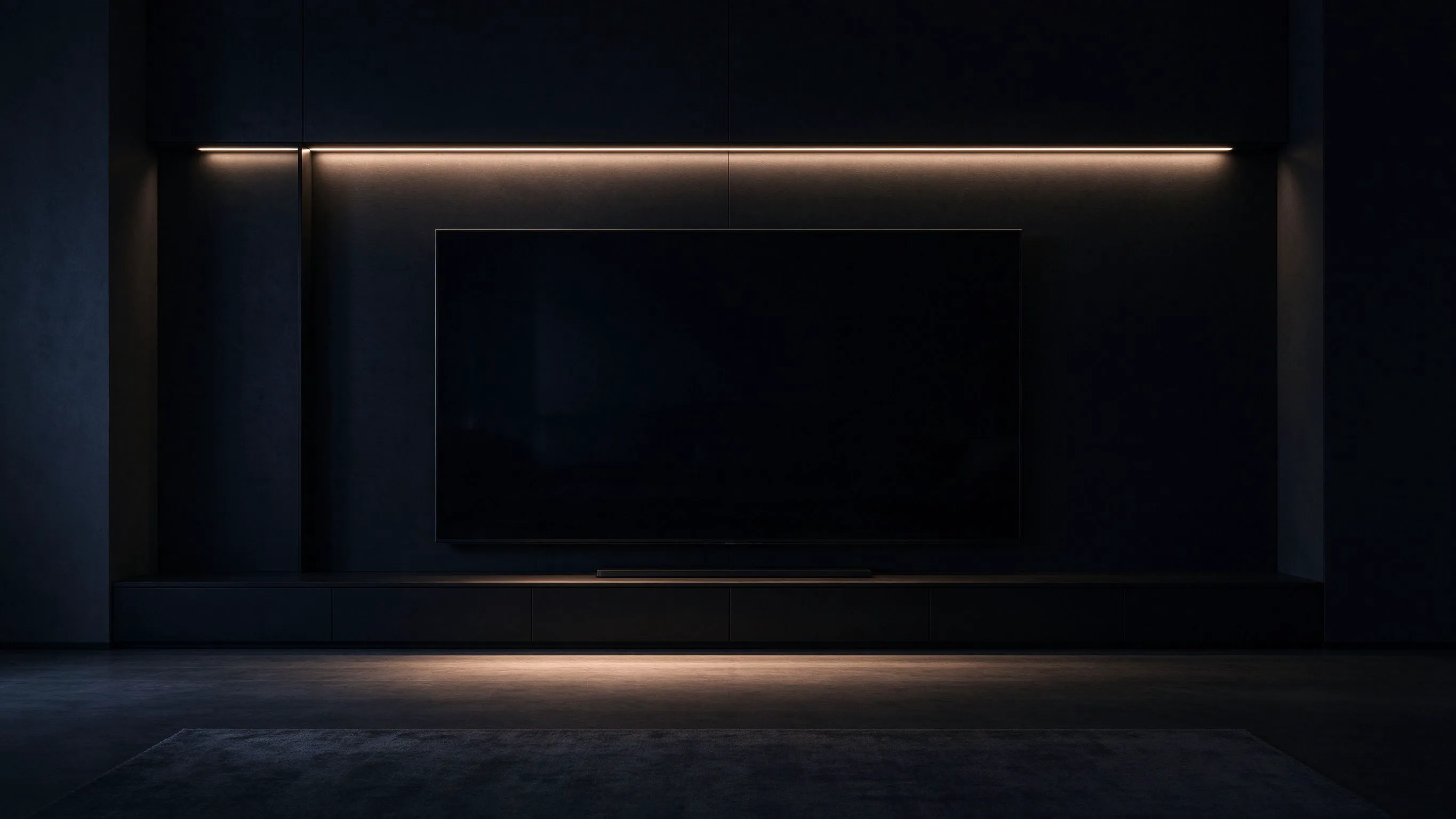
Invisible-by-Day Lighting Is a Contrast Trick
A lot of accent lighting looks great switched on and cheap switched off, because a white circuit board or clear neon body sits on a dark walnut cabinet, black ceiling or tinted glass as an obvious pale strip. In daylight the hardware announces itself, breaking the clean, minimal look the lighting was meant to enhance.
The solution is straightforward once you think in terms of contrast: make the unlit hardware match the dark surface it's mounted on. Black PCB tape, black-bodied neon and black anodized profiles blend into dark backgrounds when off and disappear visually, then produce the same clean lines of light when on. It's the defining product choice for dark-scheme interiors.
Black Neon for Dark Walls, Bars and Theater Rooms
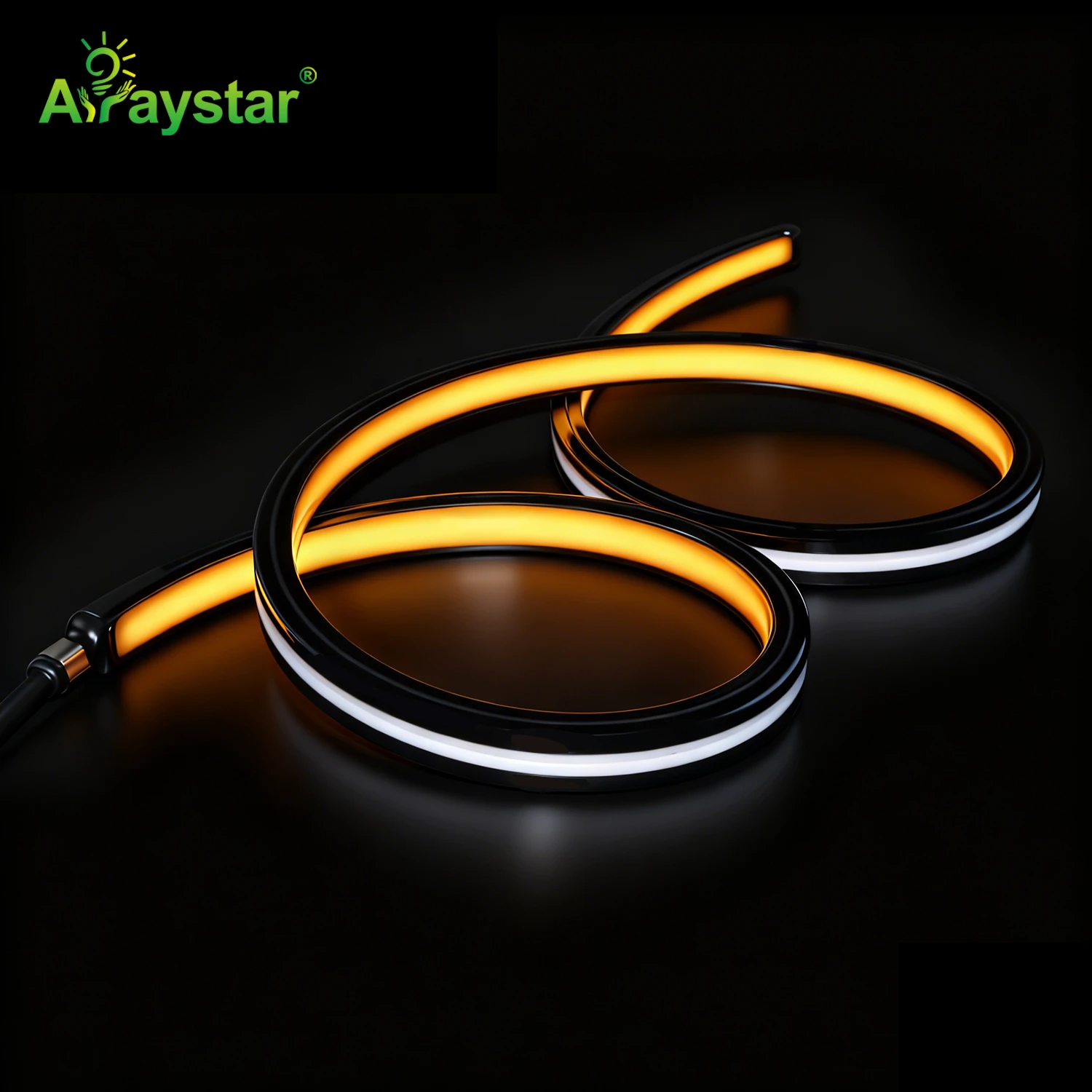
For neon-style outlines and feature lines on dark walls, behind bars, in home theaters and around dark signage, a black LED neon strip hides the fixture in daylight and shows only the glow at night. The black silicone body absorbs ambient light instead of reflecting it as a pale line, so the sign or outline reads as pure light with no visible housing.
Black neon is especially effective in home cinemas and moody hospitality interiors, where the entire design language is dark - a white-bodied product would be visible as a grid of pale strips across the room even with everything switched off, while black neon keeps the room seamless until the lights come up.
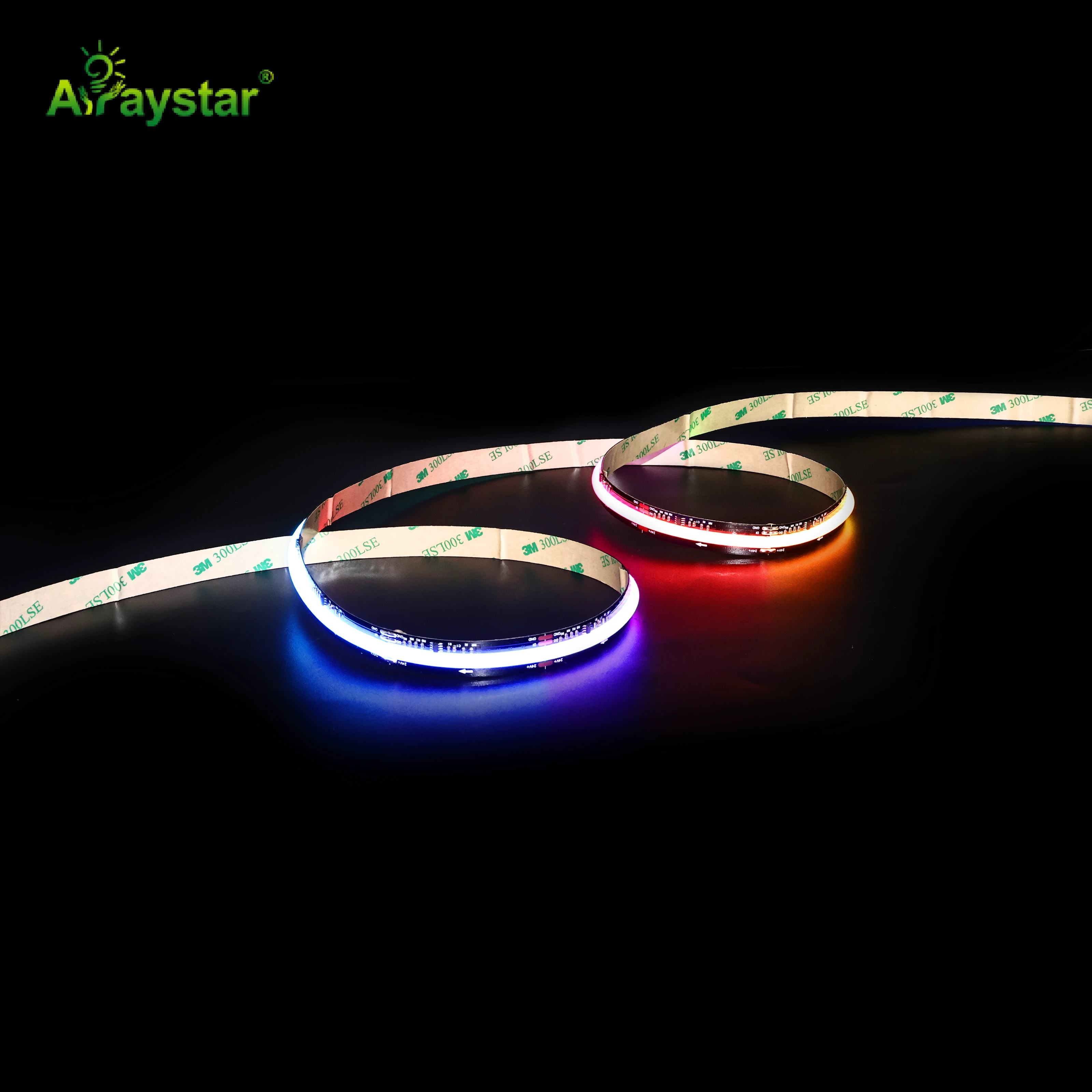
Black PCB Pixel and RGBW for Discreet Color Effects
Dynamic color installations face the same problem, often worse because addressable strips sit exposed in coves and behind TVs. A black PCB 896-pixel RGBW FCOB strip uses a black substrate that conceals the dense pixel array against dark surfaces, so a gaming wall or media cove looks like clean dark trim by day and rich addressable color by night.
The black substrate also improves perceived contrast when the strip is on - colors appear deeper against the black base rather than washed against white PCB, which is why black boards are preferred for RGB and pixel work in dark rooms even apart from the daytime-hiding benefit. It's the standard choice for premium RGB coves and bias lighting in dark-scheme builds.
- Black PCB hides dense pixel arrays in coves and behind screens by day.
- The dark base deepens perceived color contrast when effects run at night.
- Match end caps, wiring and channels to black or they'll give the game away.
- Black board is essential for RGB in home theaters, bars and dark retail.
Black Anti-Glare Profiles for the Complete Look
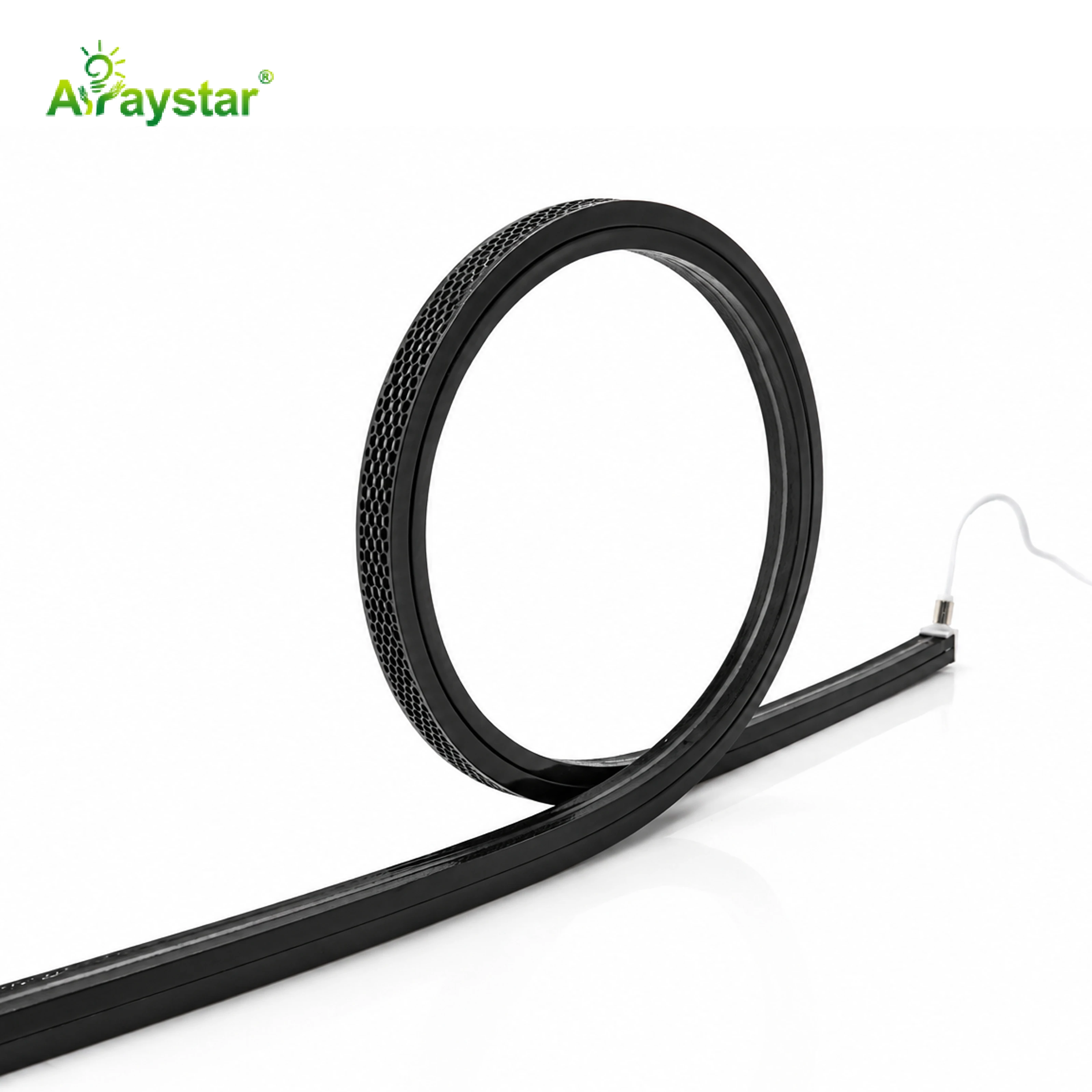
Black tape in a white aluminum channel still leaves a bright silver line, so the invisibility effect only works if the whole assembly is dark. A black anti-glare 12x12 neon flex with a black body and matched black mounting carries the concealment through to the fixture level, including the optics that control glare.
Use the black anti-glare 12x12 flex where the run is visible and close to the eye - dark cabinet reveals, black-framed glass, matte black joinery - with matched black clips and end caps. The anti-glare body also keeps the lit output controlled, so the dark-scheme aesthetic isn't undermined by a harsh bright line at night.
Where Black Invisible Lighting Wins (and Where It Doesn't)
Matching the board/body color to the surface.
| Surface / scheme | Best choice | Why |
|---|---|---|
| Dark walnut / black cabinetry | Black PCB strip + black profile | Hardware vanishes when off |
| Home theater / media wall | Black neon / black pixel FCOB | Seamless dark room, deep color |
| Bars, dark hospitality | Black neon + black anti-glare | Pure glow, no visible housing |
| Tinted/black glass displays | Black PCB, slim black channel | No pale line on dark glass |
| White / light interiors | Standard white board | Black would show as a dark line |
The logic cuts both ways: black products are designed to disappear on dark surfaces, and on white cabinetry a black board would be more visible, not less. Spec the assembly color to the mounting surface - black on dark, white on light - and the 'invisible until lit' effect works every time.
Recommended Products
Frequently Asked Questions
What is black PCB LED strip used for?
Discreet accent lighting on dark surfaces. The black substrate hides the strip against dark cabinetry, black walls, tinted glass and media coves when it's switched off, and it deepens color contrast for RGB/pixel effects when on. It's the standard choice for home theaters, bars and dark-scheme interiors where white PCB would show as a pale line.
How do I make LED strip invisible when it's turned off?
Match the unlit hardware to the mounting surface: use black PCB strip, black-bodied neon and black anodized/anti-glare profiles with black end caps on dark surfaces (and white equivalents on light surfaces). The assembly blends in by day and only the glow appears at night; mixing a black strip with a silver channel ruins the effect.
Is black PCB better for RGB and neon signs?
In dark interiors, yes - the black substrate conceals the dense pixel array or neon run when off and makes lit colors look deeper and richer against the dark base rather than washed out against white. In light or white interiors it's the opposite, so choose board color to match the scheme rather than defaulting to black.
What is black anti-glare neon flex?
Neon flex with a black, optically controlled silicone body (such as the 12x12) that both conceals the fixture against dark backgrounds when off and softens/directs the glow to reduce harsh hot-spotting when on. Pair it with matched black clips and end caps for a fully invisible-in-daylight installation.
Should I use black or white LED strip under kitchen cabinets?
Match it to the cabinet: black PCB and black profiles under dark walnut, matte black or dark-stained cabinetry, and white board/white channels under white or light cabinets. The goal is for the unlit strip to blend with its surface, so the correct answer depends entirely on the cabinet finish rather than being universally black or white.
Need help with your LED project?
Get factory-direct pricing, free samples and engineering support within 24 hours.
Email: info@arraystarled.com | Phone: +86-0755-2103-6746 | WhatsApp: 0086 1581 8514 077
Need to size your power supply? Use our LED Strip Power Calculator to find the right driver in seconds.







