Center-Feeding a Long COB Cove to Stop the Fade at Both Ends
- 2026-11-02 15:54
- /
- Arraystar LED
A 12 m cove fed from one end always looks fine in the photo and dim at the far corner in the room. The fix is not a brighter strip; it is a second injection point in the middle of the run, sized for the wire you actually pulled.
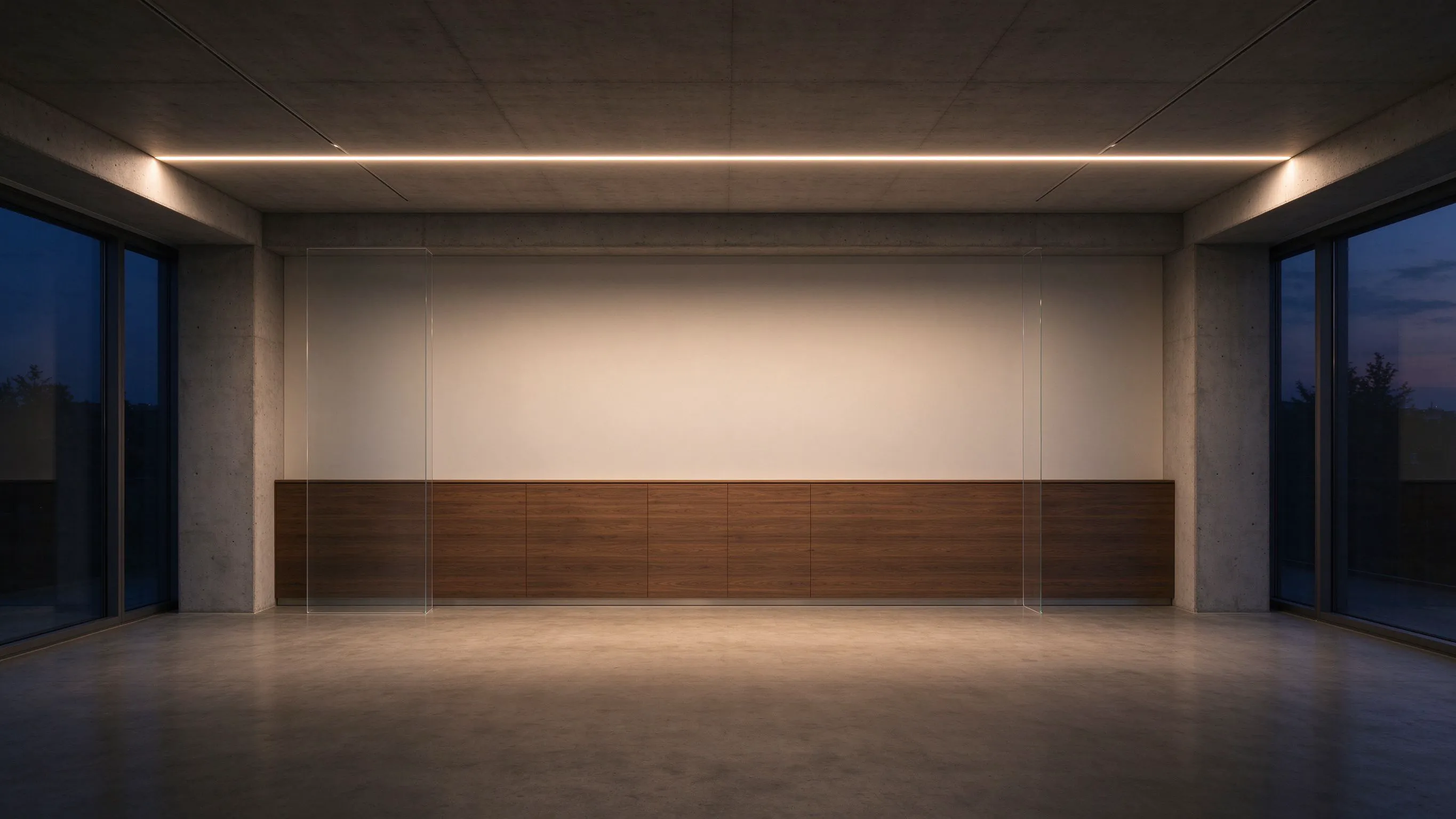
The fade that only shows after dark
You tape the strip into the cove, switch it on, and the feed end looks brilliant. Walk the room and the far corner, 10 or 12 m away, is visibly warmer and dimmer. In a photo it never shows, because the camera auto-exposes the dark end. Standing in the room, you notice it immediately, and the client notices it within a day of handover.
This is voltage drop, full stop. On a 24 V COB cove, every metre of the strip itself drops a little, and every metre of feed wire from the driver to the strip drops a little more. By the time you are 10 m from the feed, the strip may be seeing 21 or 22 V instead of 24, and the LED chips just do not put out the same lumens below nominal.
How far is too far for one feed
The planning number I use is 5 m per injection on a 24 V COB run at 15 W per metre, with 18 AWG feed wire. Past 5 m from the feed, the brightness loss starts to be visible. Past 8 m, it is embarrassing. So a 12 m cove gets fed at the 6 m point, splitting the run into two 6 m legs, and a 16 m cove gets two injections, at 5 and 11 m.
One centre feed beats two end feeds; the run splits symmetrically.
| Total cove length | Feeds needed | Feed wire gauge |
|---|---|---|
| Up to 5 m | 1 feed at end | 18 AWG |
| 6-10 m | 1 centre feed | 16 AWG |
| 11-18 m | 2 injections | 16 AWG legs |
Wiring the centre injection so it is invisible
The trick is that the injection point does not need to look like a junction. You run 16 AWG 24 V flex from the driver location up into the ceiling void, drop it into the cove at the centre of the run, and solder it straight to the strip pads at that point. The strip continues on both sides. You cover the join with a small channel bracket; at ceiling height and 300 mm back from the reveal, nobody sees it.
Steps I follow on site
- Mark the centre of the run before taping; that is where the injection goes.
- Plan the ceiling void path for the feed wire before the ceiling closes up.
- Solder the injection; do not rely on a snap connector at 6 m of load.
- Cover the join with a 50 mm aluminium bracket so the strip stays straight.
Checking the drop with a multimeter
Before I sign off, I measure the voltage at the feed end, at the injection, and at the far corner, with the run at full brightness. I want the far corner to read no less than 23.2 V on a 24 V system, which is a 3 percent loss. If the far corner reads 22.5 V or lower, I add another injection. If it reads 21 V, I also upsize the feed wire, because the loss is in the wire, not the strip.

A useful sanity check: on 18 AWG, 24 V, 15 W per metre, expect about 0.2 V drop per metre of feed. On 16 AWG, half that. If your measured drop is more than 0.3 V per metre, the wire is too thin for the distance.
Picking a strip that forgives a long cove
If the cove is genuinely long and the ceiling void access is ugly, I switch to a high-efficiency 24 V strip that pulls 10 to 12 W per metre instead of 15 to 16. Less current means less drop for the same wire, so you get another 2 to 3 m of run per injection. On a 480 LED density cove, the efficiency version is almost indistinguishable in output, and the wiring gets much easier.
- Budget 5 m per injection on 24 V COB; never feed 12 m from one end.
- Upsize feed wire to 16 AWG once the run passes 6 m.
- Measure the far corner at 23.2 V or better before sign-off.
Recommended Products
Frequently Asked Questions
How long can a 24 V COB cove run on one feed?
Plan on 5 m per injection with 18 AWG feed wire at 15 W per metre. Up to 5 m one end feed is fine. From 6 to 10 m, centre-feed it. Over 10 m, use two injection points. The cove itself can be 18 m long; it just needs the 24 V delivered to the right spots.
Is centre feeding better than feeding both ends?
Yes, usually. Centre feeding splits the run into two shorter legs, so the maximum distance from any point to a feed is half the total. Feeding both ends only helps if the centre is the longest distance, and on a straight cove the centre is exactly that point, which is why one centre injection beats two end feeds.
How much voltage drop is acceptable on a 24 V cove?
Keep the far corner above 23.2 V, which is a 3 percent loss from 24 V. Below 23 V you start to see a warm dim corner. Below 22 V it is obvious in the room. Measure at the far pad with a multimeter at full brightness, not at the driver terminals.
What wire gauge should I run in the ceiling void?
18 AWG for feeds up to 5 m, 16 AWG for 6 to 12 m. The feed wire outside the strip carries the whole run current, so it drops more volts per metre than the strip itself. On a 15 W per metre, 10 m cove, that is 6.25 A on the feed, and 18 AWG loses nearly 2 V over 10 m.
Will a brighter strip fix the dim far corner?
No. A brighter strip pulls more current, which makes the voltage drop worse and the far end dimmer relative to the feed. The fix is delivering the 24 V to the middle of the run, or using a higher-efficiency strip that draws less current per metre. Swapping in a denser reel always backfires.
Need help with your LED project?
Get factory-direct pricing, free samples and engineering support within 24 hours.
Email: info@arraystarled.com | Phone: +86-0755-2103-6746 | WhatsApp: 0086 1581 8514 077
Need to size your power supply? Use our LED Strip Power Calculator to find the right driver in seconds.