Replacing Old Rope Light Under Shop Shelves with COB: Drop and Wiring
- 2026-11-02 15:54
- /
- Arraystar LED
The old mains rope light under your shelves looked easy to swap, until you remembered it ran straight off a 110 or 220 V loop and the new COB strip wants 24 V and a real power budget. You can keep the existing wiring, but the loading changes completely.
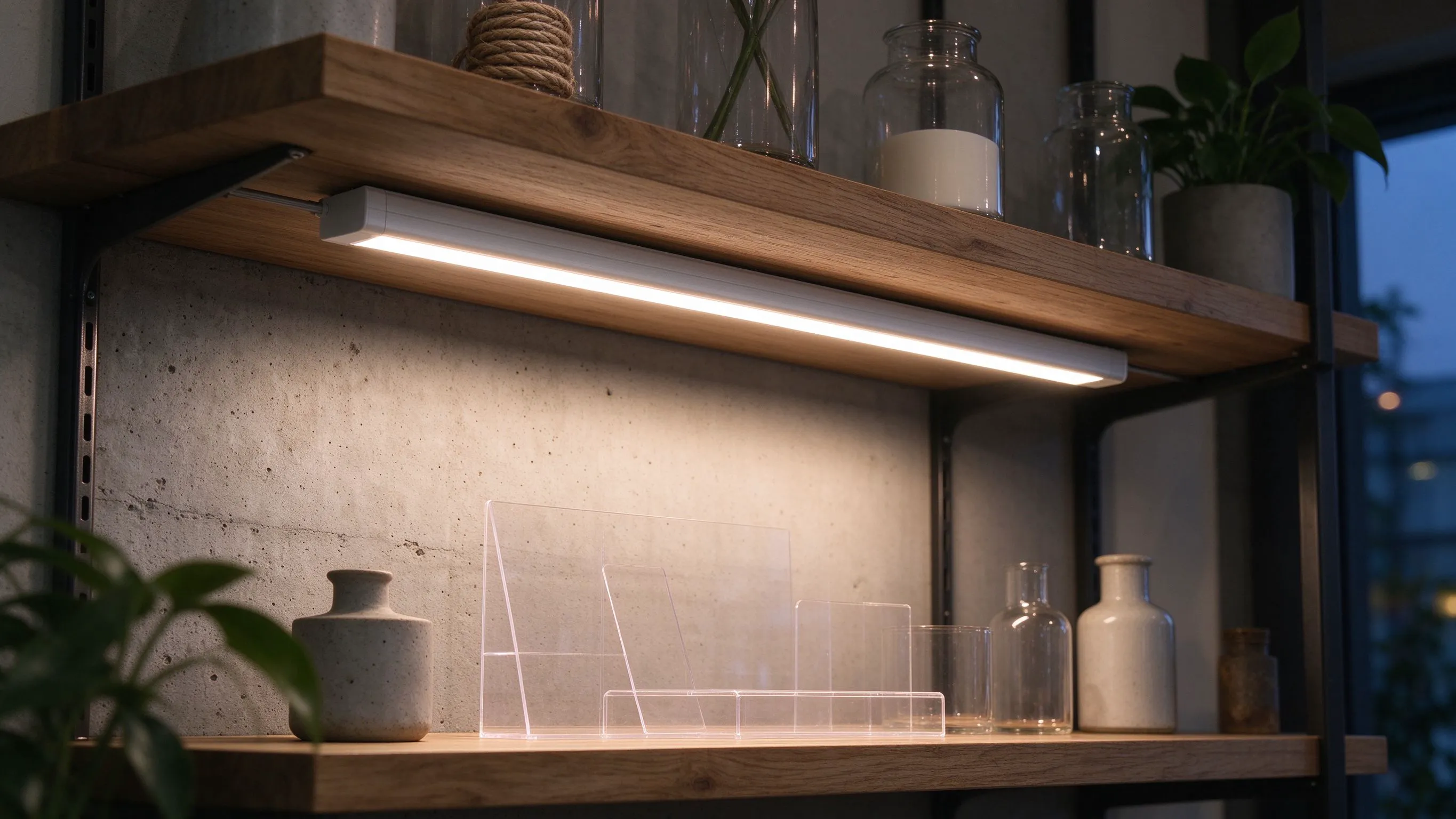
Why the old rope light fooled everyone
Rope light under retail shelves is usually 110 V or 220 V, plugged straight into a local outlet, and it has run for ten years because there is nothing to fail inside a simple series loop. When a shop wants a cleaner, even output, COB strip is the obvious upgrade, but it is a different animal. It runs on 24 V DC, it pulls real amps per metre, and it cannot share a circuit with the rope light you are ripping out.
I did one retrofit where the owner kept insisting we could re-terminate the old mains cable into the new strip. We had to stop him. COB on 24 V will not tolerate mains voltage for one second, and the cable that fed the old rope light is usually 18 AWG bell wire, fine for a rope loop but marginal for the amps a 480 LED per metre COB run draws.
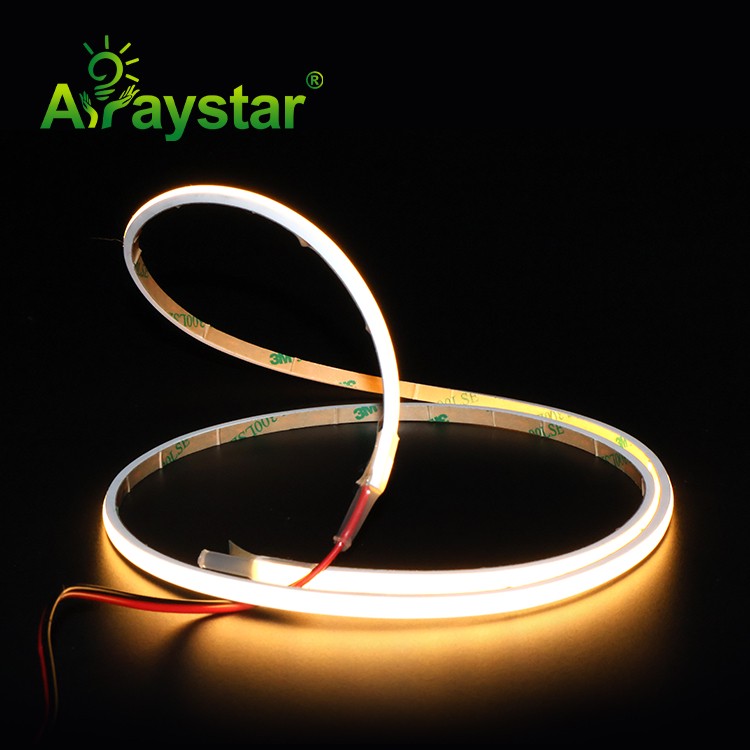
Sizing the 24 V supply for the shelf run
First I measure the total shelf run length and read the strip wattage per metre from the reel. A 480 LED per metre COB at 24 V pulls roughly 14 to 16 W per metre. A six-metre shelf bay therefore wants about 90 W of feed. I size the driver at 1.25 times that continuous load, so a 120 W driver for the six-metre bay, and I never load a driver to more than 80 percent of its rating, because a hot driver in a closed shelf bay lives half as long.
Always oversize by 25 percent; heat inside a shelf bay derates the driver.
| Shelf length | Typical draw at 15 W/m | Driver to specify |
|---|---|---|
| 3 m | 45 W | 60 W 24 V |
| 6 m | 90 W | 120 W 24 V |
| 10 m | 150 W | 200 W 24 V, inject at both ends |
Reusing the old mains cable, safely
You do not have to pull new cable through the shelf carcass. What you do is treat the old mains run as a feeder to a remote 24 V driver mounted at one end of the bay, and run new 18 AWG 24 V flex from the driver to the strip. The old mains wire stays mains, the new wire stays low-voltage, and the two never touch inside the same channel without a separator.
The wiring order I follow
- Disconnect the old rope light at the breaker and leave it labelled.
- Mount a 24 V driver at the bay end, fed from the old mains circuit through a fused spur.
- Run 18 AWG 24 V flex from driver to the shelf strip; use 16 AWG on runs over 6 m.
- Cap and abandon the old rope light tail; do not reuse it for 24 V.
Fixing the strip to the shelf
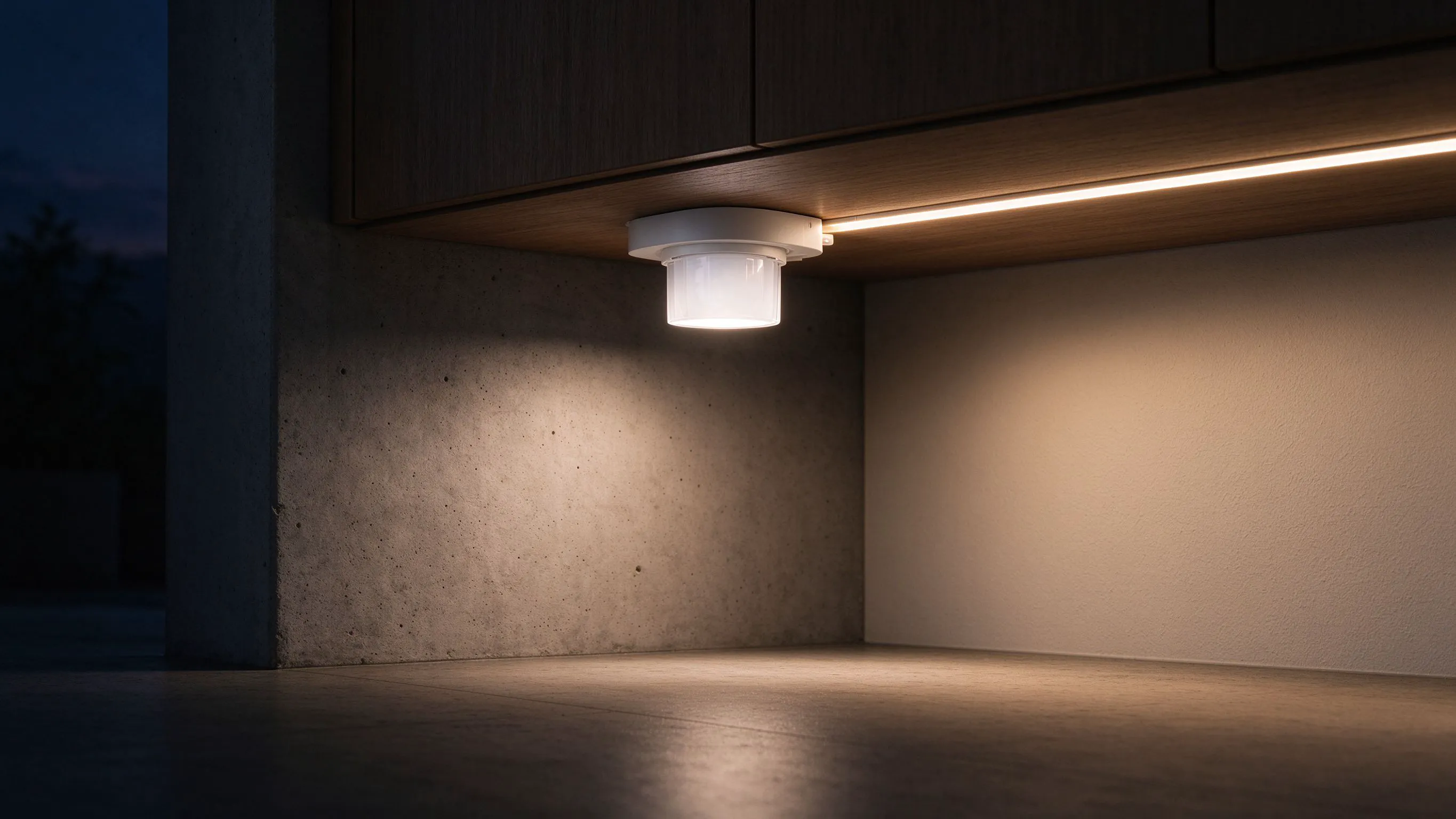
Under a shelf you have a narrow lip, usually 15 to 20 mm, and the strip wants to sit 20 to 30 mm back from the front edge so the light washes the product below rather than the customer eyes. I use a slim aluminium channel with a frosted diffuser, screwed to the shelf underside. The channel hides the strip, kills the visible dot that even COB can throw at a shallow angle, and gives you a real fixing surface instead of relying on the adhesive backing on a painted shelf bottom.
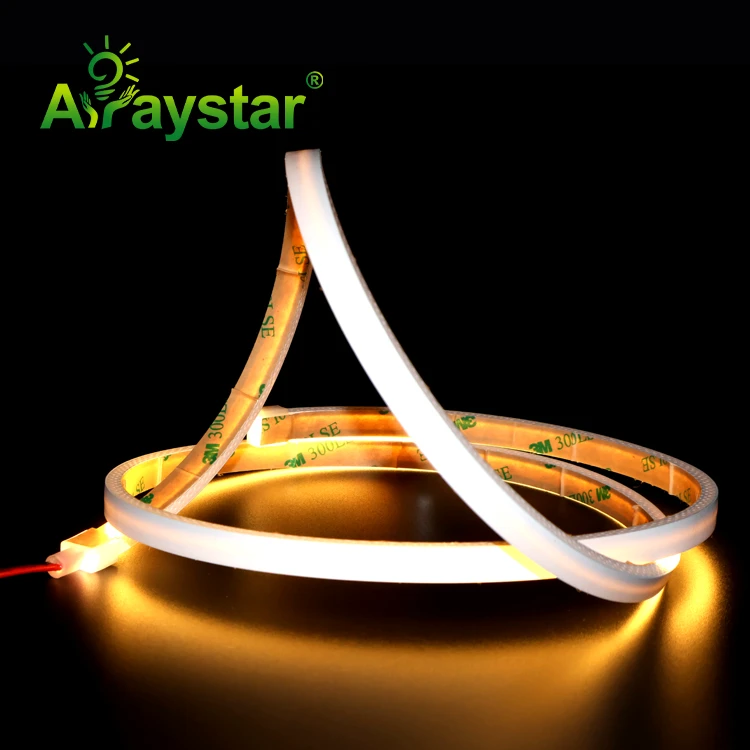
For bays that get hosed down or sit above a cold display, I pick the waterproof silicone-extruded COB. It seals itself, survives occasional spray, and the jacket acts as a secondary diffuser so you can skip the aluminium channel on a tight budget.
What usually goes wrong on a first retrofit
Three mistakes recur. The driver is sized to the old rope light wattage, which is half what COB needs, so the whole bay flickers at full brightness. The feed is taken from the far end of a long run, so voltage drop leaves the near end bright and the far end 20 percent dim. Or the strip is glued straight to a raw shelf bottom that has never been degreased, and it peels off in two weeks.
- Size the driver for the new strip draw, not the old rope light wattage.
- Feed the long run from the middle, or inject at both ends over 6 m.
- Degrease and IPA-wipe the shelf underside before any adhesive backing.
Recommended Products
Frequently Asked Questions
Can I reuse the old mains cable from the rope light for the new 24 V strip?
No. Keep the old mains cable as a feeder to a new 24 V driver mounted at the bay end, then run fresh 18 AWG flex from the driver to the strip. The old bell wire is not rated as a low-voltage feed for the amps COB pulls, and mixing mains and 24 V in the same channel is a code problem.
What wattage driver do I need for a 6 m shelf of COB strip?
At roughly 15 W per metre for a 480 LED per metre COB, six metres is about 90 W of continuous load. Spec a 120 W 24 V driver, which keeps you around 75 percent loading. If the bay is longer than 8 m, split into two runs or inject power at the middle instead of upsizing one driver.
Should the strip sit at the front edge or back under the shelf?
Set it 20 to 30 mm back from the front edge, aimed down and slightly forward. Mounted at the lip, it throws a glare line into the customer eyes and lights the shelf frame instead of the product. In a slim channel, the diffuser spreads the beam so the product face is lit, not the edge.
Do I need a waterproof strip under a retail shelf?
Not in a dry dry-goods bay. In a dairy, deli or produce bay that gets washed down, yes, use the silicone-extruded IP67 COB. It handles occasional spray and wipes down with the shelf. A bare IP20 strip in a wash-down bay corrodes the pads within a season.
Why does half my shelf look dimmer after the swap?
Voltage drop. If you fed a 6 m run from one end on 18 AWG, the far end is running 1.5 to 2 V low on a 24 V system, which is roughly a 10 to 15 percent brightness loss. Move the feed to the middle, add a second injection at the far end, or step up to 16 AWG for the feed tail.
Need help with your LED project?
Get factory-direct pricing, free samples and engineering support within 24 hours.
Email: info@arraystarled.com | Phone: +86-0755-2103-6746 | WhatsApp: 0086 1581 8514 077
Need to size your power supply? Use our LED Strip Power Calculator to find the right driver in seconds.