Counterfeit LED Chips: How to Verify Genuine 2835, 5050 & COB
- 2026-09-19 13:17
- /
- Arraystar
The LED chip is the heart of the strip and the most counterfeited component: reels labelled with a premium brand (Nichia, OSRAM, Seoul, Samsung, Cree/lumilads-class) may actually carry cheap or re-binned dies. Protect yourself by buying from authorised/traceable supply, requiring brand and bin documentation, inspecting physical and packaging marks, and verifying through lumen/efficacy, thermal, spectral and (where critical) authorised-distributor or lab checks. If the price is far below market for a branded chip, it is almost certainly not genuine.
Why Counterfeit Chips Matter

The LED package determines luminous efficacy, colour quality, consistency and — critically — long-term lumen depreciation and failure rate. Premium genuine chips from established manufacturers offer tightly controlled bins, validated LM-80 data and lower, more predictable degradation. Counterfeit or re-marked cheap dies sold under a premium label typically run less efficiently, shift colour early, fail faster and vary between reels — but they carry the brand's marking, so the fraud is invisible on a casual look. Because the chip is a large share of a quality strip's cost, substituting it is the most profitable place for a dishonest factory to cut corners.
- Lower efficacy: more watts for the same light, more heat, shorter life.
- Poor bin control: visible colour differences between and within reels.
- Early degradation: rapid lumen loss and colour shift (no real LM-80 backing).
- False labelling: premium brand mark on an unknown or rejected die.
- No traceability: no authorised channel to confirm the batch.
Where Counterfeits Appear and How They Are Faked
Common forms of chip misrepresentation
| Practice | Description |
|---|---|
| Re-marked dies | Cheap packages printed/laser-marked with a premium logo/part |
| Re-binned / rejects | Off-spec or rejected bins sold as premium grade |
| Partial substitution | Genuine chips on samples, swapped in bulk |
| Brand-name licence claims | Vague 'uses Nichia-grade' wording, not actual brand |
| COB opacity | Untested dies hidden under COB phosphor, hard to inspect |
| Fake certificates | Altered datasheets/test reports and labels |
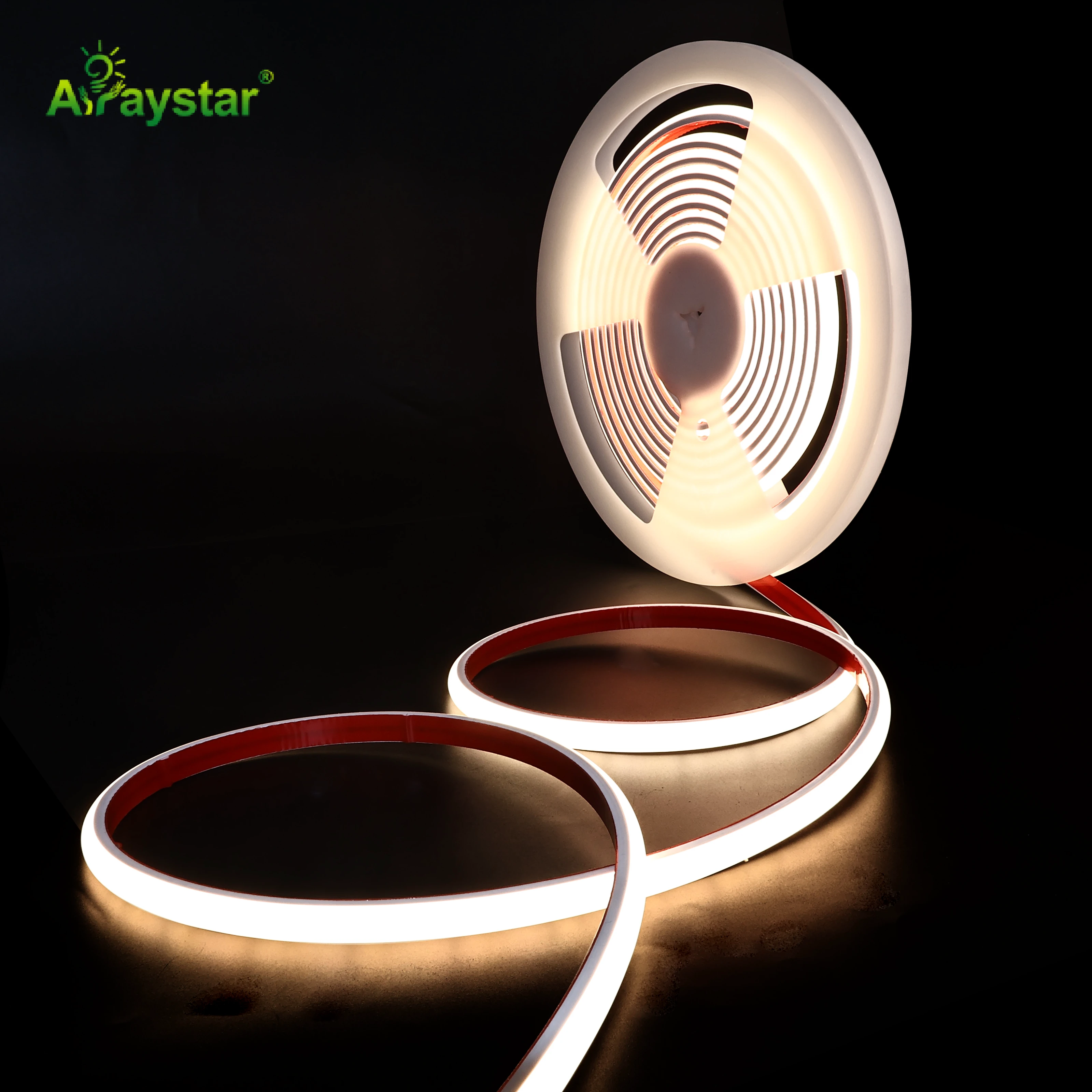
A classic bait-and-switch uses genuine chips in the approved sample and cheaper dies in bulk production. COB strip makes visual inspection harder because the dies sit under a continuous phosphor layer; here the supplier's purchasing records and finished-strip photometric/thermal performance matter more than eyeballing the package. Distrust vague language such as ‘Nichia-equivalent’ or ‘imported chip’ when the order specifies a brand — ask for the exact manufacturer, part number and bin.
How to Verify Genuine Chips
- Buy through traceable channels: authorised distributors or factories that can show purchase records for the branded components.
- Demand the exact LED manufacturer, part number, bin/rank and LM-80 report, and cross-check part-number naming against the brand's official catalogue.
- Inspect package markings, polarity marks, phosphor appearance and reel/labelling consistency; premium brands have precise, uniform marking.
- Compare finished-strip lm/W, CCT/CRI/SDCM and thermal behaviour against the genuine reference — counterfeits underperform and run hot.
- Use a spectrometer/integrating sphere for colour and efficacy; suspicious spectral output or wide bin spread exposes substitution.
- For high-value projects, request brand/authorised verification or independent lab testing and inspect during production, not only the sample.
Verification evidence hierarchy
| Evidence | Strength |
|---|---|
| Factory verbal claim / logo print | Weak |
| Brand-labelled sample only | Weak (bait-and-switch risk) |
| Named part/bin + datasheet | Better |
| LM-80 + batch test data | Good |
| Authorised-distributor purchase records | Strong |
| Independent lab test + DUPRO inspection | Strongest |
Protecting an Order Contractually
- Write the LED brand, part number and minimum bin into the purchase specification and contract, not just the marketing quote.
- Require component traceability and the right to inspect during production (DUPRO) and before shipment (AQL).
- Define rejection and penalty terms for substituted components and retain a sealed approved sample.
- Treat abnormally low pricing for a branded specification as a warning and ask the supplier to explain the cost basis (see our BOM breakdown).
- Build a long-term relationship with a transparent factory that benefits from repeat orders more than from a single substitution.
- Test bulk goods against the approved sample, since samples and production can differ.
We use genuine, traceable LED packages with documented part numbers, bins and LM-80 data, and we support customer and third-party verification including production inspection and batch test records. If a project specifies a particular brand, we quote that exact component transparently rather than relabelling alternatives; ask us for the chip sourcing and test documentation with your enquiry.
Recommended Products
Frequently Asked Questions
How can I tell if LED strip uses genuine Nichia, OSRAM or Samsung chips?
Don't rely on the package logo, which can be re-marked. Require the exact manufacturer part number and bin, LM-80 data and authorised-distributor purchase records, inspect marking/phosphor consistency, and verify finished-strip efficacy, colour (CCT/CRI/SDCM) and thermal performance against a genuine reference; for critical orders use independent lab testing and a during-production inspection.
Is COB strip easier or harder to counterfeit?
Harder to visually verify because the dies sit under a continuous phosphor layer, so logo inspection is less useful; rely more on supplier component purchase records plus finished-strip integrating-sphere measurements (lm/W, CCT/CRI/SDCM), thermal testing and LM-80 documentation. A reputable factory's traceability matters more than trying to read a die mark through COB encapsulant.
Will counterfeit LED chips fail immediately?
Not necessarily — that is what makes them dangerous. They often work at first but run less efficiently and hotter, with poor bin consistency, faster lumen depreciation and earlier colour shift or failure. The problem appears after installation, when replacement is expensive, which is why verification and LM-80-backed quality matter before purchase rather than after failure.
Can a much cheaper quote still have genuine brand chips?
Rarely if it is far below the market range for that branded specification, because the chip is a major cost and genuine premium dies have a stable market price. A large unexplained discount usually signals substituted or re-marked chips, thinner PCB, lower IP quality or other cuts. Ask for a cost explanation and component traceability rather than assuming a bargain (see our BOM cost guide).
What paperwork proves LED chip authenticity?
The strongest evidence is authorised-distributor purchase records linking the production batch to genuine components, backed by the exact part number/bin, manufacturer LM-80/temperature-test data and finished-strip batch photometric tests. Brand-printed samples and generic certificates alone are weak and can be faked; independent lab reports and production inspection add the strongest assurance.
Need guaranteed-genuine chips for a project?
We supply traceable LED packages with documented part numbers, bins and LM-80 data and welcome third-party and production inspection. Send your specified brand and bin and we will quote that exact component with sourcing and test evidence.
Email: info@arraystarled.com | Phone: +86-0755-2103-6746 | WhatsApp: 0086 1581 8514 077
Need to size your power supply? Use our LED Strip Power Calculator to find the right driver in seconds.