Dim-to-Warm 2216 Strips for That Restaurant Halogen Glow
- 2026-10-09 18:40
- /
- Arraystar LED
Halogen lamps do something diners love that ordinary dimmable LED does not: as they dim, they get warmer, sinking toward a candle-like glow. Dim-to-warm LED strip replicates that by shifting colour temperature down as brightness decreases, giving restaurants and hospitality spaces the intimate halogen dimming curve from an efficient, long-life source without the heat and short life of real halogen.
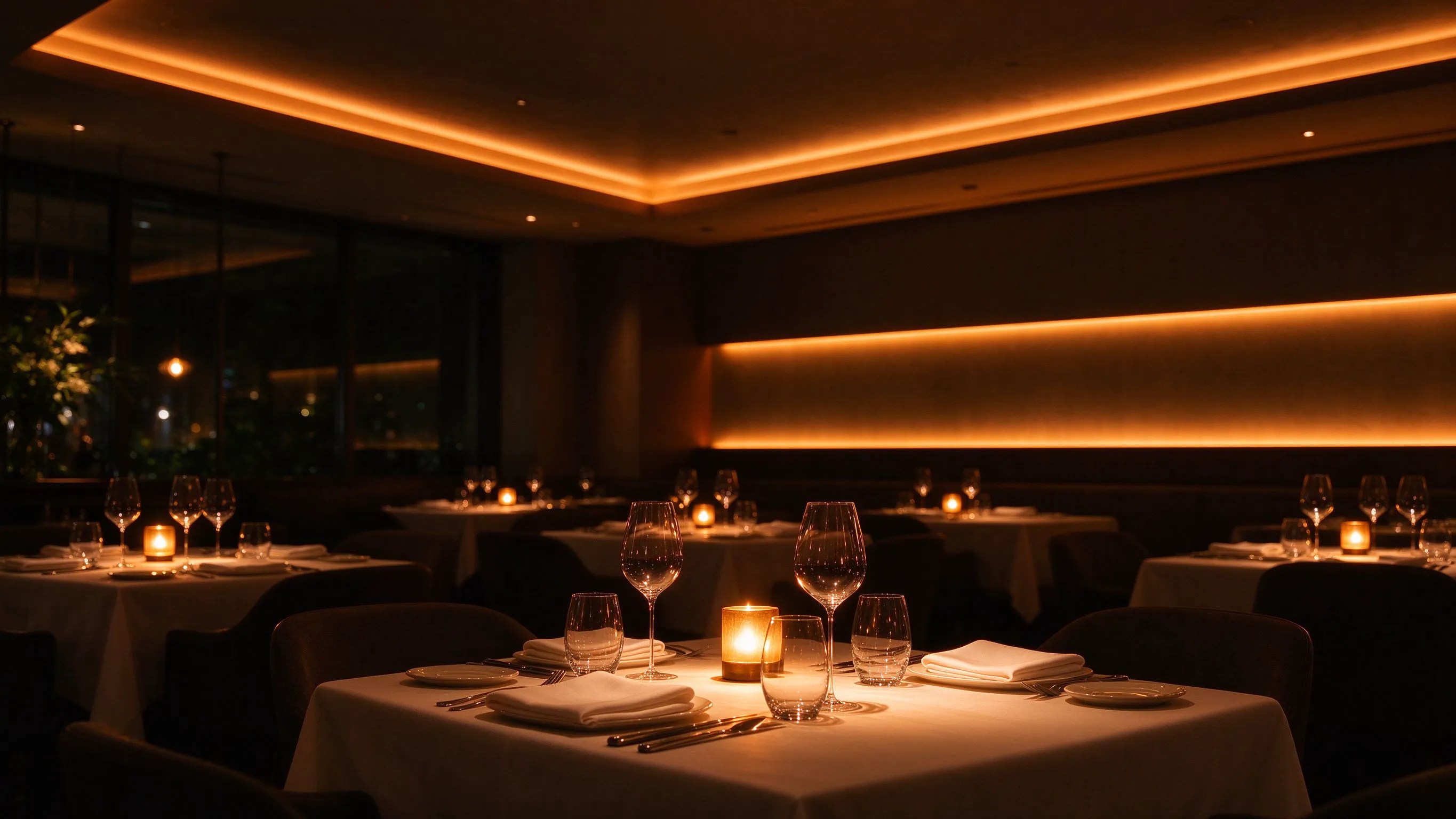
Why Ordinary LED Dimming Feels Wrong in Restaurants
Dimming a conventional fixed-white LED simply lowers the brightness while the colour temperature stays put. A 3000K strip dimmed to 20% is still a 3000K white, only weaker, which feels flat and slightly grey rather than cosy. Halogen behaves in the way human beings intuitively expect firelight to behave: the lower it goes, the warmer and more amber it becomes.
Restaurants rely on that warm dimming to transition a space from bright lunch service to intimate evening dining, and fixed-white LED quietly removes the effect.
What Dim-to-Warm Strip Does
- Colour temperature falls as brightness dims, mimicking halogen.
- Bright neutral white at full output for setup and daytime use.
- Warm candle-like glow (toward ~1800K) at low levels.
- Automatic behaviour from a standard dimmer, no scene programming needed.
- Small 2216 emitters suited to discreet cove and joinery lighting.
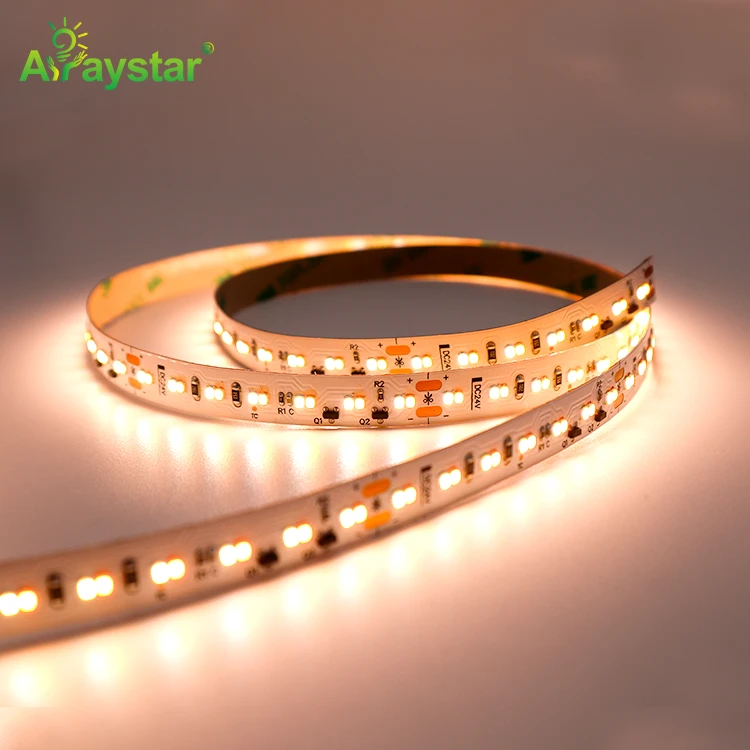
For hospitality dimming I use the dim-to-warm 2216 strip. It recreates the halogen curve that makes a room feel welcoming as the evening progresses.
Dim-to-Warm vs Tunable White
Dim-to-warm is the automatic, hospitality-friendly option.
| Feature | Dim-to-warm | Tunable white |
|---|---|---|
| CCT linked to dim level | Yes, automatic | No, set independently |
| Control needed | Standard dimmer | CCT controller / smart driver |
| Typical range | ~3000K down to ~1800K | Full adjustable range |
| Complexity / cost | Lower | Higher |
| Best for | Restaurants, homes, mood | Offices, circadian, precise scenes |
The distinction matters: dim-to-warm ties warmth to the dimmer on a fixed, halogen-like curve, which is simple and foolproof, while tunable white lets you set brightness and colour temperature independently, which is powerful but needs more control and programming. For a restaurant that just wants the natural cosy fade, dim-to-warm is the cleaner choice.
Where the Halogen Glow Is Specified
- Restaurants, bars and cafes transitioning from day to evening service.
- Hotel lobbies, lounges and guest areas wanting warmth at night.
- Hospitality coves, bar fronts and banquette seating details.
- High-end residential dining rooms and living spaces.
- Spa and wellness rooms where warm low light relaxes.
How the Effect Is Built
Dim-to-warm strip carries two warm-white populations at different colour temperatures. At high output the cooler-warm channel dominates for a clean bright white; as the dimmer lowers, the warmer channel takes over until the light sinks toward a deep candle-like amber. This cross-fade is engineered into the strip and driver response, so the operator only uses an ordinary dimmer and gets the warm dimming curve automatically, with no scenes to program or staff to train.
Dimming Smoothness and Compatibility
The whole value of dim-to-warm is in a smooth fade, so the driver and dimmer must support low-end dimming without flicker, stepping or drop-out. I match constant-voltage dimmable drivers to the strip and test at the bottom of the range, because cheap drivers often pop off or flicker at the very low candle levels where the effect is most beautiful. I confirm the dimmer protocol (triac/phase-cut, 0-10V or DALI) against the driver before ordering rather than discovering incompatibility on site.
- Use dimmable drivers rated for smooth, flicker-free low-end fade.
- Match the dimmer protocol to the driver before installation.
- Test the full warm-down curve, especially the lowest candle levels.
- Avoid mixing driver types across one visually connected space.
Designing a Restaurant Day-to-Night Scene
I plan the cove so full output supports cleaning, setup and lunch, then the natural dim-down carries the room through dinner into late evening without anyone changing a colour setting. Because the warmth follows the dimmer, staff simply run the room brighter early and dimmer later, exactly as they did with halogen, which makes adoption effortless. I layer the dim-to-warm cove with warmer accent and table lighting so the whole room moves together rather than the cove warming while fixed-white downlights stay cold.
Specifying Hospitality Dim-to-Warm
Send the space type, the desired top and bottom colour temperatures (commonly around 3000K down toward 1800K), the dimmer system already in place and run lengths. I will confirm the dim-to-warm 2216 strip, compatible flicker-free drivers and a smooth dimming setup. We supply the dim-to-warm strip and recommend watching a full fade from bright to candle on a sample, because the low-end warmth and smoothness are the entire point and are best judged in person rather than from a specification.
Retrofitting a Restaurant Without Changing How Staff Work
A bistro owner wanted to replace the halogen cove lighting that gave the dining room its warm evening character but was expensive to run, hot against the timber joinery and failing every few weeks. The owner's one non-negotiable requirement was that the new lighting feel and behave exactly like the old halogen: staff should use the same wall dimmer, run the room bright at lunch and simply push it lower at night, with no app, no scenes and no training. A fixed-white LED retrofit was rejected after a trial because dimming it produced a flat grey light that felt like an office, and a full tunable-white system was rejected as over-engineered for a small independent restaurant.
The dim-to-warm 2216 strip was the direct answer. We installed it into the existing cove with a flicker-free dimmable driver wired to the original dimmer position, matched the top output to a clean 3000K for daytime and let the engineered warm-down carry the room toward candle glow as staff dimmed for dinner. Because the warmth follows the dim level automatically, the operational routine was identical to halogen: brighter early, warmer and dimmer later, with nothing new to learn. The owner reported that regular guests did not notice a change in atmosphere, only that the cove no longer radiated heat and never seemed to fail, while the electricity and maintenance bills fell sharply. We spent commissioning time at the bottom of the dimming range to ensure the candle levels were smooth and silent, which is where cheap drivers would have flickered and broken the illusion. The case illustrates why dim-to-warm, rather than fully tunable white, is the right technology for hospitality mood lighting: it locks in the single dimming curve restaurants actually want and makes the upgrade invisible to the people who run the room every day.
Recommended Products
Frequently Asked Questions
What is dim-to-warm LED strip?
It is strip that automatically shifts to a warmer colour temperature as it is dimmed, moving from a bright neutral white at full output toward a deep candle-like glow around 1800K at low levels, replicating how halogen behaves. It is controlled with an ordinary dimmer and needs no scene programming.
What is the difference between dim-to-warm and tunable white?
Dim-to-warm ties colour temperature to the dim level on a fixed halogen-like curve and works from a standard dimmer, making it simple for restaurants and homes. Tunable white lets brightness and colour temperature be set independently via a CCT controller or smart driver, giving more precise and circadian control at higher complexity and cost.
Where is dim-to-warm strip used?
Wherever light should feel warmer and cosier as it dims: restaurants, bars and cafes moving from lunch to evening service, hotel lounges, hospitality coves and banquettes, spa rooms and high-end homes. It reproduces the intimate halogen glow without halogen's heat, energy use and short life.
Why does my dim-to-warm strip flicker at low brightness?
Almost always a driver or dimmer mismatch: cheap or incompatible dimmable drivers flicker, step or drop out at the very low candle levels where the effect matters most. Use drivers rated for smooth flicker-free low-end dimming, match the dimmer protocol to the driver, and test the full warm-down curve before fitting out.
Can staff use dim-to-warm like a normal dimmer?
Yes, that is its strength. The warm-down is automatic, so staff simply run the room brighter for setup and lunch and dim it for dinner and late evening, exactly as with halogen, with no colour controls or training. Layer it with warm accent and table lighting so the whole space warms together rather than the cove warming while fixed-white downlights stay cold.
Need help with your LED project?
Get factory-direct pricing, free samples and engineering support within 24 hours.
Email: info@arraystarled.com | Phone: +86-0755-2103-6746 | WhatsApp: 0086 1581 8514 077
Need to size your power supply? Use our LED Strip Power Calculator to find the right driver in seconds.