
LED Strip for Escape Rooms, Arcades and Mini-Golf: Pixels, Neon and Controllers That Survive Guests
- 2026-10-08 17:37
- /
- Arraystar LED
Theming an escape room, arcade, mini-golf course or dark attraction is a different discipline from lighting a room: the lights are part of the game, they run for hours unattended, and they are mounted inside props that guests touch, shake and climb on. That pushes three decisions to the top: use addressable pixels and neon chosen for effect rather than cheap single-colour tape, drive everything from offline controllers that run from storage without a PC on the network, and build for mechanical abuse and easy reset with power injected properly behind the set. Get the controller architecture and durability right and you can program puzzles, chases, reveals and win sequences that run identically all night, every night, with no staff member touching a computer.
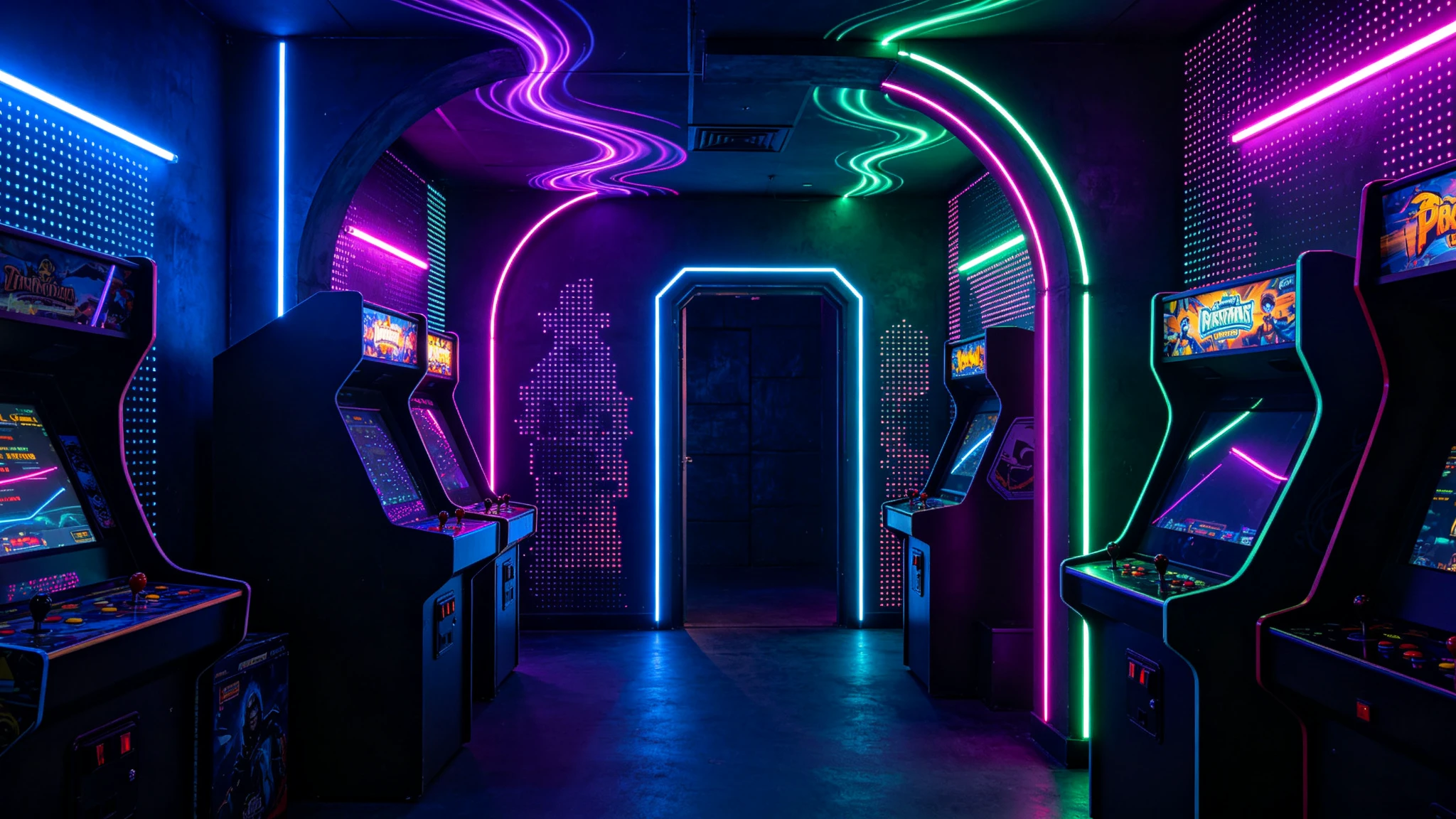
Theming Light Has to Run Unattended and Survive Guests
In an attraction, the lighting is not finished when the venue opens - it has to perform the same effects on queue all evening, often seven days a week, inside foam props, wood scenery and themed panels that get bumped, leaned on and occasionally grabbed. Domestic-style controllers that rely on a laptop, a phone being in range or a Wi-Fi connection are a liability here. The brief I design to is always: effects stored locally, power distributed properly, every fixture protected from fingers and impact, and a reset that takes one button or happens on a timer.
- Offline playback from SD card or internal memory - no PC or live app required during operation.
- Mechanical protection: diffusers, channels and recessed mounting so pixels cannot be picked at.
- Backup-data pixel ICs so one damaged LED does not black out a whole prop.
- Local power injection behind sets, with drivers accessible from the rear for service.
- Deterministic triggers (sensors, relays, buttons) wired to the controller for puzzle reveals.
Pixel Strings for Props, Signs and Set Pieces
A lot of themed effects live on small individual points rather than a continuous line - eyes that follow you, constellations, flickering torches, beacons, a trail of lights guiding players to a clue, outlines on props and set dressing. For these I use addressable point-light strings such as the FW1935B, where each pixel sits on a flexible leaded wire that can be poked through foam, wood and signage at any spacing. The leaded construction is far easier to hide inside a prop than rigid strip and survives the irregular shapes themed scenery always has.
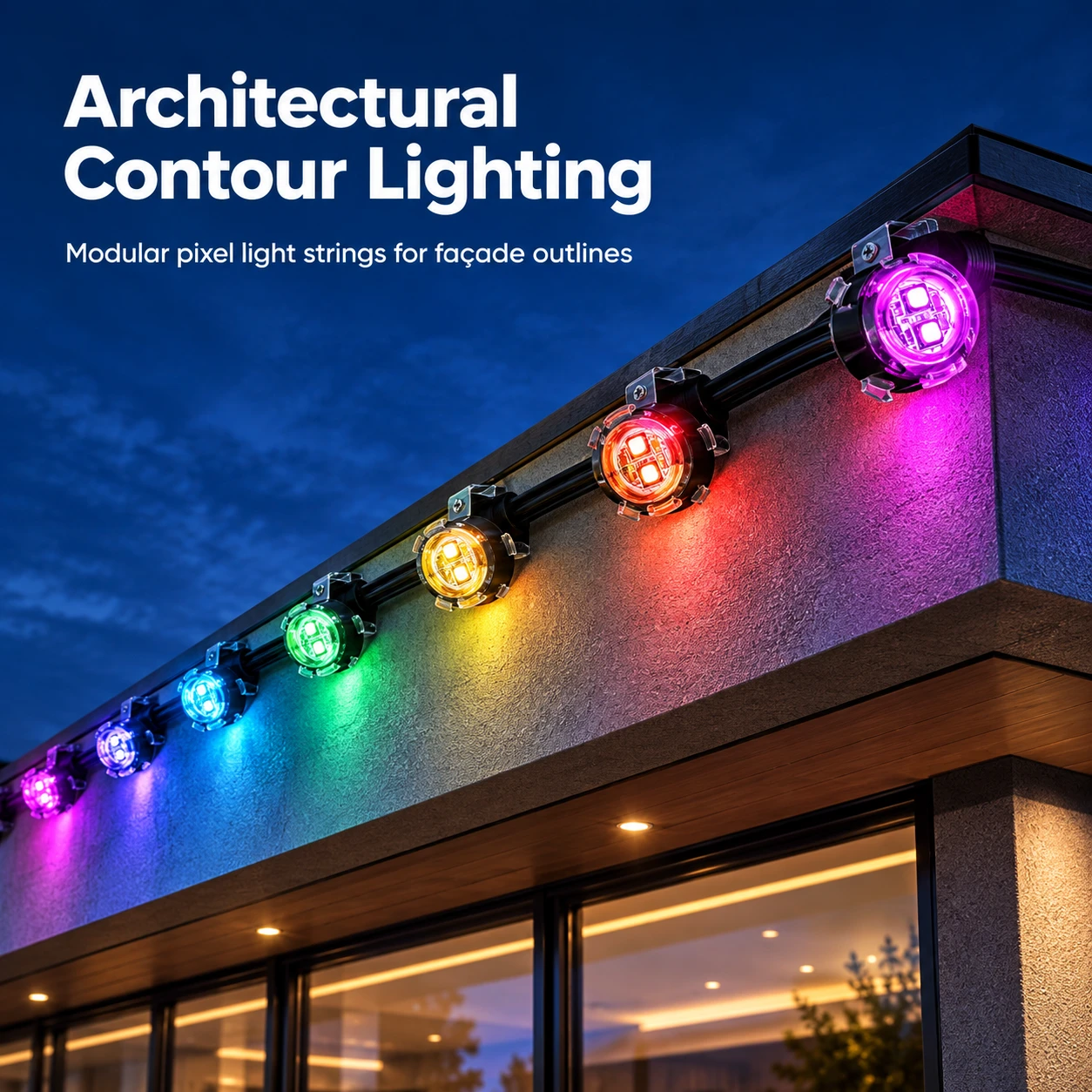
Because each point is individually addressable you can chase, flash, breathe and trigger individual pixels from the controller, which is exactly the language of puzzle and jump-scare design. Seal the backs with hot glue or silicone where they pass through scenery, and give each prop a connector so a damaged piece can be unplugged and swapped rather than rewired.
Continuous Pixel COB for Corridors, Archways and Big Effects
For long smooth animated lines - portal archways, corridor edges, baseboards that chase players forward, ceiling runs, bar fronts in arcades - individual dots look cheap and pixelated. A high-density RGBW pixel COB puts hundreds of addressable emitters per metre into a continuous diffused line, so colour sweeps and gradients look like light flowing rather than a row of bulbs. The 896-LED RGBW pixel COB is my default for these signature runs, and the white channel also gives a clean neutral when a room needs to reset to plain light between groups.
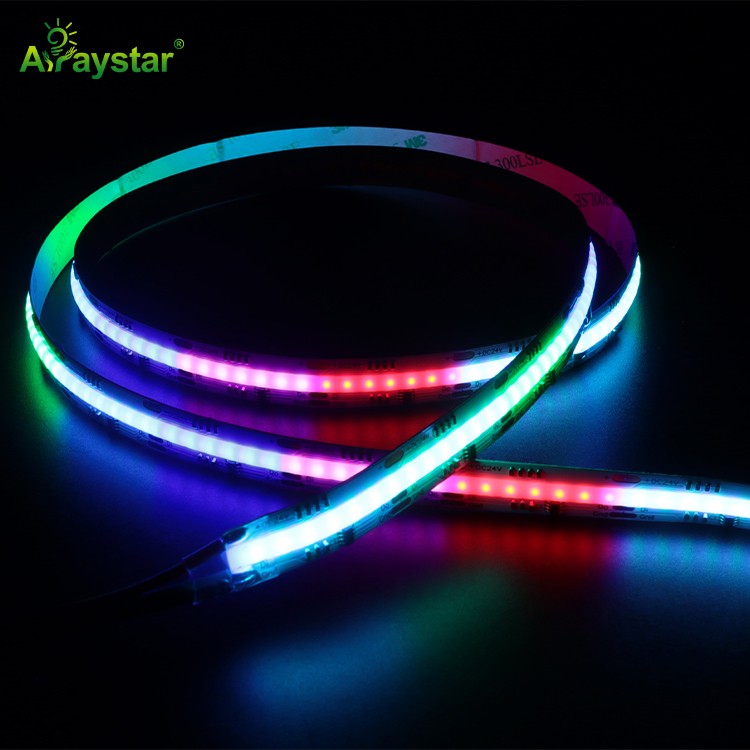
Run these in aluminium channels with opal diffusers recessed into the scenery - it both smooths the light and protects the tape from impact. Long runs still need power injection at the usual intervals even though the effect is continuous, so plan the feeds before the set is clad, when you can still hide cable.
Offline Controllers - The Heart of a Reliable Attraction
The controller is where themed installs live or die. I standardise on offline pixel controllers that store effects on an SD card and run on power-up, so there is no computer to crash, update or lose connection mid-game. The K1000C is the workhorse for this: it drives a large number of pixels, plays programmed sequences from card, and can be triggered by buttons, sensors and relays so puzzle events call up specific effects - a red alarm on a wrong answer, a green sweep and a door reveal on success.
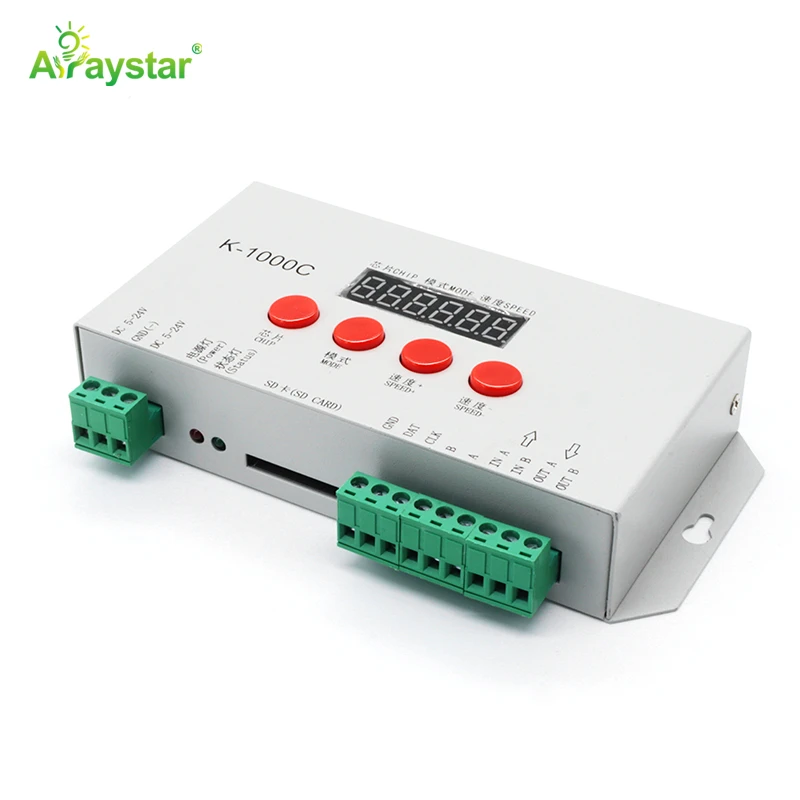
Match the controller to whether effects loop freely or must be triggered by the game.
| Need | Controller approach | Example |
|---|---|---|
| Looping ambient effects all night | Offline SD-card player | Hallway ambience, idle attract mode |
| Puzzle / sensor triggers | Controller with trigger inputs | Wrong code = red flash, win = green reveal |
| Many separate zones | Multiple controllers or SPI amps | One per room, synced at start |
| Live operator control | DMX console / receiver | Game master overriding scenes |
| Simple single-colour scenes | Relay/dimmer, no pixels needed | Light on solve, blackout reset |
Power, Serviceability and Building for Reset
Behind the set is where attraction work is won or lost. Inject power on every long pixel run, fuse each prop or zone, and use 12V/24V fault-tolerant pixel ICs so a single abused pixel does not kill an archway. Mount drivers and controllers in a service corridor or the rear of each element, never sealed inside a prop with no access, and label every connector. Standardise on a few connector types and keep spares pre-made so a knocked prop during a busy Saturday can be swapped in seconds between groups.
- Design every lit element as a removable module with its own plug.
- Inject power before cladding; hiding cable afterwards means tearing sets apart.
- Use diffusers and recessed channels - exposed pixels get poked and pried by guests.
- Keep one spare of each controller, string and COB type used in the venue.
- Program a single-button 'reset to idle' so staff can restart rooms without the software.
Build it like stage equipment that an operator can reset in the dark under time pressure, and the lighting becomes a reliable performer in the show rather than a maintenance burden.
For multi-room venues I give each room its own controller but power them on a shared start signal so the whole attraction returns to its idle state in sync, and I keep pre-programmed spare SD cards on site - if a card corrupts mid-season, staff swap the card in seconds rather than waiting for me. One-swap spares and a single reset are what separate an attraction that runs every night from one that loses a room on a busy Saturday.
Recommended Products
Frequently Asked Questions
What LED controller works best for an escape room or arcade?
Use an offline pixel controller that stores effects on an SD card and starts playing on power-up, such as the K1000C, rather than anything that depends on a PC, phone or Wi-Fi during operation. Choose one with trigger inputs so buttons, motion sensors and relays can call specific effects for puzzles and reveals, and use multiple controllers or SPI amplifiers for separate rooms. A single-button reset to an idle scene lets staff restart between groups without touching software.
What is the difference between pixel point lights and pixel strip for theming?
Point-light strings put individual addressable pixels on flexible leads that you poke through props, foam and signage at any spacing - ideal for eyes, beacons, constellations and irregular set pieces. Pixel COB or strip packs many addressable emitters into a continuous line for smooth chases along corridors, archways and bar fronts. Use points inside props and continuous diffused COB for signature runs; both are driven from the same addressable controllers.
How do I protect LED pixels from guests touching them?
Recess continuous strip into aluminium channels with opal diffusers and mount point lights from behind the scenery with just the tip showing, sealing the back with silicone. Use backup-data pixel ICs so a single damaged pixel does not black out the run, build every lit element as a plug-in removable module, and keep drivers and wiring in a service area guests cannot reach. Exposed bare pixels at reachable height will always get poked and pried.
Do escape room LED effects need power injection?
Yes, exactly like any addressable run - the data line carries instructions but every pixel draws current from the shared power rails, which sag over distance. Inject fresh power at the recommended intervals (sooner on 5V, further apart on 12V/24V), share the injected supply ground with the controller, and fuse each prop or zone. Plan and hide the feeds before the set is clad; adding them afterwards means dismantling scenery.
Can LED effects be triggered by puzzles, buttons or motion sensors?
Yes. Offline pixel controllers with trigger inputs can switch to a programmed effect when a button, relay, magnetic lock or motion sensor changes state - for example a red alarm and strobe on a wrong code, or a green sweep and door-reveal effect on solving a puzzle. Wire the puzzle hardware to the controller inputs, program the corresponding effect on the SD card, and keep a master reset that returns every room to its idle attract state between groups.
Need help with your LED project?
Get factory-direct pricing, free samples and engineering support within 24 hours.
Email: info@arraystarled.com | Phone: +86-0755-2103-6746 | WhatsApp: 0086 1581 8514 077
Need to size your power supply? Use our LED Strip Power Calculator to find the right driver in seconds.







