
LED Strip Lighting for Clothing Store Fitting Rooms: CRI, CCT and Vertical Light Done Right
- 2026-09-29 12:05
- /
- Arraystar LED
Most fitting rooms fail because the light is mounted overhead and pointed down, which shadows the face and throws the garment's true color under the wrong color temperature. Fix the vertical light on the mirror first, hold CRI 90+ with an R9 above 50, give the customer a warm/cool switch, and the room stops being where sales go to die. The strip and profile choices below are the ones I actually spec on retail fit-outs.
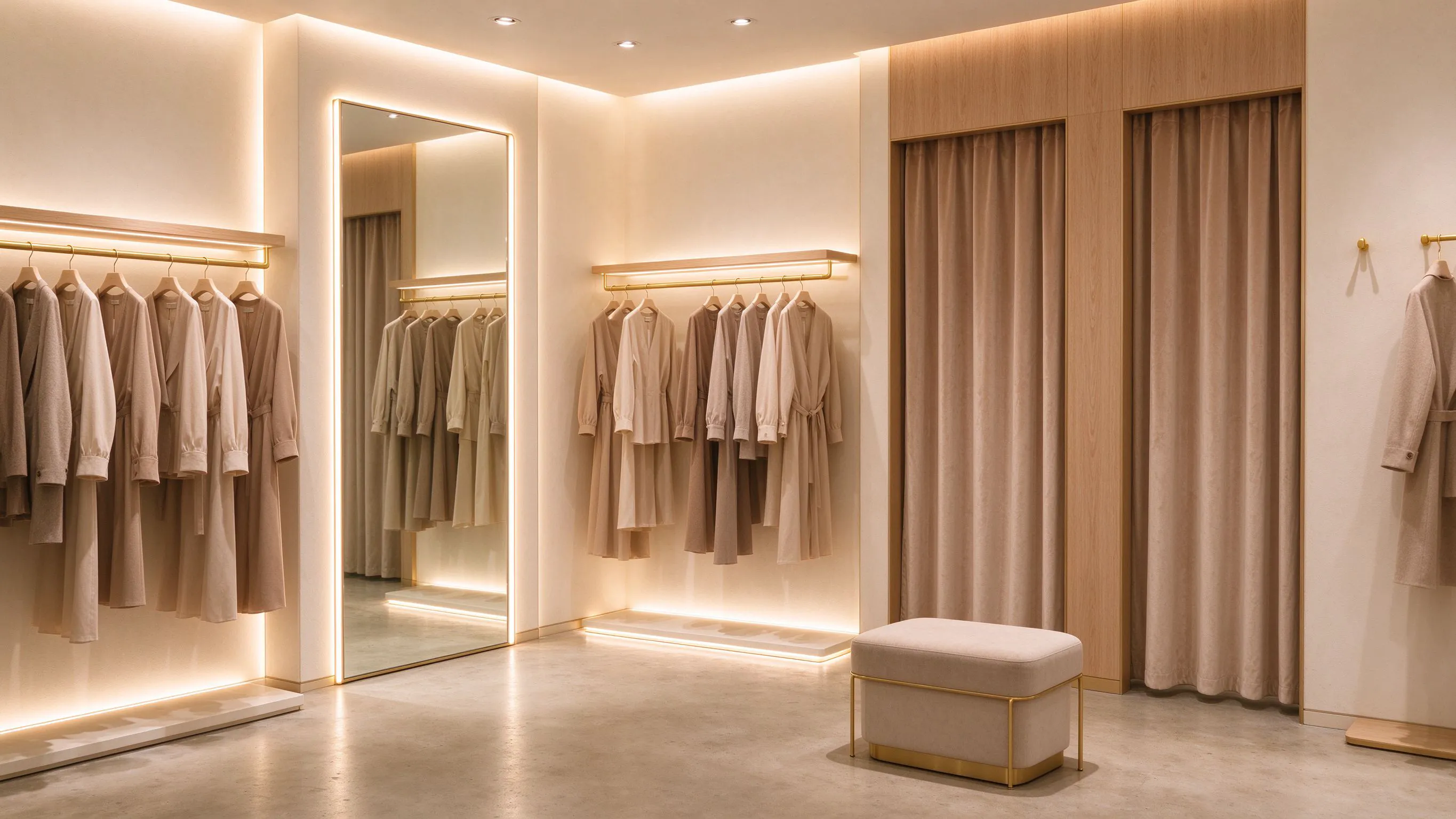
Why Customers Reject Clothes Inside the Fitting Room (That They Loved on the Rack)
I've walked enough fashion retail stores to spot the pattern in ten seconds. A customer pulls three items, loves them under the bright sales-floor light, steps into the cubicle, and comes out empty-handed. The garment didn't change between the rack and the mirror. The light did.
Sales-floor lighting is engineered to flatter. Fitting-room lighting is usually an afterthought: a single recessed downlight in the ceiling, cool white, pointed straight down. Stand under it and you get lit eyebrows, shadowed eyes, a hard shadow under the chin, and fabric colors that read nothing like they did outside. Nobody buys an outfit that makes them look tired.
The fix isn't more light, it's better-directed, better-colored light. Three things matter: vertical illuminance on the person, color rendition of the fabric and skin, and giving the shopper some control.
The Numbers to Spec: Vertical Lux, CRI, R9 and CCT
Retail lighting designers talk about vertical illuminance because that's the light hitting the customer's body and the garment, not the floor. A fitting room should deliver roughly 500-800 lux on the vertical plane at face and torso height, with evenness so there's no bright forehead and dark waist.
Baseline figures for a mid-to-premium fashion fitting room.
| Parameter | Target for fitting rooms | Why it matters |
|---|---|---|
| Vertical illuminance | 500-800 lux at face/torso | Customer and garment are lit, not the floor |
| CRI (Ra) | 90 minimum, 95+ for premium | Fabric colors read true to daylight |
| R9 (deep red) | 50+ | Keeps skin, denim, reds and warm tones alive |
| CCT | 3000K warm / 4000K neutral switchable | Mimics evening vs daytime wear conditions |
| Flicker | <1% flicker, high-frequency driver | No shimmer in phone selfies or video |
| Glare URG | Low; diffuse via profile/diffuser | Comfortable at close mirror distance |
The R9 number is the one most suppliers leave off the datasheet. A strip can show CRI 90 while R9 sits near zero, and reds, skin tones and indigo denim then look flat or muddy. Ask for the full TM-30 or CRI report, not just a single CRI number printed on a box.
Layer One: Vertical Light at the Mirror
The most important fixture is the light immediately around or beside the mirror, aimed at the person, not the glass. Two layouts work well:
- Vertical strips on both sides of the mirror (about 30-40cm apart from face centerline) - the classic 'vanity' setup that fills both sides of the face evenly.
- A horizontal strip across the top plus a short vertical each side for full-length mirrors where side-only leaves the lower body dark.
- A recessed slot in a reveal around the mirror for a premium, hardware-free look.
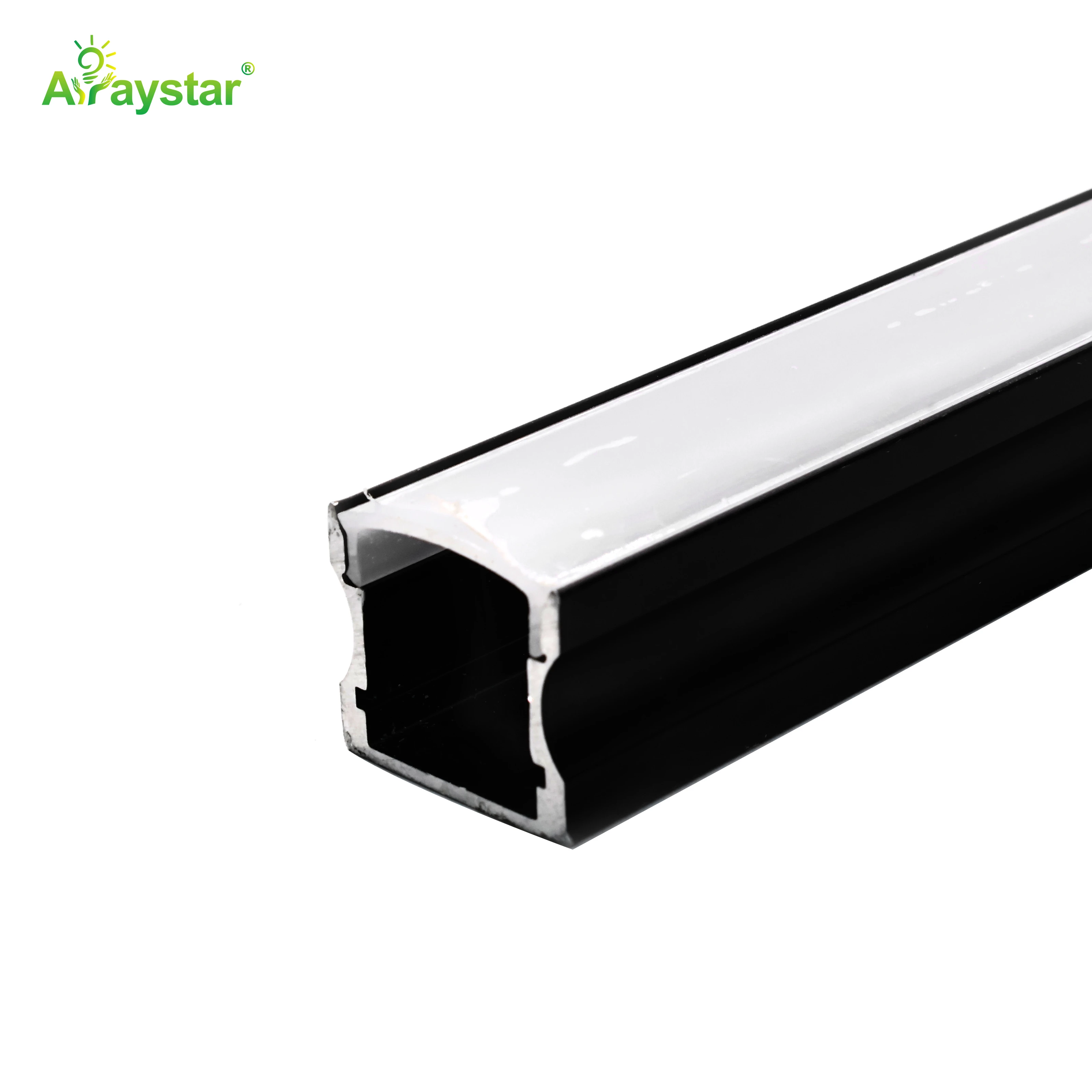
Run the strip inside an aluminum profile with an opal or frosted diffuser. Bare strip at 60cm from a face is a glare bomb, and visible dots look cheap. A profile like the P20 linear channel mounted vertically gives you a continuous soft bar and doubles as the heatsink. Aim the face of the diffuser slightly toward the customer, not straight out.
Full-length mirrors need a fourth side of light
Side lighting that looks fine at face height leaves shoes and pant hems in shadow on a 1.8m mirror. Add a low-level vertical run or a foot-level strip so the customer sees the whole outfit - that's where the add-on sale (belt, shoes, bag) is won or lost.
Layer Two: A Warm/Cool Switch Sells for Both Day and Night
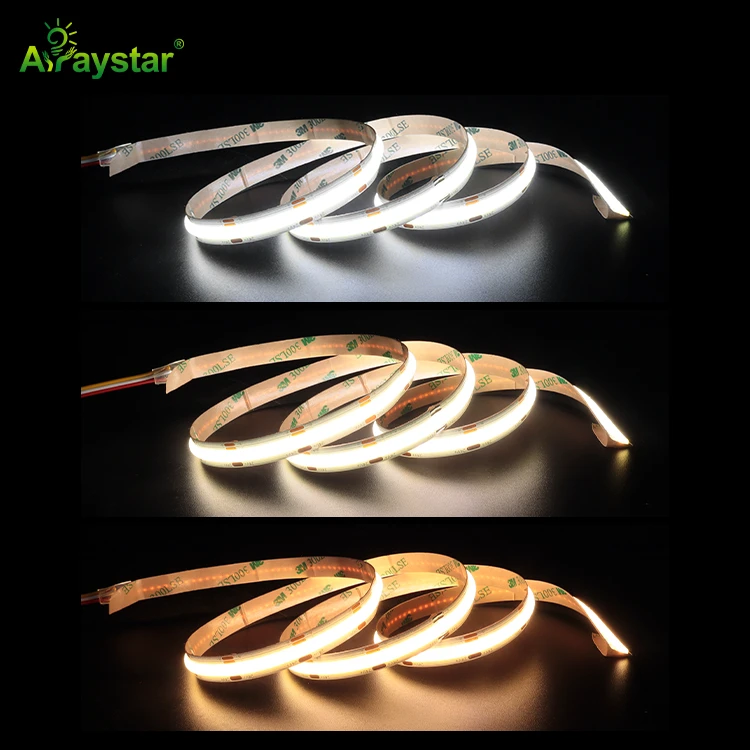
A garment worn to the office in daylight should be judged around 4000K; the same piece for an evening event should be seen at 2700-3000K. A fixed-CCT room forces one interpretation. A tunable-white (CCT) strip with a simple two-button or rotary wall control lets the customer flip between 'daylight' and 'evening' and mentally wear the item to the actual occasion.
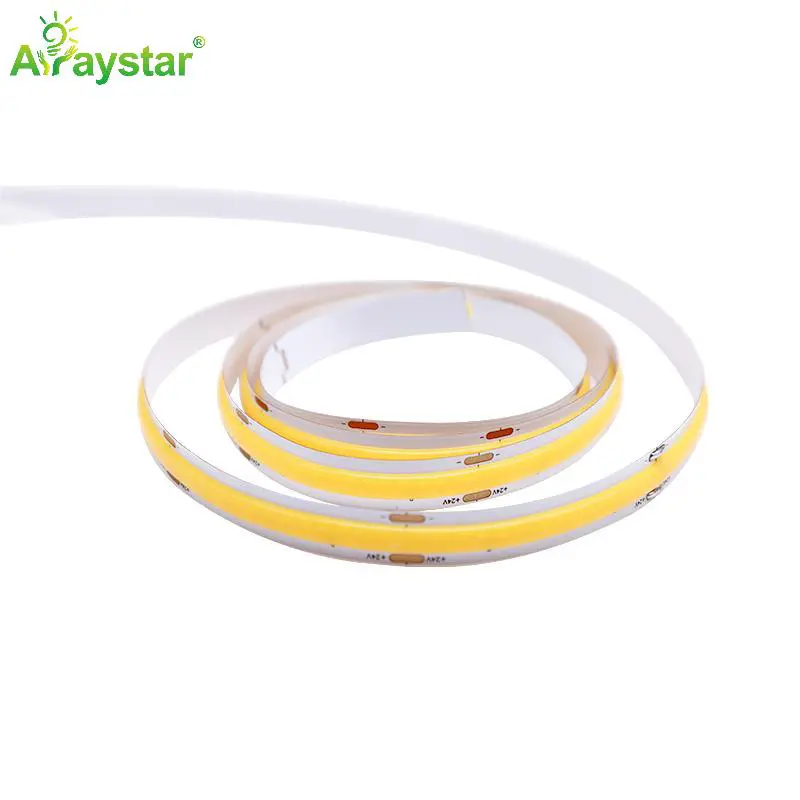
Use a CCT-tunable COB strip (two warm/cool channels) driven by a 2-channel CCT controller or dimmer panel. Program two presets rather than a free slider - too many options confuse shoppers and staff never reset the room. Keep brightness dimmable too; some intimate-apparel fitting experiences want lower levels.
Layer Three: General Fill, No Downlight Hotspots
Keep the ceiling general light soft and lower in level than the mirror light, roughly 200-300 lux, so the customer's eye is drawn to the well-lit mirror rather than a bright ceiling. If you retain downlights, pull them off the standing position - a downlight directly above where someone stands is the source of the face shadows.
- Diffuse ceiling light or bounce it off light-colored surfaces.
- Avoid spotlights aimed at the mirror (they reflect as bright blobs in the glass).
- Paint cubicle walls in neutral mid-tones; pure white over-reflects, dark colors absorb the vertical light.
- Add a low-level footlight so customers aren't dressing in a dark pool when general light is dimmed.
Wiring, Dimming and the Selfie Test
Customers photograph themselves in the mirror, so the room has to look good on a phone camera as well as to the eye. That means genuinely flicker-free dimming - specify a quality constant-voltage driver and a TRIAC/0-10V/DALI dimming path that stays smooth down to low levels, rather than a cheap PWM dimmer that banding shows up on camera.
- Power the mirror strips from a driver sized at ~80% of rated wattage, with margin for the profile's heat.
- Run warm and cool channels of tunable strip to a CCT controller within the ceiling void, not inside the sealed mirror frame.
- Set a minimum dim level so the room never snaps fully dark mid-change.
- Do the final check by recording slow-motion video in the cubicle - any flicker or banding is immediately obvious.
Recommended Products
Frequently Asked Questions
What color temperature is best for a clothing store fitting room?
Use a switchable tunable-white setup with a 4000K neutral preset for daytime/workwear and a 2700-3000K warm preset for evening wear. If you can only pick one fixed CCT, 3000K at CRI 90+ is the safest all-round choice for fashion.
How many lumens or lux does a fitting room need?
Target 500-800 lux on the vertical plane at the customer's face and torso, with around 200-300 lux of soft general ceiling fill. Vertical lux matters more than the floor lux most downlight calculations give you.
Why do clothes look a different color in the fitting room?
Because the room's color temperature and CRI differ from the sales floor and from daylight. Low-CRI light shifts hues, and a fixed cool or warm CCT changes how the fabric reads. High CRI 90+ with R9 above 50 and a warm/cool switch fixes it.
Should fitting room strips be COB or SMD?
COB is the better default at close mirror distance because the continuous dot-free emitter line diffuses to perfectly even skin light in a shallow profile. High-density SMD behind a deep opal diffuser works too, but needs a wider channel to hide the dots.
Where exactly do I mount the LED strips in a fitting room?
Run diffused strips vertically on both sides of the mirror aimed at the customer, add a top run for full-length mirrors, and a low foot-level run. Keep ceiling fill soft and move any downlights away from the standing position to avoid face shadows.
Need help with your LED project?
Get factory-direct pricing, free samples and engineering support within 24 hours.
Email: info@arraystarled.com | Phone: +86-0755-2103-6746 | WhatsApp: 0086 1581 8514 077
Need to size your power supply? Use our LED Strip Power Calculator to find the right driver in seconds.







