
Coffee Shop & Cafe LED Strip Lighting: Layering Warm, Inviting Light That Sells More Lattes
- 2026-09-29 12:07
- /
- Arraystar LED
A cafe that feels cold and clinical at 8pm loses the evening crowd, and the usual mistake is flooding the whole room with one bright cool-white layer. Good cafe lighting is layered: low, warm, dimmed ambient in the seating, a brighter task zone at the bar where drinks are made, and a glowing signature element (bar front or sign) that photographs well. Here's how I build that with strips, neon and wall-wash.
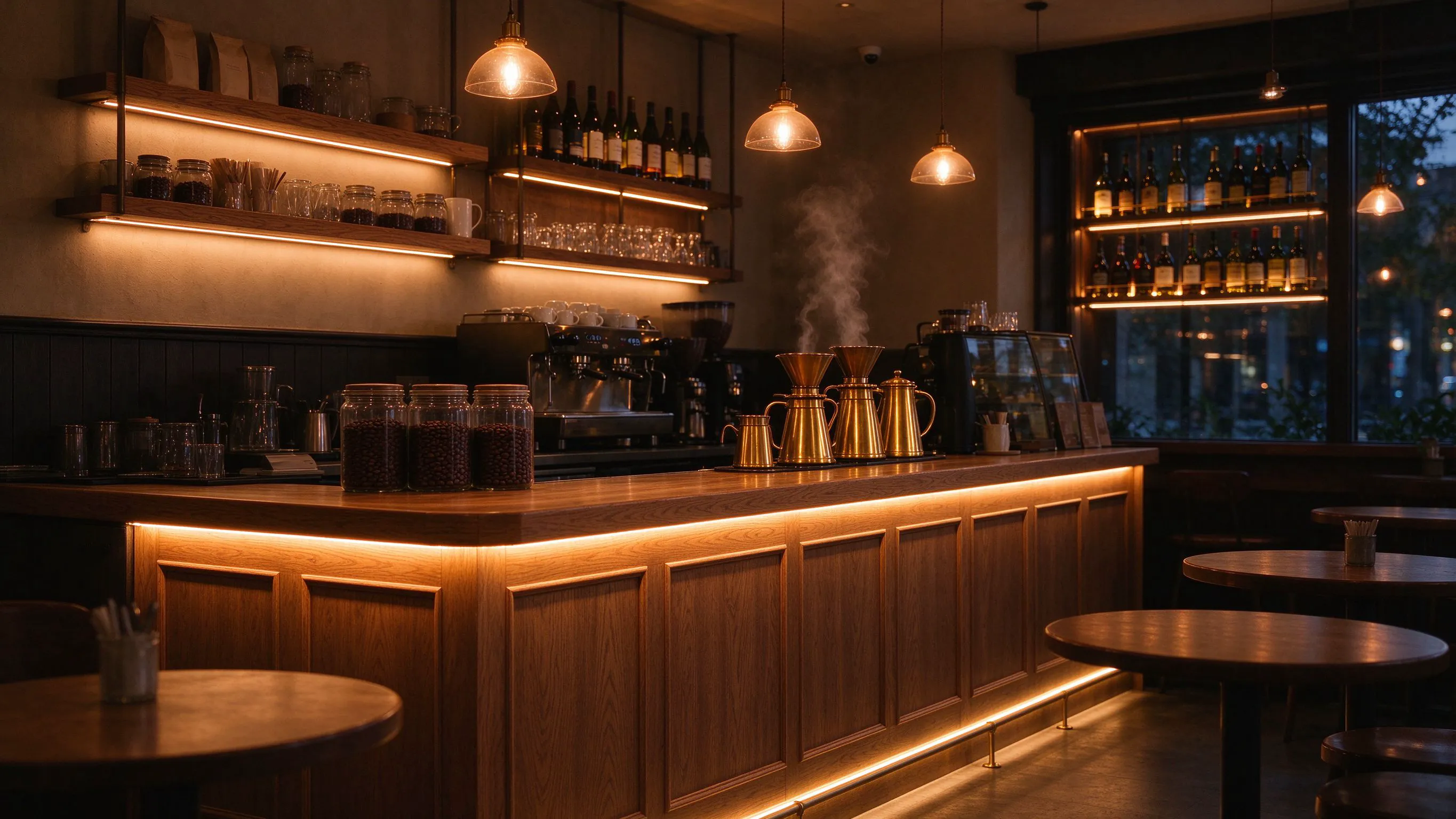
Coffee Shops Sell Evenings, Not Just Mornings
During the morning rush customers want to feel awake and move fast - brighter, cooler light works. By evening the same space has to slow people into staying for a second drink, dessert, or a glass of wine. A single static lighting scene can't do both, yet that's what most small cafes install.
The stores that look great all day use three independently dimmed layers and a simple scene change from 'day' to 'evening'. You don't need a fancy control system - two or three dimmable circuits and a staff button is enough.
Rule of thumb scenes for an independent cafe.
| Zone | Day scene | Evening scene |
|---|---|---|
| Seating / lounge | 300-400 lux, 3500-4000K | 100-150 lux, 2400-2700K |
| Bar / espresso task | 500 lux, 3500K, CRI90+ | 300 lux, 2700K, keep CRI high |
| Feature / signage | Subtle | Brightest element in the room |
| Menu board | Bright and legible | Slightly dimmed, still readable |
Layer One: Warm Cove Ambient Over the Seating
The seating zone should feel like a living room. Hide a warm-white high-density strip in a ceiling cove, behind a bulkhead, or along the top of shelving so you see the glow and not the dots. Keep it dimmed in the evening - cove light is about mood, not reading brightness. A dot-free COB strip in an opal profile is the cleanest way to get a seamless line.
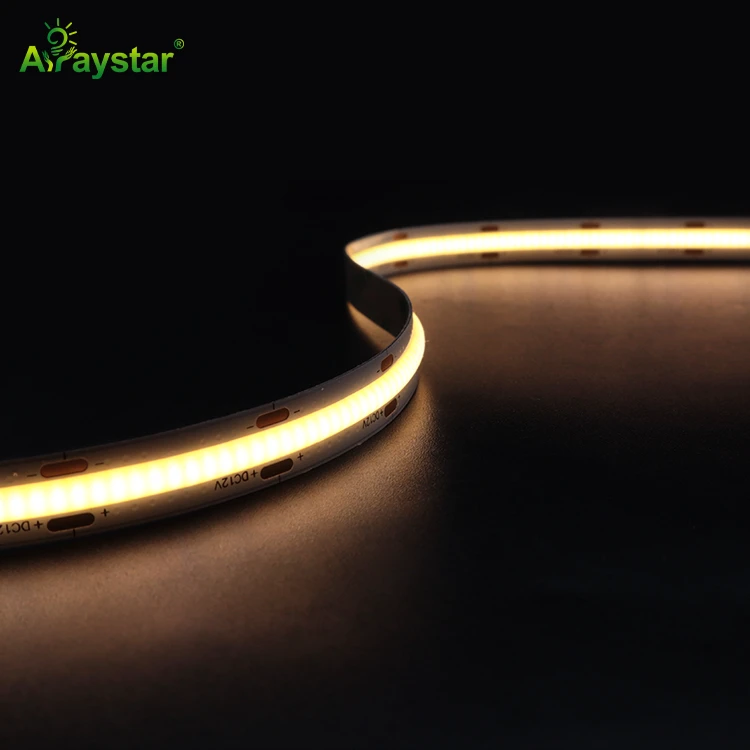
If the ceiling is concrete or there's no bulkhead, run the strip along the top of wall shelving or behind a suspended timber slat feature. The trick is always the same: hide the source, let the reflected light fill the space.
Layer Two: The Bar Front Is Your Signature
The espresso bar is where customers look while they wait, and a softly glowing bar front is the single highest-impact lighting move in a cafe. Top-bend silicone neon flex tucked under the bar lip, or a continuous strip behind a frosted bar fascia, gives the room a warm anchor that shows up in every customer photo.
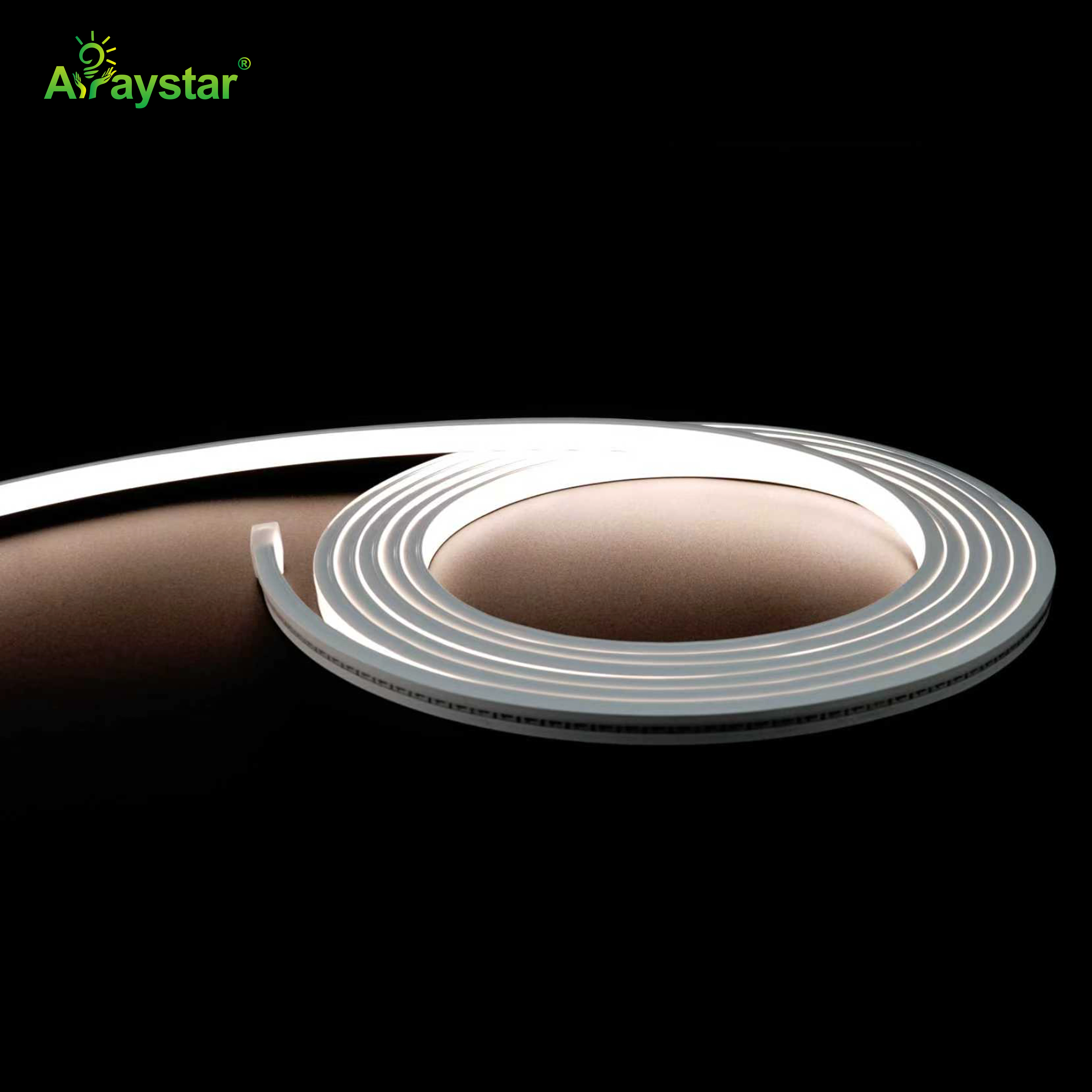
- Use warm 2400-2700K for a classic cozy feel, or the brand's accent color if the identity is bold.
- Dim it up in the evening so the bar becomes the brightest, most inviting surface.
- Keep the neon in a channel or recess so the emitter isn't exposed - glare kills the premium feel.
- Run a matching short run under the back-bar shelves to lift bottles and merchandise.
Back-bar shelving
Small strips under each shelf tier, angled toward the bottles and bags of beans, add sparkle and depth. Keep them lower brightness than the bar front - you want highlights on packaging, not a wall of light.
Layer Three: Texture With a Wall-Wash
Flat evenly-lit walls feel like an office. Grazing a brick, tile, timber or concrete feature wall with a flex wall-washer strip reveals its texture and adds a third dimension to a small space. Mount the strip close to the wall (5-15cm) at the top or bottom and let the beam run across the surface.
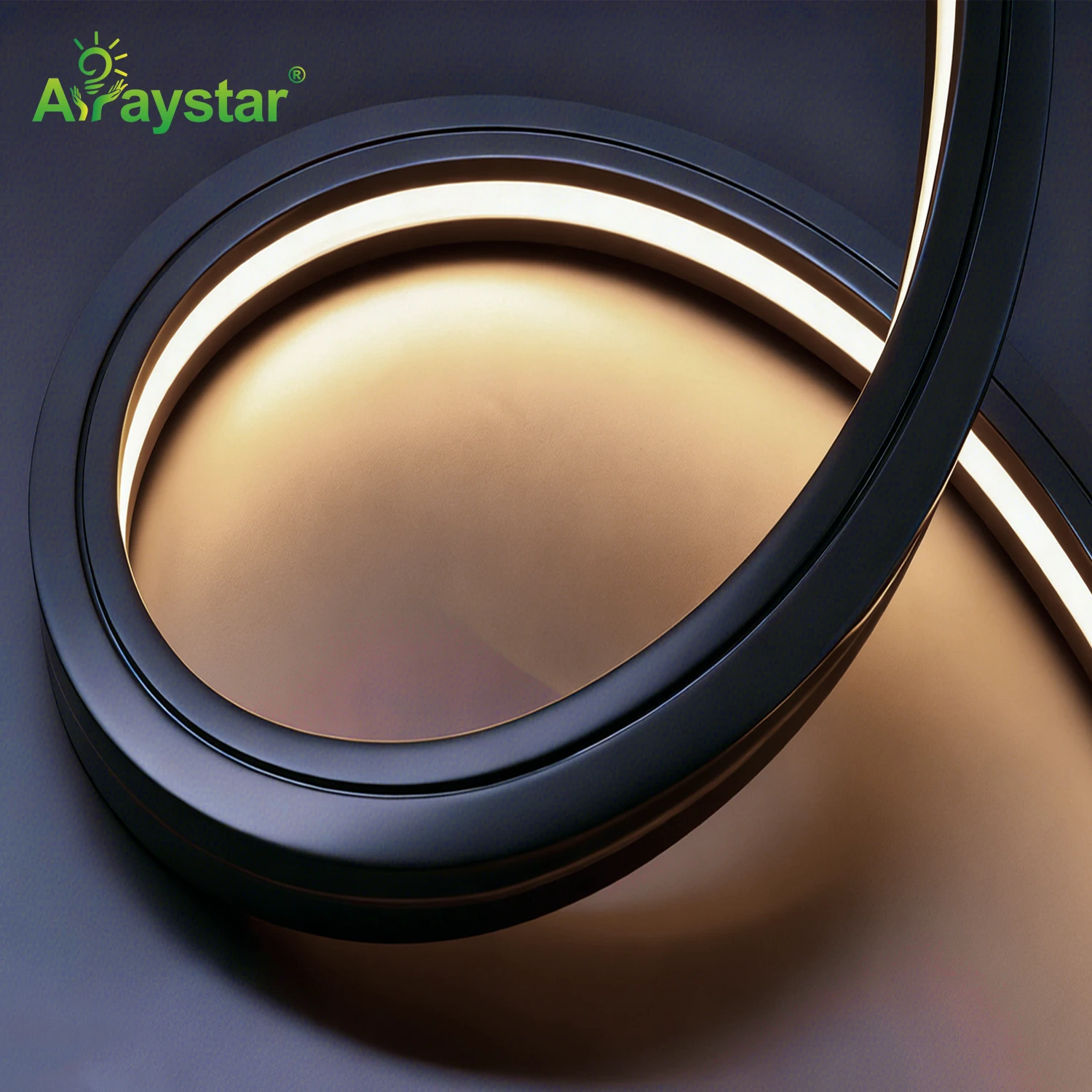
For wall art or a mural, a wider, softer wash from further away is better than a tight graze. Match the wall-wash color temperature to the evening ambient so it blends rather than looking like a separate fixture.
Menu Boards, Task Light and the Color-Rendering Catch
The bar is a workspace - the barista needs accurate color to judge extraction crema and to see the pastry case look appetizing. Keep CRI 90+ at the bar even when you warm the CCT. Pastry and food displays specifically benefit from warm, high-CRI light; cool light makes baked goods look stale.
- Backlit menu boards need even, bright illumination with no hotspots - high-density strip or LED modules spaced for overlap.
- Pastry and food: warm 2700-3000K, CRI 90+, with good red rendering.
- Dimming the whole bar too low slows service and drink quality - keep a minimum task level at the machine.
- Avoid bare cool-white tubes anywhere visible; they instantly date the interior.
Control, Wiring and Making It Dimmable for Real
Put seating ambient, bar feature and task light on at least two, ideally three separate dimmable circuits. A single rotary dimmer or a small wireless scene panel behind the counter is all staff will actually use - program 'day' and 'evening' presets so there's nothing to fine-tune.
- Use flicker-free dimmable drivers; cheap dimmers buzz and band on phone cameras.
- Neon and COB runs over 5m need voltage-drop planning - feed from both ends or step to 24V/48V.
- Keep drivers accessible above the bar for service, not buried inside a sealed bulkhead.
- Add a low-level night-light circuit for closing up without full brightness.
Recommended Products
Frequently Asked Questions
What color temperature should a coffee shop use?
Around 2700-3000K for seating and the bar in the evening for a cozy feel, rising to 3500-4000K and brighter levels for morning and barista task work. A dimmable, ideally tunable setup that shifts between the two is the best solution.
How do you light a coffee shop bar front?
Tuck top-bend silicone neon or a strip behind a frosted fascia under the bar lip, run it in a channel to avoid glare, use warm 2400-2700K or a brand accent color, and dim it up at night so the bar is the room's brightest, most photogenic feature.
What's the difference between cove lighting and wall washing in a cafe?
Cove lighting hides a strip in a ceiling recess to cast soft reflected ambient light over a room; wall washing or grazing mounts a strip near a wall to spread light across it and reveal texture like brick or timber. They serve mood and texture respectively.
Do cafe LED strips need to be high CRI?
Yes at the bar and anywhere food, drinks or packaging are seen - CRI 90+ with good red rendering makes coffee, pastry and merchandise look appetizing and color-accurate. Ambient cove light can be slightly more forgiving but should still be CRI 85+ for a premium feel.
How do I make cafe lighting dimmable without flicker?
Use quality constant-voltage dimmable drivers matched to your dimming method (TRIAC, 0-10V or DALI), separate the feature and task circuits, and verify with a phone camera in slow motion. Avoid the cheapest PWM dimmers, which buzz and show banding on video.
Need help with your LED project?
Get factory-direct pricing, free samples and engineering support within 24 hours.
Email: info@arraystarled.com | Phone: +86-0755-2103-6746 | WhatsApp: 0086 1581 8514 077
Need to size your power supply? Use our LED Strip Power Calculator to find the right driver in seconds.







