
Garage Workshop & Workbench LED Strip Lighting: Durable, Bright Task Light for DIY
- 2026-09-30 17:37
- /
- Arraystar LED
Garages are big, cold and usually lit by one miserable bulb in the middle of the ceiling that leaves every workbench and tool chest in shadow. A proper workshop setup is long-run bright overhead light that covers the whole garage, dedicated task light on the bench in a sturdy channel, and motion activation so the lights are already on when you walk in with your hands full. Use 48V long-run strip for the ceiling span, rugged surface channels over the bench, and a PIR sensor - then the garage becomes a usable room instead of a place you avoid after dark.
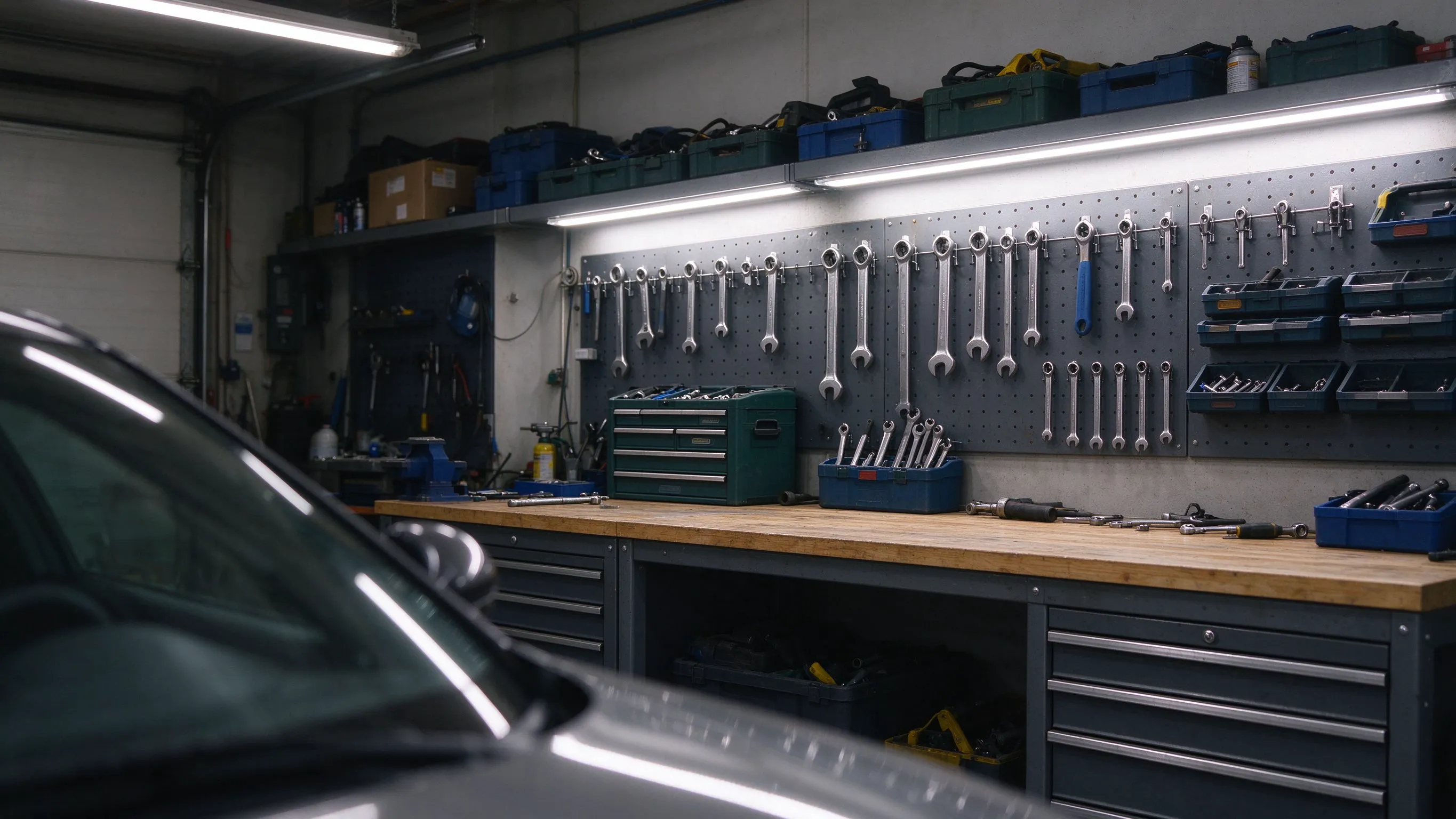
The Single-Bulb Garage Is Why Projects Don't Get Done
Most residential garages have one incandescent or fluorescent socket dead center, and it's never enough. The car blocks half the light, the workbench against the wall sits in gloom, and deep tool chest drawers are black holes. People start projects in daylight and abandon them the moment it gets dark.
A workshop needs two layers: high, even ambient across the whole garage floor so you can move and park safely, and brighter dedicated task light over the bench and tool zones. LED strip makes both cheap and easy to retrofit, and garages are forgiving spaces to run it - exposed joists and open framing give you plenty to mount to.
Long-Run Overhead Light With 48V Strip
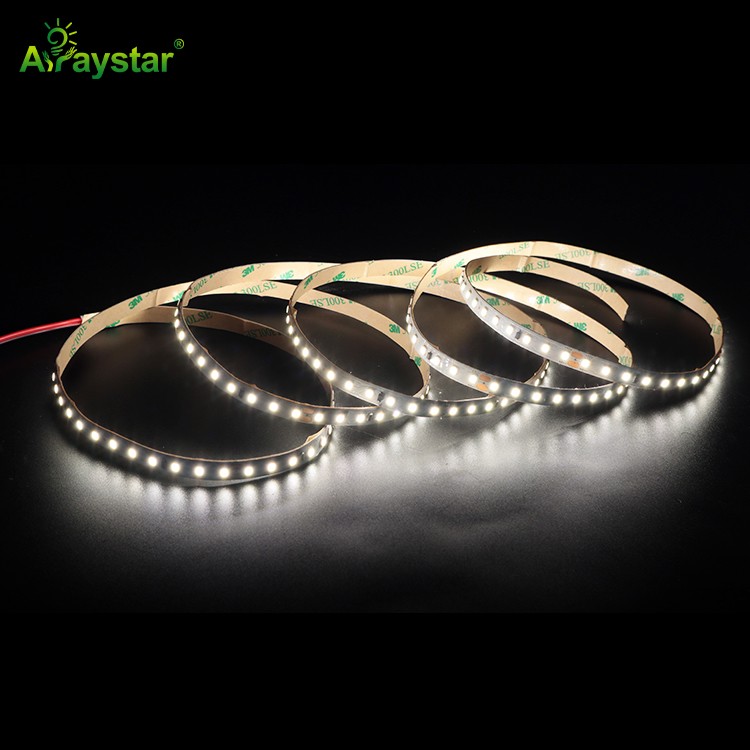
A two-car garage is 5-7 meters wide and often deeper still, which is exactly the run length where 12V strip suffers voltage drop. Running 48V long-run strip across the ceiling in parallel rows gives even brightness wall to wall from minimal feed points, without a string of adapters.
48V ultra-long 2835 strip in the 10mm width is my default for garage ceilings - you can run long continuous rows mounted on battens or in shallow channels between joists, feed from one or two points, and get genuinely even light. Aim the rows to light the floor and the fronts of wall cabinets rather than just the center, and you'll eliminate the dark zones around parked cars.
Workshop lighting targets by zone.
| Garage zone | Target | Approach |
|---|---|---|
| General ceiling | 150-300 lux, 4000-5000K | Parallel 48V long-run rows |
| Workbench | 500-750 lux, 5000K | Dedicated strip in sturdy channel |
| Tool chest / drawers | Medium, sensor | Short strips on chest and inside drawers |
| Parking / path | Lower, motion | PIR-activated for hands-free entry |
| Storage loft | Basic | Low-density strips on a switch |
Serious Task Light on the Bench
Detailed work - wiring, soldering, rebuilding small parts - needs bright, neutral light right over the bench, and it needs to survive a dusty, chip-flying environment. Bare tape under a shelf will get covered in sawdust and knocked by tools; it belongs in a proper sturdy channel.
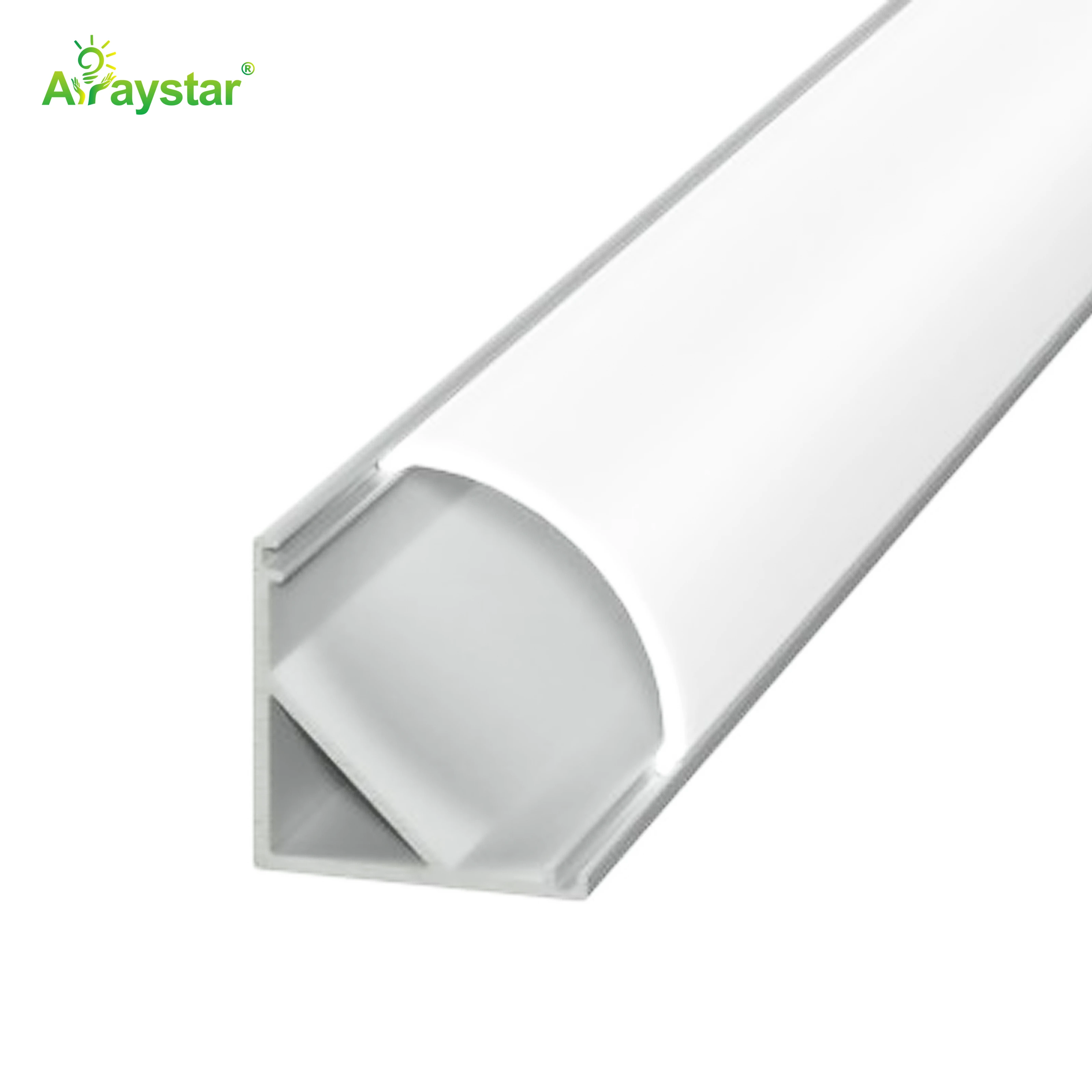
The 1709 profile with a cover is a robust surface channel for bench duty - it mounts under an overhead shelf or on a back board, the aluminum body handles heat and impact, and the diffuser throws an even neutral wash across the vice and work mat while keeping dust and swarf off the LEDs. Use 5000K at the bench so wire colors and small parts read accurately.
Motion Activation for Hands-Free Light
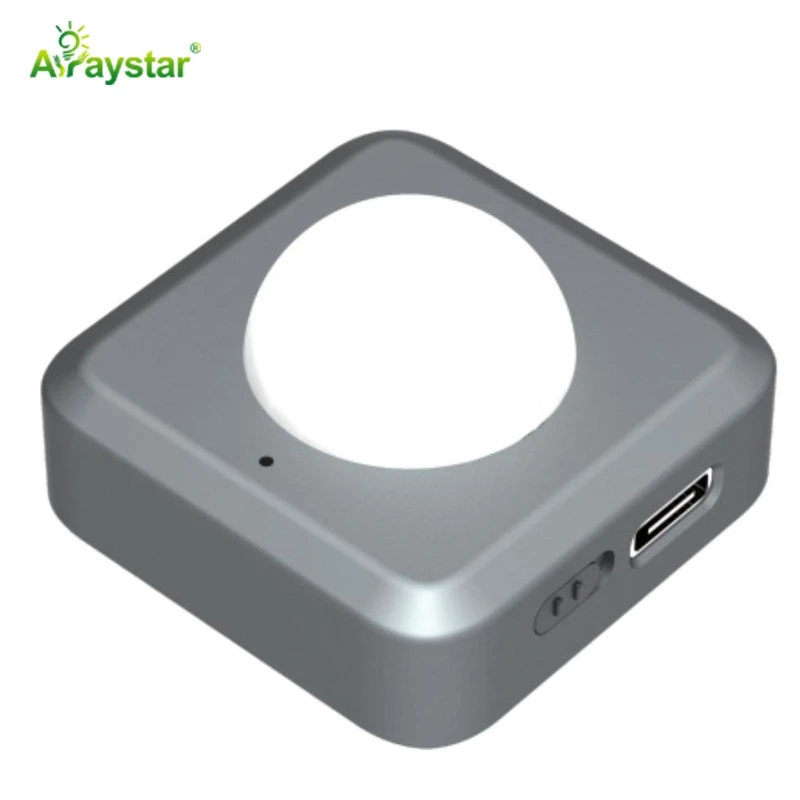
You're forever walking into a garage carrying boxes, tools or groceries, and the light switch is always on the far wall. A PIR motion sensor wired to the overhead runs means the garage lights up as the door opens and shuts off on a timer after you leave - genuinely useful in a space you pass through constantly.
A PIR motion sensor mounted near the garage door or in a corner with good coverage switches the low-voltage strip runs automatically, with an adjustable hold time so the light doesn't cut out mid-project. Keep the bench task light on its own manual switch so it stays on steadily while you work rather than timing out.
Cold, Dust and Power Realities
- Garages get cold and dusty - use channels with covers and drivers rated for the conditions.
- Prefer 4000-5000K neutral; warm light feels domestic but dulls detail work.
- Keep drivers off the floor and away from water heaters, wash bays and chemical storage.
- Add short strips inside deep tool drawers and chests, switched by contact sensors.
- Size drivers with headroom and feed long ceiling rows at multiple points.
Recommended Products
Frequently Asked Questions
What is the best LED lighting for a garage workshop?
Two layers: parallel rows of 48V long-run 2835 strip across the ceiling for even wall-to-wall ambient at 4000-5000K, and brighter dedicated 5000K strip in a sturdy covered channel over the workbench at 500-750 lux. Add a PIR sensor for hands-free overhead light and keep the bench light on its own steady switch.
How do I light a large garage without voltage drop?
Use 48V ultra-long strip rather than 12V, run parallel ceiling rows, size drivers with headroom and feed power at multiple points. 48V roughly halves the current of 24V for the same wattage, so long spans stay even from far fewer feed points and you avoid the dim far end that plagues long 12V runs.
How bright should a workbench light be?
Around 500-750 lux at the work surface in neutral 5000K light so wire colors, markings and small parts read accurately. A continuous strip in a sturdy covered channel mounted under an overhead shelf or on the back board gives even coverage, unlike a single bench lamp that leaves bright and dark patches.
Should garage lights come on automatically?
Yes for the overhead ambient - a PIR sensor near the entry door lights the garage as you walk in with your hands full and switches it off on a timer afterward. Keep the dedicated workbench light on a separate manual switch so it doesn't time out while you're in the middle of a job.
Are LED strips durable in a dusty or cold garage?
Yes if you mount them in aluminum channels with covers that keep sawdust and swarf off the emitters, and use drivers suited to the temperature and kept off the floor and away from water. The channels also act as heatsinks, so covered strip in a garage actually lasts better than exposed tape.
Need help with your LED project?
Get factory-direct pricing, free samples and engineering support within 24 hours.
Email: info@arraystarled.com | Phone: +86-0755-2103-6746 | WhatsApp: 0086 1581 8514 077
Need to size your power supply? Use our LED Strip Power Calculator to find the right driver in seconds.







