Matter & Thread for Architectural LED Strip: What Works in 2026
- 2026-09-19 13:17
- /
- Arraystar
Matter is becoming the interoperability layer for smart lighting, with Thread providing a robust low-power mesh in many devices. For architectural strip projects this means specifying Matter-compatible controllers/bridges and drivers, understanding that bare strip itself is not a Matter device, planning Thread border routers and Wi-Fi/network scope, and avoiding single-vendor lock-in — while retaining professional protocols (DALI/0–10 V) where commercial reliability and code compliance require them.
What Matter and Thread Actually Are
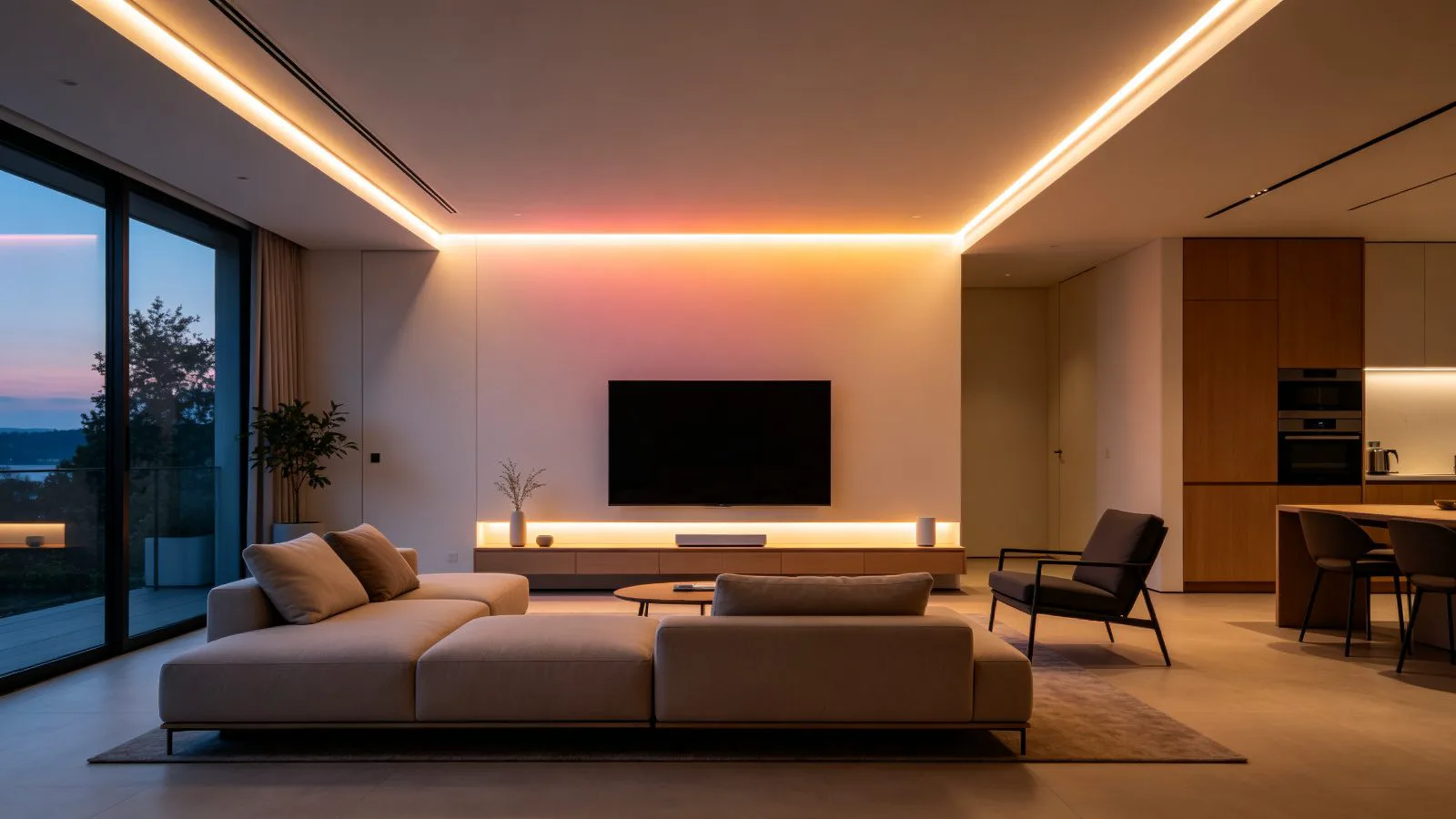
Matter is an application-layer interoperability standard (developed by the Connectivity Standards Alliance with major platform companies) that lets smart devices from different brands work together over a common language, controlled by the major ecosystems. Thread is a low-power, self-healing mesh networking protocol (based on 802.15.4) that many Matter devices use to communicate; a Thread Border Router (built into many hubs and speakers) connects that mesh to the Wi-Fi/IP network. Matter can also run over Wi-Fi and Ethernet. The key point for lighting specifiers: Matter makes controllers and ecosystems interoperable; the LED strip and its driver remain hardware that a Matter controller drives.
- Matter = common language for multi-brand devices and ecosystems (app/voice control, scenes, schedules).
- Thread = low-power mesh transport; needs a Thread Border Router to reach the IP network.
- The strip is not a Matter device — a Matter controller/bridge/driver operates it.
- Bridges can expose existing DALI/Zigbee/0–10 V systems into Matter.
- Professional protocols still matter in commercial projects for reliability, code and commissioning.
How Matter Lighting Fits an Installation
Where each control approach fits
| Layer | Technology | Best fit |
|---|---|---|
| Device mesh | Thread (802.15.4) | Battery/low-power nodes, resilient home/small-commercial mesh |
| Network | Wi-Fi / Ethernet | Higher-bandwidth controllers, border routers, hubs |
| Interoperability | Matter | Multi-ecosystem scenes/voice, avoiding app lock-in |
| Professional | DALI / D4i / 0-10 V | Commercial dimming, emergency, code, commissioning |
| Legacy wireless | Zigbee / proprietary mesh | Installed bases, bridged into Matter |
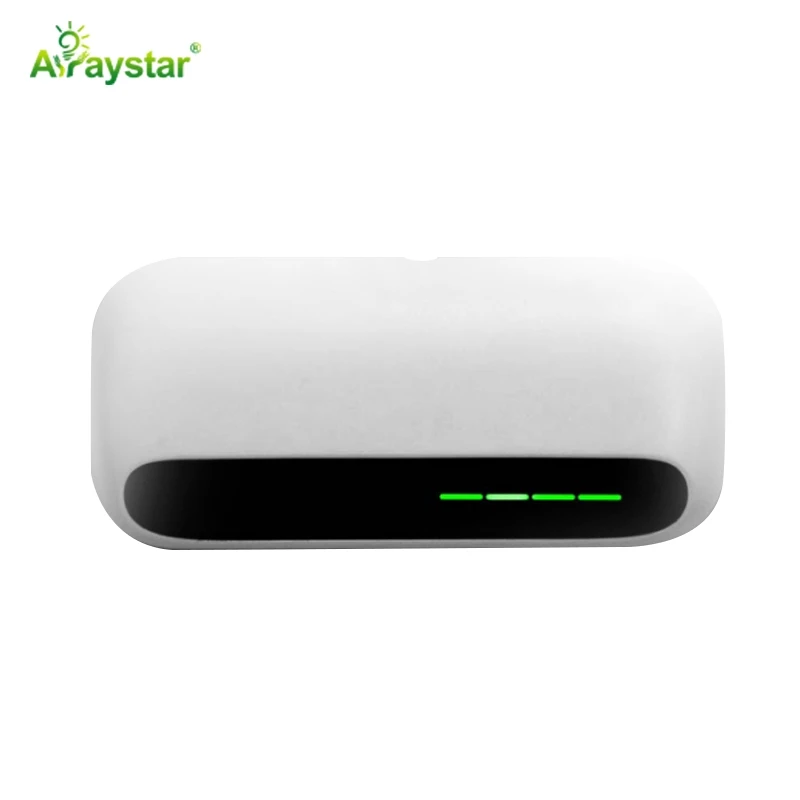
- For a residential or hospitality smart space, choose a Matter/Thread controller or bridge that drives dimmable/tunable/RGBW strip via suitable receivers, with adequate Thread border-router coverage.
- For large commercial architectural runs, keep DALI/0–10 V/DMX for the fixture layer (reliability, emergency-lighting integration, deterministic behaviour) and bridge to Matter only where cross-platform user control adds value.
- Confirm power and dimming compatibility: Matter controllers still need constant-voltage/current drivers and PWM/analogue dimming receivers matched to the strip.
- Plan network scope and security: guest networks, VLANs, IT approval and border-router placement in commercial settings.
Specifying a Future-Project Smart Strip System
- Specify quality dimmable drivers and receivers first; the smart protocol is replaceable, but flicker and dimming quality are set by hardware.
- Choose Matter-capable controllers/bridges from vendors committed to firmware updates; verify which device types and features (colour, colour-temperature, scenes) are supported.
- Ensure Thread coverage with border routers positioned for the floor plan, or use Wi-Fi/Ethernet Matter controllers where mesh density is poor.
- Prefer open, bridgeable architectures so a future platform change does not require replacing fixtures and drivers.
- For tunable/RGBW, confirm the controller supports the exact channel configuration (CCT dual-channel, RGBW, RGB+CCT) of the strip.
A realistic hybrid for a high-end home, restaurant or small hotel is professional-grade constant-voltage strip and dimmable drivers at the fixture, with Matter-bridged wireless receivers giving guests and staff app/voice scenes, while a large office or retail floor keeps DALI under a building-management/head-end with optional Matter exposure for user-facing scenes.
Limitations and Practical Advice
- Matter does not itself guarantee flicker-free, deep dimming or colour consistency — those come from the driver and strip.
- Advanced professional features (per-addressable emergency testing, DALI sensors, complex daylight logic) may be beyond basic Matter device support.
- Feature support varies by Matter version and ecosystem certification; verify before tender rather than assuming parity.
- Allow for commissioning and IT coordination in commercial buildings; consumer-style onboarding does not scale unchanged.
- Keep wired control as the reliable backbone for egress and safety-critical lighting regardless of smart features.
Smart-control specification checklist
| Aspect | Check |
|---|---|
| Driver/receiver | Dimmable, flicker-free, matched to strip |
| Protocol | Matter (Thread/Wi-Fi) and/or DALI/0-10 V |
| Border router | Coverage/placement for Thread mesh |
| Channels | Supports CCT/RGBW config of the strip |
| Bridge | Legacy/pro systems exposed to Matter if needed |
| Safety | Wired/emergency lighting independent of smart |
We supply dimmable and tunable constant-voltage strip, smooth drivers and wireless receiver/controllers compatible with app and ecosystem-based control, and can advise on bridging professional DALI/0–10 V layers to smart platforms. Tell us the space, scale and preferred ecosystem and we will design a reliable, bridgeable control architecture.
Recommended Products
Frequently Asked Questions
Does Matter replace DALI or 0-10V for commercial strip lighting?
Not generally. Matter is an interoperability/control layer strong for multi-ecosystem scenes and voice, while DALI/D4i and 0–10 V remain the reliable fixture-layer standards for commercial dimming, sensors, emergency testing and code compliance. A common design uses DALI/0–10 V at the fixture and a bridge to expose user scenes to Matter.
Do I need a Thread border router for Matter LED control?
Only if the Matter devices use Thread. Thread devices communicate on a local mesh and need at least one Thread Border Router (often built into a hub or smart speaker) to reach the IP network and internet; Matter devices on Wi-Fi or Ethernet do not. Check the controller's transport and provide border-router coverage for the floor plan.
Is the LED strip itself a Matter device?
No. The bare strip and its driver are dumb hardware; a Matter controller, receiver or bridge operates them. You pair quality dimmable/tunable strip and drivers with a Matter-capable controller or a bridge that exposes existing control wiring to Matter.
Will Matter make my lighting future-proof across ecosystems?
It substantially reduces single-vendor lock-in by enabling certified devices across major platforms, but feature support varies by Matter version and ecosystem, and it does not determine dimming quality or colour consistency, which depend on drivers and strip. Use open, bridgeable architectures with quality hardware at the fixture layer.
Can guests or staff control architectural strip by app and voice?
Yes, through Matter-compatible controllers/bridges and receivers, enabling app and voice scenes, schedules and CCT/colour control across ecosystems — ideal for homes, hospitality and small commercial spaces. For large commercial floors, keep professional wired control for safety-critical and emergency lighting regardless of the smart front end.
Designing smart, app/voice-controlled strip lighting?
We supply smooth dimmable/tunable strip, drivers and wireless receivers for ecosystem-based control, with options to bridge DALI/0–10 V to smart platforms. Tell us the space, scale and ecosystem for a reliable, future-proof architecture.
Email: info@arraystarled.com | Phone: +86-0755-2103-6746 | WhatsApp: 0086 1581 8514 077
Need to size your power supply? Use our LED Strip Power Calculator to find the right driver in seconds.