
LED Strip Lighting for Kitchen Showrooms: Under-Cabinet & Toe-Kick Setup
- 2026-10-15 14:34
- /
- Arraystar LED
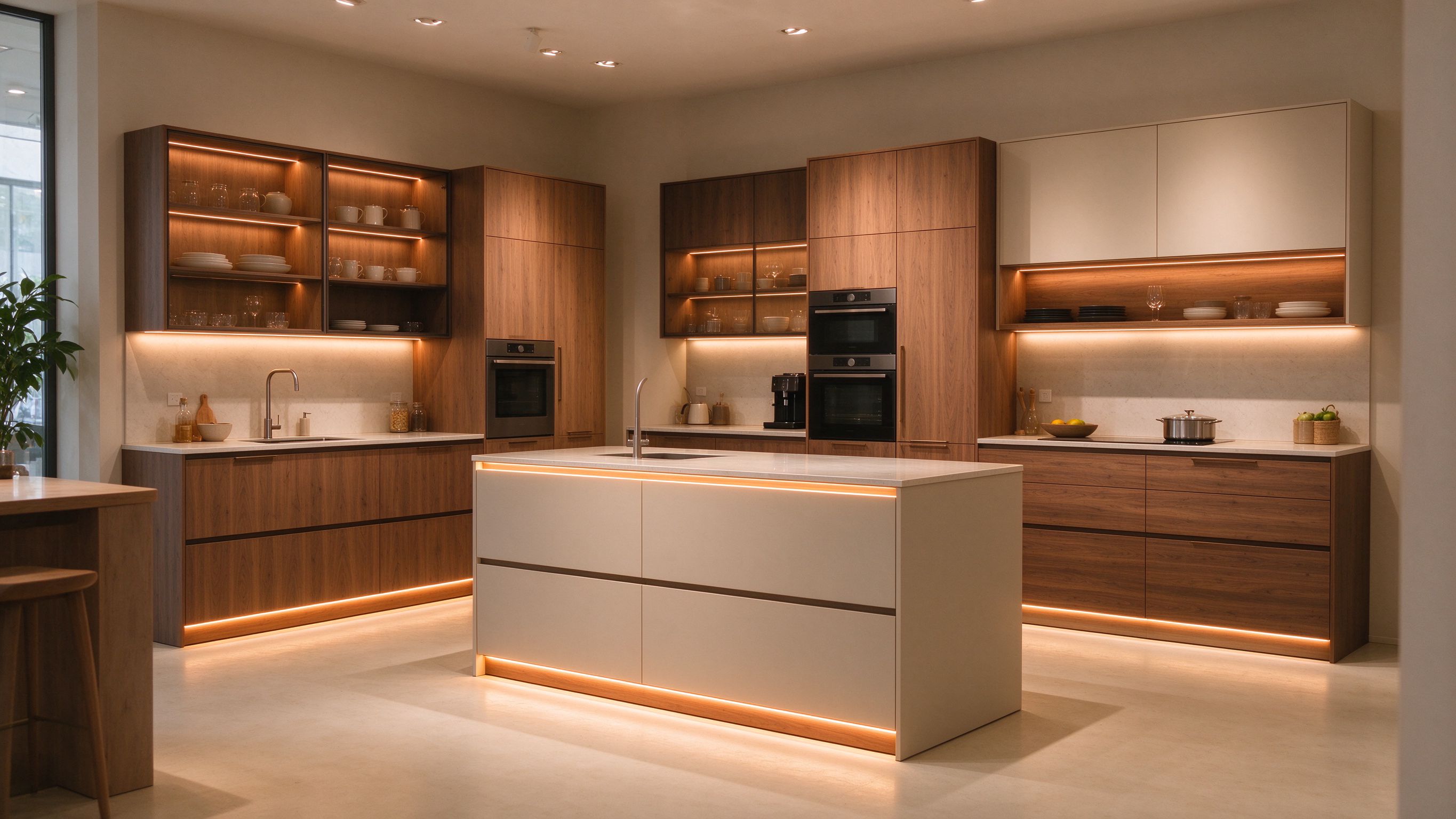
A kitchen showroom is selling a finished room feeling, and the under-cabinet and in-cabinet lighting is often what makes a display kitchen look real and high-end rather than a collection of boxes. I fit warm, dimmable strips under the wall units, inside glazed cabinets and along plinths, often with door or motion sensors on the demo units, so customers see exactly how the lighting layers work in their own kitchen and the showroom displays come alive.
The Lighting Layers That Sell a Kitchen
A well-lit kitchen display layers task light under the wall cabinets, accent light inside glass-front units, soft plinth light at floor level and bright general light, rather than relying on ceiling downlights alone. Showing these layers is what makes the room feel finished.
Customers often don't realize how much the lighting changes a kitchen, so a working demo that switches each layer on and off is a powerful sales tool, letting them see the difference the strips make rather than being told.
Under-Cabinet Task Light and Inside Cabinets
I run slim strips along the underside of the wall units to light the worktop evenly without shining in the eyes, choosing low-profile strips that tuck out of sight. Inside glazed and display cabinets, small warm strips highlight glassware and feature pieces.
Cover these cabinet points:
- Slim under-cabinet strips that light the full worktop evenly.
- Warm strips inside glass-front cabinets to highlight contents.
- Plinth-level strips that give a soft floating glow at the floor.
- Low-profile product hidden behind the cabinet lip rather than visible.

Door and Motion Sensors on Demo Units
Showroom demo cabinets can use small door sensors that switch the interior light on when a customer opens the door, exactly as it would work at home, which is a nice touch that makes the display feel intelligent and finished.
Motion or hand-wave sensors on some displays trigger the strip hands-free, showing customers the convenient control options available. The sensors need to be matched to the strips and kept unobtrusive inside the cabinetry.

Color Temperature, Dimming and Tunable White
I use warm light around 3000K for the accent and plinth layers to feel homely, with tunable white under the cabinets so customers can see bright neutral light for prep and warm light for evening, switching to match the time of day.
Dimmable layers let the showroom set a bright working scene and a softer evening scene, demonstrating how the same kitchen changes mood. Smooth dimming on matched drivers keeps the demo looking polished rather than flickering.
Control, Wiring and Keeping Displays Flexible
Because showroom layouts change as new ranges arrive, I keep the strip runs and drivers accessible with flexible connections rather than buried in fixed displays, so units can be moved and rewired easily.
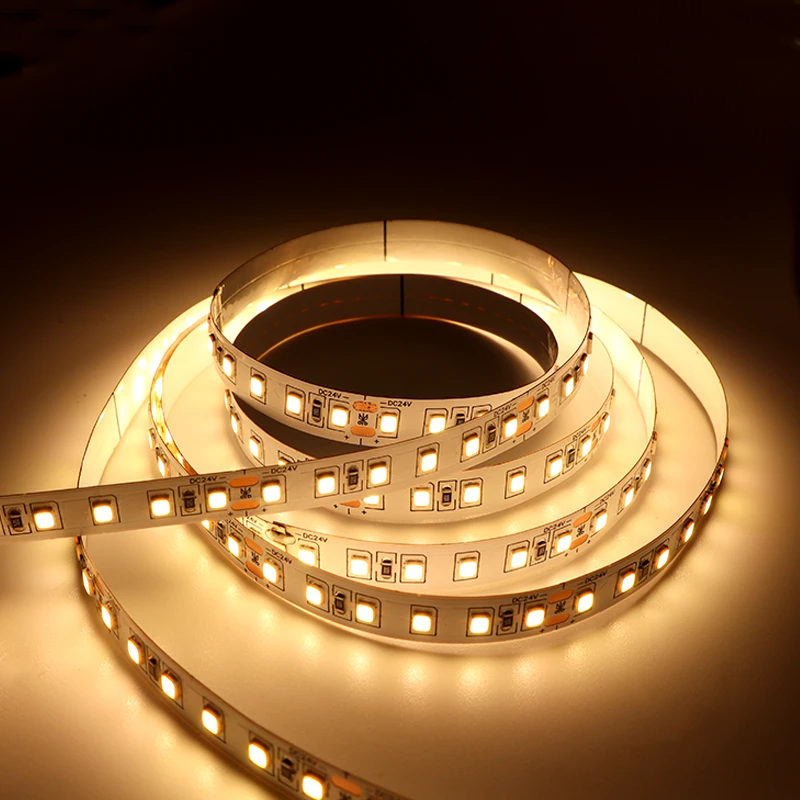
Use 24V strips, low-ripple drivers sized with headroom and a simple scene controller staff can run while showing customers. Get the task, accent and plinth layers working together with the sensors, and the display kitchens show buyers exactly the warm, finished room they want at home.
Recommended Products
Frequently Asked Questions
What lighting goes in a kitchen showroom display?
Layered strips: slim under-cabinet task light, warm strips inside glass cabinets, soft plinth light and general light, all on dimmable controls. A working demo that switches each layer shows customers the finished-room effect.
How do sensors work on showroom kitchen cabinets?
Small door sensors switch interior strips on when a cabinet opens, and motion or hand-wave sensors trigger light hands-free, demonstrating the convenient controls available at home. They're matched to the strips and hidden inside the cabinetry.
What color temperature suits a display kitchen?
Around 3000K warm for accent and plinth layers to feel homely, with tunable white under the cabinets to show bright neutral prep light and warm evening light side by side.
How do you hide LED strips in kitchen displays?
Use low-profile strips tucked behind the cabinet lip under the wall units and small strips inside glazed units, so the source is hidden and only the light shows. Visible strips look unfinished and cheapen a premium display.
Why demonstrate kitchen lighting layers to customers?
Because most buyers don't realize how much task, cabinet and plinth lighting change the room, and seeing them switch on is more persuasive than being told. It turns lighting from an add-on into a feature they want in their own kitchen.
Need help with your LED project?
Get factory-direct pricing, free samples and engineering support within 24 hours.
Email: info@arraystarled.com | Phone: +86-0755-2103-6746 | WhatsApp: 0086 1581 8514 077







