Why Some LED Drivers Hum in Quiet Rooms (and Silent-Rated Options)
- 2026-10-28 10:03
- /
- Arraystar LED
I chased a faint high whine in a home studio for three nights before I realised the strip was fine and the driver was the noise. Once I swapped to a low-noise unit and mounted it on rubber, the room went dead quiet.
What actually makes an LED driver hum
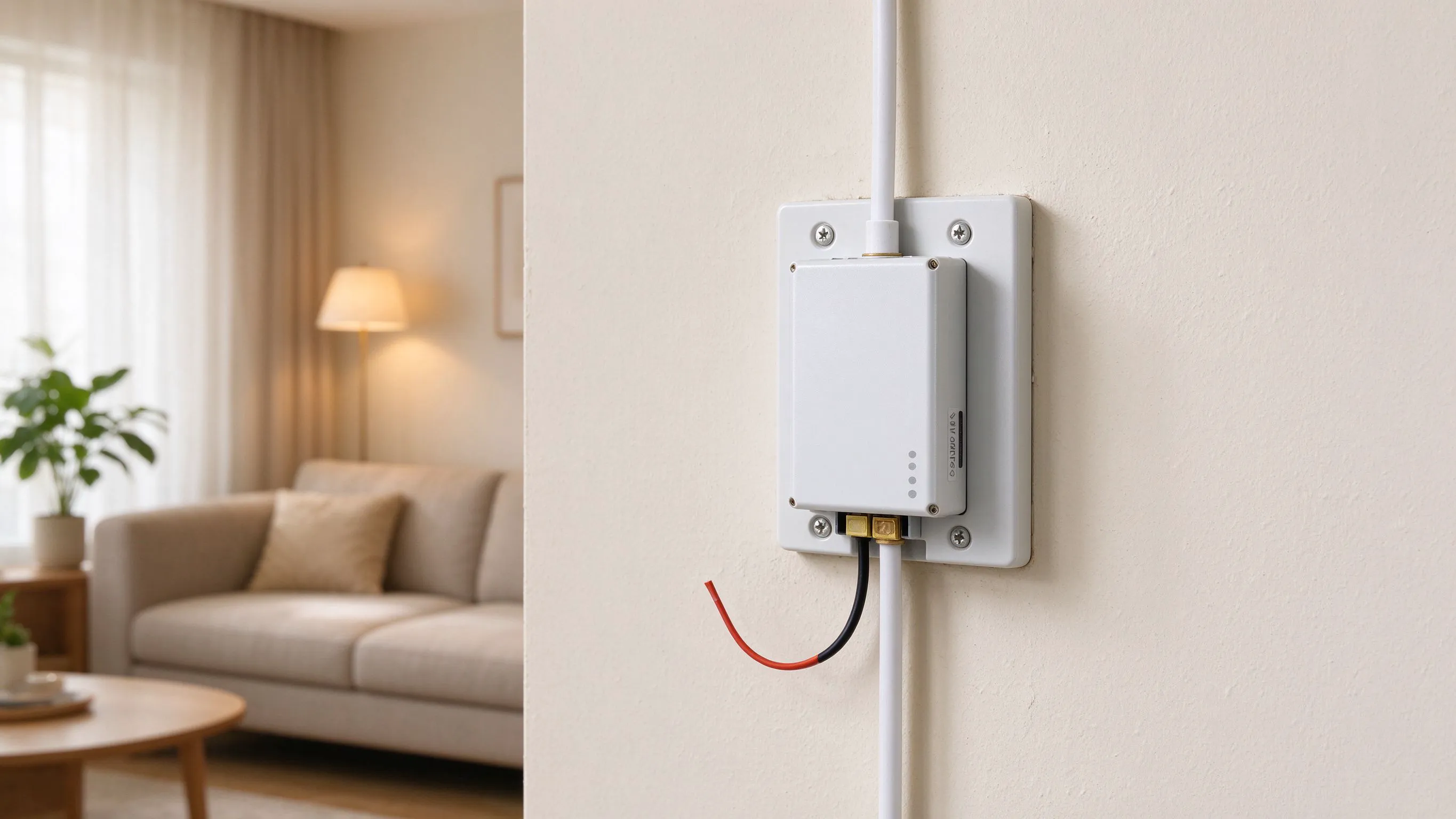
A constant-voltage driver switches its output at tens of kilohertz to regulate the strip. That switching is done by a small transformer and a bank of power semiconductors, and the transformer core flexes microscopically with every cycle. The flex is magnetostriction, and at certain switching frequencies, usually between 8 kHz and 16 kHz, ears can pick it up as a thin whine or a buzz. The strip itself makes no sound, so when a client says the light is humming, the driver is already the prime suspect.
On a residential studio job, the client described a tone that only appeared after midnight. The strip was a standard 24 V COB run, the driver a generic 60 W unit tucked in the loft. The whine sat around 12 kHz and became obvious the moment the house settled and the fridge compressor cycled off. Every cheap unit I tried in the same spot sang the same note.
The three noise sources I isolate first
- Transformer core buzz, worst at light load and at low dimming levels.
- Ceramic capacitors singing as voltage ripple stresses the body.
- Mechanical coupling, where a driver screwed tight to a timber board turns the board into a sounding board.
Why it only shows up in quiet rooms
In a living room with television and traffic, a 25 dB whine vanishes into the background noise. In a bedroom at night, or a studio booth, the ambient floor can drop below 20 dB and the same driver sounds as loud as a mosquito. A driver that is perfectly acceptable in a shop can be unacceptable in a sleep space, and the spec sheet almost never lists a noise figure, so the installer has to judge the environment rather than the catalogue.
A quiet room demands a quieter driver, independent of wattage.
| Room type | Ambient floor at night | Acceptable driver noise |
|---|---|---|
| Living room | 35-45 dB | Any standard unit |
| Bedroom | 25-30 dB | Low-noise preferred |
| Studio booth | 18-22 dB | Silent-rated required |
Mounting that stops the vibration reaching the wall
A driver screwed hard against a chipboard cupboard door turns the whole door into a speaker. I mount drivers on rubber isolation grommets or stand them off with a couple of millimetres of neoprene, and I never use a steel bracket that bolts straight to a structural wall. The metal case may touch the box, but the resonant path between the transformer and the building has to be broken, otherwise the wall amplifies a buzz nobody designed into the light.
- Isolate the driver with rubber grommets; do not over-tighten the mounting screws.
- Keep driver cables short and away from signal cables to avoid induced hum.
- Leave a 20 mm air gap around the case so heat does not raise the whine.
On the studio job, the whine halved the moment I unscrewed the driver from the loft board and hung it on two rubber clips. It was still measurable at the ear but no longer audible from the listening position, which is what the client actually cared about.
Picking a genuinely low-noise driver
Most budget drivers use a discontinuous buck topology that is efficient but prone to audible switching at low load. A driver with a quoted no-load noise below 20 dB, or one advertised as silent-rated, usually runs a fixed higher frequency above the 16 kHz hearing band or uses a shielded, potted core. I ask the supplier for the acoustic figure rather than trusting the marketing wording, and I keep one test driver on the van for quiet-room jobs so I can listen before I commit to a whole run.
- Favour drivers rated silent or with a quoted acoustic noise figure.
- Dimmed below 20 percent, test the driver at its dimmest, since whine peaks there.
- If dimming is deep, pick a driver designed for low-load operation rather than a generic unit.
The late-night handover check
I never judge driver noise on a busy afternoon. I return after dark, switch off every other appliance, and stand within a metre of the driver and the strip run. If I can hear it there but not from the room the client actually occupies, it is usually acceptable; if I can hear it from the bed or the mixing desk, it gets swapped before sign-off. Twenty minutes of listening saves a callback in month two.
- Test at the dimmest level, where coil whine is loudest.
- Switch off fridges and fans so the room noise floor drops.
- Listen at the occupied position first, then at the driver itself.
Recommended Products
Frequently Asked Questions
Why does the driver only hum when the light is dimmed low?
At low brightness the driver switches in bursts rather than continuously, and the gaps between pulses fall into the audible band. A unit that is silent at full output can whine badly at ten percent. A driver rated for deep dimming keeps a continuous switching frequency above hearing range, which is why the same strip on a silent-rated unit stays quiet.
Is the hum dangerous, or will it damage the LEDs?
The hum is acoustic noise from the transformer core, not an electrical fault. It will not damage the LEDs, and it does not mean the driver is about to fail. It is annoying rather than dangerous. The one exception is a harsh buzz that starts suddenly after years of service, which can indicate a failing capacitor and warrants a closer look before the unit stops working.
Will a bigger wattage driver be quieter?
Not by itself. Oversizing a driver to 150 percent of the strip load pushes it into a lighter operating point, and light load is exactly where cheap buck drivers get noisier. A correctly rated silent driver at 70 percent load is quieter than an oversized generic unit. Size for the load and the noise rating, not for raw wattage headroom.
Can I fix the hum by adding a capacitor or a filter?
A small LC filter on the low-voltage side can smooth ripple and reduce capacitor singing, but it cannot move the transformer switching frequency. If the whine comes from the core, only swapping or isolating the driver will remove it. Adding a filter is worth trying on a budget install, but for a bedroom or studio the cleaner fix is a silent-rated unit on rubber mounts.
Does mounting the driver inside a sealed metal box make it worse?
A sealed metal box can turn the driver into a loudspeaker because the case couples vibration to the box panel and traps the sound. A wooden or plastic box on grommets is quieter, and an open ventilated box is quieter still. The box also traps heat, which raises the whine as the driver runs hotter. Isolate and ventilate rather than enclose tightly.
Need help with your LED project?
Get factory-direct pricing, free samples and engineering support within 24 hours.
Email: info@arraystarled.com | Phone: +86-0755-2103-6746 | WhatsApp: 0086 1581 8514 077
Need to size your power supply? Use our LED Strip Power Calculator to find the right driver in seconds.