Ventilating an LED Driver in a Confined Closet or Junction Box
- 2026-10-28 10:03
- /
- Arraystar LED
A driver rated for forty degrees ambient, locked in a sealed closet at fifty degrees, will overheat and drop out before its warranty age. I size the enclosure, add real airflow, and derate the wattage so the unit runs cool for the whole summer.
Why a sealed box cooks a driver
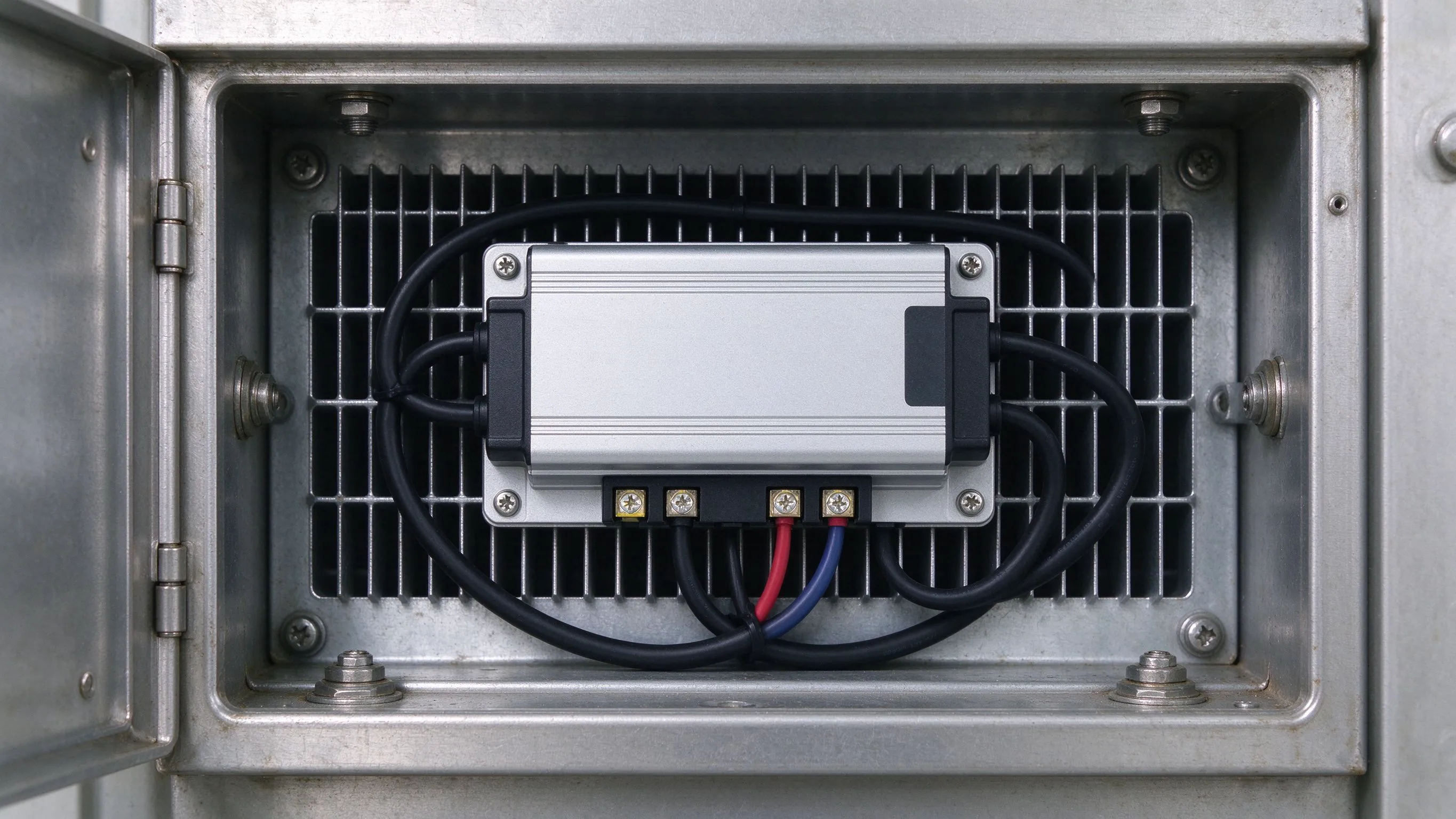
Every LED driver has a maximum case temperature, usually marked Tc at a small point on the label, and a maximum ambient it is designed to sit in. Tucking that driver into a sealed cupboard where it shares heat with a router, a charger and a washing machine pushes the internal ambient well past its rating. The driver derates itself to protect the electrolytic capacitors, the LEDs dim slightly, and after two or three hot summers the caps dry out and the unit dies early. The install looked neat; it just did not last.
I lost count of the call-backs before I started opening the closet first. On one kitchen job the driver was in a drawer above an oven, and the client reported the lights fading every Sunday lunchtime. The oven was warming the drawer to over fifty degrees and the driver was throttling itself. Moving it out solved a fault that looked like a strip problem.
The heat sources inside the box
- Driver own losses, roughly eight to fifteen percent of its output as heat.
- Adjacent gear, such as a router, charger or oven, sharing the same enclosed space.
- Solar gain through a roof void, which can add ten degrees in an attic.
How I size the enclosure and the airflow
A rule I use is to give the driver roughly ten cubic litres of free box volume per watt it dissipates, and to provide at least a 100 mm vent at the top and another low down so air can circulate. A driver that puts out 100 W wastes around 12 W as heat; that heat has to leave the box, and it leaves by convection through openings, not by magically passing through plastic. A closed box with no vents is a pressure cooker for electronics.
Bigger loads need both more space and real air movement through the box.
| Driver load | Minimum box volume | Vent area (top and bottom) |
|---|---|---|
| Under 60 W | 2 litres free | 100 mm combined |
| 60-150 W | 4 litres free | 200 mm combined |
| Over 150 W | 8 litres free | 300 mm plus fan |
Derating when the box cannot breathe
Sometimes the architect has specified a sealed IP-rated box and I cannot drill vents into it. In that case I derate the hard way: I treat the driver as if it lives in a forty-degree ambient even if the room says twenty-five, and I load it to no more than sixty percent of its rated output. A 100 W driver then feeds a 60 W strip, runs far cooler, and lives out its life. Paying for the next size up is cheaper than a ladder, a spare driver and an angry client.
- Load a sealed-box driver to 60 percent of rating, not 90 percent.
- Mount it vertically with the labelled Tc point exposed to the air path.
- Keep it away from the wall and off the floor so air can pass on all sides.
On the oven-drawer job I could not move the driver out, so I swapped the 100 W unit for a 150 W driver loaded to 55 W. It ran cool to the touch even on roast day, and the Sunday fading stopped for good.
Where I actually mount the driver
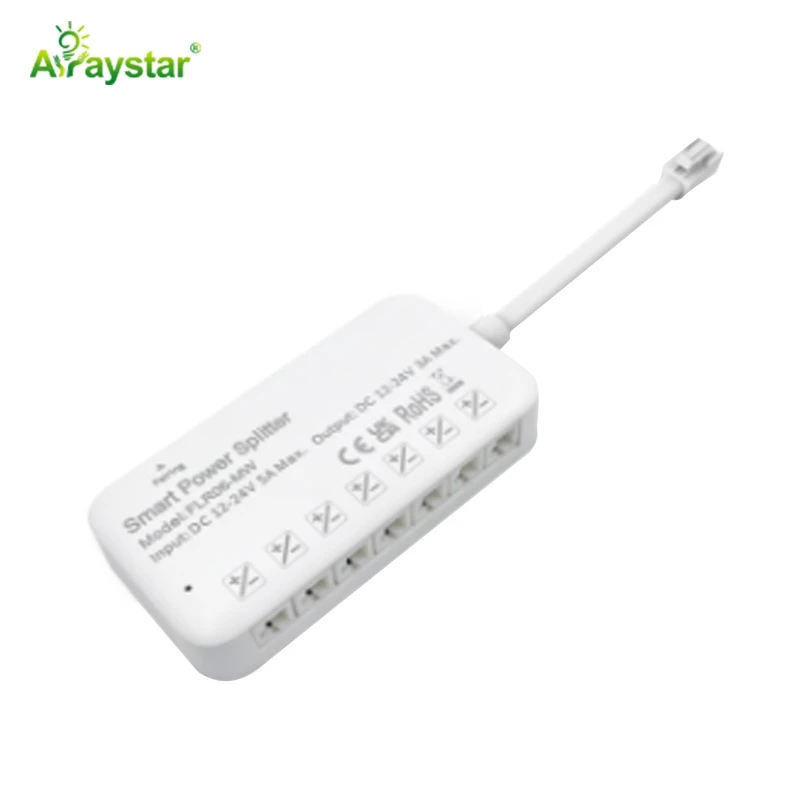
The neatest installation is rarely the best one for the electronics. I prefer a ventilated cupboard on an internal wall, away from roof voids and above-appliance drawers. If a dimmer receiver sits in the same box as the driver, I keep the two separated by at least 50 mm, because the receiver adds its own heat and the RF link can suffer when both are baking. Airflow around control gear matters as much as around the power unit.
- Never mount a driver directly above an oven, boiler or heater.
- Avoid roof voids in summer climates unless the box is insulated.
- Leave a finger gap between the driver case and the box lid.
The temperature test before I leave
I finish every enclosure job with a ten-minute heat soak. I switch the lights on at full, shut the cupboard door, and after ten minutes I open it and hold the back of my hand near the driver. If I cannot keep my hand there for three seconds, the box is too hot and I have to add a vent or step the driver down. A driver that is warm is fine; one that burns is a future call-back.
- Run the strip at full output for ten minutes before judging.
- Check the driver case, not the box surface, with a hand or an infrared gun.
- Note the ambient on the record sheet so a summer fault can be traced later.
Recommended Products
Frequently Asked Questions
Can I put an LED driver in a sealed IP65 box?
You can, but you must derate it hard, because a sealed box cannot convect heat away. Load it to no more than 60 percent of its rating and size the box generously. IP65 is for outdoor and wash-down locations; indoors, a vented IP20 box with a grommet on each cable is almost always a better home for a long-lived driver.
How much airflow does a driver actually need?
Treat the enclosure like a chimney. Put a vent low for cool air in and another at the top for hot air out, with at least 100 to 300 mm combined vent area depending on load. A single hole in the lid barely moves air; you need both an inlet and an outlet, otherwise convection cannot start and the box just fills with heat.
Does a fan inside the box help?
Yes, once the load passes 150 W or the ambient climbs above forty degrees. A small quiet 120 mm fan on the top vent pulls air through and cuts the case temperature by ten to fifteen degrees. The fan itself becomes a wearing part, so pick a quality ball-bearing unit and expect to replace it in five years. For smaller loads, passive vents are quieter and last longer.
Why do the lights dim only on hot afternoons?
That is thermal derating. The driver is protecting its internal capacitors by cutting output as the case climbs past its limit. The strip is not at fault. The fix is to lower the load, ventilate the box, or move the driver to a cooler location. Once the unit cools in the evening it recovers, which is exactly why the fault is so confusing to the client.
Can I stack the driver and dimmer on the same shelf?
Give them breathing room. A driver and an RF receiver stacked tightly in a small box share heat, and the receiver also becomes unreliable when hot. Keep at least 50 mm between them and run separate vents. On larger jobs I put the receiver in its own small vented enclosure beside the driver, which keeps the RF link stable and both units cooler.
Need help with your LED project?
Get factory-direct pricing, free samples and engineering support within 24 hours.
Email: info@arraystarled.com | Phone: +86-0755-2103-6746 | WhatsApp: 0086 1581 8514 077
Need to size your power supply? Use our LED Strip Power Calculator to find the right driver in seconds.