LED Strip for Artwork & Picture Lighting
- 2026-09-18 15:31
- /
- Arraystar
Quick Answer
Light artwork with a CRI 90+ LED strip in a lensed aluminum profile mounted 20–30 cm above the frame, angled to wash the canvas evenly with little wall spill. Use 2700K–3000K warm light, add a dimmer or tunable/dim-to-warm controller for mood, and use anti-reflective glass on framed work to kill glare. Target about 200–300 lux on the art, half that on the wall around it.
📑 Table of Contents
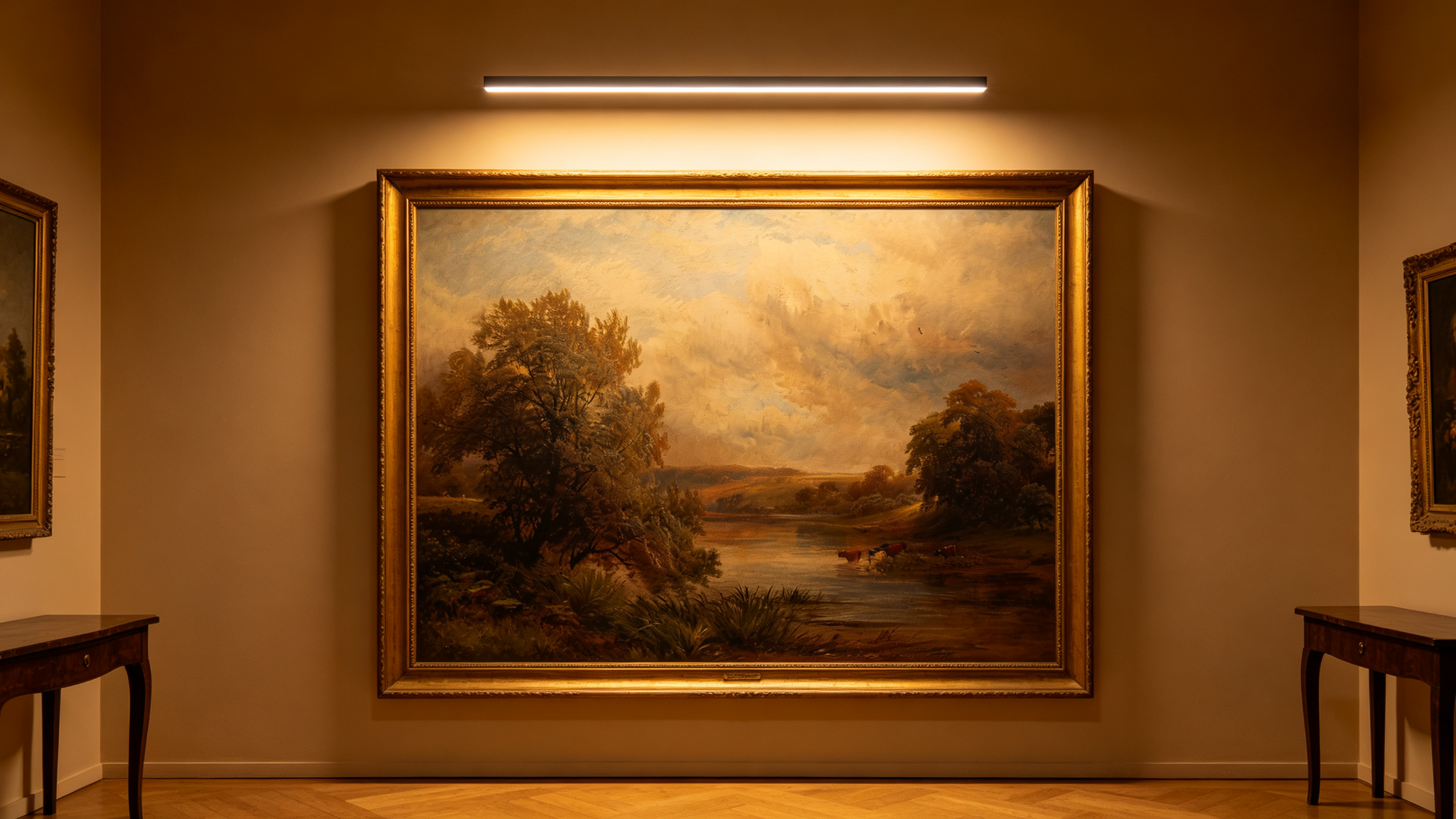
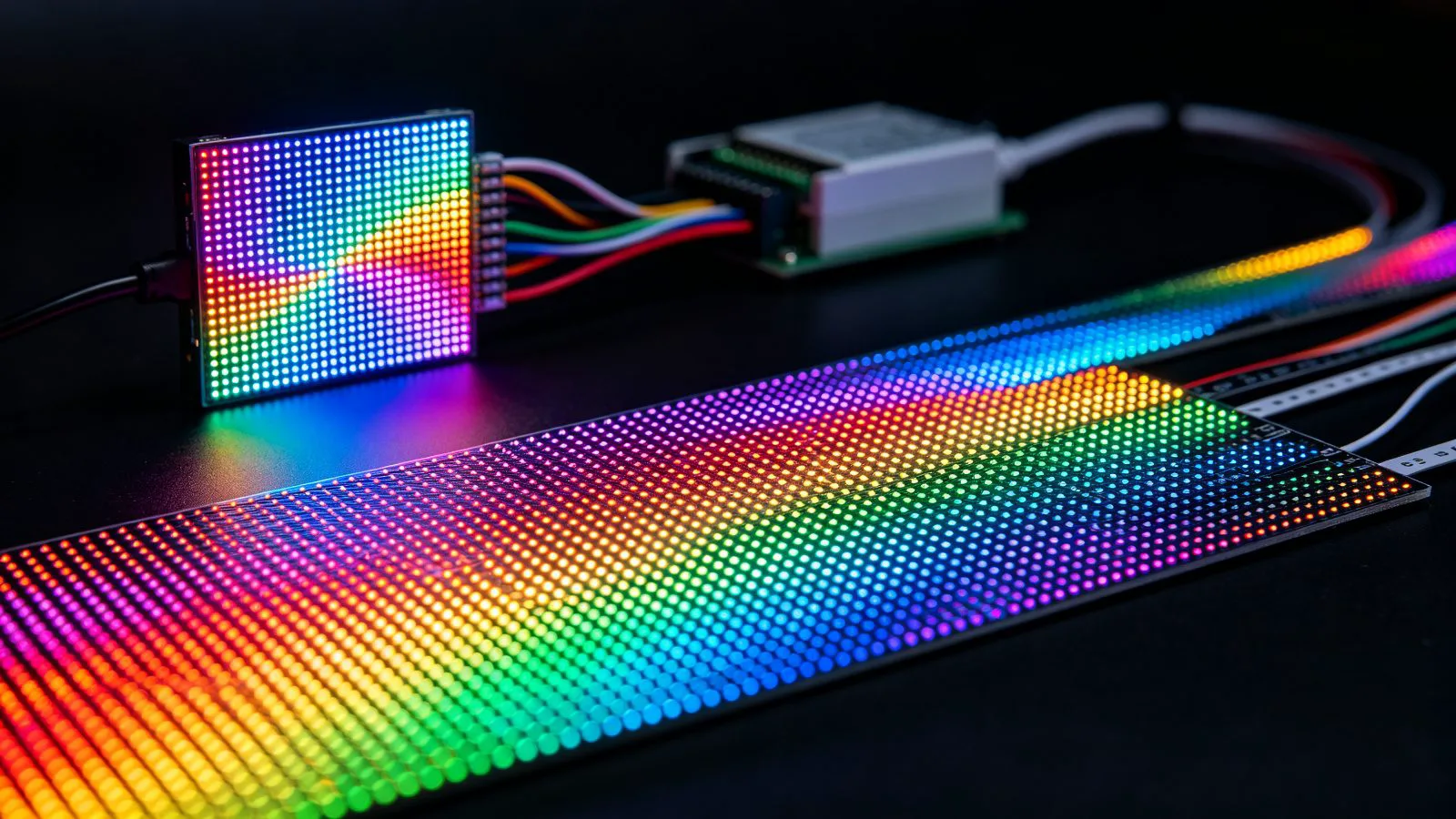
A dedicated LED picture light reveals texture and color without glare on the glass.
How Picture Lighting Differs from General Lighting
Artwork is the one surface in a room you deliberately want to see — and see accurately. A ceiling downlight either floods the painting with a hard pool or reflects off the glass, washing the surface in glare. A proper LED picture light — a slim linear source mounted above (or behind) the frame — sends a controlled, even wash across the canvas with little spill onto the wall and almost no glare. It flatters texture, renders color truthfully and makes the piece feel intentional rather than accidental.
The two parameters that separate a good art light from a bad one are color rendering (CRI) and beam control. Skip either and you have a bright wall with a disappointed painting.
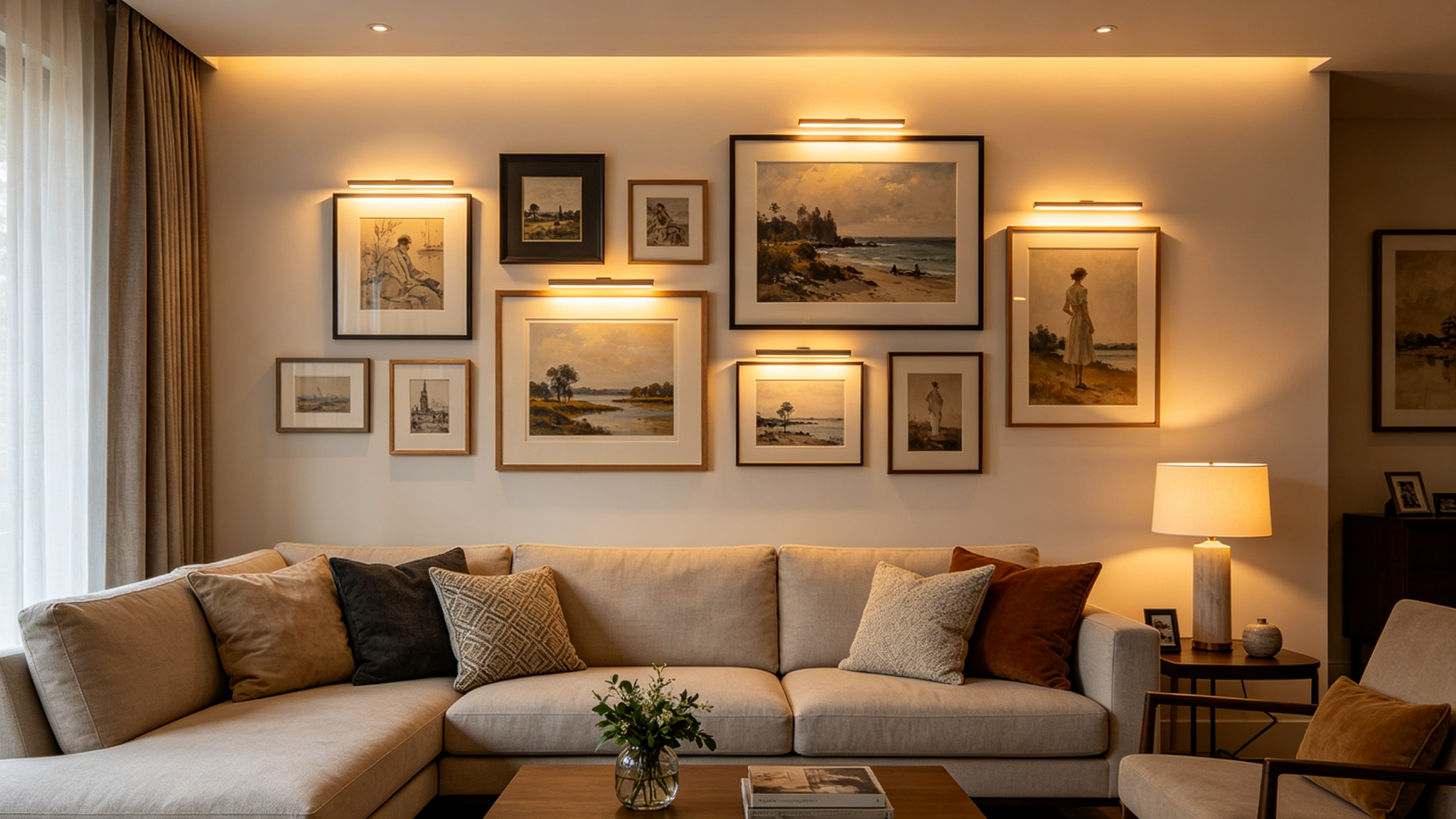
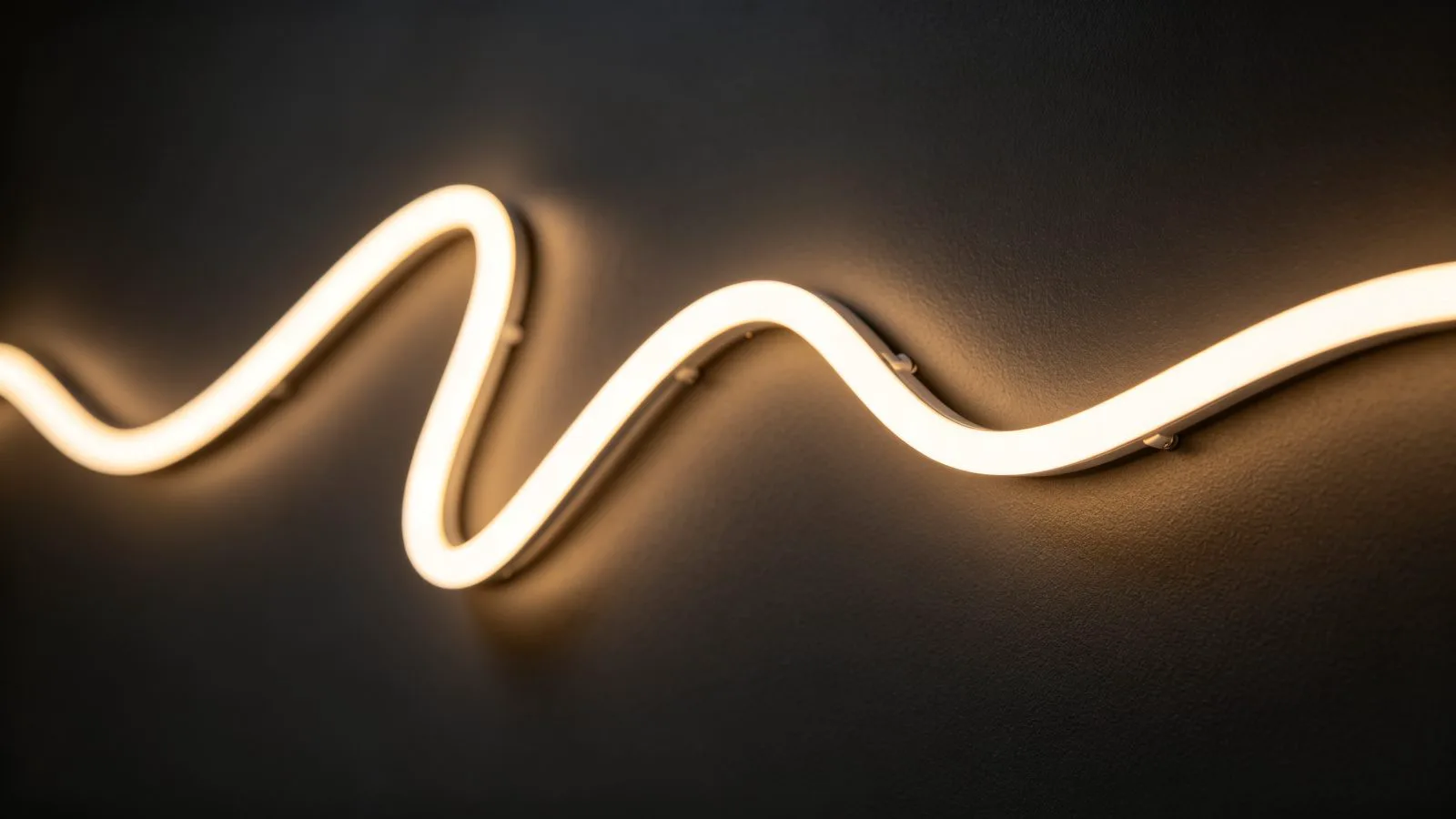
A salon-style wall reads best when every frame gets its own gentle wash.
Spec Comparison: LED Picture Light Options
| Feature | CRI 90+ COB strip | Tunable CCT COB | Dim-to-warm strip | Standard SMD |
|---|---|---|---|---|
| CRI | Ra 90–95 | Ra 90+ | Ra 90+ | Ra 80 |
| Color | Fixed 2700K–4000K | 2700K–6500K | Warms as it dims | Fixed |
| Glare control | With diffuser/lens | With diffuser/lens | With diffuser/lens | Hot spots |
| Texture on art | Excellent | Excellent | Excellent | Flat |
| Best for | Paintings, prints | Mixed galleries | Evenings / mood | Budget / drafts |
For originals, fine prints and photography, CRI 90+ is non-negotiable: below that, reds go muddy and whites turn greenish. A tunable or dim-to-warm strip lets you keep the art accurate by day and cozy by night.
Positioning, Angle and Glare
- Mount the light 20–30 cm above the frame, angled down so the beam covers the canvas top-to-bottom.
- Use a lensed or asymmetric profile that directs light onto the art rather than your eyes.
- Keep the source out of the sightline of someone standing normally — no bulb visible.
- For glass-fronted art, angle slightly and use anti-reflective glass to kill the window reflection.
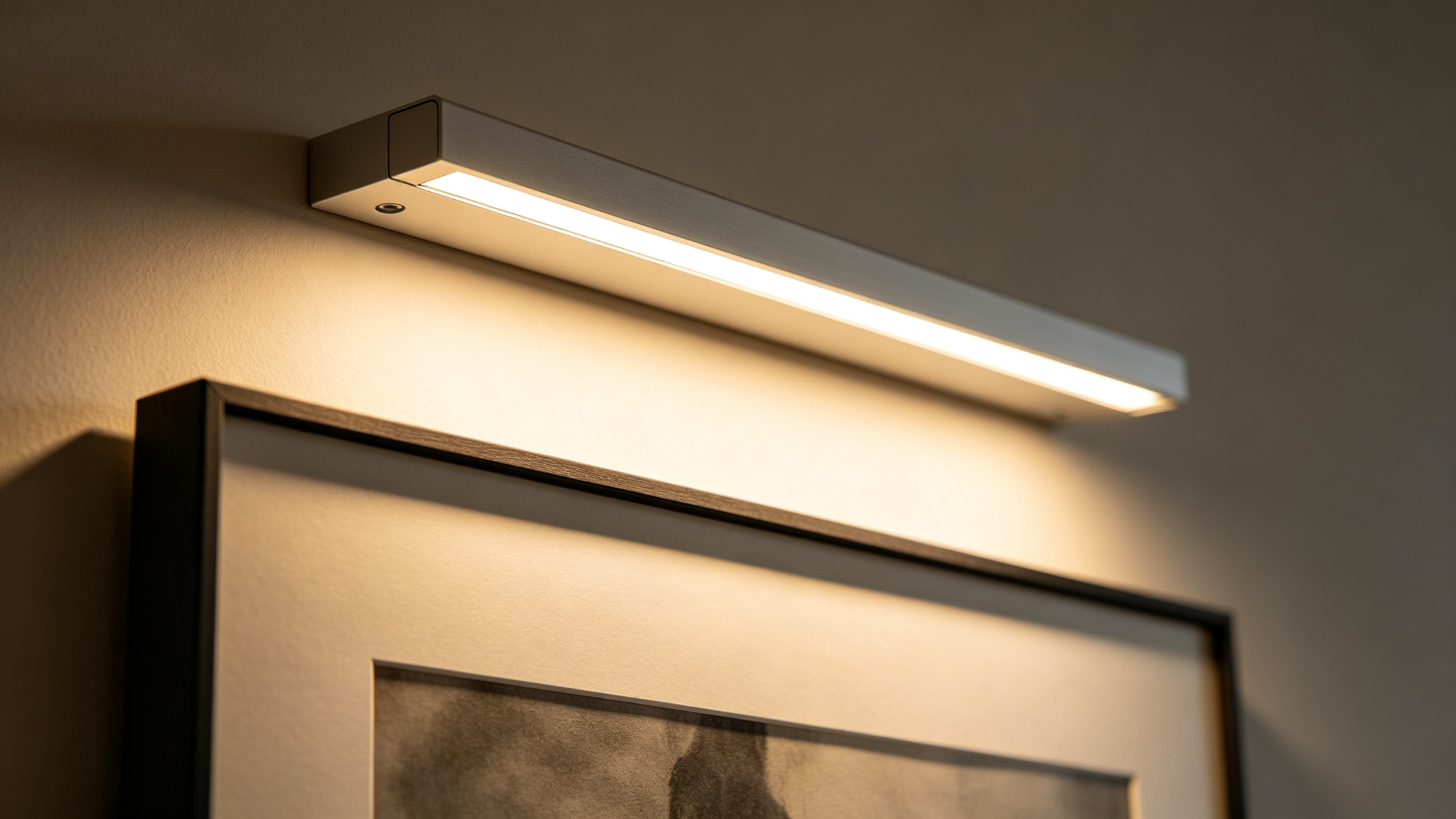
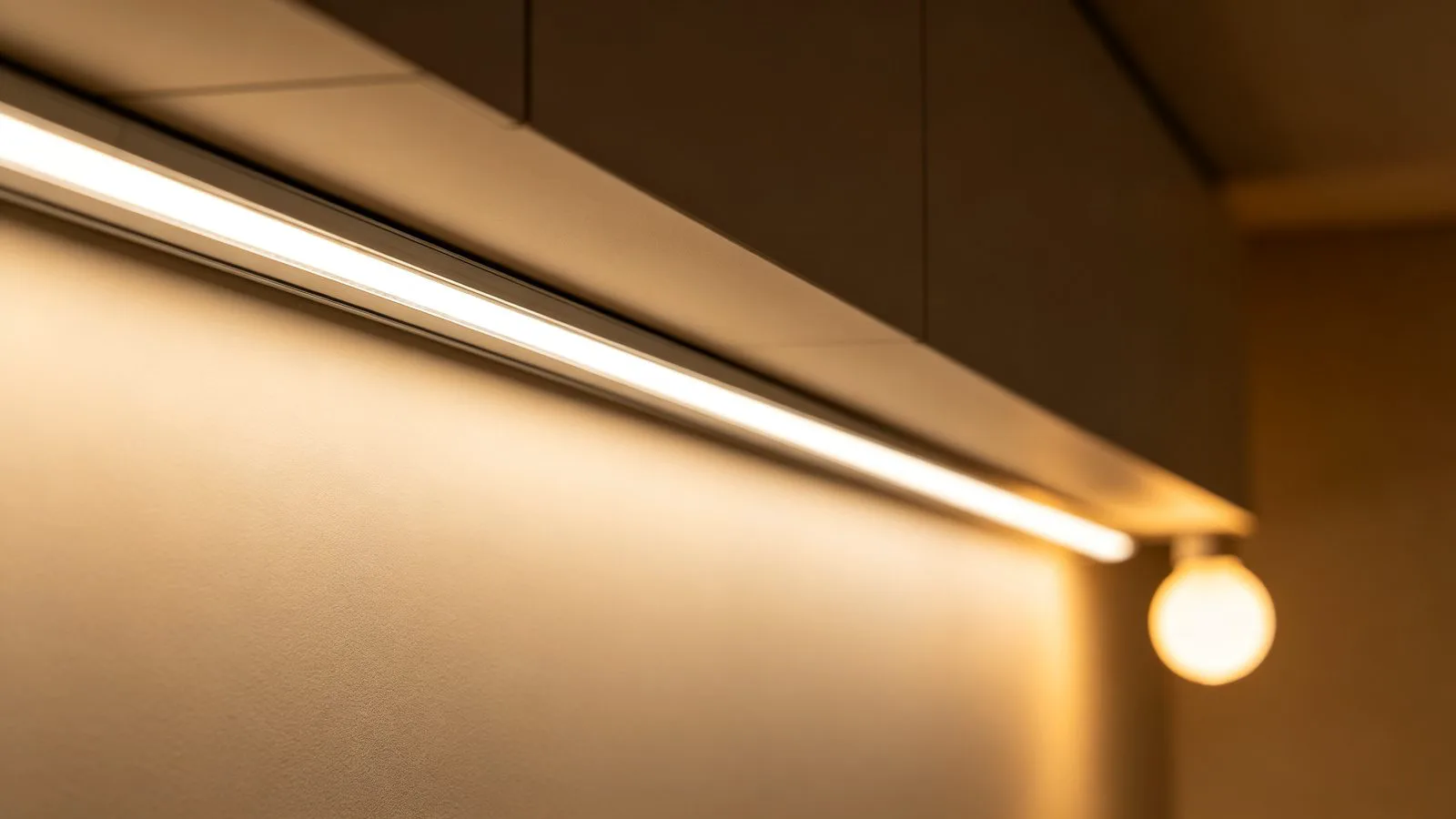
A lensed aluminum profile keeps the beam on the art and out of your eyes.
Rule of thumb: the painting should be evenly lit edge-to-edge at roughly 200–300 lux, while the wall around it stays dimmer — about half the brightness. That contrast makes the artwork pop without looking like a spotlight.
CRI, Color Temperature and Dimming for Art
Art buyers obsess over CRI for a reason: the artist’s pigments were chosen under daylight. A CRI 90+ (ideally R9 positive) LED at a stable 2700K–3000K reproduces the intended colors far better than a generic strip. Tunable white lets you shift from a neutral daylight view by day to a warm evening glow, and dim-to-warm (see the CRI explainer) makes the light feel like candle as you lower it — perfect over a dining-room painting.
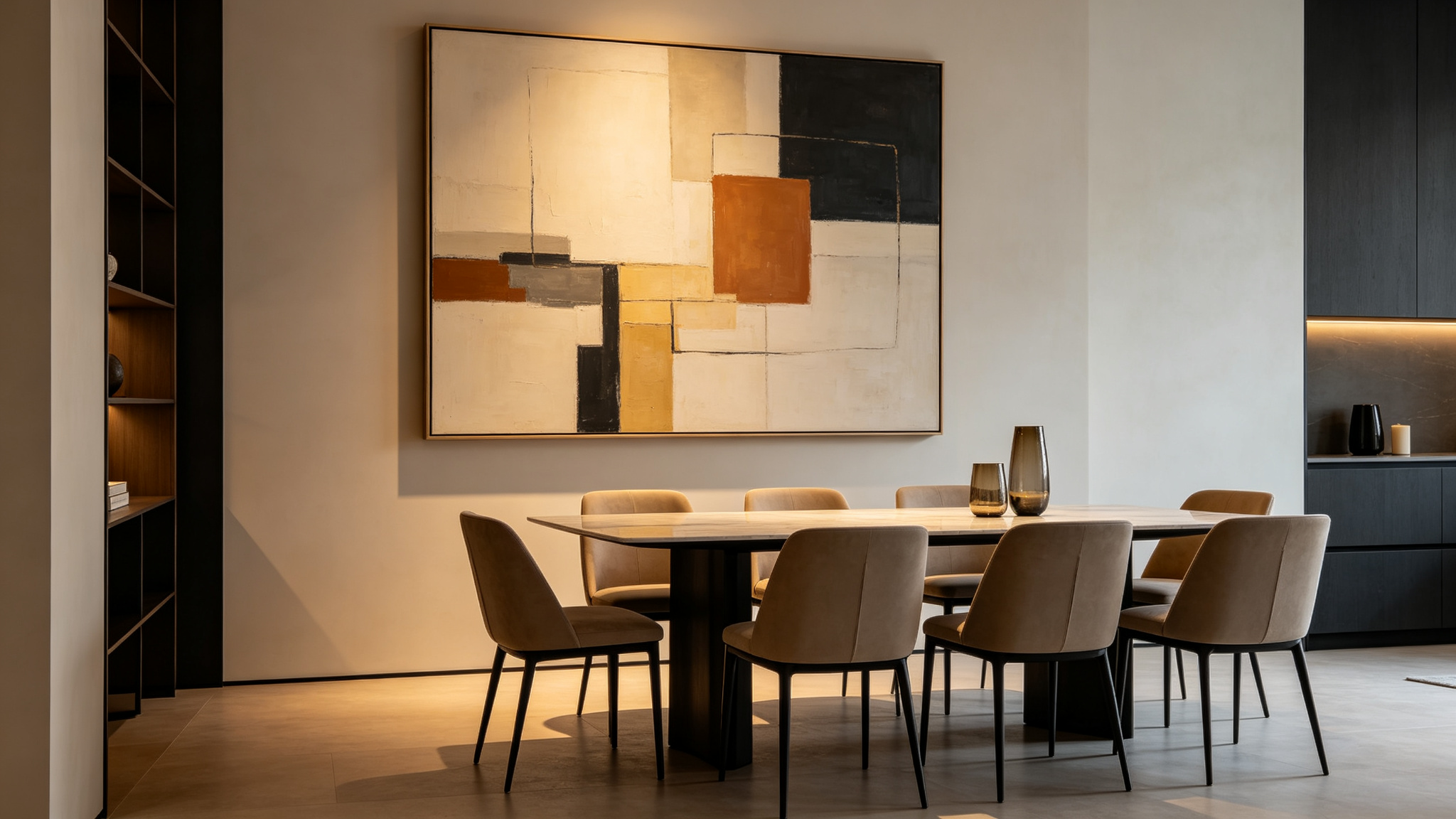
High CRI keeps the artwork’s true colors faithful from day to night.
Installation and Control
Most picture lights run on safe 12V/24V DC. Hide the driver behind the wall or in the attic, run a low-voltage cable down to the light, and pair it with a wall dimmer or a touch controller. For a whole gallery wall, a single color-temperature controller keeps every frame consistent.
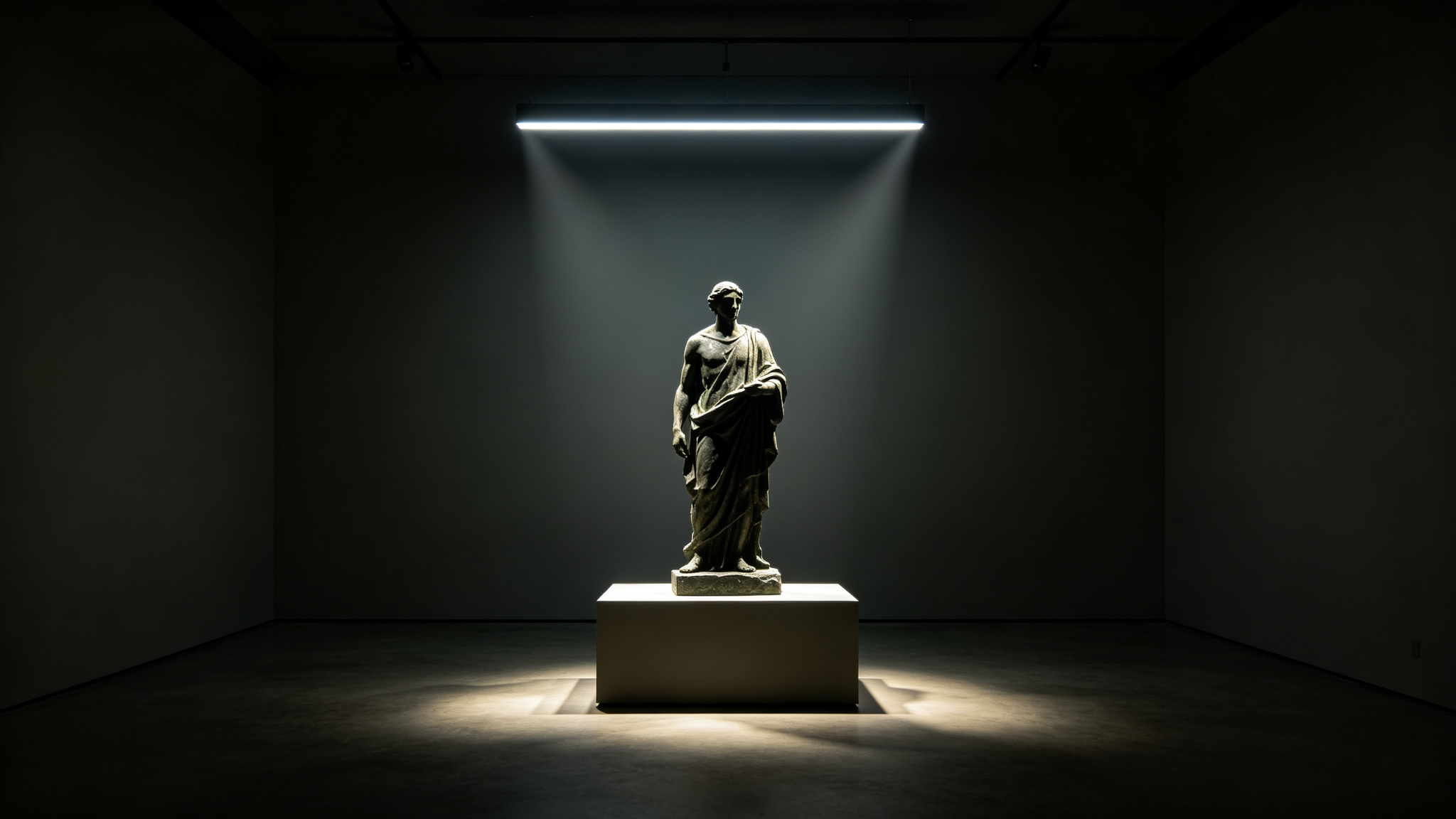
For three-dimensional work, a narrow beam raking across form reveals texture and shadow.
The 30-second decision
1) Oil / original / fine print → CRI 90+ COB in a lensed profile, 2700–3000K. 2) Changing mood → tunable CCT or dim-to-warm with a touch controller. 3) Glass frames → anti-reflective glass plus an angled asymmetric beam. Keep the source out of eye line.
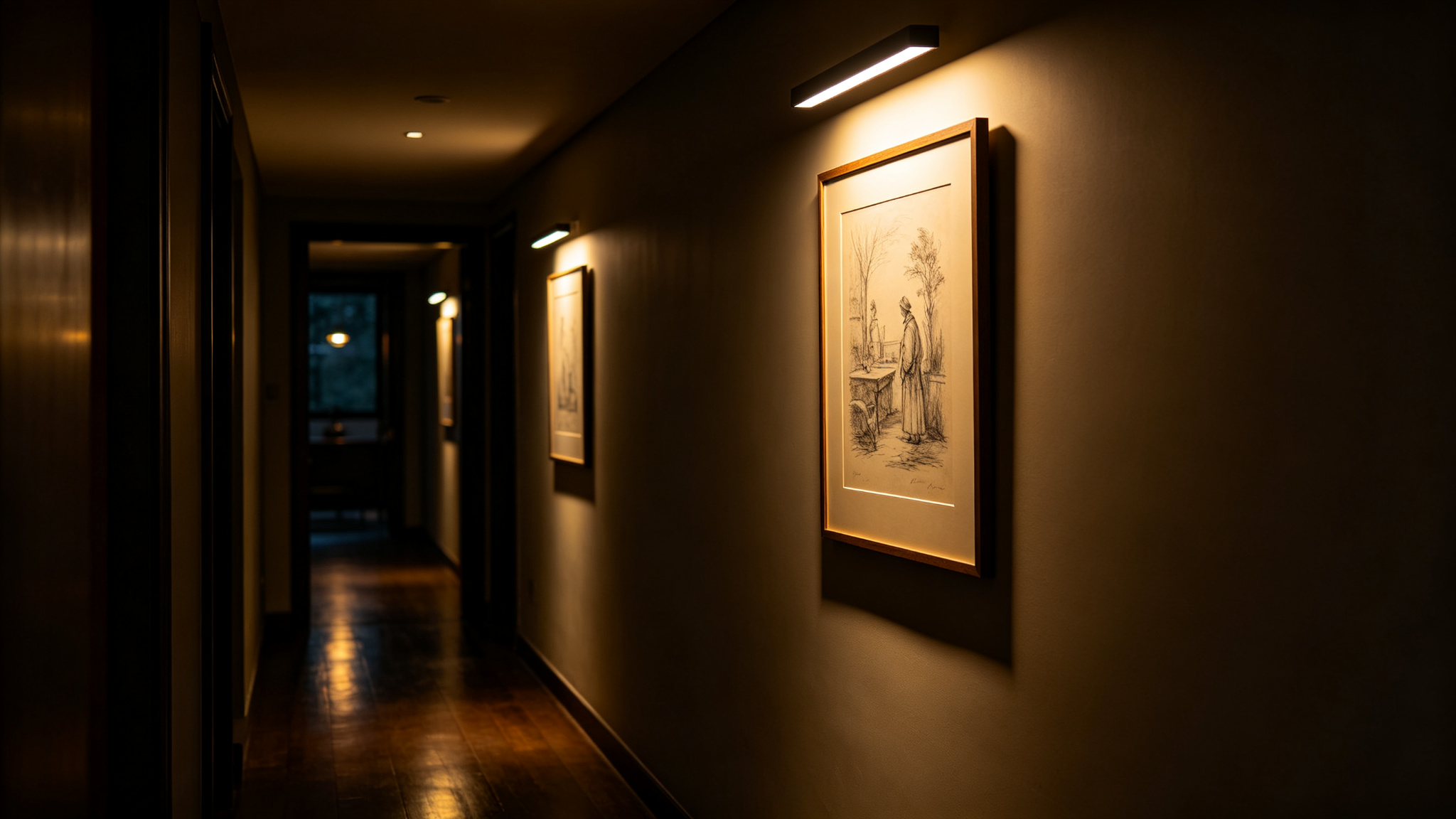
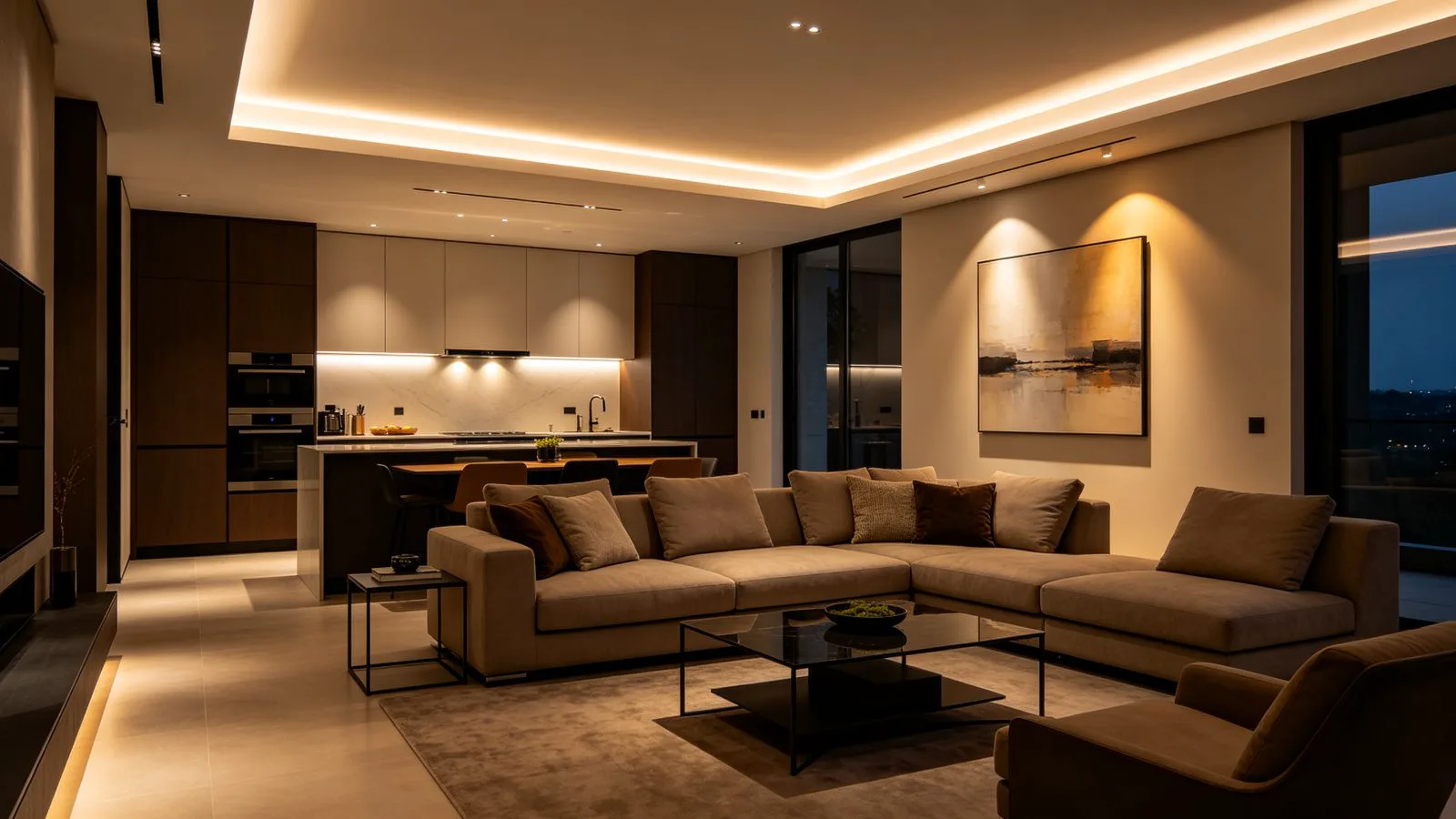
A quiet hallway becomes a private gallery with well-placed picture light.
Recommended Products


Frequently Asked Questions
What CRI do I need to light artwork properly?
Specify CRI Ra 90 or above (and a positive R9) for originals, fine prints and photography. Lower CRI (Ra 80) makes reds look muddy and whites look off, so the artwork never shows the colors the artist intended. COB picture-light strips are available at CRI 90+.
How far above a painting should the picture light sit?
Mount it about 20–30 cm above the top of the frame and angle it down so the beam covers the canvas evenly from top to bottom. Use a lensed or asymmetric profile so the light lands on the art instead of in your eyes.
How do I avoid glare and reflections on glass?
Use anti-reflective museum glass, angle the light so reflections don’t bounce back to a normal standing eye line, and keep the LED source itself out of view. A diffused, lensed profile also reduces the sharp reflections a bare LED can cause.
Should art lighting be warm or cool?
For most home settings, 2700K–3000K flatters paintings and feels welcoming. Tunable CCT lets you shift to neutral daylight by day for accurate viewing; dim-to-warm adds candle-like warmth as you dim in the evening.
Building an indoor LED strip project?
Get factory-direct pricing, free layout advice, samples and a custom quote within 24 hours.
Get a Quote