LED Strip Dimming: Complete Guide to Dimmer Types and Installation
- 2026-09-09 15:48
- /
- Arraystar
Quick Answer
LED strip dimming allows adjustable brightness for different moods and activities. Common dimming methods: 1) PWM (Pulse Width Modulation) dimming—most common, works with all LED strips, uses RF/WiFi controllers; 2) 0-10V dimming—professional standard, compatible with building automation systems; 3) DALI dimming—digital addressable, individual control of each fixture; 4) TRIAC dimming—uses standard wall dimmers, requires dimmable LED drivers. Choose dimming method based on project complexity, budget, and compatibility with existing systems. Always use dimmers specifically rated for LED loads.
Why Dim LED Strips?
Dimming LED strips provides multiple benefits: 1) Mood and atmosphere: Adjust brightness for different activities—bright for work, dim for relaxation. 2) Energy savings: Dimming reduces power consumption proportionally—at 50% brightness, use ~50% less energy. 3) Extended lifespan: Running LEDs at reduced current significantly extends lifespan (at 70% brightness, lifespan can double). 4) Flexibility: One lighting system can serve multiple purposes (task lighting, ambient lighting, accent lighting) by adjusting brightness. 5) Comfort: Avoid overly bright lighting in the evening, which can disrupt circadian rhythms and sleep. 6) Control options: Dimmers range from simple knob dimmers to smart app control, voice control, and automated scheduling. Dimming is an essential feature for any modern LED lighting installation.
PWM Dimming (Most Common)
PWM (Pulse Width Modulation) is the most common dimming method for LED strips. It works by rapidly turning the LED on and off (hundreds to thousands of times per second). The percentage of 'on' time vs 'off' time determines perceived brightness—50% on time = 50% brightness. Because the switching is faster than the human eye can detect, it appears as continuous, dimmed light. Advantages: Works with all types of LED strips (single color, RGB, RGBW, CCT). Simple and inexpensive. Wide range of controllers available (RF remote, WiFi, Bluetooth, DMX). No special power supply required (any constant voltage driver works). Disadvantages: Low-frequency PWM (<100Hz) can cause visible flicker, especially noticeable on camera or to sensitive individuals. Choose controllers with PWM frequency >1000Hz for flicker-free dimming. May cause interference with some electronic devices. Common PWM controllers: 1) RF remote dimmer: Simple, affordable, range 10-30m. 2) WiFi smart dimmer: App control, voice control (Alexa/Google), scheduling. 3) 0-10V to PWM converter: Integrates PWM dimming with 0-10V building systems. 4) DMX512 controller: Professional control for large installations, theaters, events.
0-10V Dimming (Professional Standard)
0-10V dimming is a professional analog dimming standard widely used in commercial and architectural lighting. It uses a separate 0-10V control signal (low voltage) to communicate desired brightness level to a dimmable LED driver: 10V = 100% brightness, 0V = minimum brightness (or off, depending on driver). The control signal is separate from the power circuit, allowing long control wire runs without signal degradation. Advantages: Simple, reliable, widely supported standard. Compatible with building automation systems (Lutron, Crestron, Control4). Smooth, flicker-free dimming. Can control multiple drivers from a single controller. Long control wire runs (up to 100m+). Disadvantages: Requires dimmable 0-10V LED drivers (more expensive than standard drivers). Requires separate control wiring (additional installation cost). Only one dimming zone per controller (for multiple zones, need multiple controllers or 0-10V zone controllers). Minimum brightness level may not go to 0 (some drivers go to 5-10% minimum). Components needed: 1) 0-10V dimmable LED driver (constant voltage, with 0-10V dimming input). 2) 0-10V dimmer controller (wall mount, knob, or touch panel). 3) Control wire (2-conductor, low voltage, typically 18-22 AWG). 4) LED strip (any type, connected to driver output). Installation: Connect LED strip to driver output. Connect 0-10V controller to driver's 0-10V input terminals (+10V and DIM). Run control wire from controller to driver. Ensure correct polarity (+ to +, - to -). Multiple drivers can be connected in parallel to one controller.
DALI Dimming (Digital Addressable)
DALI (Digital Addressable Lighting Interface) is a digital dimming protocol that allows individual control of each lighting fixture. Unlike 0-10V (analog, one zone per controller), DALI uses a digital bus where each driver has a unique address, allowing individual or group control of up to 64 devices per bus. Advantages: Individual control of each fixture/zone. Flexible zoning (reconfigure via software without rewiring). Status feedback (can report lamp failure, energy usage). Integrated with building management systems. Smooth, flicker-free dimming. Can combine lighting control with other systems (shades, HVAC). Disadvantages: More expensive than 0-10V (DALI drivers and controllers cost more). More complex installation and configuration (requires software setup). Steeper learning curve. May be overkill for small/simple installations. Components: 1) DALI dimmable LED driver (with DALI bus interface). 2) DALI controller/power supply (provides DALI bus power and control). 3) DALI control devices (wall panels, sensors, touch screens). 4) DALI bus wire (2-conductor, polarity-insensitive, typically 18-22 AWG, max 300m). 5) Configuration software (for assigning addresses and groups). DALI is ideal for large commercial buildings, hotels, offices, and smart buildings where flexible, individual lighting control is needed.
TRIAC Dimming (Wall Dimmer)
TRIAC dimming uses standard wall-mounted TRIAC dimmers (the same type used for incandescent bulbs) to dim LED strips. It works by chopping the AC waveform, reducing the power delivered to the LED driver. Requires a dimmable LED driver specifically designed for TRIAC dimming (standard drivers will flicker or fail with TRIAC dimmers). Advantages: Uses familiar, widely available wall dimmers. No special control wiring needed (dimmer is on the AC line). Simple for retrofits and residential installations. Many stylish dimmer options available (Lutron, Leviton, etc.). Disadvantages: Requires TRIAC-dimmable LED drivers (more expensive). Dimming range may be limited (often 10-100%, not 0-100%). Can cause flicker at low brightness levels if driver/dimmer compatibility is poor. Not all dimmers work with all drivers—check compatibility lists. One dimmer per circuit (zoning requires separate circuits). Not ideal for large commercial installations. Important: Always use dimmers specifically rated for LED loads. Standard incandescent dimmers may cause flickering, buzzing, or reduced dimming range with LEDs. Check the LED driver manufacturer's compatibility list for recommended dimmer models.
Dimming Method Comparison Table
| Factor | Option A | Option B |
|---|---|---|
| Brightness | Medium-High | High |
| Efficiency | Good | Excellent |
| Cost | Lower | Higher |
| Best For | General applications | Premium installations |
Recommended Products
ART-6025 / ART-6030 Stainless Steel Flexible Mounting Clips / Profile Channel for LED Strips, 50m/Carton Bulk Pack
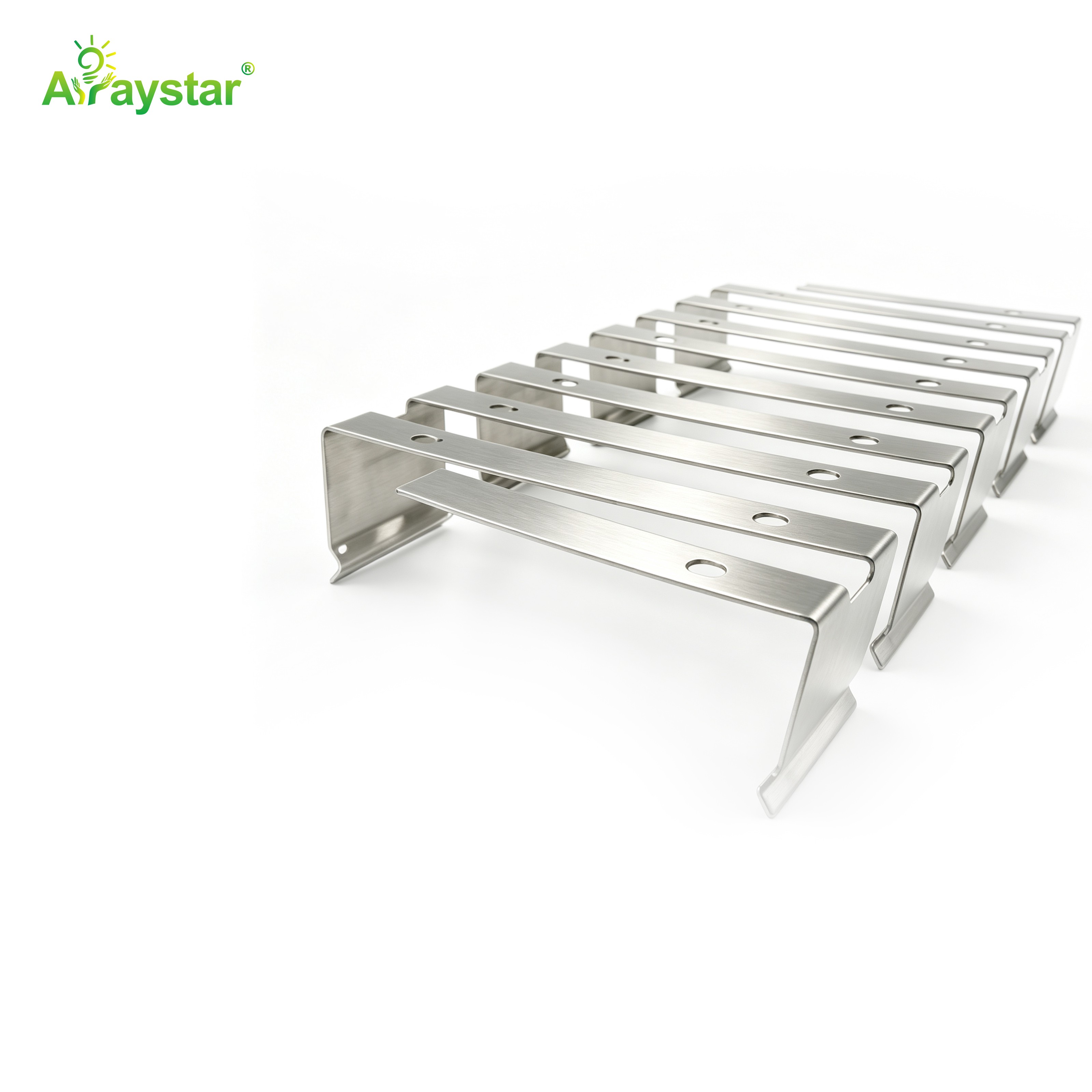
Specification Item Technical Data / Details Total Outer Height 18.5 mm Inner Height 16.5 mm Total Base Width 61.5 mm Inner Base Width 60.5 mm Top Inner Opening Width 55.8 mm Installation Method Screw
48V Ultra Long LED strip ART-2835-120-X-48-10MM
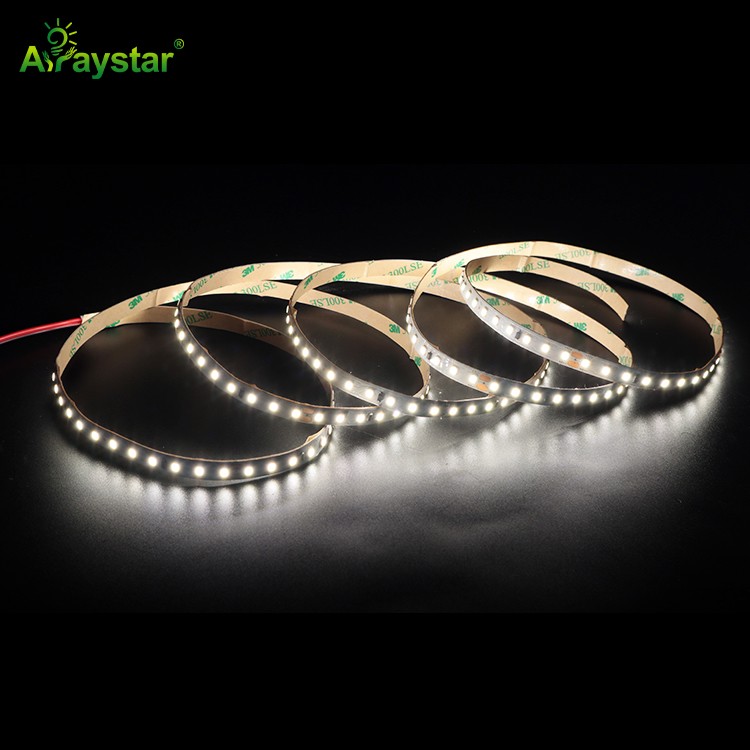
48V Ultra Long LED Strip Color Voltage Power(W/m) LED Type LED Qty/m Cut Size PCB Width IP Rating CRI Lumen (lm/W) ART-2835-120-W-48-10MM 6000K 48V DC 10 W/m 2835 120 125mm 10mm IP20 >90
Frequently Asked Questions
Q: What should I consider before buying s-shaped neon mounting channel?
A: Key factors include: required brightness (lumens/m), color temperature, voltage (12V/24V/48V), IP rating for environment, LED density, CRI requirement, dimming compatibility, and total run length. Calculate total wattage to size your power supply correctly.
Q: Can s-shaped neon mounting channel be used outdoors?
A: Only IP65 or higher rated strips are suitable for outdoor use. IP65 for covered/splash areas, IP67 for exposed outdoor, IP68 for underwater/submersion. Always use waterproof connectors and properly seal all connections for outdoor installations.
Q: How do I dim s-shaped neon mounting channel?
A: Multiple dimming options available: 0-10V, PWM, TRIAC, DALI, DMX512, and wireless (WiFi/Zigbee/Bluetooth). Ensure your dimmer is compatible with the strip's voltage and current. COB strips dim especially smoothly due to uniform light output.
Q: What is the maximum run length for s-shaped neon mounting channel?
A: This depends on voltage and copper weight. 12V strips typically max 5m, 24V up to 10m, 48V up to 20m. For longer runs, use power injection at both ends or intermediate points to prevent voltage drop and color shift.
Q: How do I calculate the power supply size for s-shaped neon mounting channel?
A: Multiply the strip's wattage per meter by total length, then add 20% headroom. For example: 5m × 14.4W/m = 72W + 20% = 86.4W, so choose a 100W power supply. Always use a power supply rated for LED applications.
Conclusion
LED strip dimming allows adjustable brightness for different moods and activities. Common dimming methods: 1) PWM (Pulse Width Modulation) dimming—most common, works with all LED strips, uses RF/WiFi controllers; 2) 0-10V dimming—professional standard, compatible with building automation systems; 3) DALI dimming—digital addressable, individual control of each fixture; 4) TRIAC dimming—uses standard wall dimmers, requires dimmable LED drivers. Choose dimming method based on project complexity, budget, and compatibility with existing systems. Always use dimmers specifically rated for LED loads. Arraystar LED offers 15+ years of LED strip manufacturing experience with full OEM/ODM capabilities, CE/RoHS/ERP certification, and 3-year warranty. Contact our team for a free consultation and custom quote for your project.
Ready to start your project? Contact us today for expert guidance and competitive pricing.
About the Manufacturer
ArrayStar LED is a professional LED strip manufacturer in Shenzhen, China since 2010, serving 80+ countries. We support custom OEM/ODM projects (custom CCT, CRI, PCB, logo, packaging) and wholesale supply for distributors and contractors worldwide.