LED Strip for Bookshelf & Display Shelving
- 2026-09-18 15:31
- /
- Arraystar
Quick Answer
For bookshelf and display shelving, hide a low-voltage strip under the front lip of each shelf, pointed down at the shelf below. Use warm white 2700K–3000K (CRI 90+ for art or collectibles), choose COB-in-a-diffuser where the strip is visible and 2835 SMD where it is hidden, and add a cabinet or motion sensor for automatic light. Parallel-feed shelves and size the driver over total watts.
📑 Table of Contents
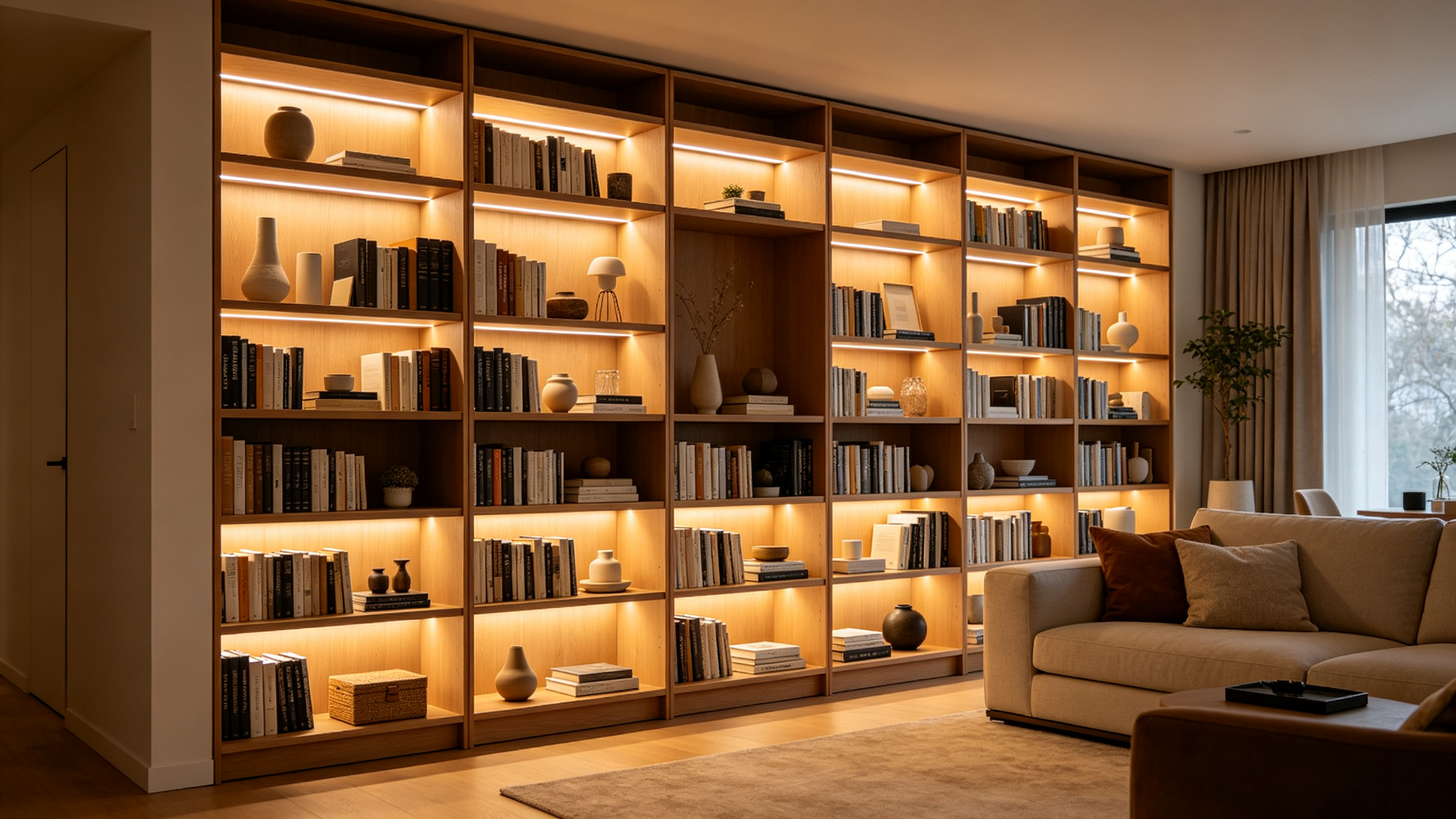
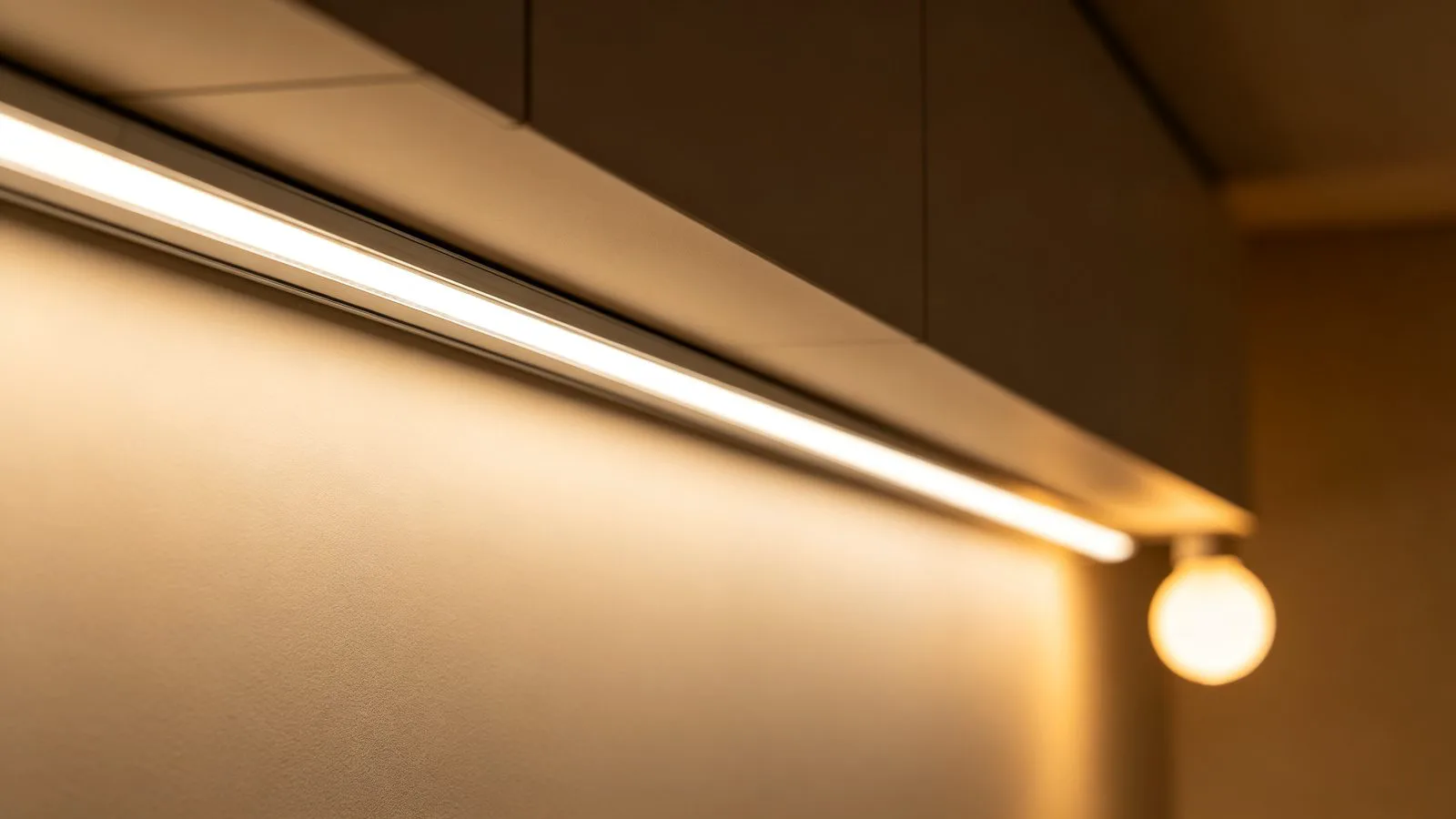
Hidden strip under each shelf lip turns a plain bookcase into a feature wall.
Why LED Strips Transform Shelving
Shelves are dark by nature: books, boxes and objects sit in pockets of shadow, and a single ceiling light throws harsh top glare and deep under-shelf gloom. A thin LED strip tucked under the front lip of each shelf solves both problems at once — it washes the shelf below with a soft, even band of light and turns a storage unit into a glowing architectural feature. This is the single upgrade that makes built-ins, display cabinets and retail shelving look “designed” rather than “fitted.”
The light does three jobs: it makes contents easy to see, it adds depth and layers to the room, and it draws the eye across the objects you actually want to show off.

Even per-shelf lighting is the difference between storage and a curated display.
Spec Comparison: Strips and Gear for Shelves
| Item | 2835 SMD strip | COB strip | Aluminum channel + diffuser | Cabinet sensor |
|---|---|---|---|---|
| Look | Dots visible close up | Dot-free continuous | Clean finished line | Auto on/off |
| Density | 120–240 LEDs/m | 320–528 LEDs/m | Houses either strip | n/a |
| Width | 8 mm | 5–10 mm | 15–25 mm profile | Small module |
| Best on | Budget open shelves | Premium / close view | Visible edges | Wardrobes, cabinets |
| IP rating | IP20 dry | IP20 / IP65 | IP20 interior | IP20 indoor |
Where the strip will be seen from close range (a display cabinet, a reading nook), use COB in an aluminum channel with a frosted diffuser for a flawless line. Where it is hidden deep under a shelf lip and mostly read by its spill, a cost-effective 2835 SMD strip is perfectly fine.
Placement: Under-Lip, Toe-Kick and Inside Glass
- Under-shelf lip: run the strip 2–3 cm back from the front edge, pointing down at the shelf below — the classic layered look.
- Glass / acrylic shelves: use edge-lit or underside strips so objects glow rather than the shelf itself.
- Toe-kick / bottom plinth: a strip along the base makes the unit appear to float.
- Crown / top cove: a strip at the top washes the ceiling and frames the whole bookcase.
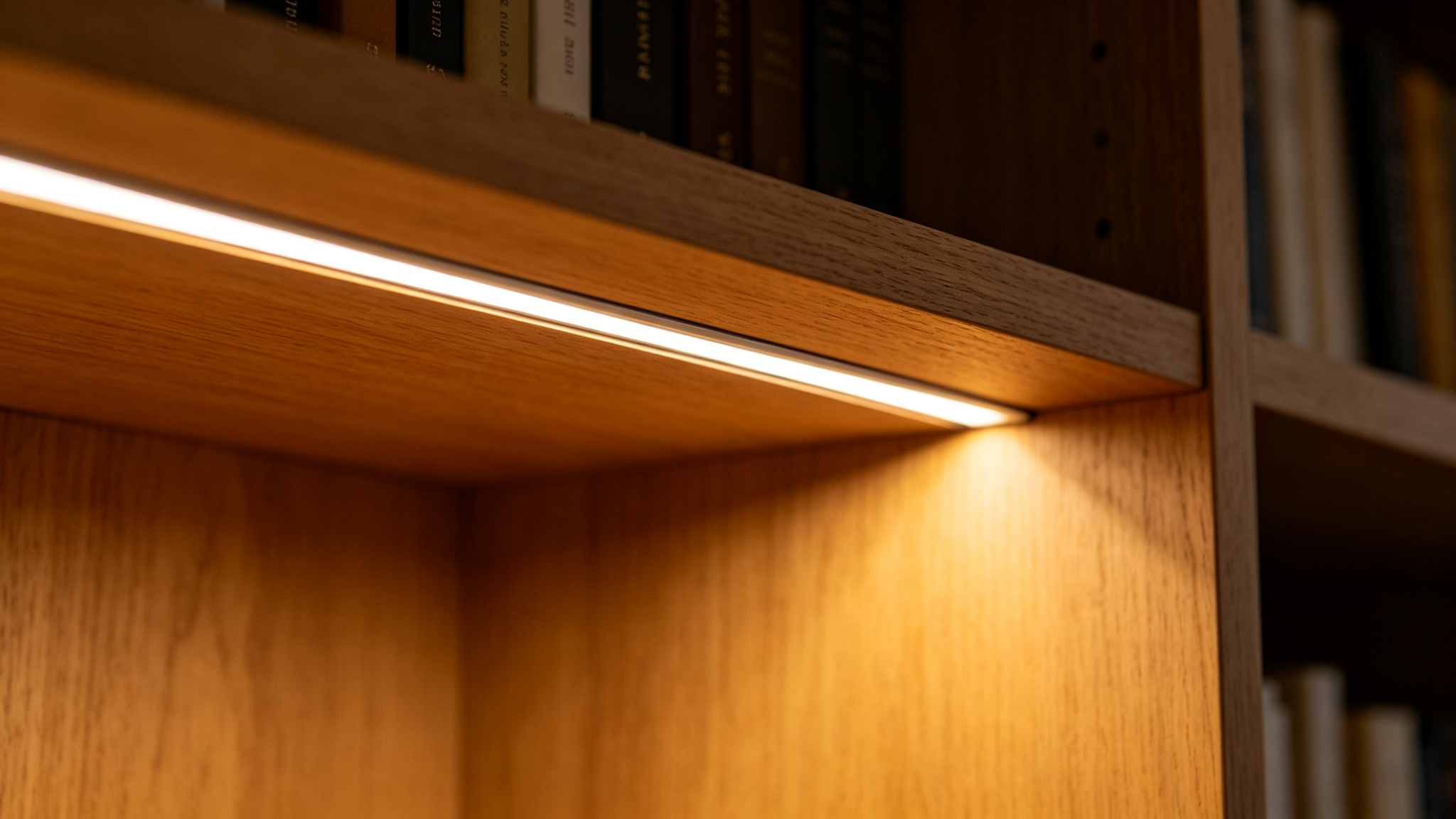
Hidden under the front lip, the strip reads as light, not hardware.
Rule of thumb for shelf lighting: light the object, not the shelf itself. Aim the strip so the beam lands on books and decor 20–40 cm below, and use warm white (2700K–3000K) so wood, paper and photos render warmly.
Color, CRI and Control for Display
Shelves show off everything from photos to pottery, so color accuracy matters. Specify CRI Ra 90+ where art or collectibles are involved — a low-CRI strip makes colors look muddy. Warm white 2700K flatters wood and leather; 3000K is a neutral middle for mixed displays. Add cabinet sensors so shelves light automatically when you open a door or walk up, and a dimmer to set mood.
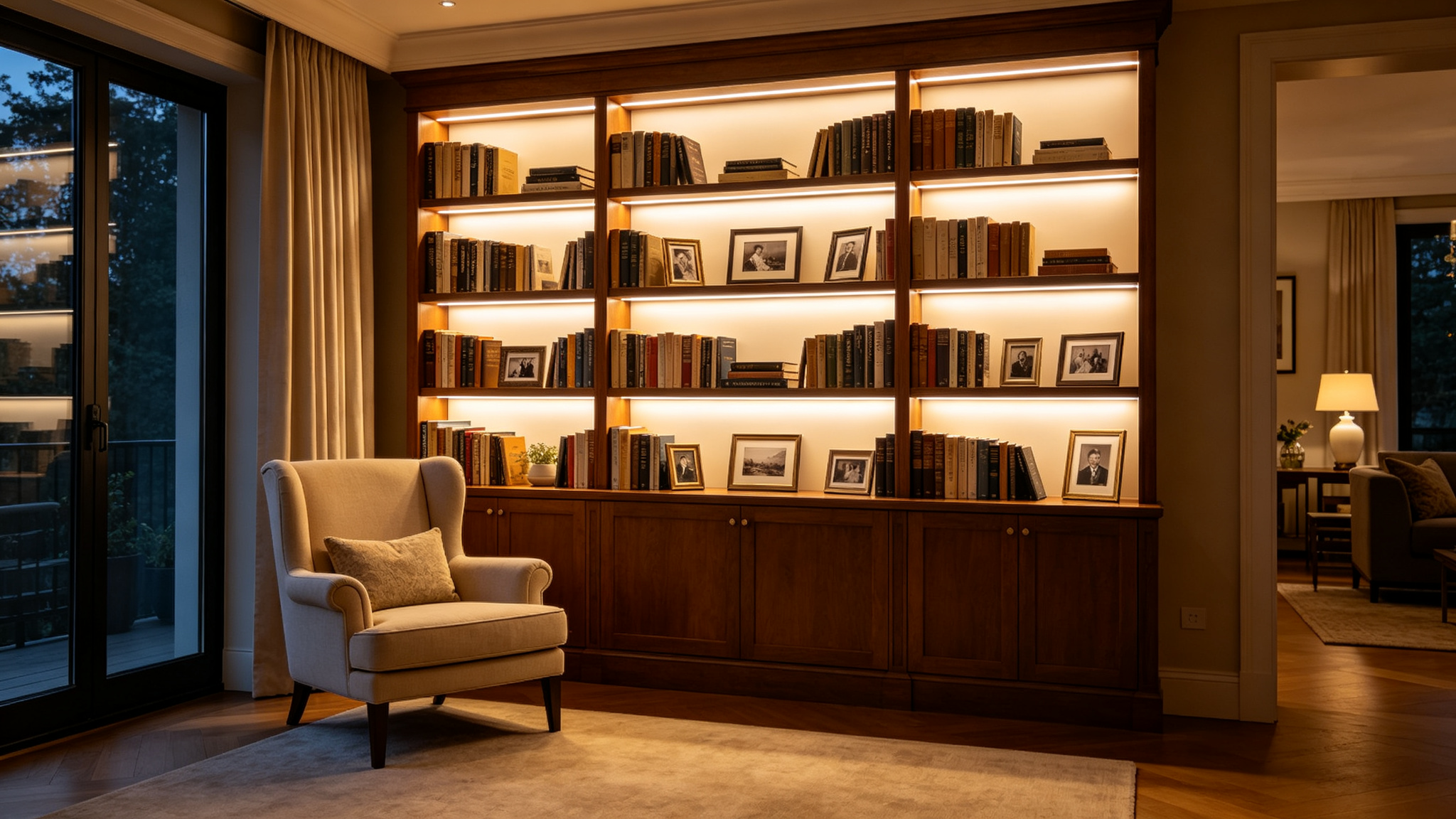
Layered warm shelves turn a reading corner into the best seat in the house.
Power and Wiring Plan
Because runs are short and shelving is inside, 12V or 24V IP20 strip is ideal. Plan the driver in a nearby cupboard or behind the unit, feed from one end per shelf, and daisy-chain shelves in parallel rather than series to avoid dim far ends — see the voltage drop guide. Count total watts and choose a driver 20–30% larger.

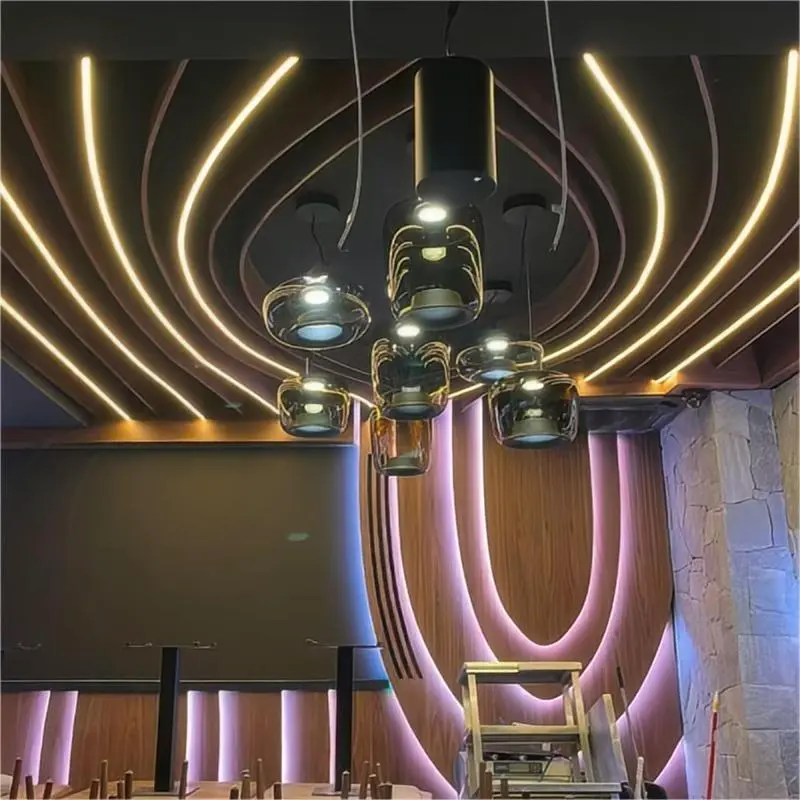
Retail-grade per-shelf lighting works just as well in a residential display wall.
The 30-second decision
1) Visible, premium display → COB in a frosted aluminum channel, CRI 90+, warm white. 2) Hidden open shelves, budget → 2835 SMD under-lip strip. 3) Cabinets → add a touch or door sensor for auto light. Always parallel-feed shelves and size the driver over wattage.
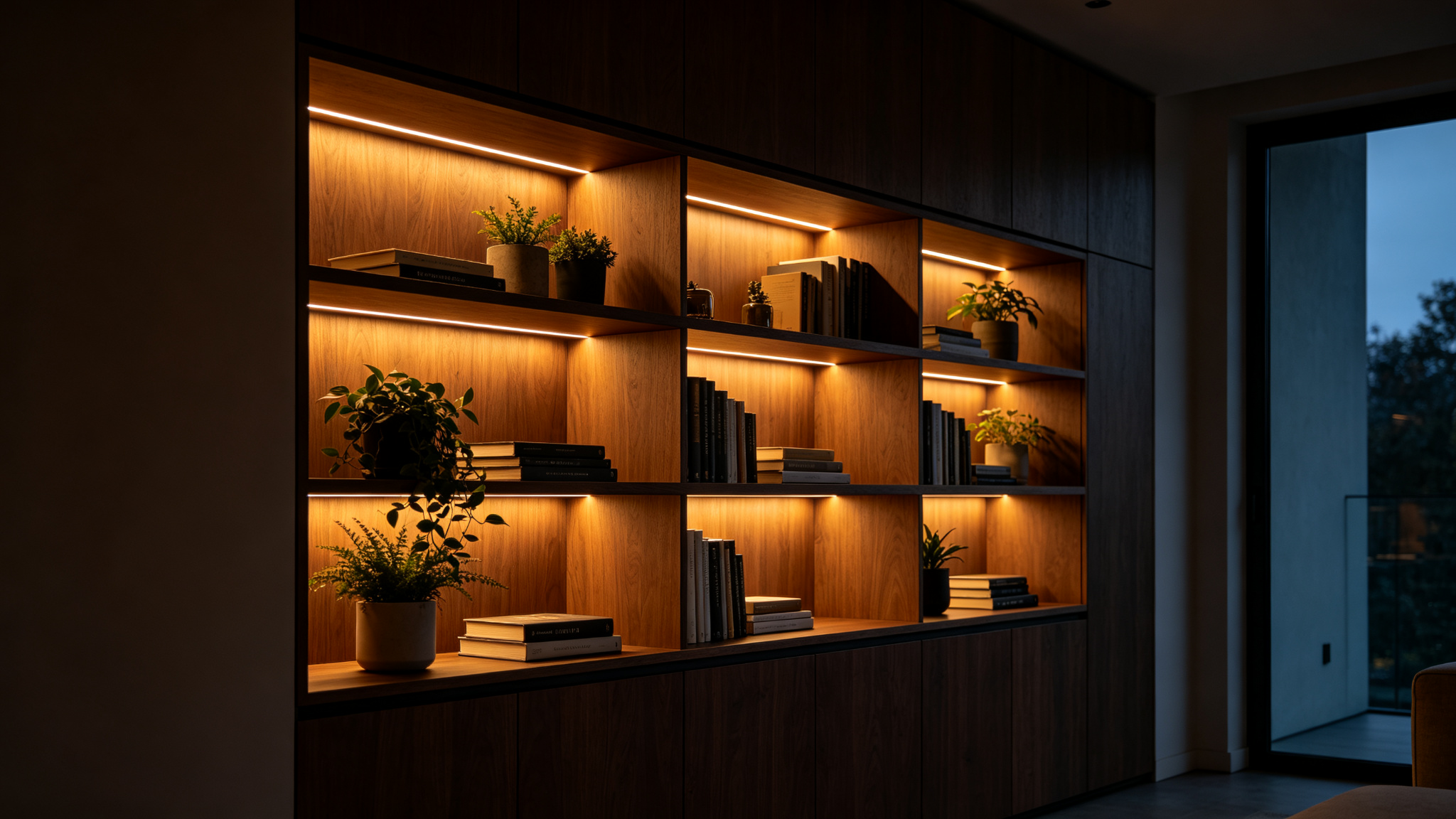
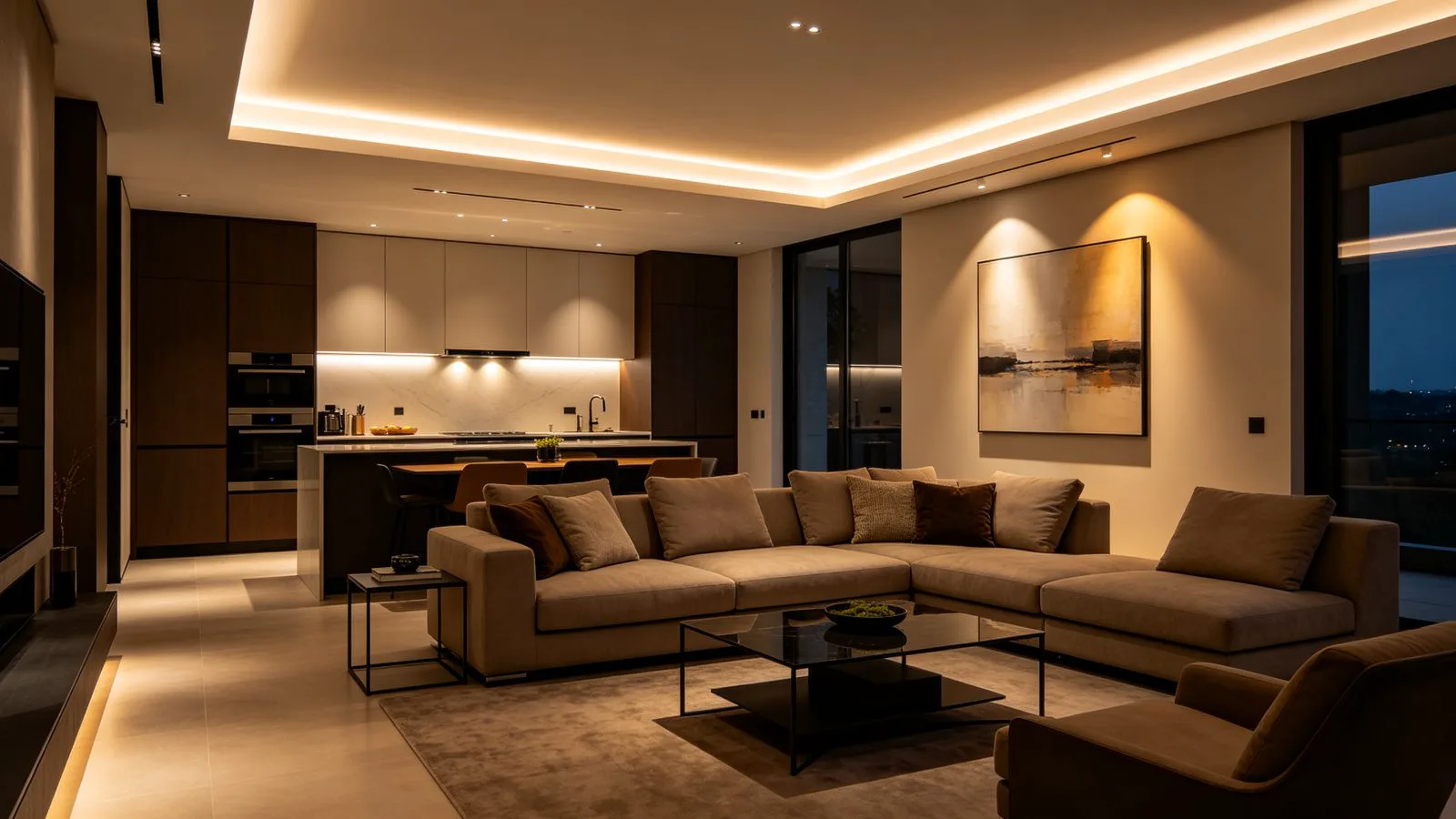
At night the lit shelves become the room’s primary ambient feature.
Recommended Products


Frequently Asked Questions
Where exactly should the LED strip go under a shelf?
Mount it 2–3 cm back from the front edge, aimed downward so the beam lands on the shelf below. This hides the strip from standing eye level and creates a clean band of light on your books and objects instead of a visible line.
Should I use COB or regular SMD strip for shelving?
Use COB (or SMD inside a diffused aluminum channel) wherever the strip itself will be seen from close range — glass cabinets, framed display walls, reading nooks. A standard SMD strip is fine when it is hidden under a shelf lip and only its light spill is visible.
How do I make shelf lights turn on automatically?
Add a cabinet sensor — a touch, hand-wave or PIR motion sensor, or a door sensor that triggers when a cabinet opens. These pair directly with low-voltage LED strips and are especially useful for closed display cabinets and wardrobes.
What color temperature looks best on books and wood?
Warm white around 2700K–3000K flatters wood, leather and paper. Specify CRI Ra 90+ if you display art, photos or collectibles, because lower CRI makes colors look dull and inaccurate.
Building an indoor LED strip project?
Get factory-direct pricing, free layout advice, samples and a custom quote within 24 hours.
Get a Quote