LED Strip Color Binning: How ANSI Bins Keep Large Projects Consistent
- 2026-09-19 11:49
- /
- Arraystar
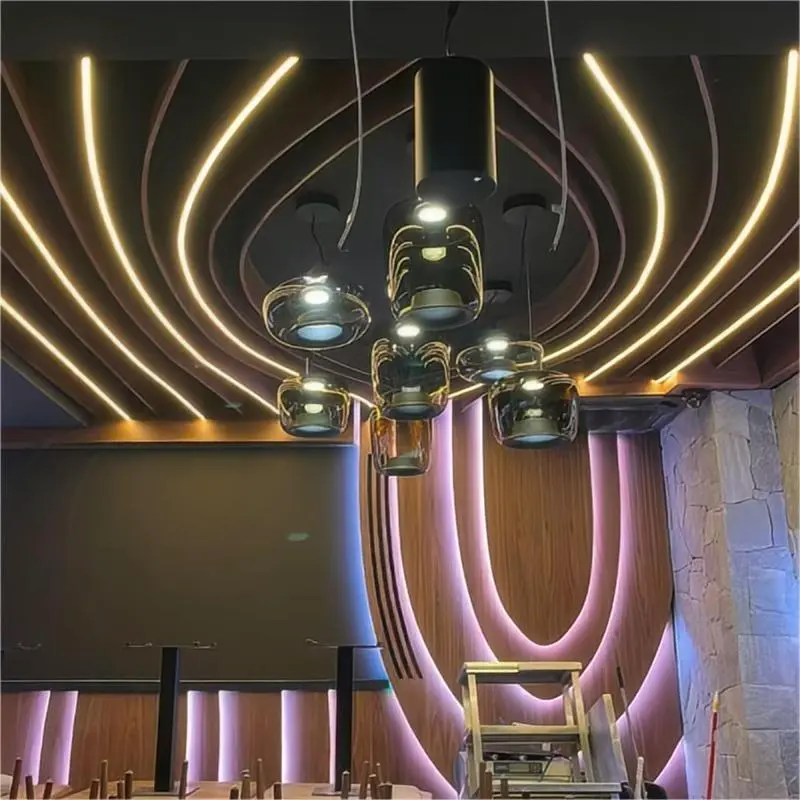
For any continuous run longer than a few meters, order LED strip from a single color bin at 3-step SDCM or tighter, produced in one batch and shipped with 5-10% spare reels from that same batch. It is the single cheapest way to guarantee that a 50-meter hotel corridor or cove looks like one seamless line of light.
Why Color Binning Decides Whether a Project Looks Seamless
White LEDs are manufactured, not painted. Even on the same production line, two chips that target 3000K can come off the wafer at 2920K and 3080K, with a slight green or pink tint. Manufacturers sort these chips into color bins — small regions on a chromaticity chart — and ship strips according to which bin their LEDs fell into.
A single reel always looks perfectly white on its own. The problem only appears when two reels from different bins meet in a long cove, a corridor ceiling, or back-to-back display cases: the eye reads the step between warm/cool or green/magenta as a visible seam. Independent lighting surveys of commercial fit-outs repeatedly find color inconsistency among the top three punch-list complaints, alongside flicker and dead LEDs.

Binning is therefore not a laboratory curiosity — it is a procurement decision. Specifying a color temperature (“3000K”) only fixes the center point; specifying the bin and tolerance fixes how tightly every meter clusters around that point.
ANSI C78.377, SDCM and How Tight Is Tight Enough
The industry maps white-light color onto the CIE 1931 chromaticity diagram. The American standard ANSI C78.377 draws a four-sided quadrangle around each nominal CCT; any point inside that quadrant may legally be labeled, for example, 3000K. That quadrangle is roughly 7 MacAdam ellipses wide — meaning two “3000K” products at opposite corners are clearly different to the eye.
How binning tolerance maps to visible consistency
| Tolerance (SDCM) | What it means | Where to use it |
|---|---|---|
| 1-step | Virtually indistinguishable; rarely offered commercially | Color-critical museum/gallery, on-camera |
| 2-3 step | Premium architectural; seamless across reels | Hospitality coves, retail, offices (recommended) |
| 4-5 step | Acceptable for short runs / indirect light | Residential accent, hidden cove with diffuser |
| 6-7 step (full ANSI quad) | Noticeable warm/cool spread between reels | Budget jobs with no continuous runs |
SDCM (Standard Deviation Color Matching), measured in MacAdam ellipses, describes the same idea as bin width. A 3-step ellipse is small enough that adjacent reels appear identical in normal viewing conditions; a full ANSI quadrant is not. Reputable strip datasheets state both the nominal CCT and the SDCM or bin tolerance — if a supplier only quotes “3000K” with no ellipse figure, assume full-quadrangle, mixed-bin stock.
How to Read a Bin Code and Order Matched Strip
1. Read the label, not just the CCT
Reel and reel-box labels from tier-one LED makers carry a bin or rank code (for example a combination such as 3000K / CRI90 / bin WG / V0). The color bin letters group chromaticity; brightness/voltage ranks group flux and forward voltage. Ask your factory which bin code your order will ship from and keep it identical across the whole project.
2. Specify single-batch, single-bin in the PO
Put the requirement in writing on the purchase order: “all reels single color bin, ≤3-step SDCM, same production batch, bin code stated on packing list.” This forces the factory to allocate from one bin rather than pulling whatever is in stock.
3. Order spares from the same batch
A replacement reel ordered six months later will almost certainly come from a newer bin and may not match. Order 5-10% extra from the original batch, label it, and keep it for maintenance. This is dramatically cheaper than re-lighting a section to chase a match.
4. Stage reels before installing
Lay all reels side by side on a bench or along the floor at the intended brightness and dimmer setting before fixing them. Group any slight differences to the least visible zones (far corners, behind beams) rather than the center of a run.
Where Binning Matters Most (and Where It Doesn't)
- High risk: long continuous coves and cornices, corridor and perimeter lines, backlit translucent ceilings, mirror/toe-kick runs, anywhere two reels are directly adjacent.
- Medium risk: separate rooms or floors using the same white — differences are less visible when not adjacent, but still worth controlling for a premium brand.
- Lower risk: short isolated accents inside a deep opal diffuser, RGB/RGBW color-changing runs (where white point is set by calibration), and dimmable warm dim products that intentionally shift CCT.
Remember that a deep opal diffuser and indirect grazing hide small differences, while a clear lens, shallow channel or direct-view dot-free COB exposes them. Tighten the bin spec as the source becomes more visible.

Recommended Products

Frequently Asked Questions
Is 3-step SDCM the same as a single ANSI bin?
Not exactly. An ANSI C78.377 quadrangle for one CCT spans roughly 6-7 MacAdam steps, so a full ANSI bin is much looser than a 3-step selection. “Single bin” from a careful factory usually means a 2-3 step sub-region of the ANSI quadrant; always confirm the SDCM number in writing.
Will ordering the same CCT from the same supplier guarantee a match later?
No. CCT is only a target, and a supplier's stock rotates across many production batches and bins. A re-order months later can land in a different bin. Specify the bin code, buy maintenance spares up front from the same batch, and reference the original PO when re-ordering.
Can I fix mixed-bin reels with the dimmer or color temperature control?
Dimming changes brightness for both reels but does not remove a chromaticity difference, and tunable-white products can be re-trimmed at the controller only if the hardware supports per-zone calibration. For fixed-CCT strip the practical fix is to regroup reels to non-adjacent zones; prevention at ordering stage is the real solution.
Does COB strip bin more consistently than SMD?
COB packages many more LEDs per meter, which averages out subtle chip-to-chip variation within a reel and removes visible dots — but two COB reels from different bins will still show a seam. COB improves intra-reel uniformity; it does not replace single-bin ordering for inter-reel consistency.
What should I ask the factory to provide as proof?
Request the bin/SDCM specification on the datasheet, the actual bin code on the packing list per reel, and a small batch test report (spectrometer measurement) for large orders. A factory that cannot or will not state a bin tolerance is shipping mixed full-quadrangle stock.
Need color-consistent strip for a large project?
Send us your meterage and CCT — we quote single-bin, ≤3-step SDCM reels from one production batch, with spare reels reserved and a spectrometer batch report on request.
Email: info@arraystarled.com | Phone: +86-0755-2103-6746 | WhatsApp: 0086 1581 8514 077
Need to size your power supply? Use our LED Strip Power Calculator to find the right driver in seconds.