Marine & Yacht LED Strip Lighting: Salt, Vibration & 12/24V Guide
- 2026-09-19 12:28
- /
- Arraystar
On a boat, weight, voltage, vibration and salt matter as much as brightness. Specify 12/24 V DC IP68 solid-silicone COB or neon, 316 stainless and anodized-aluminium fixings, sealed marine connectors, properly fused short runs and dimmable drivers matched to the vessel's battery system. Domestic ‘waterproof’ strip with steel clips will corrode and fail within a season on the water.
Why Marine Lighting Is a Separate Specification
A yacht or boat combines four stresses that domestic lighting never faces together: salt-laden, constantly humid air; persistent engine and wave vibration; a limited DC battery supply where every amp and gram counts; and confined metal and timber structures with nowhere to hide heat or corrosion. Strip that looks identical to indoor product at a trade show can fail in months once installed below decks.
- Salt and humidity corrode exposed copper, steel clips and cheap connectors (see our salt-spray guide).
- Vibration loosens screw terminals, cracks solder joints and shakes loose adhesive — mechanical fixing is mandatory.
- DC supply is typically 12 V or 24 V with voltage sag under load and sensitive battery/charging systems.
- Space and weight favour thin, light, low-profile linear light; heavy housings and long mains runs are impractical.
IP Rating, Materials and the Salt Problem
Marine-grade versus domestic strip
| Element | Domestic ‘waterproof’ | Marine-grade specification |
|---|---|---|
| Encapsulation | Hollow IP65 sleeve, PVC | Solid silicone IP67/IP68 extrusion |
| Fixings | Steel or 201 stainless clips | 316 stainless, anodized aluminium |
| Connectors | Bare clip-on / heat shrink | Moulded IP68 screw-lock harness |
| Cut ends | Sealed with tape | Glue-filled end caps / heat shrink |
| PCB / solder | Bare copper, standard solder | Tinned/protected copper, marine solder |
| Driver | Indoor plastic PSU | IP67/IP68, ignition-protected where needed |
The golden rule is that IP rating alone does not prove corrosion resistance: require salt-spray tested (ISO 9227/ASTM B117) product. Every cut end and field connection — the places water actually enters — must be sealed, and all metal within the damp zone should be 316 stainless or anodized aluminium to avoid galvanic corrosion.
Voltage, Current and Electrical Safety On Board
- Match the strip to the house battery: 12 V for smaller 12 V boats, 24 V increasingly common on larger yachts; never mix assumptions — 24 V strip on a 12 V bank will not light correctly and vice versa.
- Keep runs short or use thick-copper/long-run strip to fight voltage sag, which worsens when the battery dips under load; feed from both ends on long cabin runs.
- Fuse each circuit close to the distribution panel with appropriately rated blade fuses, use marine tinned wire and proper crimped/heat-shrunk terminals, and avoid daisy-chaining many metres from one feed.
- Prefer constant-voltage dimmable drivers/receivers designed for DC marine use, with low standby draw, and ensure switching gear is ignition-protected near engines or fuel systems.
- Calculate total amp draw against house-battery and charging capacity; efficient high-lm/W COB keeps evening lighting from draining the bank.

Dimming and colour on board are best handled by low-voltage PWM controllers or a marine-compatible smart/DMX system rather than mains TRIAC dimmers, which do not apply to a DC supply. Warm-dim or tunable-white is popular for transitioning cabins from bright daytime to a relaxing evening glow.
Where and How to Install on a Vessel
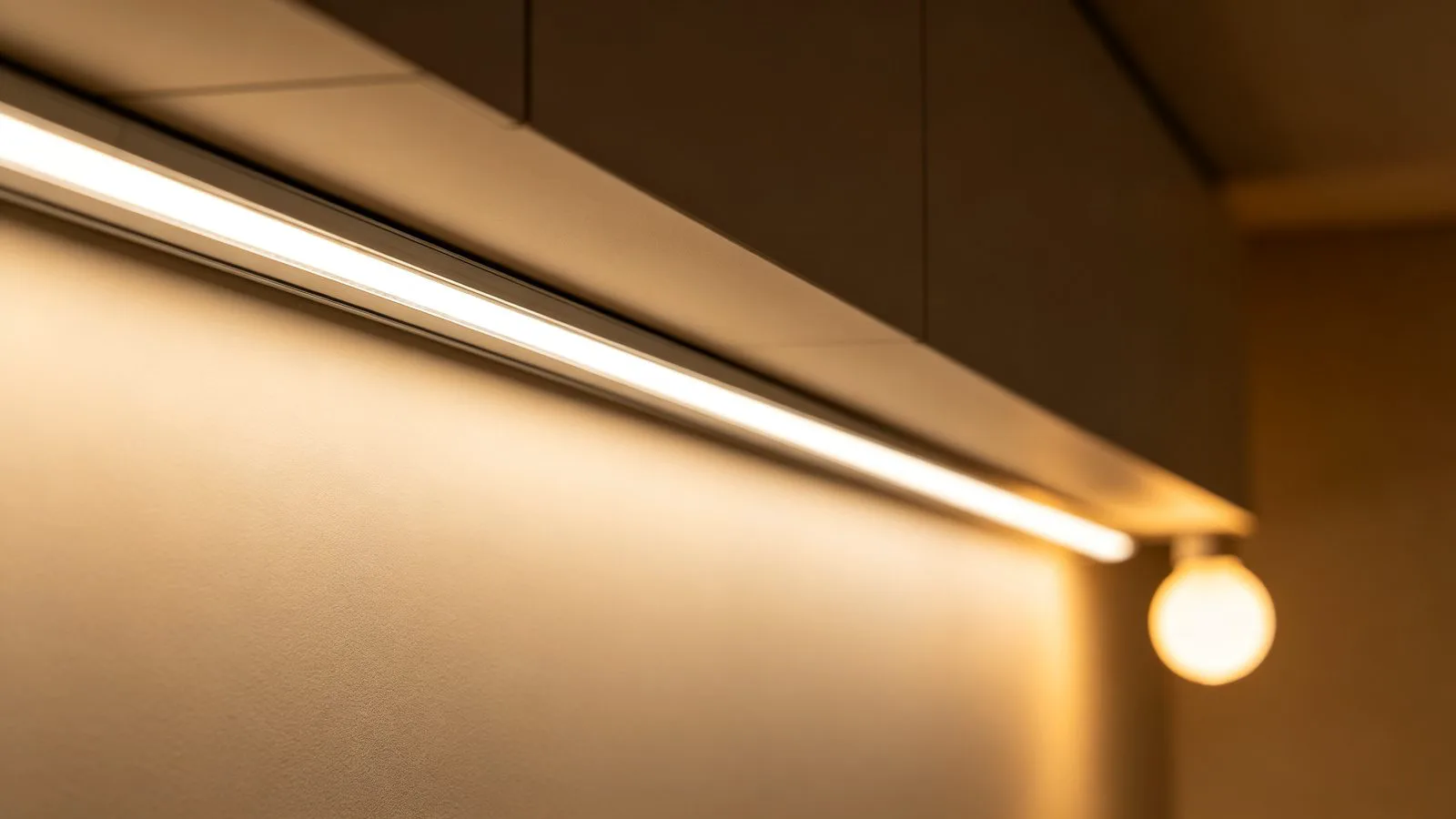
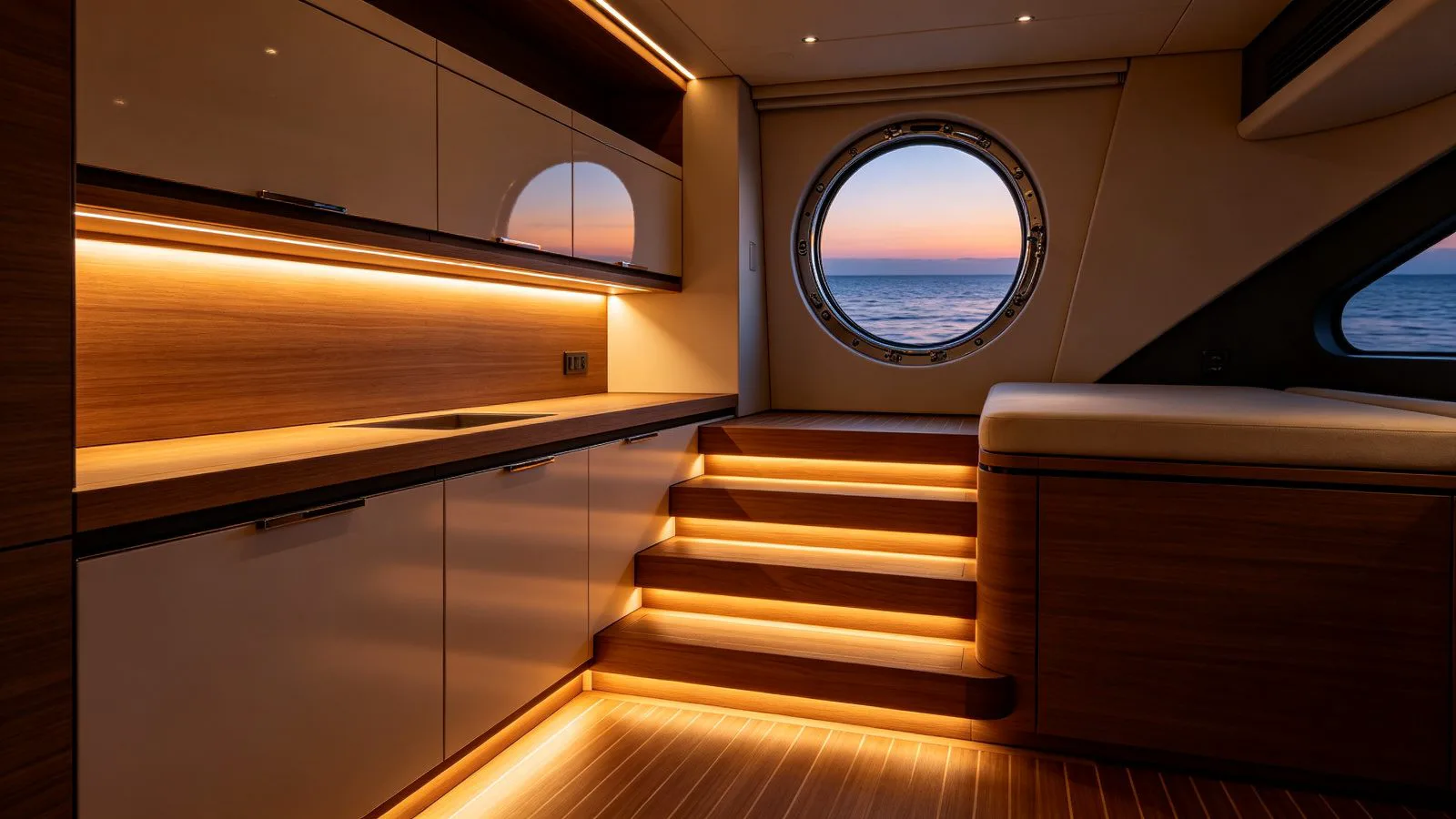
- Below decks / cabins: warm 2700–3000 K COB under gunwales, cabinet pelmets and along teak — use channels with diffusers to protect the strip and spread light.
- Companionway steps and walkways: low-level IP67 strip for safe night movement, dimmable to a faint night-light level.
- Cockpit, swim platform and rail: IP68 neon or solid-silicone strip with 316 fixings, sealed harnesses and drip loops; choose RGB or warm-white to taste.
- Engine room and lockers: bright cool-white IP67 strip on door/hat switches for task light, mechanically secured against vibration.
- Mechanical fixing everywhere: channels, clips and screws — never rely on adhesive tape alone on a vibrating, temperature-cycling boat.
Quick specification by zone
| Zone | Strip | IP / fixing | CCT |
|---|---|---|---|
| Cabin / saloon | COB in channel | IP65+, anodized channel | 2700–3000 K |
| Steps / walkways | Low-profile COB/neon | IP67, 316 clips | 2700 K, dim to night level |
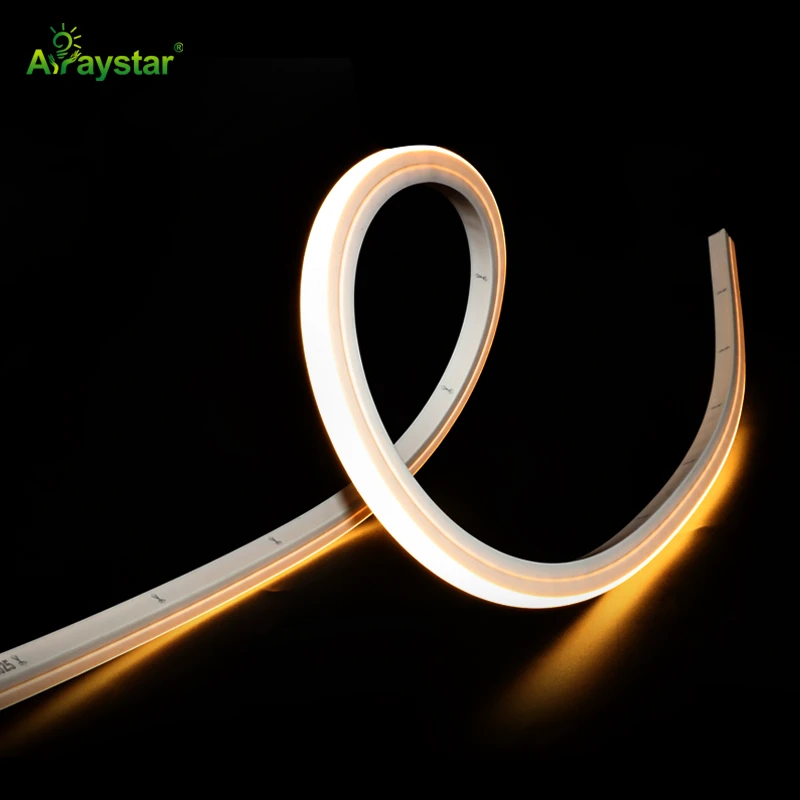
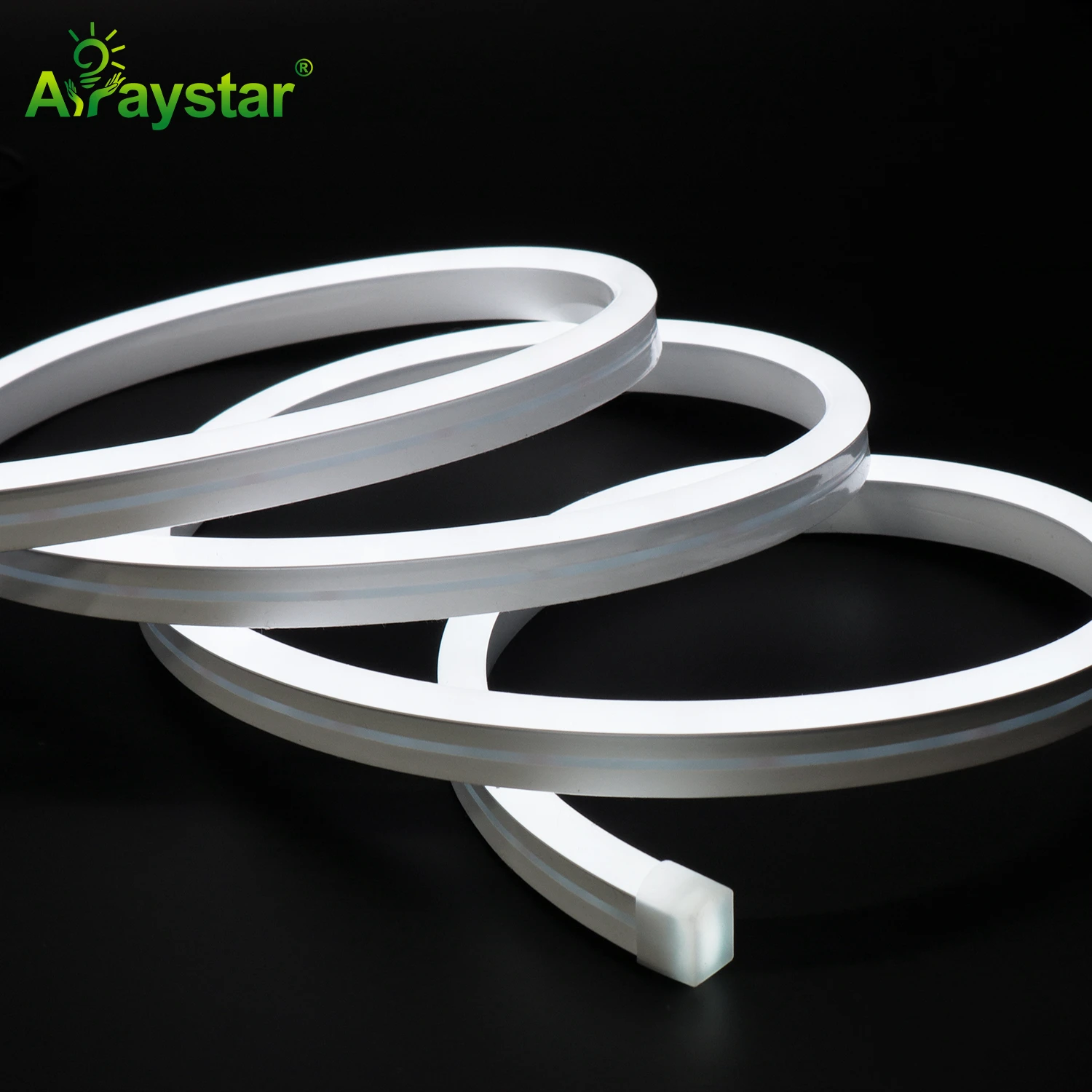
| Cockpit / exterior | Solid silicone neon | IP68, 316 SS, sealed harness | Warm or RGB |
| Engine room | Task SMD/COB | IP67, mechanical brackets | 4000–5000 K |
We supply 12 V and 24 V marine-grade IP68 COB and neon with 316 fixings, sealed harnesses and salt-spray qualification. Give us your vessel voltage, cabin/run lengths and interior-versus-exterior zones and we will size the runs, fusing and dimming for a clean, reliable install that survives the sea.
Recommended Products
Frequently Asked Questions
Can I use normal waterproof LED strip on a boat?
Domestic IP65/IP67 strip with steel clips and hollow sleeves generally fails quickly on a vessel because of salt corrosion, vibration and unsealed cut ends. Use salt-spray-tested solid-silicone IP68 strip with 316 stainless fixings, anodized aluminium channels, moulded sealed connectors and glue-filled end caps.
Should boat LED strip be 12V or 24V?
Match the house battery bank: most smaller boats are 12 V, while larger yachts commonly use 24 V. Using the wrong voltage prevents correct operation. Within that, use thick-copper or long-run strip, short fused runs and double-end feeds to counter voltage sag when the battery dips.
How do I stop marine LED strip from corroding?
Specify IP68 solid-silicone encapsulation, tinned/protected PCB copper, 316 stainless and anodized aluminium hardware, and moulded IP68 connectors; seal every cut end with glue-filled caps or adhesive heat-shrink; route cables with drip loops so water cannot track into enclosures; and require salt-spray test evidence.
How do you dim LED strip on a DC boat system?
Mains TRIAC dimmers do not apply to a DC supply. Use low-voltage PWM dimming receivers, a marine-compatible smart controller or DMX between your 12/24 V supply and the strip, with low standby draw. Warm-dim or tunable-white controllers are popular for shifting cabin mood from day to night.
Is adhesive tape enough to mount LED strip on a yacht?
No. Vibration, temperature cycling and humidity shake loose even premium VHB tape on a boat. Always mechanically secure strip in aluminum channels with 316 clips, brackets and screws, using tape only as a supplement during assembly.
Outfitting a yacht or boat with LED strip?
We supply 12/24 V salt-spray-tested IP68 COB and neon with 316 fixings and sealed harnesses. Tell us your vessel voltage and zones for a marine-ready bill of materials and run layout.
Email: info@arraystarled.com | Phone: +86-0755-2103-6746 | WhatsApp: 0086 1581 8514 077
Need to size your power supply? Use our LED Strip Power Calculator to find the right driver in seconds.