My Neon Sign Hums Loud Enough to Hear Across the Room - What Is It?
- 2026-11-02 15:54
- /
- Arraystar LED
A low 50 or 60 Hz hum from a neon sign is the driver, not the tube. The silicone flex itself is silent; the buzz you hear is laminated steel and windings vibrating against a tin box or a loose wall plate. I trace it to the bracket, the loading, or a driver on its way out, in that order.
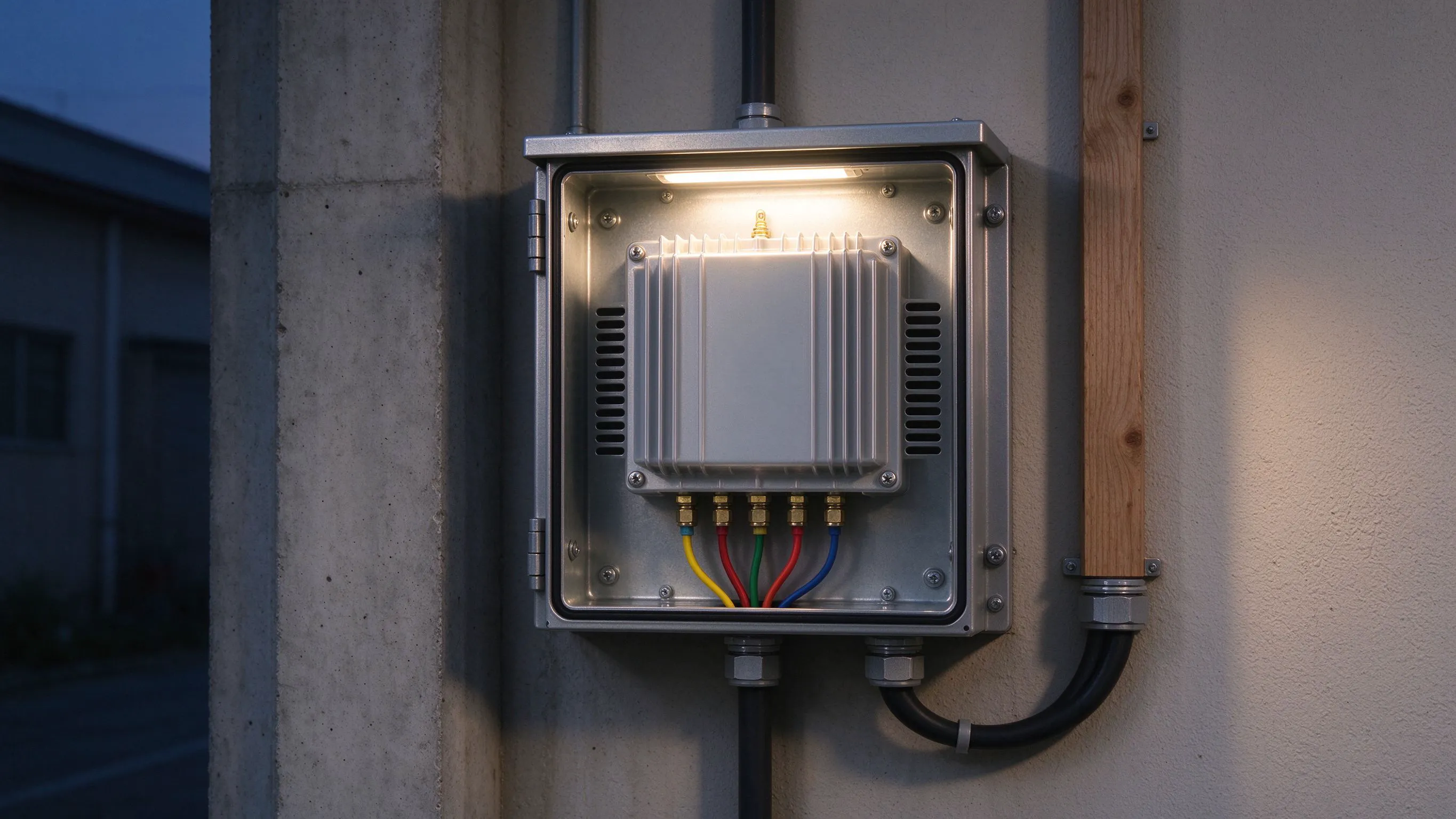
The hum that follows you across the room
The first call I get always sounds the same: the sign looks great, the colour is right, but there is a low, room-sized buzz that the owners can hear from their desk. They assume the neon tube itself is buzzing. It cannot. The tube is solid-state LEDs in silicone; there is nothing inside that can vibrate at mains frequency. The sound comes from the power supply feeding it.
I once walked into a cafe where the hum was so loud the owner thought there was a fridge compressor running. It was a 24 V switching driver screwed directly to a thin plywood backboard, and the whole panel was acting as a speaker cone. Undo two screws and the room went quiet.

Why the driver hums at all
Switching drivers run at 20 to 60 kHz, which is above human hearing, but the mains transformer stage inside hums at 50 or 60 Hz and its harmonic at 100 or 120 Hz. That is the note you hear. A well-built driver runs this quietly because the laminated steel core is glued tight and mounted on rubber. A cheap driver, an overloaded driver, or a driver bolted straight to a resonant panel turns that hum into a room speaker.
- Loose laminations inside the driver core buzz at mains frequency.
- Driver loaded over 80 percent of its rated wattage whines audibly.
- A metal or thin wood backboard acts as a sounding board and amplifies the buzz.
The order I check it in
I start with the simplest, cheapest fix: isolation. If the driver is screwed to a panel, I undo one screw at a time while listening. If the hum drops when the box loosens off the wall, the problem is mechanical and the fix is rubber mounts. If the hum stays the same when the box is free, the driver itself is the issue and the load draw is next.
Fix the cheapest cause first before swapping the driver.
| Step | What I do | What it tells me |
|---|---|---|
| 1 | Undo one driver screw, listen | Hum drops: mechanical coupling |
| 2 | Measure actual load wattage | Over 80 percent rating: overloaded |
| 3 | Tap the driver case gently | Click or worse hum: laminations loose |
Overloading is the quiet killer. A 100 W driver pulling 95 W at end of life whines because the transformer core is saturated. Downsize the load or upsize the driver by at least 30 percent.
Mounting fixes that kill the buzz for good

Once the hum is mechanical, I remount the driver on four 5 mm rubber isolation bushings so the box floats off the wall. I never screw a driver directly to plywood, plasterboard, or a thin aluminium panel. On a rigid concrete wall the buzz is usually already low; the problem is almost always a resonant substrate.
Isolation beats dampening; a box on rubber does not need extra padding.
| Mounting method | Hum level | Use it? |
|---|---|---|
| Screwed direct to plywood | Loud, amplified | No |
| Screwed to steel bracket | Medium, metallic ring | Add rubber bushes |
| Floated on rubber bushes | Inaudible at 1 m | Yes |
I also check the cable itself. A loop of mains wire running parallel to the LV feed picks up hum radiated from the driver. Cross them at ninety degrees and keep them under 50 mm apart only where they must.
When the driver itself needs replacing
If isolation and load both check out and the hum is still there, the driver is on its way out. The laminations inside the core loosen with heat cycles, and no amount of mounting trickery fixes a loose stack. When I swap, I upsize the wattage by at least 30 percent so the new driver never runs near saturation.
- Replace with a constant-voltage driver rated 30 percent above the actual load.
- Mount it on rubber bushes even if the wall feels solid.
- Keep the driver within 5 m of the sign to avoid long LV tails that pick up hum.
Recommended Products
Frequently Asked Questions
Why is my neon sign humming?
The hum comes from the power supply, not the LED tube. The silicone flex is silent; the driver transformer core vibrates at 50 or 60 Hz and, if it is overloaded, cheaply built, or screwed straight to a resonant panel, you hear it across the room. Fix the mounting, check the load, and only then consider replacing the driver.
Is a quiet hum from a neon driver normal?
A very faint hum when your ear is within 30 cm of the driver box is normal on cheap units. It becomes a fault when you can hear it across a room, when the pitch rises as the sign warms up, or when it is accompanied by a high-pitched whine. Those signs point to overloading or loose laminations inside the driver.
How do I stop my neon driver from buzzing?
First, isolate it. Undo the screws one at a time while listening; if the hum drops, remount the box on four 5 mm rubber bushes so it floats off the wall. Second, check the load: if the driver is pulling over 80 percent of its rated wattage, upsize it. Third, cross the mains and low-voltage cables at ninety degrees so they do not couple hum.
Can an overloaded neon driver cause a fire?
An overloaded driver usually fails by shutting down or blowing its fuse, not by catching fire, but it will run hot and shorten its life. A driver pulling over 90 percent of its rated wattage saturates the transformer, whines, and can run 20 degrees hotter than its case rating. Upsize the driver so the actual load sits at 60 to 70 percent of rating.
Where should I hide the neon driver to keep it quiet?
Mount it off the wall on rubber bushes, in a vented box, within 5 m of the sign. Do not tuck it inside a sealed ceiling void; heat kills drivers and makes them whine. A 50 mm clearance around the case on all sides is enough. Keep it accessible; you will be replacing it in five years and you do not want to open a ceiling panel to reach it.
Need help with your LED project?
Get factory-direct pricing, free samples and engineering support within 24 hours.
Email: info@arraystarled.com | Phone: +86-0755-2103-6746 | WhatsApp: 0086 1581 8514 077
Need to size your power supply? Use our LED Strip Power Calculator to find the right driver in seconds.